

More news on this day
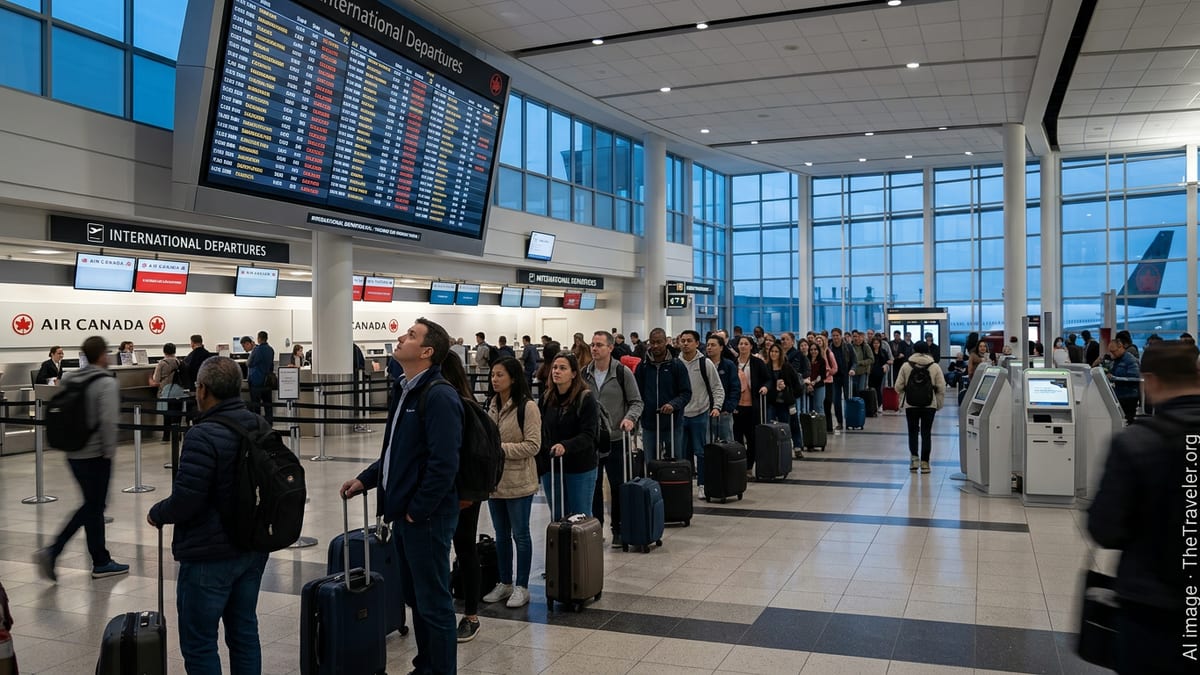
Air Canada has temporarily suspended its non-stop Toronto–Dubai service as a rapidly evolving security crisis in the Middle East forces airlines to reconsider flight paths, triggering fresh disruption for travelers and raising new questions about the resilience of global air connectivity.
Get the latest news straight to your inbox!
Security Turbulence Reaches a Critical Hub Pair
The Toronto–Dubai route has been one of Air Canada’s highest-profile links between North America and the Gulf, connecting Canada’s busiest international gateway with Dubai’s role as a mega-hub for travel across the Middle East, Africa and South Asia. Publicly available information from airline schedules and flight-tracking platforms shows that this service has now been pulled from near-term timetables, with bookings either closed or rerouted over alternative hubs.
The suspension follows a broader deterioration in the regional security environment, including new restrictions on overflying certain Middle Eastern airspace and advisories urging carriers to avoid specified conflict zones. Industry notices indicate that these constraints have sharply narrowed viable routing options for long-haul flights transiting the area, increasing flight times, operating costs and perceived risk.
Reports from aviation analysts describe the Toronto–Dubai pause as part of a wider pattern, with multiple global airlines pruning or redirecting services that rely on Middle Eastern corridors. While exact timelines for restoration remain unclear, observers note that the combination of security limitations, insurance considerations and operational complexity is likely to keep schedules in flux for weeks, if not longer.
Ripple Effects for Passengers and Global Connections
The immediate impact is being felt by passengers who rely on Dubai as a one-stop gateway from Canada to destinations across India, Pakistan, the broader Gulf, East Africa and beyond. Booking systems and traveler reports indicate that many itineraries once built around Air Canada’s non-stop Toronto–Dubai flight are now being reconfigured via European hubs such as London, Frankfurt and Paris, or via alternative Gulf and regional carriers where capacity allows.
Travel forums and social media posts show a growing volume of accounts from affected customers facing last-minute schedule changes, longer journey times and crowded alternative flights. Several travelers describe being rebooked days later or routed on multi-stop itineraries that add many hours to their trips, particularly on popular migrant and visiting-friends-and-relatives routes linking Canadian cities with South Asian and African destinations.
Airlines have some flexibility to upgauge aircraft or add short-notice capacity on resilient corridors, but industry commentary suggests that the scale of the disruption is outpacing the speed at which networks can be re-optimized. This is especially acute during peak travel periods, when spare long-haul capacity is limited and crew scheduling is already tight.
Operational Pressures and Airspace Restrictions
Aviation safety regulators and industry bodies have repeatedly warned that evolving conflict zones in the Middle East require conservative routing decisions by carriers. Publicly available bulletins outline restricted or prohibited flight areas, requiring airlines to contour around large swaths of airspace that previously formed part of the most efficient paths between North America, Europe and Asia.
For a route such as Toronto–Dubai, those constraints can translate into significantly longer great-circle alternatives, higher fuel burn and added complexity in crew duty planning. Analysts note that when compounded by insurance and security risk assessments, some carriers determine that operating certain routes is no longer viable in the short term, especially when other network vulnerabilities, such as ongoing labor or aircraft availability challenges, are considered.
Industry coverage highlights that airlines are also balancing these security-driven adjustments with commercial pressures. Some have opted to concentrate limited long-haul capacity on markets with more predictable routings, while temporarily suspending or thinning frequencies on services heavily exposed to volatile airspace or heightened geopolitical risk.
Competitive Landscape Shifts as Gulf and European Carriers React
The pause in Air Canada’s Toronto–Dubai operation is likely to have knock-on effects on the competitive landscape. Dubai remains a central hub for Emirates and other Gulf carriers that already provide substantial one-stop connectivity between Canada and a wide range of onward destinations. Travel industry reports suggest that these airlines may see increased demand from displaced passengers seeking stable alternatives.
At the same time, European network carriers are positioned to capture traffic via their own hubs, using relatively secure northern and central corridors between North America and Asia or Africa. Published schedules show that many of these airlines have maintained or even reinforced key trunk routes, creating opportunities to absorb passengers who can no longer rely on a direct Canada–Dubai option.
However, the rebalancing is not seamless. Capacity constraints, timing mismatches and visa requirements for transiting certain countries mean that not all travelers can easily switch routings. Travel agents and online booking platforms are reporting more complex trip-planning scenarios, particularly for families and travelers originating in smaller Canadian cities who previously depended on a straightforward connection through Toronto and Dubai.
What Travelers Can Expect in the Coming Weeks
With the security situation still fluid and airspace advisories subject to rapid change, industry observers anticipate continued schedule volatility for routes touching or overflying the Middle East. Passenger advocacy groups and consumer-focused coverage are urging travelers to monitor their bookings closely, enable airline notifications and be prepared for itinerary changes, even if tickets were purchased months in advance.
Travel specialists advise that passengers whose Toronto–Dubai flights have been canceled or significantly altered should review airline and regulator rules around refunds, rebooking options and duty-of-care obligations such as accommodation and meal support during extended disruptions. The specifics vary by jurisdiction and ticket type, but documented policies provide avenues for customers to seek remedies when long-haul travel plans are heavily impacted.
For now, the suspension of Air Canada’s Toronto–Dubai link stands as a visible symbol of how quickly geopolitical tensions can unravel carefully calibrated global networks. Until the security outlook improves and routing options stabilize, both airlines and travelers will be navigating an environment where long-haul plans are increasingly subject to forces far beyond the departure gate.