

More news on this day
Canada’s already competitive airline market is set for a fresh jolt in 2026, as Air Canada rolls out new international and sun routes that align it with an aggressive network expansion trend led by WestJet, Porter Airlines, Air Transat and Flair Airlines.
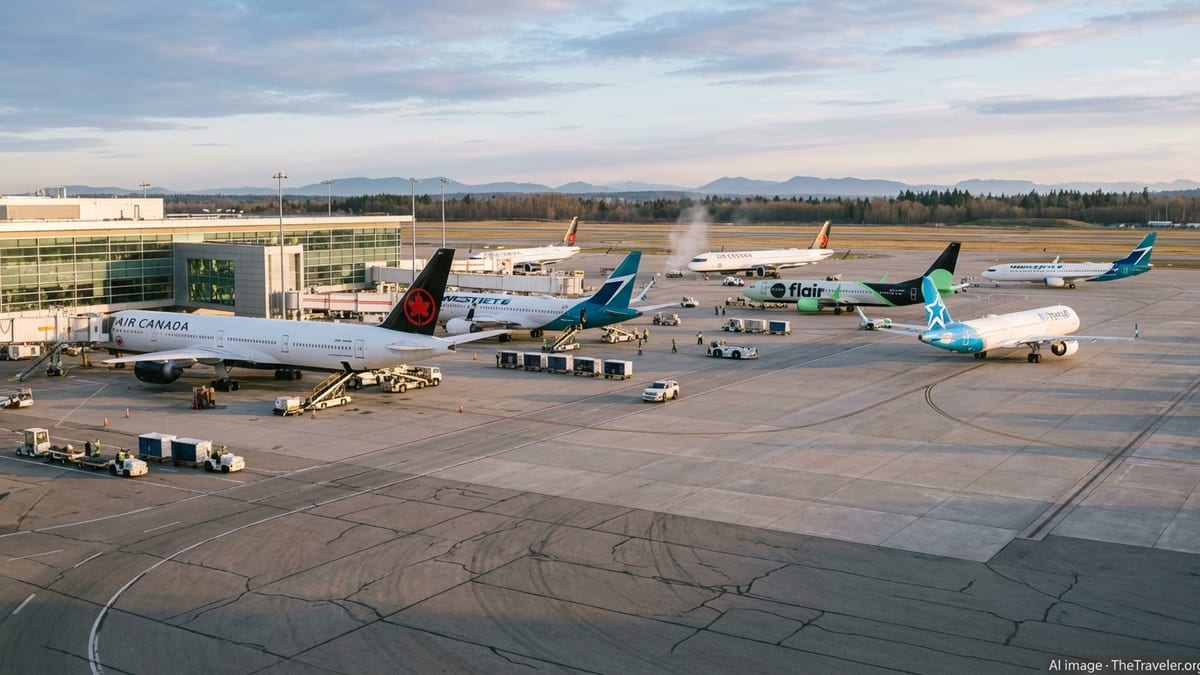
Air Canada’s 2026 Push Targets Mexico and Long-Haul Recovery
Air Canada is using the 2026 summer season to deepen its pivot toward Latin America and rebuild long-haul connectivity, particularly after several years of volatile demand and geopolitical disruptions. Industry schedules show the carrier lifting capacity to Mexico by roughly one fifth compared with last summer, driven by new service and added frequencies from its Montreal, Toronto and Vancouver hubs.
At the heart of the plan is a new year-round Montreal–Guadalajara route, scheduled to launch in early June with three weekly flights. The service connects Quebec directly to one of Mexico’s fastest-growing business and tech corridors, while also appealing to visiting friends and relatives travel. Air Canada is simultaneously increasing flights on existing routes such as Montreal–Cancun, Toronto–Monterrey, Vancouver–Mexico City and Vancouver–Puerto Vallarta, building up to an estimated 10 daily Mexico departures across its network at the summer peak.
The push into Mexico and broader Latin America comes as Air Canada carefully reshapes its long-haul schedule elsewhere. The carrier has suspended previously planned Montreal services to Tel Aviv and Delhi for summer 2026, citing commercial and geopolitical factors, and will instead consolidate traffic over Toronto on those routes. At the same time, it is restoring and expanding Asia and Europe flying, including the resumption of nonstop Toronto–Shanghai and additional capacity on routes such as Vancouver–Bangkok, which is being upgraded to year-round service.
Combined, the moves illustrate a two-track strategy: lean into proven leisure and diaspora markets like Mexico and Southeast Asia while trimming exposure where demand or risk remains uncertain. They also place Air Canada directly into the same growth narrative as its domestic rivals, which are racing to plant their flags on new city pairs at home and overseas.
WestJet, Porter and Air Transat Accelerate International Growth
While Air Canada fine-tunes its global network, WestJet is pressing ahead with a bold international expansion from Eastern Canada and key western bases in 2026. The Calgary-based airline has unveiled a slate of new summer routes from Toronto and Halifax, including its first South America link from Toronto to Medellín and new European services to Cardiff, Ponta Delgada in the Azores, Madrid, Lisbon and Copenhagen. Additional flights from Edmonton and Winnipeg to Reykjavik will further anchor WestJet’s growing transatlantic footprint.
Porter Airlines, once known primarily for short-hop turboprop flights from downtown Toronto, is rapidly reinventing itself as a transborder and sun-market challenger. Using its Embraer E195-E2 jets, Porter is opening or expanding routes such as Toronto Pearson–Austin, Phoenix services from both Vancouver and Ottawa, and new winter flights connecting Montreal and Nassau. Its 2026 schedule also bulks up domestic connectivity, with new or enhanced routes from Ottawa, Hamilton and Toronto to secondary Canadian cities, creating more feeder traffic for its growing portfolio of international and leisure destinations.
Air Transat, Canada’s largest leisure specialist, is simultaneously pushing deeper into Europe, Africa and the Caribbean. For summer 2026, the airline has announced exclusive routes such as Quebec City–Marseille and Ottawa–London Gatwick, alongside new services from Montreal and Toronto to destinations including Reykjavik, Accra, Dakar and Agadir. Several popular sun routes from Montreal and Toronto to the Caribbean and Latin America are being converted from seasonal to year-round operations, strengthening Air Transat’s role as a bridge between Canada and niche leisure markets worldwide.
Together, these strategies demonstrate how Canadian carriers are using targeted international growth to differentiate themselves. WestJet’s focus on underserved transatlantic and South American city pairs, Porter’s emphasis on high-comfort narrowbody jets to mid-haul U.S. and sun markets, and Air Transat’s specialization in leisure-heavy destinations all frame Air Canada’s own 2026 moves as part of a broader fight for long-haul and holiday travelers.
Flair and Domestic Competition Intensify Connectivity Within Canada
Below the marquee long-haul launches, a parallel race is playing out on domestic corridors, where ultra-low-cost carrier Flair Airlines and an expanding Porter network are reshaping how Canadians move between provinces. Flair’s spring 2026 schedule adds or restores several key point-to-point links, including daily Vancouver–Montreal service and renewed connections from Toronto to St. John’s and Moncton. These additions reinforce Flair’s strategy of using simple, high-density routes to undercut legacy carriers on price and stimulate new demand.
Porter is also leaning into domestic growth, particularly through Ottawa and Hamilton. New summer flights from Ottawa to Sudbury, Windsor and Kelowna, as well as Hamilton services to St. John’s and Winnipeg, are designed to build a robust secondary network that feeds both Porter’s own international routes and its growing web of partnerships. Increased frequencies on existing routes, such as Ottawa–Winnipeg and Toronto Pearson–Deer Lake, add further competitive pressure on incumbents.
For Air Canada, which has long dominated trunk routes between major Canadian cities, this low-cost and regional surge raises the stakes. The flag carrier has already responded in past seasons with fare sales, capacity shifts and more aggressive deployment of smaller jets on thinner routes, and 2026 is likely to bring further adjustments as new entrants and expanding rivals test the limits of demand.
The outcome for travelers is a wider choice of departure points and nonstops, but also a market where scheduling, reliability and perceived value may matter as much as absolute price. As more carriers cluster around the same busy gateways, secondary airports and alternative routings are gaining importance in airline strategies and passenger decision-making.
What 2026’s Route Race Means for Travelers and Tourism
The wave of new routes to and from Canada in 2026 is arriving against a backdrop of resilient demand for leisure travel, a softer but stabilizing corporate market and persistent pressure on airline profitability. By pivoting toward sun destinations, mid-haul business centers and previously underserved transatlantic city pairs, carriers are trying to capture high-yield segments while spreading risk across more geographies.
For travelers, the benefits are immediate and tangible. Canadians in cities such as Quebec City, Ottawa, Halifax, Edmonton and Winnipeg are gaining nonstops to destinations that previously required connections through Toronto or Montreal. International visitors, in turn, are finding more direct access into regional Canadian markets via one-stop itineraries on WestJet, Air Transat, Porter or Air Canada, often without routing through traditional U.S. hubs.
Tourism boards and airport authorities across Canada are seizing on these developments as tools for regional economic growth. New year-round routes to Mexico and the Caribbean support resort and cruise tourism, while added links to Europe, Africa and South America open doors for cultural exchange, student mobility and trade. In many cases, carriers are timing launches to capture both summer leisure peaks and diaspora-driven shoulder-season traffic, aiming to keep planes full beyond the traditional holiday rush.
Yet the flurry of announcements also underscores lingering uncertainty. Airlines are still fine-tuning networks after the rapid buildup that followed the pandemic, and not every new route will prove sustainable. Capacity can be pulled back if demand softens or geopolitical risks rise, as seen in Air Canada’s decision to delay the return of some Montreal long-haul services. For now, however, the 2026 schedules of Air Canada, WestJet, Porter, Air Transat and Flair collectively point to a more connected Canada, with an unprecedented array of options for travelers at home and abroad.