

More news on this day
Air Canada is set to transform air travel between Canada and Mexico with the launch of a new year-round non-stop service linking Montréal and Guadalajara from June 2026, opening a direct corridor between one of Canada’s most dynamic francophone hubs and the industrial and cultural powerhouse of western Mexico.
A Strategic New Bridge Between Canada and Mexico
The new Montréal–Guadalajara route positions Air Canada at the center of a fast-deepening relationship between Canada and Mexico. Announced in mid-February 2026, the service is part of a broader 18 percent increase in the carrier’s seat capacity to Mexico for the upcoming summer season, even as some other Canadian airlines pare back or pivot away from other international markets. For travelers, the route offers a long-awaited non-stop option between Quebec and Mexico’s second-largest metropolitan area.
Guadalajara, capital of the state of Jalisco, is a key engine of Mexico’s economy and a major cultural destination. Until now, passengers on this corridor have typically relied on seasonal services, competing carriers, or connections through Toronto, Vancouver, or U.S. hubs. By adding a direct Montréal link that operates all year, Air Canada is betting on sustained demand from both leisure and business travelers and underlining its long-term commitment to western Mexico.
The move also reflects a broader shift in Canadian aviation strategy. With cross-border traffic to the United States under pressure, Mexico and wider Latin America are becoming focal growth markets. Air Canada’s decision to double down on its Mexican network, including this new Guadalajara service, underscores how carriers are repositioning capacity toward markets that combine strong tourism appeal with robust commercial and cargo potential.
Schedule, Aircraft and Onboard Experience
Air Canada’s Montréal–Guadalajara flights are scheduled to start on June 2, 2026, and will operate three times weekly on a year-round basis. Southbound flight AC1393 is planned to depart Montréal–Trudeau International Airport at 17:00 and arrive at Guadalajara International Airport at 20:55 on Tuesdays, Thursdays and Saturdays. The northbound AC1392 is set to leave Guadalajara at 08:05 and arrive in Montréal at 15:30 on Wednesdays, Fridays and Sundays, offering travelers convenient late-afternoon arrivals in Quebec.
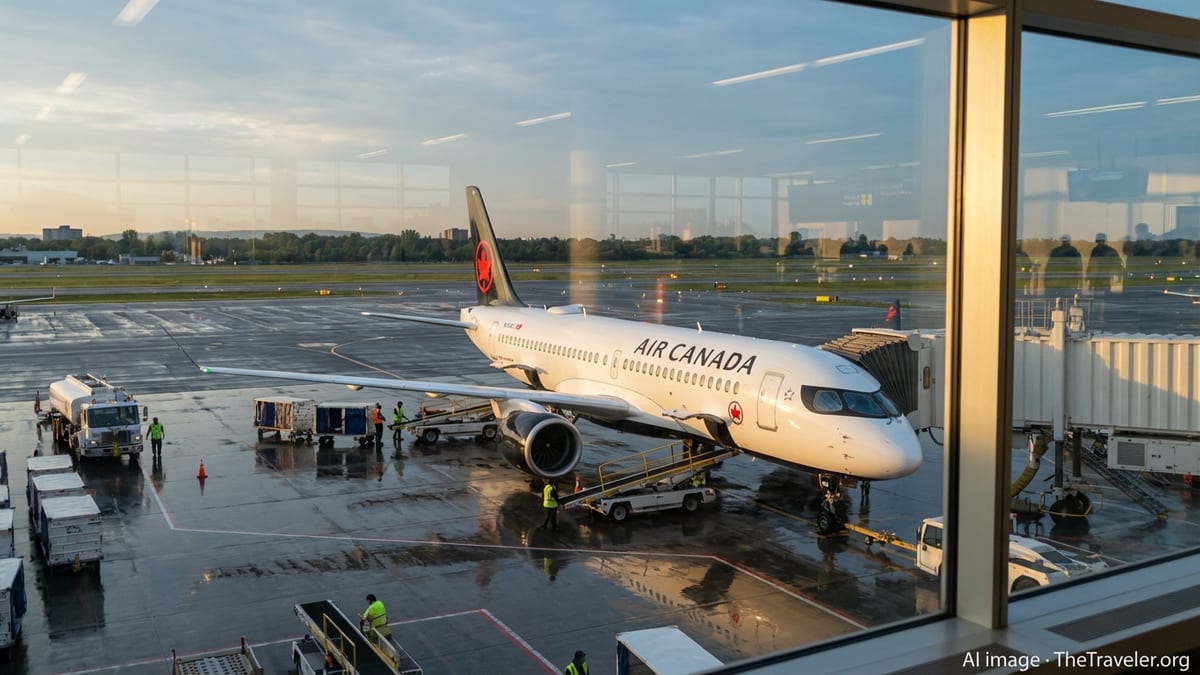
The route will be operated with Airbus A220-300 aircraft, Air Canada’s new-generation narrowbody that has become a workhorse on key transcontinental and medium-haul international routes. The A220 is known for its quieter cabin, larger windows and improved fuel efficiency, features that are expected to appeal to both leisure travelers seeking comfort on a six-hour flight and business passengers who value a modern onboard environment. The aircraft configuration typically includes both a premium cabin and standard economy seating.
Onboard, passengers can expect Air Canada’s latest inflight product for medium-haul markets. The airline highlights complimentary inflight entertainment at every seat, including a wide catalog of films, television programming and music, alongside power outlets and USB ports for device charging. Aeroplan members benefit from fast, free Wi-Fi on this route, signaling Air Canada’s push to make connectivity a standard part of its offering on more international services. Complimentary beer, wine and Canadian snacks are also part of the service profile, aligning the Guadalajara flights with the carrier’s broader transborder and sun-destination standards.
The timing of the flights has been designed to provide workable connections at both ends. In Montréal, afternoon departure and mid-afternoon arrival windows are aligned with onward links across eastern Canada and onward transatlantic services. In Guadalajara, morning departures and late-evening arrivals mesh with domestic Mexican connections, as well as ground transport feeding into the wider metropolitan region of more than five million residents.
What This Means for Travelers in Montréal and Quebec
For travelers based in Montréal and across Quebec, the new route removes long-standing friction in reaching western Mexico. Until now, many passengers bound for Guadalajara and surrounding regions have opted for itineraries involving connections in Toronto, U.S. hubs such as Dallas, or Mexico City, adding time and complexity to their journeys. By offering a direct, year-round service, Air Canada effectively turns Guadalajara into a single-hop destination from Québec’s largest city.
The convenience factor is expected to resonate strongly with Quebec’s sizeable Mexican community and families who travel regularly between the two countries. Direct flights will not only shorten travel times but also simplify baggage handling and reduce the risk of missed connections, key concerns for travelers moving with children, gifts and personal effects. The schedule, split between early-morning northbound and early-evening southbound operations, also helps align with typical family travel routines.
Leisure travelers stand to gain from easier access to Jalisco’s beaches and highland towns, which are increasingly popular with Canadian visitors looking for alternatives to the traditional resort hubs around Cancún and Puerto Vallarta. Guadalajara itself is increasingly marketed as a destination for food, history and arts, with its colonial center, mariachi heritage and proximity to the agave landscapes of Tequila. A non-stop option from Montréal could help spread Canadian visitor flows more evenly across Mexico, easing pressure on classic resort corridors while encouraging more in-depth cultural travel.
For frequent flyers and corporate travelers, the route also enhances Air Canada’s network value proposition. Montréal is one of the carrier’s three global hubs, and integrating Guadalajara into that system allows Quebec-based businesses to tap into a new axis to Mexico that does not require doubling back through Toronto or relying on partners via the United States. With Aeroplan earning and redemption available on the route, loyalty members gain another international destination that can be woven into multi-stop itineraries.
Guadalajara’s Rising Profile as a Business and Cultural Hub
Guadalajara’s selection as Air Canada’s next Mexican gateway is not accidental. The city has emerged as a major technology and manufacturing center, sometimes dubbed the Silicon Valley of Mexico thanks to its cluster of electronics, IT and startup companies. For Canadian firms in sectors such as aerospace, automotive components, software development and agrifood, the new non-stop flights open a more direct line to partners, suppliers and customers across western Mexico.
The region’s industrial strength is matched by its cultural influence. Guadalajara is renowned for its vibrant arts scene, historic architecture and festivals, including its internationally recognized film festival and book fair. It is also a launchpad for exploring Jalisco’s traditional heartlands, from mariachi performances in nearby towns to excursions into the agave fields and distilleries that underpin Mexico’s tequila industry. By connecting Montréal to this multifaceted destination, Air Canada is tapping demand for travel that blends business, culture and leisure.
The route could also be especially attractive for students and academics. Both Montréal and Guadalajara have large university and research communities, and the new corridor creates opportunities for exchange programs, joint research projects and academic conferences that can move participants more freely between the two cities. With universities in Montréal already cultivating Spanish-language and Latin American studies programs, and Mexican institutions seeking stronger North American links, the availability of a direct flight may catalyze new partnerships.
On the tourism front, regional tourism boards are expected to promote the service as a two-way opportunity. For Mexican travelers, Montréal’s festivals, culinary scene and gateway role to Quebec’s landscapes offer a compelling counterpoint to more familiar U.S. destinations. Direct flights may encourage more Mexican visitors to consider Canada for cultural and summer tourism, not just winter ski trips and business travel.
Strengthening Trade and Cargo Links Between Two Key Economies
Beyond passenger traffic, Air Canada’s Montréal–Guadalajara route has clear implications for freight and trade. The airline has emphasized that the expansion of its Mexico network supports Canada’s broader trade diversification efforts, particularly at a time when policymakers are encouraging exporters to look beyond the United States. Guadalajara’s role as a logistics node for automotive, electronics and agricultural goods makes it a logical target for enhanced cargo capacity.
By using the Airbus A220 on a regular, year-round basis, Air Canada can offer belly cargo space on each flight, supporting shipments ranging from high-value manufactured components to perishable products. For Quebec exporters, this opens a more direct path into western Mexico’s supply chains and consumer markets. Conversely, Mexican producers gain a streamlined route into eastern Canada for goods such as fresh produce, beverages and specialty food products destined for Montréal’s ports, distribution centers and restaurant scene.
The route is also expected to complement existing trade flows facilitated through other Mexican gateways. Montréal already has strong air and sea connections to Mexico’s eastern and central regions. Adding Guadalajara provides a more balanced geographic spread, reducing the need to truck goods long distances within Mexico to reach an appropriate export point. In turn, this may reduce transit times and logistics costs for businesses on both sides of the border.
Air Canada’s strategy aligns with government-to-government efforts to deepen commercial ties under the framework of North American trade agreements. As officials in Ottawa and Mexico City advocate for closer cooperation in areas such as clean technology, agrifood, and advanced manufacturing, the availability of new non-stop air connectivity offers a concrete, operational platform on which those ambitions can be realized.
Network Expansion and Competitive Landscape
The launch of Montréal–Guadalajara comes as Air Canada accelerates its pivot toward Mexico and Latin America. For summer 2026, the airline plans to operate ten daily flights from its hubs in Montréal, Toronto and Vancouver to five Mexican destinations, reflecting an 18 percent increase in seat capacity compared with the previous summer. In addition to the new route, frequencies will rise on Montréal–Cancún, Toronto–Monterrey, Vancouver–Mexico City and Vancouver–Puerto Vallarta, consolidating Air Canada’s position as a major player in Canada–Mexico air travel.
This growth also unfolds against a dynamic competitive backdrop. Other Canadian carriers have been re-evaluating their U.S. and Caribbean portfolios, with some reducing transborder services and shifting aircraft into sun and leisure markets where demand remains resilient. In the Montréal–Guadalajara corridor specifically, travelers have already seen seasonal non-stop options offered by leisure-focused airlines, while a web of one-stop itineraries through North American hubs continues to provide alternatives.
By opting for a year-round service rather than a purely seasonal winter schedule, Air Canada is signaling confidence that demand in this corridor will not be confined to peak holiday periods. The carrier’s Star Alliance membership also gives it an additional advantage, enabling onward connections and through-ticketing with partner airlines for passengers continuing deeper into Mexico or onward to other Latin American destinations, subject to alliance and code-share arrangements.
Industry analysts note that as Canada’s demographic profile evolves, with growing Latin American communities in major cities, routes such as Montréal–Guadalajara may become foundational rather than niche. For Air Canada, early investment in building brand recognition and schedule reliability on the corridor could pay dividends in loyalty and market share over the medium term.
Practical Tips for Booking and Flying the New Route
With sales expected to open well ahead of the June 2026 launch, prospective passengers will want to pay close attention to how Air Canada prices the new Montréal–Guadalajara service, particularly in its first operating season. New routes sometimes come with introductory fares, while demand patterns are still forming. Flexible travelers who can choose among the three weekly departure days may find better availability or lower prices on off-peak dates, especially outside major holiday periods in Canada and Mexico.
For those planning connections, it will be important to build in adequate time at Montréal–Trudeau, especially if arriving from domestic feeder flights in winter months when weather disruptions are more common. Air Canada’s afternoon southbound departure gives a cushion for morning arrivals from cities across Quebec and Atlantic Canada, but passengers should still allow for potential delays. On the northbound leg from Guadalajara, the early morning departure supports same-day onward travel across eastern Canada and select European destinations.
Travelers should also consider seasonal factors when planning trips. Summer flights from Montréal coincide with the rainy season in parts of western Mexico, which can bring brief but intense storms, while winter months in Quebec can challenge airport operations with snow and ice. Although the A220 is well suited to varying conditions, building flexibility into itineraries and closely monitoring airline communications remains advisable.
From a documentation and entry perspective, Canadian citizens traveling to Mexico must ensure their passports are valid for the required period, and should review current entry requirements and tourism policies before travel. Mexican visitors to Canada similarly need to confirm visa, eTA or other entry regulations in effect at the time of travel. With governments periodically adjusting border rules, particularly in response to broader geopolitical or public health trends, staying informed will be crucial for passengers taking advantage of this new direct link.