

More news on this day
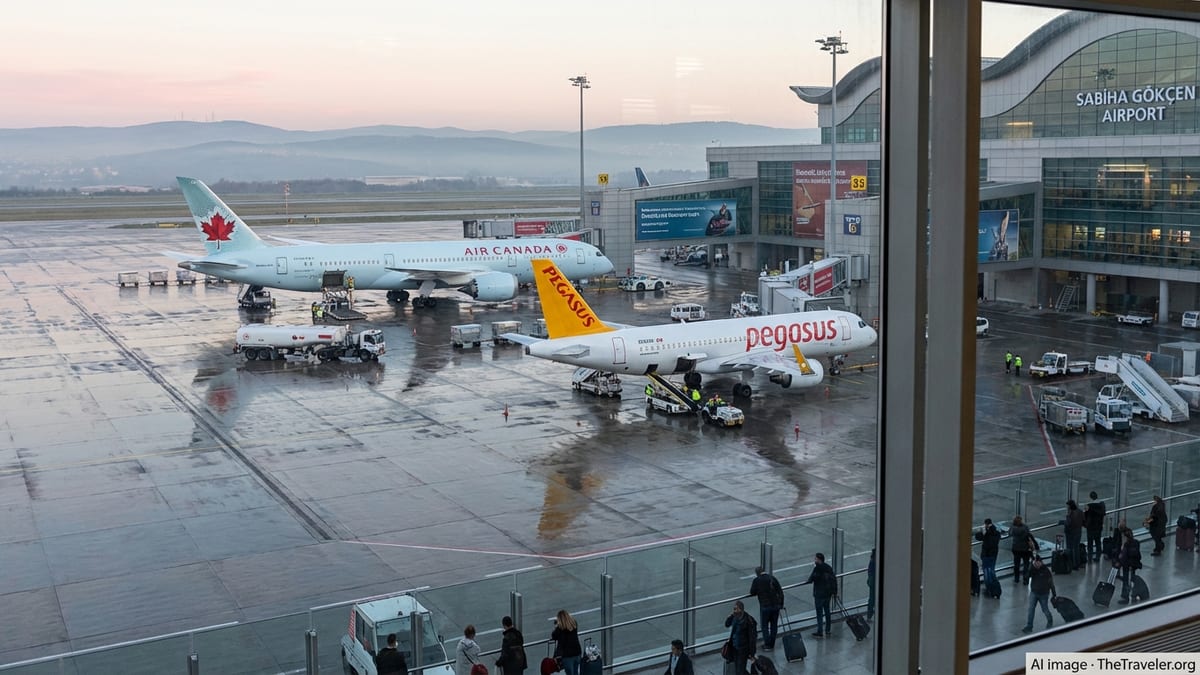
Air Canada has moved to deepen its footprint in Türkiye, unveiling a new partnership with low-cost carrier Pegasus Airlines that gives Canadian travelers streamlined, one-ticket access to Istanbul, Izmir and a growing network of destinations across the country via key European hubs.
A Strategic Push Into a Fast-Growing Market
Announced on February 19, 2026, the agreement between Air Canada and Pegasus Airlines is structured as an interline partnership, allowing both carriers to sell connecting itineraries that combine their flights on a single ticket. For Air Canada, it is a targeted move into one of the world’s most dynamic aviation markets, at a time when demand between Canada and Türkiye is steadily rising.
The deal immediately unlocks new itineraries for customers flying between Canada and Türkiye, without adding an additional long-haul route to Air Canada’s own network. Instead, the Canadian flag carrier will rely on Pegasus’s extensive operations at Istanbul Sabiha Gökçen International Airport on the Asian side of the city, as well as its growing presence in coastal centers such as Izmir.
Air Canada executives framed the agreement as part of a broader strategy to bolster global connectivity through selective partnerships. By tapping into Pegasus’s dense regional network, Air Canada gains relevance in a market where leisure and visiting-friends-and-relatives traffic has been expanding, while Turkish authorities have signaled their support for more air links through liberalized air transport agreements.
For Pegasus, the tie-up is another step in a years-long effort to position itself as a key connector between Europe and Türkiye, and increasingly between Türkiye and the wider Middle East and North Africa region. By partnering with a major North American carrier, it stands to capture new flows of transatlantic traffic that previously might have bypassed its Istanbul hub.
New One-Stop Routes via Major European Gateways
Under the agreement, Air Canada customers will be able to book travel on nine Pegasus-operated routes, connecting through some of Air Canada’s core European gateways. From cities such as Amsterdam, Frankfurt, Copenhagen, Munich, Geneva, Vienna, Zurich and Athens, travelers will gain convenient same-day connections to Istanbul Sabiha Gökçen, with Frankfurt also providing access to Izmir Adnan Menderes Airport.
These new options are designed to dovetail with Air Canada’s transatlantic schedule, allowing passengers to depart Canada on Air Canada metal, transit a familiar European hub, and continue onward on a Pegasus flight under a single booking. For many travelers, this will reduce the need to self-connect using separate tickets when heading to secondary Turkish cities or to Istanbul’s alternative airport on the Asian side.
The network design reflects the importance of large Star Alliance-linked hubs such as Frankfurt, Munich and Zurich in Air Canada’s European strategy, while also leveraging strong point-to-point demand via Amsterdam and Athens. For Pegasus, the partnership is an opportunity to add fresh feed from North America into its existing bank of flights at Sabiha Gökçen and Izmir.
By starting with a relatively small but focused list of nine routes, both airlines can test demand patterns, optimize schedules and iron out operational issues before potentially extending the agreement to additional destinations across Pegasus’s 150-plus route network.
What the Partnership Means for Travelers
For passengers, the most immediate benefits of the Air Canada and Pegasus alignment will be simplicity and predictability. The interline arrangement allows customers to travel on a single itinerary, check bags through to their final destination and be covered by standard protections in the event of missed connections or schedule disruptions.
That represents a significant upgrade from the current reality for many travelers heading from Canada to Türkiye’s secondary cities, who often rely on separate tickets across different carriers to piece together one-stop journeys via Europe. A through-ticket reduces the risk associated with tight connections and removes the need to re-check luggage mid-journey.
The partnership will be especially attractive to Canadian travelers visiting friends and family in regional centers or coastal resorts around the Aegean. By opening a new route to Izmir via Frankfurt and providing seamless access to Istanbul Sabiha Gökçen, Air Canada enables smoother travel to western Türkiye’s beaches, historic sites and fast-growing urban areas.
Business travelers also stand to gain. Türkiye has become a more important commercial partner for Canada, and greater connectivity supports trade missions, investment delegations and corporate travel. The ability to reach Istanbul’s Asian-side airport is particularly relevant for travelers doing business in the city’s technology, industrial and logistics corridors, where Sabiha Gökçen is often the more convenient gateway.
From Interline Beginnings to Potential Codeshare and Loyalty Ties
While the partnership launches as a straightforward interline agreement, both airlines have signaled that they see it as a foundation for deeper cooperation. Air Canada and Pegasus have stated publicly that they intend to explore a full codeshare arrangement, which would allow each carrier to place its own flight code on selected services operated by the other.
Such a shift would represent a significant step forward, integrating Pegasus routes more fully into Air Canada’s booking channels and schedules. If implemented, Air Canada could sell Pegasus-operated flights under its own code, making Turkish destinations appear more prominently when travelers search for itineraries from Canadian cities.
The two airlines are also studying options for reciprocal loyalty benefits, which would add an additional layer of appeal for frequent flyers. For Air Canada’s Aeroplan members, that could eventually mean earning and redeeming points on Pegasus-operated segments, and potentially accessing priority services or extra benefits when flying on the Turkish carrier’s network.
For Pegasus, which has invested heavily in digital tools and customer experience, aligning with a large global loyalty ecosystem would be an opportunity to introduce its brand to higher-yield customers who may be less familiar with low-cost carriers in Türkiye but are accustomed to leveraging points and status in their travel planning.
Positioning Against Other Canada–Türkiye Links
The Air Canada and Pegasus pact arrives as competition on Canada–Türkiye routes intensifies. Turkish Airlines already operates direct flights from Canadian gateways including Toronto, Montreal and Vancouver, with onward connections through its main hub at Istanbul Airport, while other Canadian carriers have also begun building their own bridgeheads into the Turkish market.
In late 2025, Air Transat, another Montreal-based carrier, expanded its cooperation with Turkish Airlines, combining interline and codeshare agreements to offer more seamless itineraries between Canada, Türkiye and onward destinations across Europe, Asia and the Middle East. That deal bolstered Turkish Airlines’ position as a major connector for Canadian passengers heading toward a wide swath of long-haul markets.
Against this backdrop, Air Canada’s decision to work with Pegasus can be read as a differentiating move. Rather than partnering with the country’s full-service flag carrier, Air Canada is tapping into a nimble low-cost operator that focuses heavily on point-to-point connectivity through Sabiha Gökçen and regional Turkish airports. This gives Air Canada a distinct product to offer, especially for travelers bound for Istanbul’s Asian suburbs or western coastal regions.
The partnership also underscores how competitive dynamics in global aviation increasingly revolve around network design and alliances rather than simply the number of non-stop flights. By stitching together their schedules and sales platforms, Air Canada and Pegasus are aiming to compete on connectivity and convenience, even if they do not overlap on a single long-haul route.
Boost for Tourism and Diaspora Travel
Tourism officials in both countries are likely to welcome the announcement, which could make it easier for visitors to move beyond the most obvious gateways and explore more of Türkiye’s diverse regions. Easier access to Izmir, for example, positions Canadian travelers closer to UNESCO-listed sites such as Ephesus, as well as resort towns along the Aegean coast.
The partnership may also stimulate demand outside of peak summer months. With Pegasus offering a wide range of year-round domestic routes, Canadian visitors can connect to winter city breaks in Istanbul or Izmir, as well as cultural and culinary tourism in inland Anatolian destinations, using Sabiha Gökçen as a convenient transfer point.
For the sizeable Turkish diaspora in Canada, the ability to reach home regions with fewer travel hurdles is another major benefit. When bookings are available on a single ticket through Air Canada’s channels, families based in cities such as Toronto, Montreal and Vancouver can more easily connect to relatives in western and central Türkiye without spending additional time or money on complex self-connecting itineraries.
As visa processes and border formalities continue to normalize following recent years of disruption, policymakers in both Ottawa and Ankara have pointed to air connectivity as a key enabler of people-to-people ties. Enhanced airline cooperation feeds directly into that objective by making visits more accessible and predictable.
Pegasus’s Expanding Role in Regional Connectivity
The deal also highlights the growing international profile of Pegasus Airlines. Once a purely charter-focused operator, Pegasus has evolved into a major low-cost carrier with a network that now spans more than 150 destinations in over 50 countries. Its main base at Istanbul Sabiha Gökçen has emerged as a powerful alternative hub for travelers seeking efficient, competitively priced connections across Europe, the Middle East and North Africa.
In recent years Pegasus has signed a series of partnership agreements with European legacy carriers to extend its reach and diversify its customer base. These arrangements position Pegasus as a versatile partner for airlines looking to plug into Türkiye’s domestic and regional markets without building their own local networks from scratch.
The collaboration with Air Canada aligns with that strategy, opening a new transatlantic dimension to Pegasus’s partnership portfolio. It also underscores the airline’s continued investment in digital tools and operational efficiency, including initiatives that use artificial intelligence to improve customer service and manage complex schedules across its busy network.
As more global carriers look to low-cost and hybrid partners to expand their reach in key regions, Pegasus’s role as a bridge between full-service airlines and price-sensitive travelers is likely to grow. The Air Canada agreement is a clear example of how such relationships can unlock new markets without the need for significant capital outlays on additional widebody aircraft.
What Comes Next for Canada–Türkiye Air Links
Industry observers will be watching closely to see how quickly Air Canada and Pegasus move from their initial interline cooperation to broader forms of collaboration. The transition to codeshare and loyalty integration typically requires regulatory approvals, technical alignment and commercial negotiations, but both airlines have indicated that they view those steps as the logical next phase.
In the meantime, the partnership adds another layer to a rapidly evolving Canada–Türkiye aviation landscape. With multiple carriers now vying to serve travelers between the two countries, passengers are likely to see more options, sharper competition on fares and an increasing variety of routing choices over different European hubs.
The move also dovetails with Canada’s policy of expanding international air transport agreements to open more capacity and encourage competition on key routes. By pairing that more flexible regulatory environment with targeted airline partnerships, carriers such as Air Canada can respond quickly to shifts in demand and open up new corridors for both tourism and trade.
For travelers planning trips in the coming seasons, the new Air Canada and Pegasus link will be another option to weigh. As schedules are loaded and booking channels are updated, the practical test will be whether the partnership delivers on its promise of smoother, more convenient access to Istanbul, Izmir and beyond, and whether it prompts further innovation in how Canadian airlines connect with Türkiye and the wider region.