

More news on this day
A binding arbitration ruling that delivers first-year wage increases of up to 13 percent for more than 10,000 Air Canada cabin crew is restoring much-needed stability to Canada and United States aviation after months of strike disruption, grounded fleets and mounting concern over the reliability of one of North America’s most important cross-border carriers.
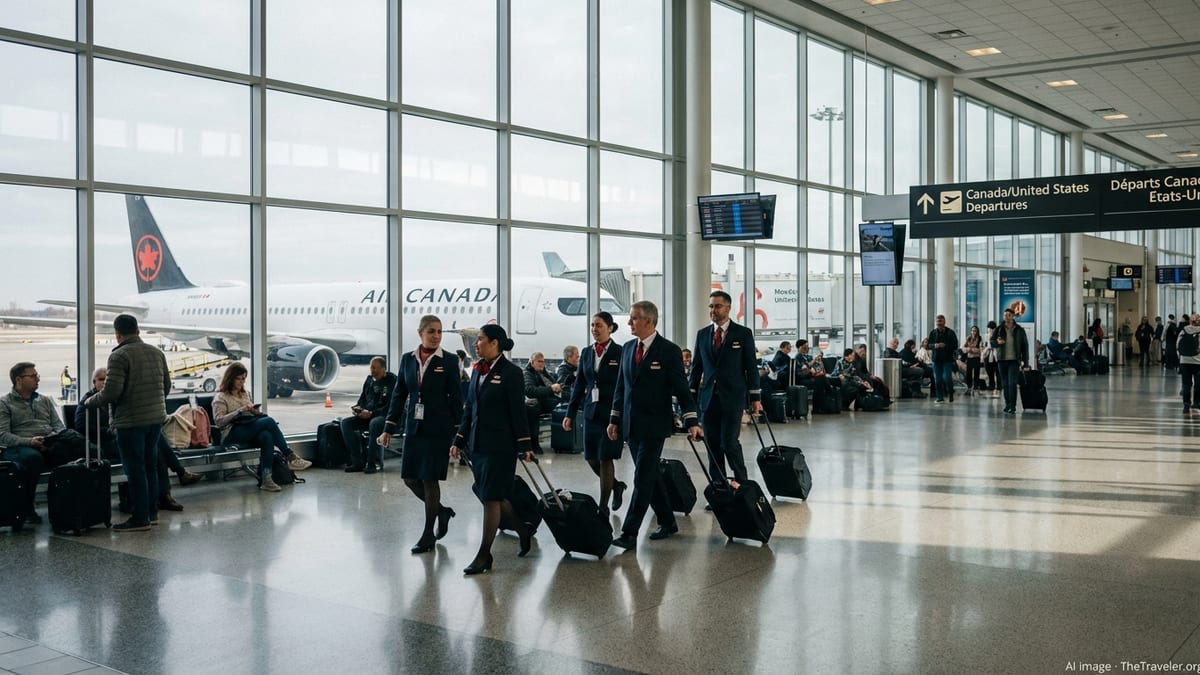
Arbitration Ruling Caps Months of Turbulence
The decision, issued on February 18, 2026 by an arbitrator appointed under federal authority, settles the wage component of Air Canada’s bitter dispute with the Air Canada component of the Canadian Union of Public Employees, which represents the airline’s mainline and Rouge flight attendants. The ruling confirms a wage framework that had been tentatively agreed last year but overwhelmingly rejected by union members over pay, triggering a strike that rippled through the Canadian and US aviation systems.
Under the award, most junior mainline flight attendants will receive a 12 percent salary increase in the first year of the contract, while more senior mainline crew obtain an eight percent rise. Cabin crew at Air Canada Rouge, the airline’s low-cost subsidiary that operates a dense schedule of transborder and leisure routes, will see their first-year raise lifted to 13 percent, one percentage point higher than in the original tentative deal. Subsequent general wage increases of 3 percent, 2.5 percent and 2.75 percent are scheduled annually through April 2028.
The four-year agreement runs retroactively from April 1, 2025 until March 2029 and is designed to provide a predictable wage path in an industry where recruitment and retention pressures have intensified since the pandemic. While the union stressed it had sought a larger adjustment to address what it calls “poverty wages” and unpaid ground duties, the award removes the immediate threat of further labour disruption that had weighed heavily on passengers and the wider travel sector.
The arbitration outcome follows a tumultuous period in mid-2025, when flight attendants launched strike action after bargaining talks collapsed following nine months of negotiations. The walkout forced Air Canada to suspend hundreds of flights and temporarily halt all operations on some days, stranding travelers across Canada, the United States and abroad and prompting an extraordinary intervention from the federal government to compel final binding arbitration.
How a Strike at One Carrier Shook North American Travel
Although Air Canada is a single airline, its role as the dominant Canadian carrier and a major operator on cross-border routes meant that labour unrest quickly spilled beyond national borders. At the peak of the strike in August 2025, the airline canceled more than 700 flights in a single day and later suspended all operations for a period, affecting an estimated hundreds of thousands of passengers. Many of those travelers were bound for or transiting through the United States on key corridors such as Toronto–New York, Vancouver–Los Angeles and Montreal–Chicago.
The disruption reverberated through partner airlines and airport hubs on both sides of the border. Codeshare and Star Alliance partners that rely on Air Canada feed at major US gateways were forced to rebook or reroute customers, while ground handlers, caterers and regional operators saw knock-on operational and financial strain. Airports from Newark and LaGuardia to San Francisco reported crowded customer service lines and elevated rebooking volumes as passengers scrambled to piece together alternative itineraries.
For Canadian travelers headed to US destinations, options were quickly constrained. Seats on rival carriers filled up, fares climbed and some routes saw dramatically reduced connectivity, especially for smaller cities that depend on Air Canada’s network to access US hubs. Business travelers complained of missed meetings and conferences, while tourism operators in both countries reported cancellations and shortened stays as visitors abandoned or scaled back trips.
The turmoil also raised broader questions about the resilience of North America’s aviation system in the face of labour disputes at a single major carrier. Industry analysts noted that the concentration of cross-border capacity among a handful of airlines leaves the system vulnerable when one operator is knocked offline, especially during peak travel periods or in regions with few alternative carriers.
Federal Intervention and the Road to Binding Arbitration
The path to this week’s arbitration ruling began in earnest when the strike triggered decisive federal action in August 2025. Within hours of the walkout escalating and Air Canada grounding its fleet, Labour Minister Patty Hajdu invoked provisions of the Canada Labour Code that allowed the government to refer the dispute to the Canada Industrial Relations Board for final binding interest arbitration, citing serious economic and social impacts on Canadians.
The board ordered Air Canada and all cabin crew, including those at Rouge, to resume operations on August 17, 2025, effectively ending the strike while leaving key issues, especially wages and unpaid ground time, to be settled through the arbitration process. At the same time, the board extended the previous collective agreement, which had expired March 31, 2025, until a new contract could be finalized, guaranteeing continuity of terms while the parties awaited a ruling.
Even after operations resumed, the dispute remained highly charged. In September 2025, flight attendants voted by more than 99 percent to reject the wage offer contained in a tentative agreement that otherwise addressed pensions, benefits, vacation and rest provisions. The union argued that the proposed wage path failed to compensate for years of rising living costs and did not adequately value the safety-critical responsibilities of cabin crew, particularly in light of increased workloads and volatile schedules.
Recognizing that talks on pay were deadlocked, both the company and the union agreed to refer the wage portion specifically to mediation and, if that failed, to arbitration. Mediation did not deliver a breakthrough. The issue then moved to the arbitrator, who has now delivered a ruling that largely preserves the wage pattern originally negotiated but modestly enhances the first-year increase for Rouge crews in order, the award notes, to keep them within the “normative range” of comparable Canadian airlines.
What the Pay Award Delivers to Cabin Crew
The arbitrator’s decision sets out a tiered wage framework that differentiates between junior and senior mainline flight attendants while placing Rouge crews on a uniform increase schedule. On April 1, 2025, junior mainline cabin crew from steps one to nine on the wage grid receive a 12 percent raise, while more senior mainline attendants on higher steps receive 8 percent. Rouge attendants across all steps receive a 13 percent boost, reflecting an explicit effort to prevent their pay from lagging behind peers at other carriers.
On April 1, 2026, wages for both mainline and Rouge are slated to rise a further 3 percent. In 2027, the general increase will be 2.5 percent, followed by 2.75 percent in 2028. Over the life of the agreement, these compounded increases, combined with new ground pay provisions, are expected to lift overall compensation by significantly more than the headline percentages suggest, particularly for those who fly frequent multi-leg domestic and transborder rotations where unpaid work had been a longstanding grievance.
A separate but related element addresses compensation for time on the ground. Historically, Air Canada flight attendants, like many in the industry, were not fully paid for pre-departure duties such as boarding, safety preparations and turnaround tasks when aircraft were not in motion. Under the new framework, crews will receive a portion of their hourly rate for specified ground time on narrow-body and wide-body aircraft, with that share increasing in stages through 2028. The company has said this feature represents, on average, more than 7 percent in additional wages in the first year, though actual gains will vary by schedule.
Beyond wages, the broader collective agreement, which the arbitrator took into account when assessing the reasonableness of pay rates, includes improvements to pensions, health benefits, vacation entitlements and layover rest rules. For example, rest periods on layovers will now hinge on the time cabin crew receive their hotel room keys rather than flight check-out times, a change intended to ensure a minimum rest window regardless of delays or ground handling bottlenecks.
Union Frustration and Ongoing Concerns
Despite the substantial first-year increases, the Air Canada component of CUPE has been explicit that it is “disappointed” with the arbitration outcome. Union leaders say the award falls short of delivering the transformative cost-of-living catch-up they sought and does not fully resolve what they characterize as systemic underpayment for ground duties and non-flight tasks that are essential to passenger safety and service.
In communications to members following the ruling, union representatives emphasized that the wage rates were imposed rather than freely negotiated, underlining their longstanding concern that binding arbitration tends to favor wage patterns already established in the sector rather than fully reflecting workers’ leverage or public support. They argue that the arbitrator placed excessive weight on comparability with other Canadian airlines and on the suite of non-wage improvements, instead of recognizing what they call a once-in-a-generation opportunity to reset cabin crew pay standards.
There is also apprehension about inflation and housing costs in major base cities such as Toronto, Vancouver and Montreal, where many flight attendants struggle with high rents and variable schedules. While the multi-year increases provide some predictability, union leaders say they will closely monitor real purchasing power over the life of the contract. They have hinted that the next bargaining round, due before 2029, could be contentious if wage gains are eroded by rising living expenses.
At the same time, the union has highlighted partial wins within the broader agreement, including enhancements to pensions, better access to vacation, and improved flow-through opportunities from Rouge to mainline positions without stringent language requirements. These features, they note, will matter for long-term career progression and for newer entrants to the profession, even as debates over pay levels continue.
Air Canada, Regulators and the Case for Stability
For Air Canada’s management, the arbitration ruling provides clarity on labour costs and removes a cloud of uncertainty that had alarmed investors, partners and regulators. The airline had warned that prolonged labour unrest could jeopardize its recovery trajectory following the pandemic and disrupt long-term fleet and network planning, including plans to expand transborder and transatlantic services that rely heavily on stable cabin crew staffing.
Regulators in both Canada and the United States, who must oversee a safe and orderly air transport system, have also welcomed the end of the dispute. During the strike, Transport Canada and the Federal Aviation Administration were closely monitoring operational impacts, particularly as flight cancellations and last-minute schedule changes put pressure on air traffic management, crew duty-time compliance and airport congestion. With a binding agreement now in place, authorities expect a more predictable operating environment heading into the busy spring and summer seasons.
Industry analysts say the settlement illustrates a broader trend of governments stepping in to shield critical transport infrastructure from protracted shutdowns. In this case, Ottawa’s decision to mandate arbitration reflected concerns not only about economic damage inside Canada but also about the integrity of cross-border connectivity with the United States. Business groups and tourism boards on both sides of the border had urged swift resolution, warning that reputational harm from repeated cancellations could push travelers to competing hubs and carriers.
Air Canada has framed the arbitrated outcome as being within the normative range for the North American airline sector, citing competitive pressures and the need to balance fair wages with sustainable ticket pricing. Executives have said they will now focus on operational reliability, customer service improvements and the gradual rebuilding of public trust after a year in which many travelers felt burned by sudden cancellations and limited communication.
Impact on Canada–US Routes and Passenger Confidence
With the wage dispute settled, attention is turning to how quickly Air Canada can restore full reliability on its Canada–US network and whether passengers will return in force. The airline has already resumed a normal schedule following the government-ordered restart in August 2025, but lingering skepticism has persisted among frequent cross-border travelers who experienced repeated disruptions. Travel agencies and corporate travel managers say some clients had temporarily shifted business to US carriers or low-cost competitors during the height of the turmoil.
Early signs suggest that bookings on key transborder routes are strengthening as news of the arbitration ruling circulates and as spring and summer travel planning picks up. Operators of major Canadian gateways such as Toronto Pearson and Vancouver International, along with US hubs including Newark, Chicago O’Hare and San Francisco, report steadier schedules and fewer last-minute cancellations linked to crew availability. That, in turn, is easing pressure on airport customer service desks and baggage systems that were stretched during the strike.
For leisure travelers, especially those planning vacations that combine Canadian and US destinations, the restored stability at Air Canada offers greater confidence in complex itineraries that might involve multiple connections, codeshares and regional links. Tourism boards in destinations from British Columbia and Quebec to Florida and California are hopeful that the resolution will support a rebound in visitor numbers that had been constrained by both pandemic-era restrictions and subsequent labour unrest.
Still, passenger advocates caution that trust, once shaken, can take time to rebuild. They note that while the new contract reduces the risk of sudden strike action for the coming years, other factors such as air traffic control bottlenecks, weather disruptions and aircraft delivery delays can still affect reliability. Many argue that transparent communication, realistic scheduling and meaningful compensation when things go wrong will be critical to convincing travelers that the worst of the turbulence is over.
What the Settlement Signals for North American Aviation
The Air Canada arbitration outcome is being closely watched across the North American airline industry, where labour tensions have been running high as inflation, staffing shortages and shifting travel patterns reshape expectations on both sides of the bargaining table. Major US carriers have recently concluded significant contracts with pilots, mechanics and, in some cases, cabin crew, often featuring double-digit pay increases and quality-of-life improvements similar in spirit to the demands raised by Air Canada flight attendants.
For unions and workers, the award underscores both the potential and the limits of government-mandated arbitration. While it delivered substantial raises and some structural gains on issues like ground pay and rest, it stopped short of the transformational reset some had hoped for. For employers and regulators, the case highlights arbitration as a tool of last resort to prevent disruptions in essential services when negotiations break down, especially in sectors where alternative providers cannot quickly fill the gap.
Travel industry observers say the settlement could serve as a reference point in future contract talks at other Canadian carriers and may influence expectations among cabin crew at US airlines that share routes, alliances and labour market conditions with Air Canada. The emphasis on aligning Rouge wages with comparable airlines, for example, reflects a growing recognition that low-cost subsidiaries must still offer competitive compensation if they are to retain experienced staff and maintain service quality.
Above all, the resolution brings a measure of calm to a cross-border aviation ecosystem that had been buffeted by uncertainty. With a four-year agreement in place, Air Canada, its cabin crew and their passengers can look ahead to a period in which scheduling decisions, fleet investments and travel plans are less likely to be overshadowed by the threat of sudden labour upheaval, even as underlying debates over fair pay and working conditions are sure to continue in the years to come.