

More news on this day
Air Canada has unveiled a new partnership with Türkiye’s Pegasus Airlines that will give travelers in Canada streamlined, one-ticket access to Istanbul and Izmir via major European hubs, marking the carrier’s latest move to deepen its presence in one of the fastest-growing markets for global tourism.
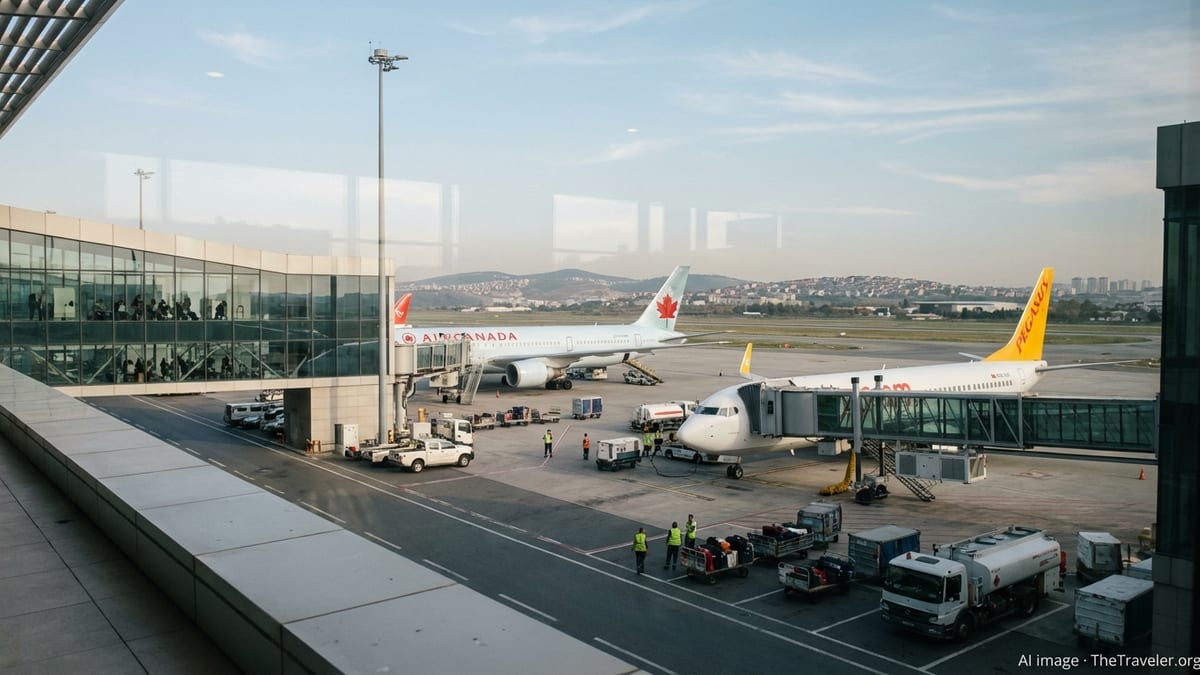
A Strategic New Bridge Between Canada and Türkiye
Announced on February 19, 2026, the agreement between Air Canada and Pegasus Airlines introduces a fresh pathway for Canadian travelers heading to Türkiye’s cultural and economic centers. Built around an interline partnership, the deal allows customers to combine flights on both airlines under a single booking, simplifying journeys that previously required piecemeal ticketing and separate check-in procedures.
The move comes as demand for Türkiye continues to rise among North American travelers drawn to Istanbul’s blend of history and modernity, and to the Aegean coast’s resort cities such as Izmir. For Air Canada, it is a chance to capture more of that demand without immediately adding its own aircraft into the Turkish domestic market, relying instead on a local low-cost leader with deep coverage across the country.
For Pegasus Airlines, the tie-up delivers a stronger foothold in the Canadian market, plugging its Istanbul Sabiha Gökçen hub and Izmir operations into Air Canada’s long-haul network. The partnership underscores how regional carriers are increasingly using interline and codeshare arrangements to extend their reach far beyond their home markets.
Executives on both sides have framed the deal as a foundation that could evolve over time. Alongside the initial interline arrangement, the airlines have signaled a shared intent to explore expanded cooperation, including potential codesharing and reciprocal loyalty benefits as the relationship matures.
How the New Interline Partnership Works
At the heart of the agreement is a classic interline structure that allows travelers to book a single itinerary encompassing Air Canada’s transatlantic legs and Pegasus-operated segments into Türkiye. The key benefit for passengers is simplicity: one ticket, coordinated schedules and through-checked baggage from their Canadian origin to their Turkish destination.
Under the arrangement, Air Canada will carry customers from Canada to a set of European gateways, where they will connect to Pegasus flights bound for Istanbul Sabiha Gökçen International Airport and Izmir Adnan Menderes Airport. The itineraries appear in a single booking path, giving travelers clarity on timings, fares, and connection windows that are designed to be realistic rather than rushed.
The interline model also assigns responsibility more clearly in the event of delays or missed connections. Instead of travelers being forced to negotiate between two unconnected tickets and two separate carriers, Air Canada and Pegasus are expected to coordinate rebooking policies in line with standard interline practices, offering a smoother customer experience during irregular operations.
While interline agreements are less integrated than full codeshares, they are increasingly used as a flexible way to test new market combinations. If demand on these Canada–Türkiye routings grows as anticipated, the structure gives both airlines room to deepen cooperation without starting from scratch.
New One-Stop Routes to Istanbul and Izmir
The launch phase of the partnership focuses on nine Pegasus-operated routes that can now be combined with Air Canada flights. Travelers flying with Air Canada into Amsterdam, Frankfurt, Copenhagen, Munich, Geneva, Vienna, Zurich or Athens will be able to connect onward to Istanbul Sabiha Gökçen, Pegasus’s main hub on the Asian side of the city.
In addition, passengers traveling via Frankfurt will gain access to Pegasus flights serving Izmir Adnan Menderes Airport, the primary aviation gateway to Türkiye’s Aegean coast. This creates a new one-stop option for Canadians looking to reach Izmir and surrounding coastal destinations without transiting through Istanbul’s main airport.
For many Canadian travelers, these routings will feel familiar, as Europe has long served as the main connecting bridge to Türkiye and the broader Eastern Mediterranean. The difference now is that the connection is formally structured between two partner airlines, reducing the need to manually align timetables and independently manage luggage or separate check-ins.
By concentrating traffic through these well-established European gateways, the airlines can tap into existing Air Canada capacity while leveraging Pegasus’s dense regional network. It is a configuration that could prove especially attractive for travelers originating outside Toronto and Montreal, who may already be connecting once within Canada before flying east across the Atlantic.
What Travelers Can Expect From the Experience
For passengers, the most immediate change will be visible at the booking stage. Itineraries combining Air Canada and Pegasus segments will appear as continuous journeys, with pricing and timing displayed together and confirmed in a single transaction. This should make it easier to compare options and avoid the uncertainties that can accompany separate self-connecting tickets.
On travel day, customers will be able to check in with Air Canada at their departure airport and have baggage tagged through to Istanbul Sabiha Gökçen or Izmir, depending on their final destination. That through-check reduces both hassle and risk, particularly when connections are tight or airports are busy during peak seasons.
The onboard experience itself will reflect two distinct brands. Air Canada will operate the long-haul and transatlantic sectors with its familiar cabins and service standards, while Pegasus will handle the European-to-Türkiye legs using its single-aisle fleet optimized for short and medium-haul flying. Travelers connecting via European hubs can expect standard transfer procedures, including security checks where required by local regulations.
Although the initial phase of the partnership does not yet include full reciprocal frequent flyer benefits, both airlines have publicly signaled that they are studying the possibility of deeper loyalty integration. If realized, that could allow members of Air Canada’s Aeroplan program and Pegasus’s customers to earn and potentially redeem miles on select partner flights in the future.
Competitive Context: Canada’s Growing Links With Türkiye
The Air Canada–Pegasus agreement lands at a time when air links between Canada and Türkiye are multiplying. Turkish Airlines, already a long-standing Star Alliance partner of Air Canada, continues to operate nonstop services from major Canadian gateways to Istanbul Airport, while other carriers have been adding capacity and partnerships that tap into Türkiye’s role as a global connecting hub.
In recent years, other Canadian and European airlines have entered interline or codeshare deals with Turkish carriers, allowing them to offer one-ticket journeys that pair North American flights with Turkish domestic and regional services. These arrangements reflect growing two-way demand driven by tourism, business travel and diaspora communities with family and commercial ties spanning both countries.
Against this backdrop, the Air Canada–Pegasus partnership can be seen as a complementary move rather than a direct challenge to existing nonstop offerings. By routing travelers through secondary European hubs and into Istanbul Sabiha Gökçen and Izmir, it adds an additional layer of choice for passengers who may prefer specific connection points or who are seeking flights into airports closer to their final Turkish destinations.
Industry observers note that these kinds of targeted partnerships also give airlines flexibility in how they deploy their fleets. Instead of launching their own services into every promising city pair, carriers can join forces with local specialists whose networks are already well established, balancing risk and reward as they test new flows of traffic.
Implications for Istanbul, Izmir and Regional Tourism
Istanbul and Izmir stand to benefit significantly from the new agreement. Istanbul, straddling Europe and Asia, has become one of the world’s major aviation crossroads, and Sabiha Gökçen on the Asian side plays a crucial role in handling low-cost and regional traffic. The Air Canada–Pegasus link brings more North American travelers directly into that ecosystem, where they can connect to wider domestic and regional networks operated by Pegasus.
Izmir, meanwhile, is poised to gain visibility among Canadian travelers as more than just a domestic Turkish destination. Positioned near popular coastal towns and ancient sites, the city has traditionally drawn visitors from Europe and the Middle East. With an easier one-stop path from Canada via Frankfurt and Pegasus, tourism stakeholders in the Aegean region may see new opportunities to attract long-haul visitors.
Tourism boards and industry partners in Türkiye have been working to diversify their source markets, seeking to reduce reliance on any single region. Expanding access from Canada fits that strategy, particularly as Canadian travelers often stay longer and spend more per trip than the average short-haul visitor from within Europe.
The partnership may also benefit secondary Turkish destinations connected to Istanbul Sabiha Gökçen and Izmir through Pegasus’s broader domestic network. As traveler familiarity grows and more Canadians experiment with itineraries that go beyond Istanbul, there is scope for increased traffic to smaller cities and resort areas reachable via one additional short flight.
From Interline Today to Possible Codeshare Tomorrow
While the new partnership currently operates on an interline basis, both Air Canada and Pegasus have openly discussed the possibility of evolving the relationship into a codeshare arrangement. That would see each airline placing its flight code on selected services operated by the other, deepening commercial and operational integration.
A codeshare could unlock further marketing benefits by allowing Air Canada to sell seats on Pegasus flights under its own code, and vice versa. It would also typically pave the way for expanded loyalty cooperation, enabling frequent flyers to accrue and possibly redeem points more seamlessly across both networks.
However, industry veterans caution that such steps usually come only after airlines have tested the underlying traffic flows and operational compatibility through an interline phase. Performance data from the first seasons of the Canada–Türkiye partnership, including load factors and connection reliability, will likely shape how quickly both sides move toward more advanced forms of cooperation.
For now, the airlines appear content to emphasize the immediate customer-facing benefits of the partnership, while leaving room for gradual expansion if demand and operational results align with expectations.
What This Means for Canadian Travelers Planning 2026 Trips
For Canadians mapping out international travel in 2026 and beyond, the Air Canada–Pegasus linkage adds another option at a time when many are seeking new destinations and more flexible routing choices. It offers a structured way to reach Türkiye’s two key gateways without being tied to a single nonstop corridor or a single major hub airport in Europe.
Travel agents and online booking platforms are expected to integrate the new itineraries into their systems as the partnership goes live, giving customers visibility into the full range of connections and fares. That should make it easier to weigh factors such as total travel time, connection points, arrival airports in Istanbul, and proximity to onward domestic flights or coastal resorts.
The agreement also highlights a broader trend in post-pandemic aviation, where carriers continue to rebuild and refine global networks through targeted alliances rather than large-scale expansion alone. For travelers, that often translates into more route choice and more ways to tailor trips to individual preferences, whether that means arriving closer to family in Izmir, connecting to smaller Turkish cities, or simply choosing a preferred European hub for a layover.
As schedules and booking paths are finalized, Canadian travelers eyeing Türkiye can expect more granular information on flight times, seasonal frequencies and potential loyalty benefits. What is already clear, however, is that the new partnership is set to make Istanbul and Izmir more accessible than ever for those flying out of Canada’s major cities.