

More news on this day
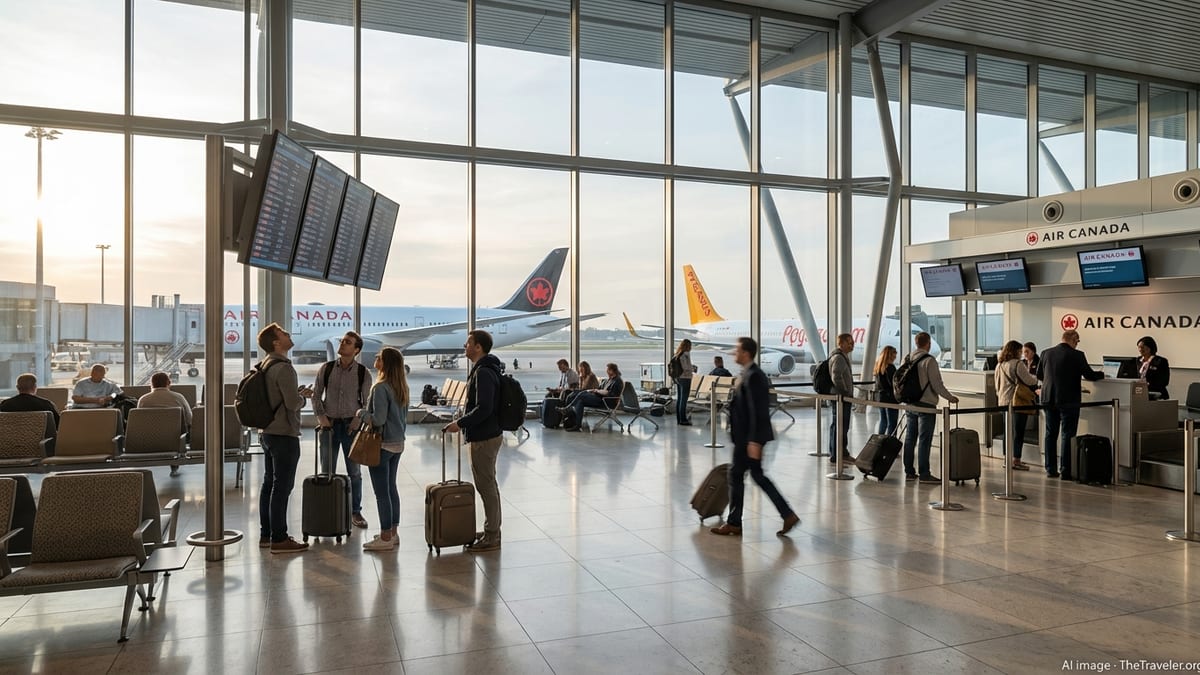
Travel between North America and Turkey is set to become smoother as Air Canada launches a new interline partnership with Turkish low-cost carrier Pegasus Airlines, allowing passengers to reach Istanbul and Izmir on single-ticket itineraries with through-checked bags via major European gateways.
What the Air Canada–Pegasus Partnership Actually Does
Announced on February 19, 2026, the interline agreement between Air Canada and Pegasus Airlines gives travelers new one-stop options into Turkey by combining flights on both carriers under a single itinerary. Rather than booking separate tickets and managing transfers independently in Europe, passengers will be able to purchase one Air Canada-issued ticket that includes onward Pegasus-operated flights into Turkey.
The deal focuses on creating a smoother journey to Istanbul Sabiha Gökçen International Airport on the Asian side of the city and to Izmir Adnan Menderes Airport on Turkey’s Aegean coast. These are two of Pegasus’s key hubs, with extensive domestic and regional connections, and they complement rather than duplicate existing services into Istanbul’s main international hub.
Crucially, the agreement is interline rather than full codeshare at this stage. That means Pegasus flights are combined and ticketed with Air Canada sectors, and baggage can be checked through to the final destination, but each airline continues to operate and market its own flights without sharing flight numbers across the network.
For travelers, the most immediate benefit is practical: they gain access to more Turkish destinations via a familiar North American carrier without the complexity and risk of self-connecting in busy European hubs.
New Routes and European Gateways Into Turkey
The backbone of the partnership is a set of nine Pegasus-operated routes that will be bookable for Air Canada customers as part of their itinerary. These flights connect major European cities served by Air Canada with Pegasus’s bases in Istanbul and Izmir, turning European stopovers into efficient transfer points into Turkey.
Under the agreement, Air Canada passengers arriving in Europe can connect to Pegasus services from Amsterdam, Frankfurt, Copenhagen, Munich, Geneva, Vienna, Zurich and Athens. From those gateways, Pegasus flies to Istanbul Sabiha Gökçen, with an additional Frankfurt to Izmir route feeding the Aegean region. This effectively plugs Air Canada’s long-haul transatlantic network directly into Pegasus’s Turkish operation.
The partnership does not add new nonstops from Canada to Turkey, but it significantly widens the range of one-stop options available to travelers from cities across North America served by Air Canada. For many passengers, especially those outside Toronto or Montreal, that can mean avoiding multiple separate bookings and reducing exposure to delays and misconnections.
Because the European gateways are spread across both central and southern Europe, the agreement also allows passengers to choose routings that fit their schedule and preference, whether that means changing planes in Germany, the Netherlands, Switzerland, Scandinavia or Greece.
How Single-Ticket Itineraries Change the Travel Experience
Single-ticket travel has become a key selling point as airlines rebuild and expand international networks, and the Air Canada–Pegasus interline is designed squarely around that expectation. When travelers book one combined itinerary, they are protected on a single passenger name record, meaning that if delays occur on the first leg, airlines have an obligation to assist with rebooking onward segments.
Another important feature is through-checked baggage. Under the new arrangement, passengers starting in North America will be able to check their luggage at their departure airport and have it tagged all the way to Istanbul or Izmir. This removes the need to collect and re-check bags at the European transfer point, a common pain point for those juggling separate tickets with different airlines.
From an airport experience perspective, the move should make transfers more predictable. Minimum connection times are coordinated between the two carriers, and travelers will receive all boarding passes at check-in whenever possible. For families, older travelers or anyone carrying sports equipment or bulky luggage, the reduction in handling and re-checking can significantly lower stress during transit.
The interline framework also standardizes some customer service responsibilities, so that missed connections caused by an inbound delay are handled within the context of a shared itinerary rather than leaving travelers to negotiate separately with two carriers.
What This Means for Canadian and U.S. Travelers
For passengers based in Canada, the partnership opens more structured options into Turkey beyond existing services via other European or Middle Eastern hubs. Travelers from cities such as Vancouver, Calgary, Ottawa, Halifax or Quebec City can now route through an Air Canada European gateway and on to Pegasus services to reach Istanbul Sabiha Gökçen or Izmir without stitching together multiple airline bookings on their own.
For U.S. travelers who connect through Canadian airports, the impact is similar. Flights into Air Canada’s main hubs, particularly Toronto Pearson and Montreal, can be paired with transatlantic services to Europe and then onward to Turkey on Pegasus. That makes Turkey more accessible from smaller and medium-sized American cities that may not have direct service to European carriers with strong Turkish networks.
The main Turkish arrival points under this agreement are particularly attractive for leisure travelers. Istanbul Sabiha Gökçen has grown as a gateway to both the city itself and to onward domestic flights across Turkey, while Izmir is a primary jumping-off point for resorts and heritage sites along the Aegean coast, including popular destinations such as Çeşme, Kuşadası and the ruins of Ephesus.
Business travelers also benefit from more defined one-stop options into Turkey’s commercial centers without relying solely on traditional full-service carriers. For many corporate travel policies, the added schedule choice on a major North American carrier combined with a reputable low-cost airline partner can translate into cost savings without sacrificing connectivity.
Positioning Against Turkish Airlines and Other Competitors
The agreement with Pegasus comes in a market where Turkish Airlines has long dominated long-haul access to Turkey and beyond. Air Canada already maintains a partnership with Turkish Airlines through Star Alliance, but routing via Istanbul’s main airport tends to funnel traffic through a single mega-hub. By teaming up with Pegasus, Air Canada effectively adds an alternative path into the Turkish market focused on Sabiha Gökçen and Izmir.
Pegasus operates as a low-cost carrier, emphasizing point-to-point traffic and competitive fares, which can position the Air Canada–Pegasus option as a value-oriented alternative to traditional network carriers. For price-sensitive travelers willing to connect in Europe, this can create more flexibility in how they reach Turkey while still enjoying the security of a single itinerary.
The move also aligns with a broader industry trend toward new interline and codeshare combinations that bypass traditional alliances. As airlines seek growth in high-demand leisure markets, they are increasingly open to pairing full-service long-haul operations with low-cost or hybrid carriers in destination regions, as long as operational standards and reliability can be coordinated.
At the same time, Air Canada’s partnership with Pegasus is structured to complement rather than replace existing options via other carriers. For passengers, that means the agreement adds another layer of choice, especially for those who prefer or are required to start their journeys on Air Canada metal from North American cities.
Potential Next Steps: Codeshare and Loyalty Integration
While the current agreement is limited to interline cooperation, both airlines have signaled that they are exploring a future evolution into a full codeshare partnership. A codeshare would allow Air Canada to place its flight number on select Pegasus services and market them more prominently in its schedules and booking channels.
Codesharing could also pave the way for loyalty integration, including reciprocal earning and redemption of points on each other’s flights. For members of Air Canada’s Aeroplan program, the ability to earn points on Pegasus-operated sectors within Turkey, or to redeem points on those flights, would significantly increase the appeal of using the new routes for holiday or business travel.
Any expansion into codeshare territory would require regulatory review and detailed operational alignment, but both sides have indicated that enhanced cooperation across their international networks is on the table. That would deepen Air Canada’s footprint in Turkey while supporting Pegasus’s ambitions to build more long-haul connectivity via European gateways.
For now, travelers should expect the focus to remain on making the interline work reliably, with clear communication around baggage handling, connection times and customer support, while the two carriers evaluate how demand develops on the new flows between North America and Turkey.
How to Book and What Travelers Should Watch For
From the passenger perspective, the new itineraries will be sold through Air Canada’s normal booking channels, including its website, mobile app, call centers and travel agency partners. Customers searching for flights to Istanbul Sabiha Gökçen or Izmir will see options that combine Air Canada and Pegasus flights where schedules line up, marked clearly as operated by Pegasus on the European to Turkey leg.
Because the routes involve a change of aircraft in Europe, travelers should pay close attention to connection times offered at each gateway. While the interline protects passengers in the event of delays, choosing itineraries with comfortable transfer windows in busier airports such as Frankfurt or Amsterdam will help minimize stress and allow for potential security or immigration checks depending on the routing.
Travelers should also note that onboard products will differ between the two airlines. Long-haul transatlantic segments on Air Canada typically feature multiple cabins, including premium economy and business class, while Pegasus, as a low-cost carrier, offers a single-class cabin with optional extras such as seat selection, additional baggage and onboard food and beverage for purchase.
Checking fare rules, baggage allowances and any ancillary charges at the time of booking will help avoid surprises at the airport. Even with through-checked baggage, some ticket types may include only standard luggage, so sports equipment, musical instruments or oversized items may require additional arrangements in advance.
What This Partnership Signals for Turkey as a Destination
The Air Canada–Pegasus tie-up underscores Turkey’s continued rise as both a leisure and business destination for North American travelers. By making it easier to reach Istanbul and Izmir on a single ticket, the partnership supports the country’s tourism ambitions and responds to sustained demand for cultural, coastal and city-break travel.
Istanbul remains one of the world’s most-visited cities, blending historic landmarks with a growing contemporary arts and culinary scene. Sabiha Gökçen’s role as the airport on the Asian side provides convenient access to neighborhoods and business districts beyond the traditional tourist core, as well as to domestic connections deeper into Anatolia.
Izmir, meanwhile, is a strategic addition for the Canadian and North American market. Its position on the Aegean coast makes it a gateway not only to beach resorts but also to historic sites dating back to antiquity. Easier access through structured one-stop itineraries can encourage travelers to explore beyond Istanbul, distributing tourism flows more widely across the country.
As airlines worldwide compete for long-haul leisure traffic, partnerships like the Air Canada–Pegasus interline illustrate how carriers are using collaborative networks to reach secondary cities and emerging hotspots without launching new nonstops from every origin. For travelers planning trips to Turkey in the coming seasons, that translates into more choice, more routing options and a simpler booking experience.