

More news on this day
North American travelers heading to Türkiye will soon find it easier to reach Istanbul, Izmir and the country’s Aegean coast, as Air Canada and Turkish low-cost carrier Pegasus Airlines roll out a new interline partnership that stitches together transatlantic and intra-Europe flights on a single, streamlined itinerary.
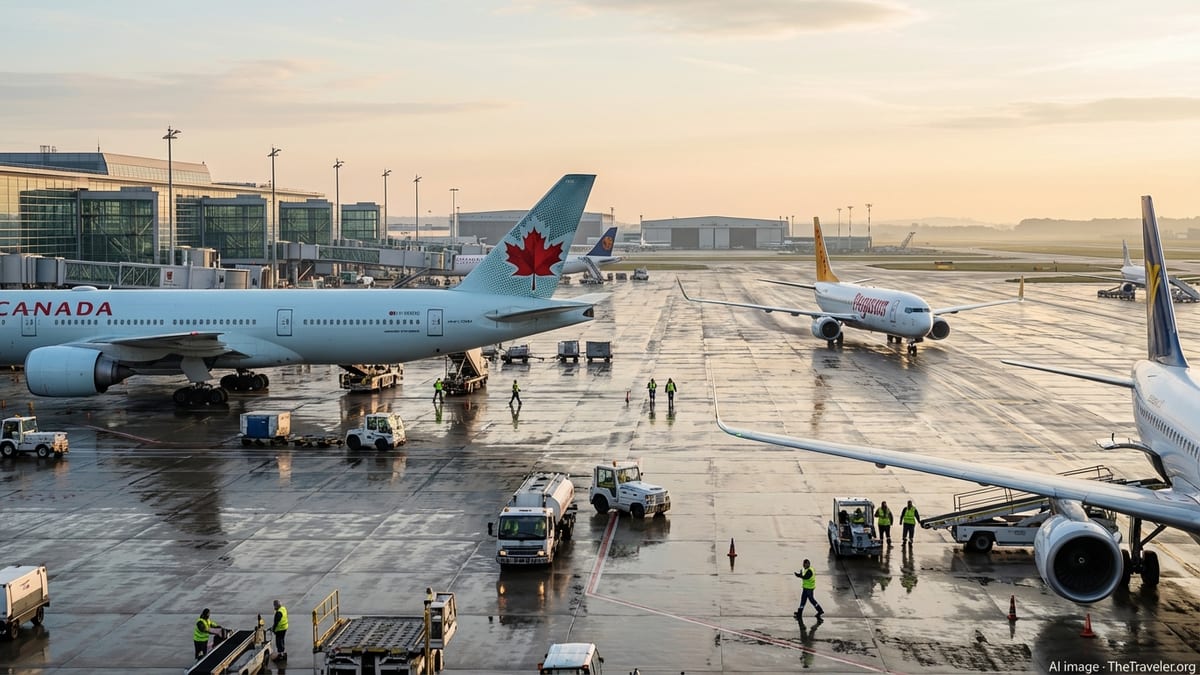
New Partnership Links North America to Türkiye via Europe
Air Canada and Pegasus Airlines have signed a fresh interline agreement that creates a new bridge between North America and Türkiye, routing passengers through eight of Europe’s busiest hubs. Announced on February 19, 2026, the deal allows travelers to combine Air Canada’s long-haul services from Canadian and U.S. cities with Pegasus’s extensive short- and medium-haul network across Türkiye, using just one ticket from origin to final destination.
The agreement initially covers nine Pegasus-operated routes that are now bookable on Air Canada itineraries. These flights link Amsterdam, Frankfurt, Copenhagen, Munich, Geneva, Vienna, Zurich and Athens with Istanbul’s Sabiha Gökçen International Airport on the Asian side of the city, as well as Frankfurt with Izmir’s Adnan Menderes Airport on the Aegean coast. For travelers, it effectively means that a single reservation can carry them from cities such as Toronto, Montreal, Vancouver or New York, via a major European hub, directly into some of Türkiye’s most popular gateways.
While the partnership stops short of a full codeshare at launch, both airlines describe the interline deal as a first phase in deeper cooperation. Executives on both sides have signaled that they are exploring wider collaboration, including reciprocal frequent-flyer benefits and further integration of schedules, which could follow if early demand and operational performance meet expectations.
How the Interline Works: One Ticket, Seamless Connections
At the heart of the new agreement is the interline mechanism, a behind-the-scenes framework that lets airlines sell each other’s flights on a single ticket while coordinating baggage handling and passenger protections. In practical terms, that means a traveler from, say, Calgary to Izmir can book a single Air Canada-issued ticket that includes segments from Calgary to Frankfurt and then onward to Izmir on Pegasus, with through-checked bags and coordinated transfers.
Passengers will check in once, at their original departure airport in North America, and receive boarding passes for all segments when operationally possible. Their luggage is tagged through to Istanbul Sabiha Gökçen or Izmir Adnan Menderes, removing the need to collect and re-check bags during a European layover. If delays or disruptions occur along the way, the interline agreement also provides a framework for the airlines to re-accommodate customers, rather than leave them to sort out missed self-connections on their own.
The partnership is particularly significant because Pegasus operates primarily as a low-cost carrier, a segment where self-connect itineraries booked on separate tickets are common. By formalizing an interline arrangement, Air Canada and Pegasus are effectively taking a model associated with budget airlines and adding a layer of full-service protection and simplicity. This could make Türkiye more accessible for less-experienced travelers who might otherwise hesitate to navigate complex multi-carrier journeys on their own.
Key Routes and Gateways: Where You Can Fly
For the moment, the network unlocked by the interline agreement is tightly focused but strategically chosen. The backbone is Air Canada’s existing transatlantic services into major European gateways such as Amsterdam, Frankfurt, Copenhagen, Munich, Geneva, Vienna, Zurich and Athens. From each of these points, Pegasus operates flights to Istanbul’s Sabiha Gökçen International Airport, one of the country’s fastest-growing hubs and a key base for domestic and regional routes.
Frankfurt plays a dual role under the agreement. In addition to feeding Pegasus services to Istanbul Sabiha Gökçen, it also connects passengers onward to Izmir Adnan Menderes Airport, the primary aviation gateway to Türkiye’s Aegean coast. That direct Frankfurt–Izmir link, when paired with Air Canada long-haul flights, opens up an efficient path for travelers from North America to reach resort towns and coastal cities stretching down the Aegean shoreline.
Industry watchers expect that, if the initial nine routes perform well, additional Pegasus services within Türkiye and to neighboring countries could be added over time. For now, though, the focus is squarely on the Istanbul and Izmir corridors, which already see strong demand from both leisure travelers and members of the Turkish diaspora in Canada and the United States.
Why Istanbul Sabiha Gökçen and Izmir Matter for Travelers
The decision to route most onward flights into Istanbul Sabiha Gökçen, rather than the larger Istanbul Airport on the European side, is driven in part by Pegasus’s own network structure. Sabiha Gökçen is the carrier’s primary base, offering dense connectivity to secondary Turkish cities and holiday destinations that are less accessible from other hubs. For visitors, that translates into relatively short onward hops to cities along the Mediterranean and Aegean coasts, as well as to emerging inland destinations.
Izmir, meanwhile, is a gateway with growing appeal for travelers seeking a more relaxed Aegean atmosphere than Istanbul’s full-throttle energy. Izmir Adnan Menderes Airport sits within easy reach of coastal resorts like Çeşme and Kuşadası, as well as ancient sites such as Ephesus. By linking Frankfurt directly to Izmir within the interline framework, the partnership carves out a more direct path for North American passengers who would otherwise face multi-stop combinations or separate low-cost tickets to reach these areas.
For the Turkish diaspora in Canada and the United States, many of whom have roots outside Istanbul, the new options can shorten journeys back to family hometowns and regional centers. Rather than connecting through a single mega-hub in Europe or relying solely on Istanbul’s main airport before transferring again within Türkiye, passengers can now pivot through a range of European cities and arrive closer to their final destination, often with comparable or shorter total travel times.
What Passengers Gain: Convenience, Flexibility and Pricing
For North American travelers, the most immediate benefits of the Air Canada–Pegasus tie-up are convenience and flexibility. With a single ticket, passengers can access a broader menu of departure times and routing options across the Atlantic, then mix and match those with multiple daily flights from Pegasus on key lanes into Türkiye. That added flexibility can be especially valuable during peak summer travel, when popular nonstop services sell out quickly or command premium fares.
The agreement also brings a more consistent service experience to routes that many travelers previously navigated using a patchwork of separate bookings. Instead of juggling different confirmation numbers, boarding passes and baggage rules, passengers can lean on Air Canada as the primary point of contact for the entire journey. In an era where disruptions caused by weather, air traffic control constraints or labor issues remain a concern, having that single carrier responsible for the itinerary can be a decisive factor for risk-averse travelers.
On the pricing front, analysts expect the partnership to sharpen competition on Canada–Türkiye itineraries, where Turkish Airlines and other European network carriers have long dominated. By combining Air Canada’s transatlantic reach with Pegasus’s low-cost structure, the alliance could produce more competitive fares on certain dates and routes, particularly during shoulder seasons. However, as always, pricing will fluctuate based on demand, seasonality and how aggressively rival airlines respond.
Booking Details, Baggage Rules and Travel Tips
Air Canada is selling the new interline itineraries through its regular distribution channels, including its website, call centers and travel agency partners. When searching for trips from North America to Istanbul or Izmir, customers may see options that include a European city as a transit point and show a Pegasus-operated flight on the final leg. These mixed itineraries will carry an Air Canada ticket number, even though the last segment is operated by Pegasus.
Standard interline practices apply to baggage. In most cases, checked bags are accepted at the original departure airport in North America and tagged to the final destination in Türkiye. Passengers should still verify baggage allowances at the time of booking, as these can vary depending on fare type and cabin class. Cabin baggage rules may also differ slightly between carriers, so packing with the stricter policy in mind can help avoid surprises at the gate.
Travelers are advised to pay close attention to minimum connection times, especially at large European hubs where walking distances between piers can be significant. While the interline agreement includes protections for missed connections within the ticketed itinerary, leaving a generous buffer can reduce stress during peak travel hours. Checking in online as early as possible and familiarizing oneself with the layout of the connecting airport can further smooth the journey.
Strategic Context: Canada–Türkiye Links on the Rise
The move by Air Canada and Pegasus comes as links between Canada and Türkiye deepen, both for tourism and for visiting friends and relatives. Canadian carriers have been gradually expanding their presence in the Turkish market, while Turkish airlines have targeted Canadian cities as part of broader North American growth strategies. The new interline deal positions Air Canada to defend and grow its share of traffic to Türkiye without deploying its own aircraft deeper into the country.
From Pegasus’s perspective, tapping into Air Canada’s transatlantic network extends its reach into markets where it does not operate long-haul aircraft. Rather than launching its own flights to Canada or the United States, the carrier can draw passengers from across North America onto its existing European-to-Türkiye routes, filling seats more efficiently and smoothing seasonal demand swings. It also reinforces Istanbul Sabiha Gökçen’s role as an alternative international gateway to Türkiye.
Aviation observers note that such partnerships have become increasingly common as airlines seek asset-light ways to expand into new markets. For travelers, the result is a growing web of cross-carrier connections that can open up destinations once considered too complex or costly to reach. The Air Canada–Pegasus agreement is the latest example of this trend, focused squarely on one of the Eastern Mediterranean’s most dynamic tourism markets.
What Comes Next for the Air Canada–Pegasus Alliance
Although the agreement currently remains an interline arrangement, both airlines have publicly expressed interest in moving toward a full codeshare in the future. A codeshare would allow each carrier to place its own flight code on select services operated by the other, potentially unlocking more prominent display in booking systems and enabling tighter integration of schedules and fares.
Equally significant for frequent travelers is the possibility of reciprocal loyalty benefits. While details have not yet been finalized, Air Canada has indicated that discussions are underway about recognizing elite perks and earning opportunities across the two networks. If implemented, such enhancements could make the partnership even more attractive to frequent flyers in Canada and among the Turkish diaspora who often travel between North America and secondary cities in Türkiye.
For now, the new interline routes via Europe mark a substantial step in widening access to Türkiye’s largest city and one of its key coastal gateways. As airlines continue to refine their summer schedules and fine-tune capacity in response to demand, travelers eyeing Istanbul’s skyline or Izmir’s waterfront will have an expanded set of options for getting there from North America, all built around a simpler, single-ticket journey.