

More news on this day
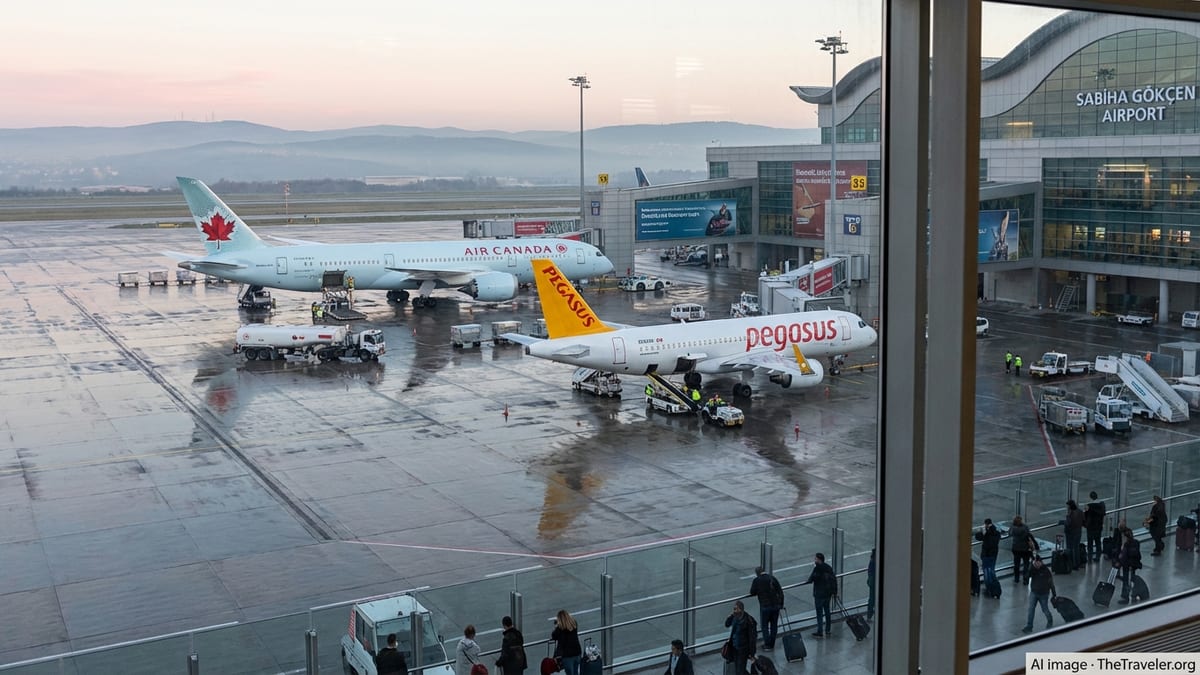
Air Canada and Pegasus Airlines have launched a new partnership designed to make it easier for travelers from Canada and beyond to reach Türkiye’s most sought-after destinations, introducing a slate of new one-ticket connections via key European gateways into Istanbul and Izmir.
New Interline Deal Opens Door to Türkiye’s Hottest Hubs
Announced on February 19, 2026, the interline agreement between Air Canada and Türkiye’s Pegasus Airlines gives passengers streamlined access to Istanbul Sabiha Gökçen International Airport and Izmir Adnan Menderes Airport. The move adds fresh momentum to Canada’s growing air links with Türkiye, a market that has seen rising demand from both leisure and visiting-friends-and-relatives travelers.
The arrangement allows Air Canada customers to book connecting flights operated by Pegasus on a single itinerary, with through check-in and baggage tagged to the final destination. For passengers who previously had to piece together separate tickets on low-cost carriers or navigate complex booking platforms, the new setup is designed to remove friction from the journey.
Both airlines describe the tie-up as a strategic step rather than a one-off convenience. Air Canada is looking to deepen its presence in a market that connects Europe, the Middle East and Asia, while Pegasus gains fresh access to high-yield traffic flowing through Canadian and transatlantic gateways. The partners have signaled that a fuller codeshare and loyalty integration could follow if early results are strong.
The announcement also comes as Türkiye continues to position itself as a year-round tourism and business destination. With Istanbul’s growing status as a global transit hub and the Aegean coast surging in popularity, the partnership is set to give Canadian travelers and transatlantic passengers more ways to tap into that growth.
Nine New Routes Link Air Canada Gateways to Pegasus Network
At launch, the agreement covers nine Pegasus-operated routes that dovetail with Air Canada’s existing transatlantic services. Passengers flying Air Canada into Amsterdam, Frankfurt, Copenhagen, Munich, Geneva, Vienna, Zurich or Athens can now connect onward to Istanbul Sabiha Gökçen on a Pegasus flight issued on the same ticket.
In addition to those Istanbul links, the partnership includes a connection from Frankfurt to Izmir, opening easy access to the Aegean coast for travelers originating in Canada or elsewhere in Air Canada’s long-haul network. With Izmir’s beaches, heritage sites and proximity to resorts such as Çeşme and Kuşadası, tourism authorities have long seen it as a growth market for long-haul visitors.
For Air Canada, the new connectivity effectively broadens its Turkish footprint beyond existing direct services to Istanbul, without committing additional long-haul aircraft. By feeding passengers onto Pegasus’s dense short- and medium-haul network, the carrier can offer more choice to travelers while preserving flexibility in how it deploys its widebody fleet.
Pegasus, in turn, benefits from incremental flows of international passengers connecting from Canada and beyond via European hubs. Those travelers can fan out across Pegasus’s extensive domestic and regional network, which reaches dozens of cities across Türkiye as well as points in Europe, the Middle East and North Africa.
One Itinerary, Smoother Travel and Checked-Through Bags
Beyond the additional route options, the interline agreement is structured to simplify the travel experience for passengers who may be unfamiliar with Türkiye or hesitant to self-connect via Europe. Under the new arrangement, customers can book the entire journey, including the Pegasus leg, in one transaction through Air Canada or a travel agent.
Tickets issued under the partnership also come with through-checked baggage, meaning bags are tagged from the origin airport to the final destination in Türkiye. Travelers no longer need to collect luggage at a European gateway, clear arrivals formalities and then recheck for a separate low-cost flight, a process that can add time, stress and missed-connection risk.
Schedule coordination between Air Canada and Pegasus is designed to keep connection times competitive at European hubs such as Frankfurt, Amsterdam and Munich. While exact minimum connection times will vary by airport, the carriers say they are working to build itineraries that balance convenience with a buffer to minimize disruption from delays.
The single-ticket model also strengthens consumer protection. In the event of a missed connection caused by delays on an Air Canada or Pegasus leg, passengers holding an interline itinerary have clearer recourse to rebooking support than travelers who cobble together separate tickets on their own.
Future Codeshare and Loyalty Tie-Up on the Horizon
While the interline agreement is the first step, both airlines have indicated that they are exploring a deeper partnership that would include a formal codeshare and reciprocal loyalty benefits. A codeshare would allow Air Canada to place its flight numbers on select Pegasus services and vice versa, bringing the Turkish carrier more fully into Air Canada’s global selling and distribution ecosystem.
For frequent flyers, the potential addition of loyalty reciprocity is likely to be among the most closely watched developments. A future phase of the partnership could see Aeroplan members earning points on eligible Pegasus segments booked under the agreement and possibly redeeming points for travel deeper into Türkiye.
Pegasus, which has built a strong following in the Turkish and regional market as a digital-first low-cost carrier, would gain exposure to millions of loyal Air Canada customers. For travelers who prefer to stay within a familiar loyalty scheme when venturing to new destinations, that could tip the balance in favor of Türkiye when planning trips.
The interest in expanding the accord reflects a wider trend across global aviation, where full-service carriers and low-cost operators are finding new ways to cooperate. Rather than seeing each other solely as rivals, many now view carefully structured partnerships as a way to broaden their networks and provide more complete travel solutions.
Strategic Bet on Türkiye’s Growing Tourism and Trade
The new tie-up underscores the importance both airlines place on Türkiye’s tourism and trade potential. Visitor arrivals to the country have rebounded strongly in recent years, supported by the appeal of Istanbul’s cultural and culinary scene, the Aegean and Mediterranean coastlines, and a currency that has often made the destination relatively good value for long-haul travelers.
From Canada’s perspective, Türkiye is more than just a holiday hotspot. Bilateral economic ties, including trade in sectors such as machinery, agriculture and services, underpin a steady flow of business travel between the two countries. Academic exchanges and a sizable Turkish diaspora in Canada further support year-round demand.
By adding new one-stop links to Istanbul and Izmir via Europe, Air Canada can capture more of that demand while creating feeder flows into its own network across North America and beyond. Passengers from Türkiye gain additional options to reach Canadian cities and, through them, onward destinations in the United States, Latin America and the Asia-Pacific region.
Pegasus, whose core strength lies in domestic and regional connectivity from Istanbul Sabiha Gökçen, is positioned to benefit from growing interest in secondary Turkish cities. As visitors look beyond Istanbul to coastal resorts, archaeological sites and emerging urban centers, the carrier’s network becomes a key bridge between international arrivals and local destinations.
Competitive Landscape: Canada–Türkiye Links Accelerate
The partnership arrives at a time when competition on routes between Canada and Türkiye is intensifying. Turkish flag carrier Turkish Airlines has expanded its presence in Canada over the past decade, operating from Toronto, Montreal and Vancouver and feeding passengers into its vast Istanbul hub bound for Europe, Asia and Africa.
More recently, other Canadian carriers have moved to strengthen their own Turkish offerings, recognizing the country’s dual role as both a destination and a transit point. Interline and codeshare deals, as well as added capacity on nonstop routes, have begun to reshape the way Canadians reach Türkiye and beyond.
Against that backdrop, the Air Canada and Pegasus agreement can be seen as part defensive, part offensive. It enables Air Canada to field a more comprehensive proposition into Türkiye without replicating the scale of its competitors’ hubs, while giving Pegasus a differentiated channel to attract long-haul travelers who might otherwise route entirely via other airlines.
For travelers, increased competition on the corridor tends to translate into more choice, potentially sharper pricing and a broader range of connection possibilities. The addition of yet another partnership in this space underlines the strategic value airlines are placing on Türkiye’s role in global aviation.
What the Partnership Means for Travelers Planning 2026 Trips
For Canadian travelers mapping out trips to Türkiye in 2026, the most immediate change is the ability to search for and book itineraries that combine Air Canada and Pegasus flights in one go. Whether the goal is a city break in Istanbul, a beach holiday near Izmir or a multi-stop itinerary that combines both, the partnership is designed to surface more one-stop options via Europe.
Travelers originating outside Canada also stand to benefit. Air Canada’s transatlantic network pulls passengers from across North America into European gateways such as Frankfurt and Amsterdam, where they can now connect directly to Pegasus services. This effectively turns Türkiye into a more accessible add-on to wider European or North American trips.
Industry observers recommend that passengers pay attention to airport details when comparing itineraries, especially in multi-airport cities. In Istanbul, for instance, Pegasus primarily operates from Sabiha Gökçen on the Asian side of the city, which offers different ground transport options and traffic patterns than the newer Istanbul Airport on the European side.
As the partnership beds in, travelers are likely to see incremental adjustments in schedules, fares and inventory as the two airlines refine how they coordinate. For now, the launch of the interline deal adds another convenient pathway into one of the world’s most dynamic and geographically strategic countries.