

Air Canada is stitching Texas back into its recovering United States network, restoring and adding routes that once funneled millions of Canadian visitors to high-demand states such as Tennessee, Ohio, Washington, and Florida, in a move tourism officials on both sides of the border say could mark a turning point after two bruising years of disrupted travel, political tension, and shifting consumer sentiment.
Texas Rejoins the Front Line of Canada–U.S. Tourism
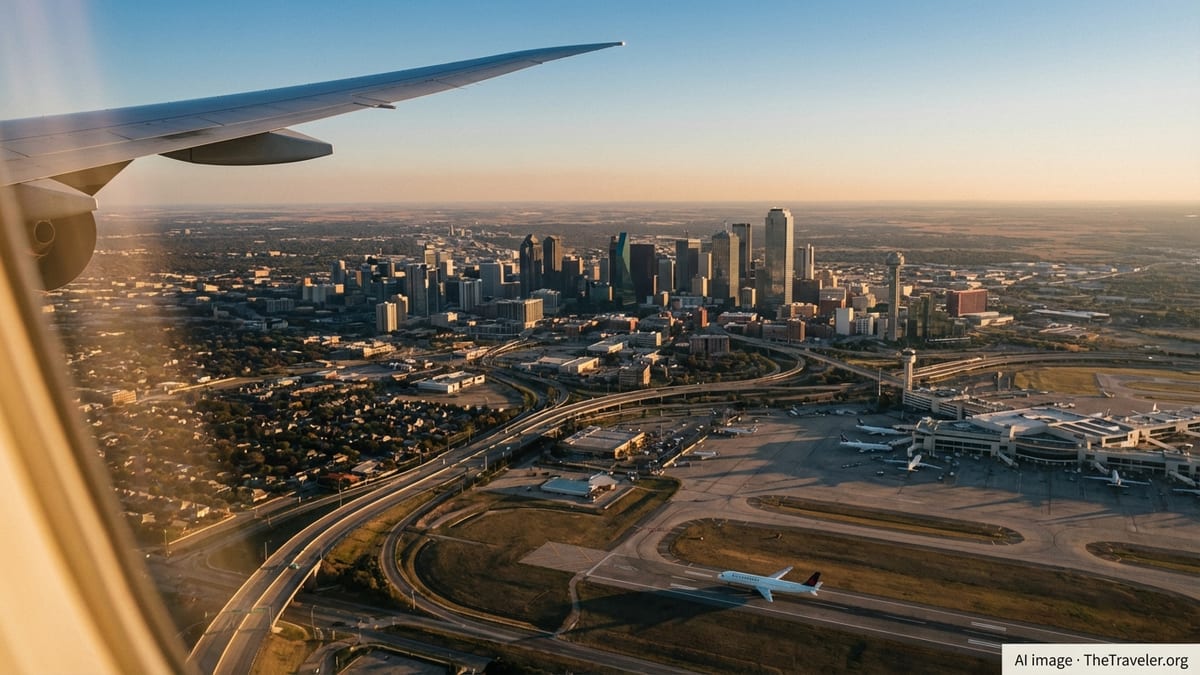
Texas is once again emerging as a frontline destination in the contest to win back Canadian travelers, with fresh Air Canada capacity set to reconnect major metropolitan areas and second-tier cities that rely heavily on cross-border visitors. Industry schedules for the 2025–2026 seasons show the carrier restoring and adding links into the Lone Star State, a notable reversal after months of seat cuts and suspended routes across the broader Canada–U.S. market.
While Texas never disappeared entirely from the map, a combination of reduced frequencies and the loss of certain nonstop options left popular gateways such as Austin, Dallas Fort Worth, and Houston more reliant on indirect traffic and domestic feed. The headline-grabbing announcement of new Toronto to San Antonio service for summer 2026, operating several times weekly, underscores how Air Canada is now pivoting back to U.S. interior markets that show resilient demand from both leisure and business travelers.
For Texas tourism boards, the symbolism is as important as the seat numbers. Direct Air Canada flights bring not only high-spending Canadian “snowbirds” and urban weekenders, but also meeting and convention delegates, oil and gas executives, and families connecting to Latin America through Texas hubs. Local officials in San Antonio and across the state are positioning the restored connectivity as proof that Texas remains open for Canadian business despite the broader chill in bilateral travel.
The renewed focus dovetails with a wider push by Texas cities to diversify their visitor base beyond traditional domestic markets. With the Rio Grande Valley and other regions already expanding intrastate connectivity, the return of nonstop Canadian links is expected to amplify itineraries that combine urban breaks in Austin or San Antonio with coastal or hill country escapes, creating longer, higher-yield visits.
High-Demand States Compete for Scarce Canadian Seats
Texas is not alone in Air Canada’s recalibrated U.S. strategy. Tennessee, Ohio, Washington, and Florida, long magnets for Canadian tourists, are again featuring prominently as the airline shifts capacity toward routes that can sustain premium yields and year-round demand. New and restored services from Canadian hubs into cities such as Nashville, Cleveland, Columbus, Seattle, and multiple Florida destinations point to a carefully targeted rebuild rather than a blanket return to pre-crisis levels.
Air Canada has made clear in recent schedules and network updates that it is favoring “fast-growing metropolitan areas and sought-out destinations” in the United States. Seasonal expansions from Vancouver to Nashville and increased capacity into Austin, Denver, Miami, and other high-profile cities highlight a preference for large catchment areas with strong tourism infrastructure and diversified economies. These same markets are often the ones courting Canadian visitors with aggressive marketing campaigns and partnerships.
In the Southeast, Florida remains the bellwether. Despite the temporary suspension of some winter-only links, including the Toronto to Jacksonville route that is due to return for spring and summer 2026, the state continues to command a heavy share of Air Canada’s winter “sun” network. Routes into Orlando, Tampa, Fort Lauderdale, and Miami are backed by intensive promotion from Florida tourism agencies eager to retain their dominant position with Canadian snowbirds, even as overall capacity from Canada to the United States softens.
Meanwhile, secondary but strategically important states like Tennessee and Ohio are leaning on their music, sports, and cultural offerings to stand out. The return and expansion of links into Nashville, Cleveland, and Columbus offer Canadian travelers non-coastal alternatives that marry city-break appeal with easy access to surrounding nature, a mix that has grown in popularity since the pandemic reshaped travel preferences.
A Fragile Rebound after Boycott and Capacity Cuts
The revival of select U.S. routes by Air Canada comes against a volatile backdrop. Over the past year, flight bookings from Canada to the United States plunged amid a politically charged boycott and a sharp deterioration in public sentiment. Aviation data showed transborder bookings dropping by more than 70 percent at one point, prompting carriers to slash capacity and redeploy aircraft to the Caribbean, Mexico, and European destinations that faced fewer headwinds.
By early 2026, analysts estimate that Canadian airlines have removed hundreds of thousands of seats from U.S. routes compared with the previous year, amounting to close to a 10 percent capacity reduction for the first quarter alone. The cuts have been particularly steep to some of the most recognizable U.S. leisure markets, including Las Vegas, Fort Lauderdale, New York, Los Angeles, Orlando, and Miami, all of which have seen notable declines in incoming seats from Canada.
Despite the scaling back, the United States remains Canada’s largest outbound market by a wide margin. In 2024, Canadian tourists made more than 20 million visits across the border, spending upwards of 20 billion dollars and supporting roughly 140,000 U.S. jobs tied directly to tourism. This economic heft has fueled urgent lobbying from U.S. state and city tourism offices, many of which have warned that the prolonged boycott and flight cuts risk long-term damage to local businesses reliant on Canadian dollars.
It is within this tension that Air Canada’s new direct services to states like Texas, Tennessee, Ohio, Washington, and Florida take on outsized significance. Each restored or newly announced route is viewed by hoteliers, restauranteurs, and attraction operators as both a practical conduit for visitors and an important signal that cross-border normalization is possible, even if a full recovery remains distant.
Snowbirds, City-Breakers, and a Shifting Canadian Traveler Profile
The passengers expected to fill Air Canada’s revived Texas and other U.S. services are not identical to pre-2025 travelers. Market researchers and booking platforms report that while traditional long-stay snowbird trips to Florida, Arizona, and parts of Texas have softened, there has been a notable rise in flexible, shorter itineraries that combine multiple cities or mix business and leisure in a single journey.
Within this evolving landscape, states now being spotlighted in Air Canada’s network, such as Texas, Tennessee, and Washington, can cater to changing tastes. Austin and Nashville lure younger visitors with music, nightlife, and tech-driven creative scenes, while San Antonio’s historic core and riverfront appeal to culture-focused travelers. Seattle’s connection to the Pacific Coast and outdoor recreation serves Canadians who want access to nature without sacrificing urban amenities.
Tourism officials say Canada’s post-boycott traveler is also more politically and socially aware, with some visitors scrutinizing state policies and local attitudes as part of destination choice. That has nudged some U.S. states to highlight inclusive events, diverse neighborhoods, and partnerships with local communities in their outreach to Canadians. Campaigns now emphasize not only beaches and theme parks but also food culture, Indigenous history, and sustainable experiences.
Crucially for Air Canada, this more fragmented demand pattern favors a network strategy built on multiple medium-sized cities rather than just a handful of mega-hubs. By stitching together Toronto, Montreal, Vancouver, and other Canadian gateways with an array of U.S. state capitals and secondary cities, the carrier can capture a wider range of trip types, from university visits and sports tourism to corporate meetings and cultural festivals.
States Step Up Marketing as Routes Return
As Air Canada brings back direct flights, destination marketing organizations in Texas and other high-demand states are wasting little time in courting Canadian consumers. From co-branded advertising campaigns in Canadian media to in-market roadshows and travel agent training sessions, tourism boards are working to ensure that every new or restored flight comes with a corresponding bump in visibility.
Florida, facing a measurable drop in Canadian arrivals over the past year, has intensified its outreach in core feeder provinces such as Ontario and Quebec. Television and digital campaigns highlight the breadth of the state’s offerings beyond traditional resort corridors, with particular emphasis on arts districts, culinary scenes, and eco-tourism experiences. Officials hope that as Air Canada maintains and selectively rebuilds its Florida network, these messages will help reassure hesitant travelers.
Texas, by contrast, is leaning on its image as both business powerhouse and cultural crossroads. Economic development agencies and convention bureaus in cities like San Antonio, Austin, and Dallas are coordinating with local airlines and airports to bundle messaging around new Air Canada links, emphasizing ease of access from Canadian hubs and the potential for multi-city itineraries within the state. Trade missions to Canada are increasingly including tourism components, an acknowledgment that business and leisure flows are closely intertwined.
States such as Tennessee, Ohio, and Washington are similarly focusing on distinctive selling points to stand out in a crowded field. Nashville’s music heritage, Cleveland’s lakefront redevelopment and cultural institutions, Columbus’s university energy, and Seattle’s outdoor access are all being packaged as reasons for Canadians to look beyond familiar sunbelt destinations. With limited new transborder capacity being rolled out, state tourism agencies know they must fight for every seat that Air Canada puts back into the market.
Air Canada’s Balancing Act between Risk and Recovery
Behind the scenes, Air Canada’s renewed push into high-demand U.S. states reflects a delicate balancing act. On one hand, the carrier faces intense pressure to rebuild critical North American connectivity that underpins its global network and feeds lucrative long-haul routes to Europe, Asia, and Latin America. On the other, it must protect profitability in a climate where political uncertainty and consumer boycotts can erode demand with little warning.
Executives have signaled that the current strategy is to “derisk” exposure by shifting capacity fluidly among regions. In recent seasons, that has meant cutting or pausing certain U.S. routes when bookings faltered and reinvesting those aircraft into Caribbean resorts, Mexican beach destinations, and emerging European city breaks that showed more stable demand. The upcoming resumption of suspended Florida routes for the spring and summer of 2026 is a case in point, timed carefully to coincide with peak travel windows and supported by joint promotions with local partners.
At the same time, new launches such as Toronto to San Antonio and added frequencies into Nashville, Austin, and other cities are being introduced with moderate schedules, allowing the airline to gauge sustained interest without committing excessive capacity. Many of these services are seasonal or begin with only a few weekly frequencies, giving Air Canada flexibility to scale up or down based on real-time booking trends.
Analysts note that this nimble approach is a marked departure from the more static pre-pandemic network planning model. It reflects an acknowledgment that cross-border travel flows between Canada and the United States are now more sensitive to political developments, currency swings, and shifting consumer values than at any time in recent memory.
Local Economies in Texas and Beyond Watch the Skies
On the ground, the implications of Air Canada’s revived U.S. routes are being closely tracked by chambers of commerce, hotel associations, and airport authorities. In border-adjacent and tourism-dependent regions, a single daily flight can represent millions of dollars in annual visitor spending and serve as a critical link for trade and investment.
In Texas, officials in the Rio Grande Valley point to their own expanding network of direct flights to Austin, Dallas, and Houston as proof that the state’s internal connectivity is robust. The addition of new or restored Air Canada services into major Texas hubs could funnel even more Canadian visitors into this web of domestic routes, supporting everything from beach tourism on South Padre Island to cultural festivals in smaller inland cities.
Similar dynamics are playing out in states like Ohio and Washington, where regional airports view transborder flights as both prestige assets and economic lifelines. Connections from Montreal or Toronto into secondary cities can unlock new tourism flows and make it easier for local companies to court Canadian partners. Even limited seasonal services are often enough to justify new hotel investments or attraction upgrades, as businesses bank on higher-spending international guests.
For state and city leaders, the stakes are high. With Canadian capacity to the United States still below previous levels and likely to remain constrained in the near term, competition for Air Canada’s aircraft and attention is intense. Texas, Tennessee, Ohio, Washington, Florida, and their peers know that the routes secured today could shape their share of the cross-border tourism pie for years to come.
A Test Case for the Future of Canada–U.S. Tourism
Industry observers say the next two travel seasons will serve as a critical test of whether restored Air Canada services to Texas and other high-demand U.S. states can overcome lingering headwinds. If load factors hold and yields remain strong, the airline may have confidence to deepen its U.S. footprint and reconsider some of the capacity cuts made earlier in the boycott period.
Conversely, if bookings soften or political tensions flare anew, the current resurgence could prove fleeting, with aircraft once again redeployed away from the United States. For now, tourism officials are betting that the enduring appeal of American cities and landscapes, combined with targeted outreach and more conscientious travel choices, will be enough to draw Canadians back in significant numbers.
In Texas, there is cautious optimism that new links, such as the Toronto to San Antonio route, will showcase the state’s blend of culture, cuisine, and commerce to returning Canadian visitors. Paired with renewed access to Tennessee’s music venues, Ohio’s cultural districts, Washington’s Pacific vistas, and Florida’s perennial beaches, Air Canada’s evolving network offers Canadians a refreshed map of cross-border possibilities.
As planes once again trace direct lines between Canadian hubs and these high-demand states, the broader question is whether this patchwork of revived routes can stitch together a more resilient model of Canada–U.S. tourism, one capable of withstanding the political and economic turbulence that has defined the past two years.