

More news on this day
Air Canada is set to dramatically expand air links between Colombia and Canada, unveiling new Boeing 787 Dreamliner routes from Bogotá to Toronto and Montreal that position the Colombian capital as a rising northern gateway to the Americas and beyond.
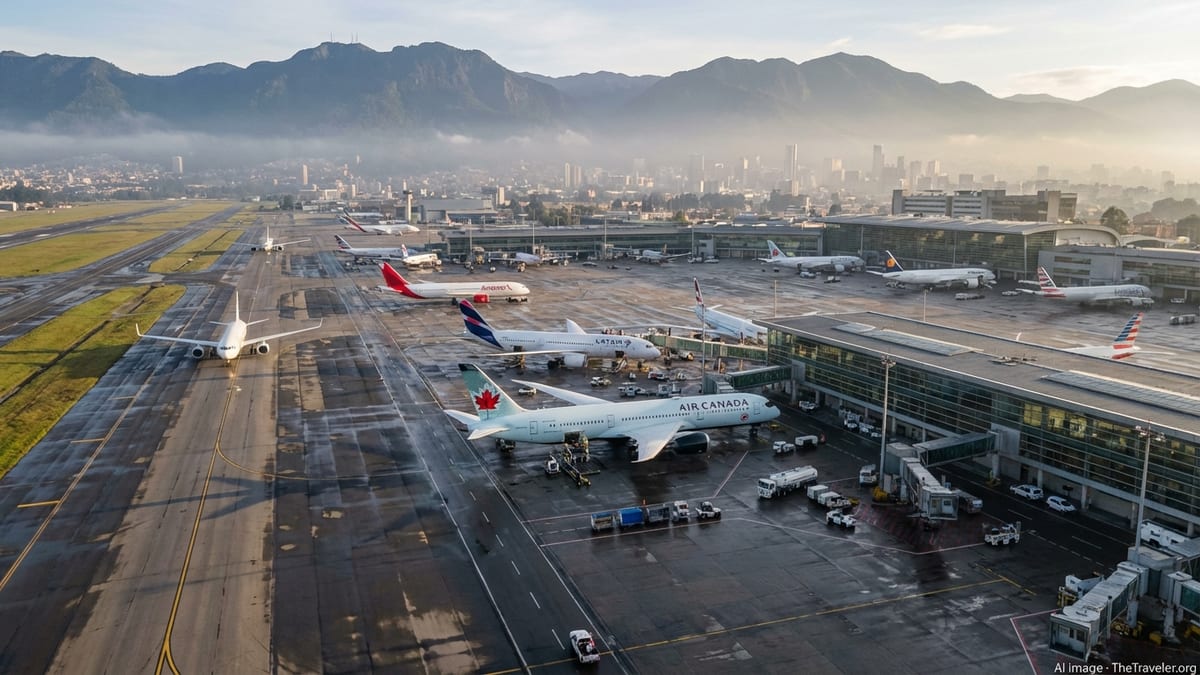
New Bogotá–Canada Routes Mark a Strategic Shift
Air Canada will launch new non-stop services connecting Bogotá with Toronto and Montreal for the 2026–27 winter season, using widebody Boeing 787-8 Dreamliner aircraft on both routes. According to recent schedule filings and local tourism officials, the Bogotá–Montreal service is planned four times weekly from late October 2026, while flights between Bogotá and Toronto will also operate several days a week, giving travelers more options in the peak northern winter travel period.
The new services significantly upscale capacity on the Colombia–Canada corridor, traditionally served by narrowbody aircraft and limited frequencies. The use of Dreamliners, with three cabins including a full lie-flat premium product, signals that Air Canada is targeting not only leisure demand but also higher-yield business and connecting traffic across its hubs in Toronto and Montreal.
For Bogotá’s El Dorado International Airport, already one of Latin America’s busiest hubs, the move anchors a deeper partnership with a major North American carrier. The additional widebody frequencies add long-haul seats into the market at a time when Colombia’s inbound tourism and outbound travel to North America are both expanding.
Colombian tourism authorities have welcomed the announcement as a vote of confidence in Bogotá’s role as a regional aviation center. They argue that more premium capacity and better schedules will help attract conferences, corporate travel, and high-spend visitors who rely on seamless, long-haul connectivity.
Dreamliners Boost Premium and Connecting Traffic
Air Canada’s decision to deploy its Boeing 787 Dreamliner fleet on Bogotá routes represents a notable upgrade in both comfort and capacity. The aircraft type features a three-class configuration, including the airline’s Signature Class cabin with lie-flat seats, a dedicated premium economy section, and a refreshed economy cabin with enhanced inflight entertainment and connectivity.
This product mix is designed to appeal to a wide cross-section of travelers: Colombian and Canadian executives shuttling between corporate centers, visiting-friends-and-relatives traffic, and international passengers connecting through Toronto and Montreal to Europe and Asia. The schedule is being optimized so that Bogotá arrivals and departures line up with Air Canada’s banks of transatlantic and transpacific flights, turning El Dorado into a more effective spoke in the airline’s global network.
Industry analysts note that this aligns Bogotá with other South American cities where Air Canada is expanding, such as Rio de Janeiro, Lima, Santiago, and Quito. Across the region, the airline is adding frequencies, bringing forward seasonal resumptions, and consolidating more of its South American flying onto widebody aircraft, particularly during the northern winter when demand to warmer destinations peaks.
By enhancing comfort and connection opportunities, Air Canada is also positioning itself to capture more sixth-freedom traffic: passengers from Europe or Asia who choose to route via Canada to reach Colombia. This strategy not only benefits the carrier but also diversifies Bogotá’s visitor base beyond traditional markets.
Policy Changes Unlock a New Phase of Canada–Colombia Air Links
The rapid build-up of capacity between Canada and Colombia is underpinned by a more liberalized air transport framework between the two countries. Ottawa and Bogotá updated their bilateral air transport agreement in recent years to allow unlimited flights and destinations for airlines from both sides, removing constraints that previously capped growth.
That shift has laid the groundwork for carriers like Air Canada to pursue more ambitious network plans, knowing that they can increase frequencies or add new Colombian destinations without renegotiating traffic rights. It also opens opportunities for future expansion beyond Bogotá, including potential links to Colombia’s secondary cities as demand matures.
Combined with Canada’s broader efforts to expand international air agreements under its Blue Sky policy, the Colombia deal is part of a push to position Canadian hubs as more competitive transfer points for travel into Latin America. For Bogotá, the benefits are tangible: more potential carriers, more capacity, and greater leverage in attracting investment and tourism flows.
Tourism stakeholders in both countries say that the timing is favorable. Colombian outbound travel has grown steadily as the middle class expands, while Canadian travelers are showing renewed interest in Latin American destinations that offer culture, nature, and relative affordability compared with some long-haul alternatives.
Bogotá Emerges as a Northern Gateway for Latin America
The expansion of Air Canada’s Bogotá services is part of a broader recalibration of South American connectivity. Alongside increased capacity to Brazil, Peru, Chile, and Ecuador, the enhanced Bogotá–Canada links consolidate the Colombian capital’s role as a key node in multi-country itineraries that span the hemisphere.
Travel planners are already eyeing new routing possibilities, such as combining a Canadian city break with longer journeys through the Andes and Amazon, or stitching together Bogotá with Cartagena, Lima, and Santiago using a mix of Air Canada and partner airlines. Bogotá’s geographic position, roughly midway between North and Southern Cone markets, makes it attractive for such multi-stop trips.
Locally, officials are leveraging the new routes to promote Bogotá not just as a transit point, but as a destination in its own right. Campaigns emphasize the capital’s gastronomy, museums, street art, and nearby nature escapes, arguing that better air access from Canada and connecting markets will help spread visitors beyond the city’s historic core and into surrounding regions.
The anticipated wave of new arrivals is also spurring investment interest in hotels, convention facilities, and airport-side commercial developments. With more widebody traffic on the horizon, investors see an opportunity to capture spending from premium travelers and long-haul connections who previously might have bypassed Bogotá for other Latin American hubs.
Opportunities and Challenges for Tourism Stakeholders
For tourism boards, tour operators, and airports, Air Canada’s Bogotá expansion brings both opportunity and responsibility. On the upside, additional Dreamliner capacity and better schedules are expected to increase seat supply during key northern winter months, helping stabilize fares and support package-deal growth in both directions.
Canadian tour operators can now build more ambitious Colombia-focused products, including long-stay trips that combine Bogotá with coastal, coffee-region, or adventure destinations. Colombian agencies, in turn, gain new access to the Canadian market, particularly in major population centers served by Air Canada’s hubs and its domestic network.
However, the growth also highlights challenges around infrastructure, sustainability, and service quality. Bogotá’s airport continues to manage heavy traffic volumes, and additional widebody operations place pressure on runway, terminal, and baggage systems. Authorities are under pressure to ensure that expansion in air connectivity goes hand in hand with investments in ground transport links, immigration processing, and visitor services.
Environmental considerations are increasingly central as well. Airlines and tourism authorities face heightened scrutiny to balance route growth with emissions reduction strategies, from fleet renewal and sustainable aviation fuel initiatives to promoting longer, deeper stays over frequent short breaks. How effectively these concerns are managed will influence whether Bogotá’s new era of connectivity is perceived as a sustainable success story in the years ahead.