

More news on this day
Air Canada is dramatically expanding its footprint in Mexico for summer 2026, rolling out a surge of new frequencies from Montreal, Toronto and Vancouver as Canadian travelers flock south in record numbers and the region braces for a tourism boom ahead of the FIFA World Cup.
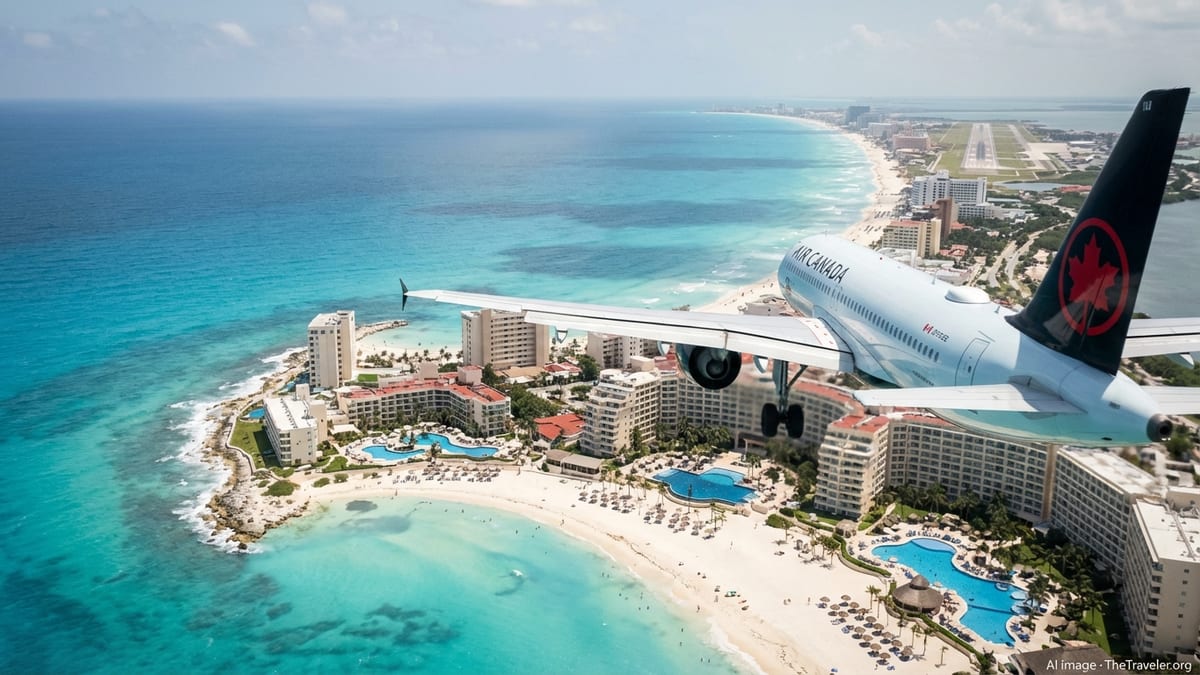
Big Summer Bet on a Booming Mexico Market
Air Canada will significantly increase its Mexico schedule in summer 2026, positioning itself as a leading player on the busy Canada–Mexico corridor just as leisure demand hits historic highs. The carrier plans to operate 10 daily flights from Montreal, Toronto and Vancouver to five Mexican destinations, adding hundreds of weekly seats into a market that has already seen strong growth over the past two years.
According to details shared in recent briefings in Mexico City, the expanded program will bring Air Canada’s one-way capacity to roughly 1,700 seats per day between Canada and Mexico during the peak vacation season. The airline is focusing on adding frequencies on existing routes rather than launching a long list of new cities, betting that more choice of flight times and added weekday options will resonate with both vacationers and business travelers.
The push comes as Canadian airports emerge as powerful gateways to Mexico’s resorts. Toronto Pearson, for example, has become the busiest international gateway to Cancún, surpassing several major U.S. hubs after a sharp jump in traffic in 2025. Air Canada’s latest schedule build on that momentum, while sharpening its competitiveness against Canadian low-cost and leisure rivals that have also moved aggressively into Mexican beach markets.
For travelers, the result is a summer map that increasingly resembles a winter “sun” schedule, with major Canadian cities now offering near year-round density into Mexico’s top holiday destinations. Airlines that once treated Mexico primarily as a winter escape are now responding to steady, summer-long demand from families, remote workers and event-driven travelers.
More Flights from Montreal, Toronto and Vancouver
Air Canada’s growth strategy in Mexico for summer 2026 is anchored in three Canadian hubs. From Montreal, the airline will boost its Montreal–Cancún route from seven to 11 weekly flights, effectively moving to multiple daily options on peak days. This expanded schedule is designed to capture both nonstop leisure demand from Quebec and connecting passengers from eastern Canada and Atlantic provinces.
In Toronto, capacity increases are more targeted but still significant. The Toronto–Monterrey route, which links Canada’s largest city with one of Mexico’s most important industrial and business centers, will grow from three to four weekly flights. This provides additional flexibility for corporate travelers shuttling between the two manufacturing and technology hubs, while also serving visiting friends-and-relatives traffic amid deepening economic ties.
On the West Coast, Vancouver will see some of the most noticeable gains. Air Canada plans to raise service on Vancouver–Mexico City from seven to 11 weekly flights, effectively offering more than one daily departure and tighter connectivity to its transpacific and domestic networks. At the same time, Vancouver–Puerto Vallarta will double from one to two weekly flights, giving British Columbia travelers more options to reach one of Mexico’s most popular Pacific resort regions during the northern summer.
The network design underscores Air Canada’s ambition to use its three primary hubs as launchpads into different Mexican regions: eastern Canada feeding Cancún and Caribbean-facing resorts, central Canada leaning into business and industrial links via Monterrey, and western Canada capitalizing on cultural and trade ties along the Pacific coast and in the capital.
Preparing for a World Cup Tourism Surge
Air Canada’s Mexico expansion is closely timed with the run-up to the FIFA World Cup in 2026, which will be co-hosted by Canada, the United States and Mexico. Although the carrier has framed the schedule as part of a long-term commitment to the Mexican market, executives have acknowledged that the coming tournament is expected to lift traffic on both sides of the border.
With Mexico set to host multiple matches and Canadian cities such as Toronto, Vancouver and others serving as key venues and fan gateways, the airline anticipates an uptick in two-way travel as supporters, media and corporate delegations crisscross the continent. The enhanced summer 2026 schedule is designed in part to ensure adequate lift into the Mexican market at a time when seat demand could be volatile and highly event-driven.
Beyond pure football tourism, the World Cup is seen as a catalyst for broader itineraries that combine sports with beach vacations or cultural travel. Fans traveling from Europe or Asia into Canada for early matches, for instance, may opt to add a Mexico segment onto their trip, taking advantage of seamless same-carrier connections from Montreal, Toronto or Vancouver into Cancún, Mexico City or other resort gateways.
Industry analysts note that this kind of integrated North American travel pattern was less common in previous World Cups, but is likely to be more pronounced in 2026 thanks to visa policies, growing familiarity with multi-stop trips and the strong marketing push from airlines and tourism boards. Air Canada’s added capacity, particularly on trunk routes into Cancún and Mexico City, positions it to capture a meaningful share of that traffic.
Mexico’s Strategic Role in Air Canada’s Network
While the World Cup delivers a timely bump, Air Canada’s messaging around its Mexico push is emphatically long-term. Senior executives have described the country as a cornerstone of the airline’s international network, pointing out that Mexico has featured on its route map since the 1950s and has long served as a bridge between Canadian leisure travelers and Latin American commerce.
The latest capacity decisions reflect that history. Cancún remains the flagship leisure route, supported by rising demand from Ontario and Quebec, while Mexico City and Monterrey increasingly serve as business and connections hubs into wider domestic Mexican and Latin American networks. Puerto Vallarta, meanwhile, continues to be a favored choice for west coast Canadians seeking beaches, whale-watching and access to the Riviera Nayarit region.
For Air Canada, emphasizing Mexico’s dual identity as a holiday favorite and a commercial powerhouse is a way to diversify revenue across seasons and traveler types. Higher-yield corporate and cargo traffic moving through Mexico City and Monterrey can help balance the highly seasonal, price-sensitive beach market. At the same time, leisure demand from Canada has proven resilient, with many travelers prioritizing winter and shoulder-season sun trips even during periods of inflation.
The airline is also leveraging its membership in the Star Alliance and code-share relationships with Mexican partners to deepen its reach beyond the primary gateways. Travelers booking through Air Canada will be able to access secondary cities across Mexico through coordinated schedules and through-ticketing, making the expanded summer program more attractive than a simple point-to-point offering.
Competitive Pressure in the Canada–Mexico Corridor
Air Canada’s new summer schedule lands in a market that has grown sharply more competitive in the past two years. Canadian ultra-low-cost and leisure carriers have been busy adding their own sun flights to Mexican resorts, while Mexico-based airlines have expanded northbound services to tap strong outbound demand from Canadian travelers and diaspora communities.
At the same time, rival Canadian airlines have announced or launched new routes and extra frequencies into Mexico, particularly to Cancún and Puerto Vallarta. Those moves, combined with increased service from U.S. carriers feeding Canadian-bound connections via Mexican hubs, have forced Air Canada to defend its share with a more assertive schedule strategy.
The airline’s response leans heavily on scale and connectivity rather than pure price competition. By thickening frequencies on key routes and emphasizing through-connections across its domestic and international networks, Air Canada aims to offer a seamless Mexico product that appeals to both budget-conscious vacationers and time-sensitive business travelers. Its presence in major Canadian hubs also allows it to funnel passengers from smaller cities into Mexico with single-ticket itineraries and coordinated schedules.
For consumers, the rivalry translates into more choice and, at times, sharper pricing during off-peak days or shoulder dates. However, analysts caution that high demand for peak summer and holiday weekends means flights are likely to remain heavily booked, and travelers seeking lower fares will still need to plan well in advance or be flexible with dates and departure points.
What the Schedule Means for Travelers
For Canadian travelers planning a Mexico escape in summer 2026, the practical implications of Air Canada’s boosted schedule are straightforward: more flight times, better connection windows and an expanded range of departure days on popular routes. The move to 11 weekly flights between Montreal and Cancún, for instance, gives Quebec passengers additional early-morning and late-afternoon options that can sync more neatly with resort check-in times or onward ground transfers.
The extra weekly flight on Toronto–Monterrey adds flexibility for business trips, allowing corporate travelers to plan shorter stays that align with project timelines or factory visits without having to remain over a weekend. For leisure passengers, the added frequency opens up more combinations for open-jaw or multi-city itineraries that combine business, culture and beach time.
On the West Coast, the increased frequencies from Vancouver to Mexico City and Puerto Vallarta provide new options for British Columbia residents who once had to route through Calgary or Toronto for certain itineraries. More nonstop choices may also reduce total journey times for long-haul travelers coming from Asia or the South Pacific and connecting through Vancouver into Mexico, making Air Canada’s west coast hub a more compelling gateway.
Travel agents and tour operators expect to leverage the expanded schedule when building packages that mix charter hotel inventory with scheduled air. More flight choices across the week make it easier to tailor itineraries to client budgets, preferred resort durations and specific events or festivals in Mexican destinations.
Economic and Tourism Ripple Effects
The surge in capacity is set to have knock-on effects for tourism economies in both countries. Mexican resorts and cities stand to benefit from a steadier flow of Canadian visitors throughout the summer months, supporting local jobs in hospitality, transportation, dining and excursions beyond the traditional high winter season.
Air Canada’s added frequencies also help underpin broader trade and investment ties. The reinforced Toronto–Monterrey and Vancouver–Mexico City routes, for example, align with ongoing efforts by Canadian businesses to deepen engagement with Mexico’s manufacturing, automotive, technology and energy sectors. More reliable, higher-capacity air links make it easier to move executives, specialists and time-sensitive cargo between the two markets.
On the Canadian side, airports and tourism boards see an opportunity to attract more Mexican visitors during the northern summer and shoulder periods, particularly into major cities and nature-focused destinations. As schedules become more balanced in both directions, city pairs such as Montreal–Cancún and Vancouver–Mexico City can support growth in inbound as well as outbound tourism.
Against this backdrop, Air Canada’s summer 2026 schedule to Mexico reads not just as a seasonal adjustment, but as a statement of intent. By locking in more daily flights and aligning capacity with high-profile events and structural demand growth, the carrier is staking a long-term claim on one of North America’s most dynamic leisure and business corridors.