

More news on this day
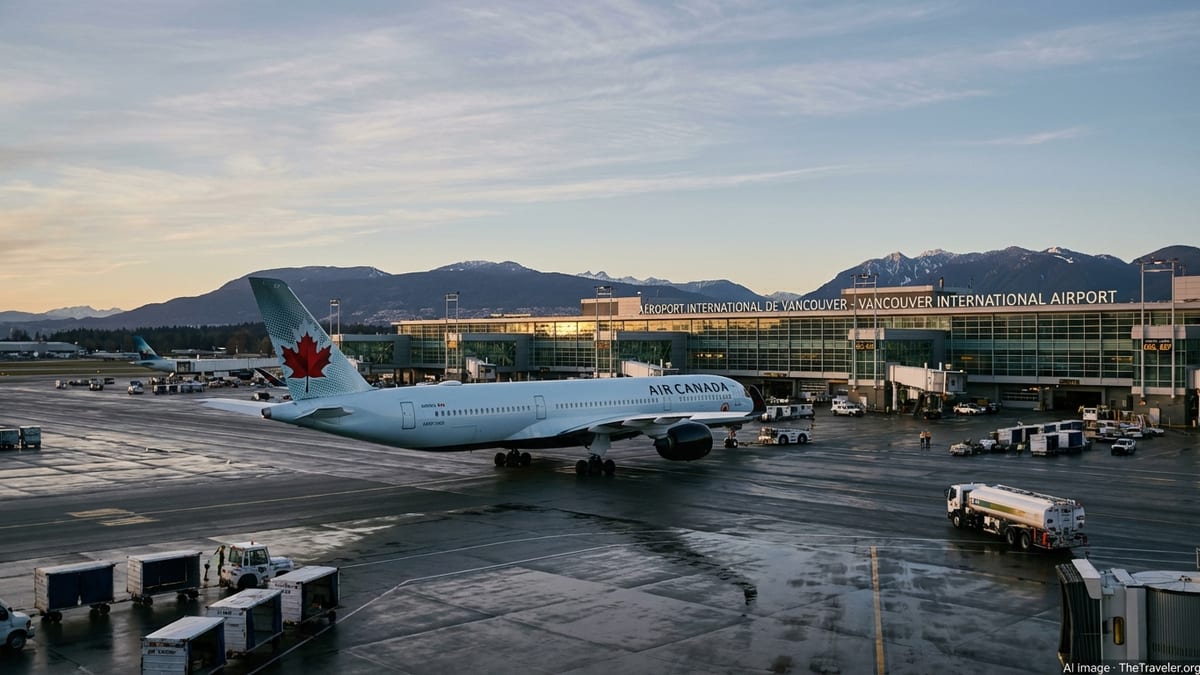
Air Canada’s newly disclosed order for next-generation Airbus A350-1000 aircraft is poised to unlock a fresh phase of long-haul growth from its core hubs in Toronto, Vancouver and Montreal, positioning the carrier to accelerate post-pandemic expansion on key intercontinental routes while modernising its flagship widebody fleet.
A Strategic Widebody Bet With Global Ambitions
Air Canada confirmed this month that it has placed a firm order for eight Airbus A350-1000 jets, converting a previously undisclosed commitment that was logged in late 2025. The disclosure, made in Toulouse and highlighted by industry outlets, frames the move as a central pillar of the airline’s long-haul strategy and a signal of deeper alignment with Airbus for its future widebody needs.
While the carrier has not yet released a delivery timetable or cabin configuration details, executives describe the A350-1000 as a workhorse for long-range flying. With a published range of up to 9,000 nautical miles, the type gives Air Canada the performance to add or thicken ultra-long sectors from Canada to the Indian subcontinent, Southeast Asia and Australia, markets that are particularly relevant to the country’s multicultural population and growing business ties.
The new order arrives as global travel demand continues to recover and shift. For Air Canada, the focus is on knitting together Canada’s three main international gateways with a broader roster of nonstops into Asia-Pacific, the Middle East and secondary European cities, while maintaining strong connectivity over its transatlantic and transborder networks. The A350-1000’s economics and range are intended to provide the backbone for that next phase of growth.
Industry analysts point out that Air Canada joins a growing cohort of global carriers turning to the largest A350 variant to replace aging widebodies and support expansion. With more than 1,500 A350-family orders now placed worldwide, the aircraft has become a cornerstone of long-haul renewal programs for airlines seeking lower fuel burn, reduced emissions and more premium-heavy cabins.
What the A350-1000 Means for Toronto Pearson
Toronto Pearson International Airport is expected to be the primary beneficiary of Air Canada’s new long-range capacity. As the airline’s largest hub and a key North American gateway for international traffic, Toronto already sustains dense schedules to Europe, the United States and select Asian markets. The A350-1000 order raises expectations that Pearson will see more nonstop options into South and Southeast Asia, where demand has been outpacing capacity.
The aircraft’s extended range is likely to prove pivotal for nonstop or one-stop itineraries linking Toronto to major Indian cities, as well as key Southeast Asian hubs such as Singapore, Bangkok and Kuala Lumpur. While Air Canada currently relies heavily on Boeing 777 and 787 fleets for these markets, the A350-1000’s operating economics could allow the airline to experiment with new city pairs, adjust seasonal capacity more nimbly and add frequencies on high-demand corridors.
Toronto’s role as a connecting hub for travelers from the United States and across Canada further amplifies the strategic impact of the new jets. With favourable transatlantic and transpolar routings, Air Canada can position Pearson as a competitive alternative to U.S. hubs for journeys between the United States and India or Southeast Asia, leveraging the A350-1000’s fuel efficiency to keep unit costs in check.
Airport stakeholders in the Greater Toronto Area have been pushing to attract more long-haul services as the region’s population and business community expand. New widebody investment by the flag carrier strengthens that ambition, giving Pearson added weight in route development discussions and potentially drawing additional tourism and trade flows to Canada’s largest metropolitan area.
Vancouver’s Pacific Gateway Set for Deeper Asia Links
On the West Coast, Vancouver International Airport stands to gain from the A350-1000’s capabilities on transpacific and South Pacific missions. Air Canada has long marketed Vancouver as Canada’s Pacific gateway, with established links into East Asia and Oceania. The arrival of more efficient, long-legged aircraft provides the flexibility to deepen those ties and open thinner, longer routes that older widebodies might not support profitably.
The A350-1000 is well-suited to serve dense trunk routes to cities such as Tokyo, Seoul and Hong Kong while also enabling potential expansion toward Southeast Asia and Australia. Industry observers expect Air Canada to evaluate options such as additional frequencies to existing Asian hubs, seasonal services timed to leisure peaks, and possibly new nonstop links to secondary cities where traffic has traditionally routed via other airlines’ hubs.
Vancouver’s geographic position offers natural advantages for transpacific travel, trimming flight times compared with more easterly North American gateways. Coupling that with the A350-1000’s fuel savings and lower emissions profile could help Air Canada sharpen its environmental messaging to increasingly climate-conscious travellers on long-haul journeys, a factor that airports in British Columbia have been keen to highlight.
As competition across the Pacific intensifies, particularly from Asian and U.S. carriers ramping up their own next-generation fleets, Vancouver’s ability to host more efficient long-haul aircraft becomes a strategic differentiator. The A350-1000, with its quieter cabin and advanced systems, gives Air Canada another tool to compete for high-yield traffic on routes where product and comfort can sway booking decisions.
Montreal Caught Between Route Cuts and Future Growth
Montreal, Air Canada’s corporate home base, has experienced both expansion and retrenchment in recent months, underscoring the complexity of long-haul planning from Canada’s second-largest city. Late last year, the airline confirmed that previously scheduled summer 2026 services from Montreal to Tel Aviv and Delhi would be suspended, citing commercial reasons and ongoing geopolitical and demand uncertainties. Those markets will continue to be served from Toronto instead.
Despite those cuts, the A350-1000 acquisition signals that Montreal is unlikely to be sidelined in Air Canada’s long-term strategy. The aircraft’s range and efficiency give the airline greater flexibility to re-time or eventually restore flights from Montreal to key long-haul destinations when conditions stabilise, and to consider new links into Europe, North Africa or the Middle East that match the city’s demographic and economic ties.
Montreal-Trudeau International Airport has been investing in its own infrastructure and passenger experience to shore up its position as a transatlantic and transborder hub. Air Canada’s widebody renewal could dovetail with those efforts, allowing the airline to deploy more modern aircraft on existing European services and to test new point-to-point routes that feed connecting flows over Montreal without the heavier risk profile of older, less efficient jets.
For travellers in Quebec and Atlantic Canada, the long-term prize will be a broader menu of one-stop options to Asian, Indian and Middle Eastern destinations via Montreal. While the A350-1000 fleet will initially be small, its flexibility gives network planners an additional lever to adjust capacity between Toronto, Vancouver and Montreal as demand patterns evolve.
Modern Cabin Experience and Sustainability Gains
Beyond route planning, Air Canada’s selection of the A350-1000 aligns with industrywide moves to upgrade passenger experience while cutting emissions. Airbus markets the type as delivering around 25 percent lower fuel burn and associated emissions compared with previous-generation widebodies, thanks to advanced aerodynamics, extensive use of composite materials and new-generation Rolls-Royce engines.
For travellers, the A350 platform is associated with lower cabin altitude, higher humidity and reduced noise levels, features that are increasingly used in airline marketing for ultra-long-haul flights. Air Canada has yet to reveal its specific layout, but observers anticipate a premium-heavy configuration with an upgraded business-class product tailored to corporate travellers and high-yield leisure passengers linking Canada with Asia, Europe and the South Pacific.
The aircraft’s compatibility with up to 50 percent sustainable aviation fuel blends from entry into service also dovetails with Air Canada’s public climate commitments. The carrier and Airbus both emphasise a longer-term target of enabling 100 percent SAF operations by 2030, dependent on regulatory approvals and fuel availability. For Canadian hubs where environmental concerns are shaping local policy discussions, such fleet investments offer a tangible signal of progress.
Onboard, the airline is expected to harmonise the A350-1000 cabin with its broader product evolution, which already includes refreshed interiors on narrowbody jets and new-generation cabins on Boeing 787 Dreamliners. That consistency is particularly important on connecting itineraries that might combine a domestic leg from a smaller Canadian city with an intercontinental sector operated by the new flagship widebody.
Fitting Into a Wider Fleet Shake-Up
The A350-1000 order is arriving amid a broader reshaping of Air Canada Group’s fleet. The carrier has been working through delivery delays for its Boeing 787-10 and Airbus A321XLR aircraft, both now pushed into 2026, while simultaneously implementing a narrowbody swap between mainline operations and its leisure-focused Rouge subsidiary. Earlier this week, Air Canada completed the transfer of its first Boeing 737-8 to Rouge following cabin modifications, part of a plan that will see the low-cost unit move to an all-737 MAX fleet.
Under the current strategy, Rouge will take over all of Air Canada’s 737 MAX 8 aircraft, while mainline operations receive Rouge’s Airbus A321s alongside incoming A220-300s and A321XLRs. The transition, targeted for completion by the end of 2026, is intended to simplify Rouge’s fleet, lower operating costs on leisure routes and free up more capable, longer-range narrowbodies for the parent airline’s North American and transatlantic expansion.
In that context, the A350-1000 functions as the long-haul counterpart to a wider renewal program spanning every segment of Air Canada’s network. Smaller-gauge aircraft like the A220 and future A321XLRs will funnel passengers from secondary Canadian markets into the main hubs, where A350-1000s and existing 787s can carry them onward to distant global destinations. The goal is a more finely calibrated network that matches aircraft size and capability to each route’s demand profile and yield potential.
The breadth of Air Canada’s commitments to Airbus platforms, from A220s to A321XLRs and now A350-1000s, also signals an evolving fleet balance alongside its long-standing relationship with Boeing. As new widebodies arrive, older aircraft will gradually be retired or redeployed, with implications for maintenance operations, pilot training and long-term capital planning.
Competitive Pressures and the Global Widebody Race
Air Canada’s move comes as major North American and European rivals place their own bets on next-generation long-haul fleets. Delta Air Lines recently expanded its Airbus widebody commitments, including additional A350-family aircraft that will begin arriving toward the end of the decade, while International Airlines Group, parent of British Airways and Iberia, has locked in substantial orders for A350s, A330neos and Boeing 787s to support long-term growth.
As these carriers modernise their fleets, competition on transatlantic and transpacific routes will be shaped not only by schedules and fares but also by product differentiation and environmental positioning. For Air Canada, early clarity around the A350-1000’s role in its network helps it keep pace with peers that are already marketing new cabins and sustainability credentials to corporate travel buyers and high-end leisure customers.
Canada’s geography and diaspora patterns give Air Canada a particular incentive to keep up in the widebody race. Long, thin routes linking Canadian hubs to cities across India, East Asia and the South Pacific are inherently challenging to serve profitably with older jets. A new generation of efficient widebodies makes it more feasible to sustain such services year-round, smoothing seasonality and reducing reliance on circuitous routings via foreign hubs.
At the same time, Air Canada must navigate supply chain constraints that continue to affect aircraft manufacturers worldwide. Delivery timing, engine performance and aftermarket support will all influence how quickly the A350-1000s can be phased into service and which routes see the new type first. Network planners will be watching those variables closely as they map out the next several years of growth from Toronto, Vancouver and Montreal.
What Travellers Can Expect in the Coming Years
For passengers, the near-term changes from Air Canada’s A350-1000 order will be more about expectations than immediate schedule shifts. The airline has not yet detailed which routes will be first to receive the new aircraft, and delivery timing remains to be finalised. Nonetheless, frequent flyers can anticipate that some of the longest services from Canada’s three main hubs will eventually be operated by the new flagship, bringing quieter cabins, larger overhead bins and updated seats.
As the aircraft begin to arrive, Toronto Pearson is the likeliest starting point, given its status as Air Canada’s primary long-haul hub. Vancouver should follow swiftly for transpacific deployment, while Montreal’s role will evolve in line with broader demand trends and geopolitical conditions affecting specific markets. Over time, the A350-1000 could also appear on select transatlantic routes where premium demand justifies the added capacity and product uplift.
In parallel, travellers will see a steady refresh across the rest of Air Canada’s network as A220s, A321XLRs and refurbished narrowbodies take over more short- and medium-haul services, improving connectivity into the big three hubs. That integration is critical if the benefits of the A350-1000 fleet are to be fully realised, since reliable, well-timed feeder flights are what turn long-haul flagships into effective global connectors.
For now, the A350-1000 order is best read as a clear statement of intent. Air Canada is positioning Toronto, Vancouver and Montreal to compete more aggressively for long-haul traffic in an era of rising environmental scrutiny and demanding customers. How quickly that vision materialises will depend on delivery schedules, market conditions and the airline’s ability to execute on a complex, multi-year fleet and network transformation.