

More news on this day
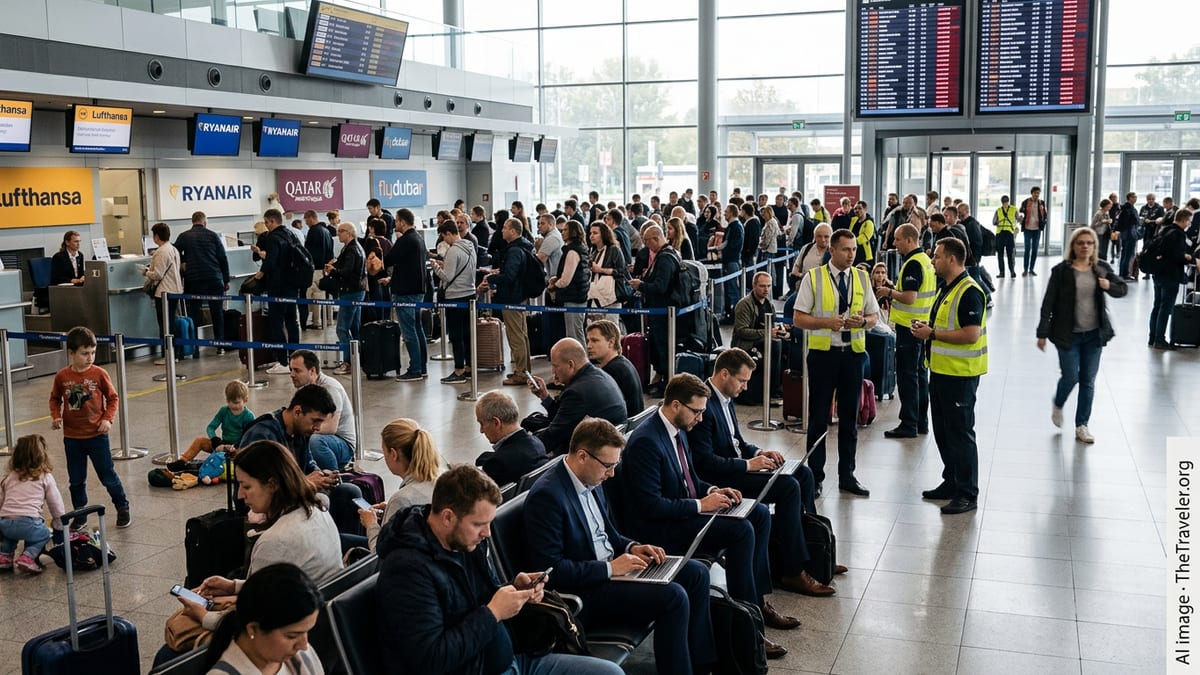
Hundreds of air passengers were left sleeping on terminal floors in Warsaw and Kraków on Thursday after Lufthansa, Qatar Airways, Ryanair and FlyDubai suspended 29 flights serving Poland, triggering rolling delays on some of the country’s busiest international routes.
Get the latest news straight to your inbox!
Middle East Airspace Crisis Ripples Into Polish Hubs
The latest wave of disruption followed continuing closures and restrictions in Middle Eastern airspace linked to escalating regional tensions, which have already forced airlines across Europe and Asia to cancel or reroute services through hubs such as Doha and Dubai. While Polish airspace remains open, Poland’s main international gateways have been hit hard because so many long haul services from Warsaw and Kraków rely on Gulf and European connections.
At Warsaw Chopin Airport, ground staff said morning departures to Doha, Frankfurt, Dubai and several Ryanair bases were pulled from the schedule with only a few hours’ notice, creating bottlenecks at rebooking desks that stretched well into the afternoon. Similar scenes played out at Kraków John Paul II International Airport, where passengers bound for the Middle East, Western Europe and Southeast Asia suddenly found their journeys cut short on the tarmac.
Airport duty managers warned that further disruption was likely over the coming days, as aircraft and crew end up out of position and airlines grapple with rapidly shifting overflight permissions. Even flights still operating were subject to extended delays as carriers adjusted routings to avoid closed corridors, adding hours to block times and complicating tight connection windows.
Poland’s Civil Aviation Authority has yet to publish consolidated disruption figures for the day, but data from flight tracking services and airport boards suggested at least 29 cancellations tied directly to the affected carriers, alongside dozens of late arrivals and departures on connected routes.
Flagship Routes From Warsaw and Kraków Disrupted
Among the most heavily affected services were Qatar Airways’ Warsaw to Doha flights, a key link for Polish travelers heading to Asia, Africa and Australasia. With Qatari airspace still operating under strict constraints, the airline pulled multiple rotations and shifted its focus to limited repatriation services, leaving passengers in Warsaw with few immediate alternatives on comparable long haul itineraries.
Lufthansa’s cancellations hit regional and long haul connectivity for Poland in a different way, disrupting its feeder flights from Warsaw and Kraków into Frankfurt and Munich. Those services act as vital bridges for Polish business travelers and holidaymakers connecting to North America, Africa and the Middle East. When they were taken off the board, downstream connections collapsed, and some passengers were told they would need to wait at least 24 hours for replacement itineraries.
Ryanair’s network, normally a pressure valve during disruptions because of its dense European coverage, instead became another pressure point. Selected departures from Polish airports to key leisure and migrant-worker destinations in Western Europe were cancelled or heavily delayed as the carrier dealt with knock-on operational issues and crew rostering constraints. For passengers, the distinction between a cancellation driven by airspace politics and one caused by airline logistics made little practical difference.
FlyDubai’s direct links from Kraków and Warsaw to Dubai, popular with Polish holidaymakers and travelers heading on to Asia and Australia, were also affected as Emirati authorities continued to manage traffic through the Gulf’s congested and partially restricted skies. The loss of those nonstops forced many passengers back onto already overloaded European and Turkish hubs.
Passengers Face Long Queues, Confusion and Mounting Costs
Inside terminal buildings, the human cost of the disruption was immediately visible. Families sprawled on makeshift bedding between check in islands, backpackers queued at information desks clutching printouts of cancelled itineraries, and business travelers fielded frantic calls as meetings and conferences slipped out of reach.
Many passengers complained of limited real time information from airlines, with some finding out their flights were cancelled only after clearing security. Conflicting guidance between airline apps, airport departure boards and call centers added to the confusion, particularly for those with complex multi leg journeys involving interline partners or separate tickets.
As hotel prices in airport districts climbed through the day, stranded travelers faced difficult decisions. Some opted to pay out of pocket for overnight stays and seek reimbursement later, while others chose to wait in the terminal in the hope of securing a last minute seat on a relief or rerouted service. Taxi queues lengthened as locals abandoned air travel entirely and sought rail or road alternatives to neighboring countries.
Consumer advocates urged passengers to document expenses and keep all receipts, warning that compensation rules vary depending on the cause of disruption and the operating carrier’s home jurisdiction. With regional security developments at the root of many cancellations, airlines are expected to argue that the situation falls under extraordinary circumstances, potentially limiting cash payouts even as they remain obligated to provide care and rebooking.
Airlines Scramble to Rebook and Reroute
Behind the scenes, airline operations centers and airport coordinators were locked in a constant reshuffling of aircraft, crews and passengers. For Lufthansa and Ryanair, whose European networks interlock closely with Polish airports, the priority was to restore some measure of predictability to schedules while freeing capacity for stranded travelers.
Qatar Airways, still constrained by the closure of its home airspace and operating only limited authorized corridors, focused on organizing repatriation style flights for customers who had already been interrupted mid journey. Industry sources said the carrier was working with partner airlines to re protect some passengers via Istanbul, Vienna and other hubs, though availability remained tight, particularly in premium cabins.
FlyDubai, along with other Gulf and regional airlines, weighed the trade off between maintaining skeletal services and reducing operations to protect crews and aircraft from further sudden airspace shifts. Where flights did operate, priority was reportedly given to passengers who had already experienced previous cancellations, pushing new bookings further back in the queue.
In Warsaw and Kraków, ground handlers staffed additional counters dedicated to disrupted passengers, but staffing limits meant long waits were unavoidable. Travelers were frequently advised to use airline apps and websites for rebooking where possible, though high traffic and system strain led to intermittent outages on several carriers’ digital platforms during the day.
Uncertain Outlook for Polish Travelers
Looking ahead, aviation analysts warned that the disruption seen in Poland could persist in waves over the coming weeks, even if some Middle Eastern airspace gradually reopens. Aircraft and crews are now scattered across multiple continents, schedules will need to be rebuilt, and carriers are likely to maintain a more conservative approach to overflying sensitive regions.
For Polish travelers, that could mean fewer daily frequencies on some flagship routes, longer connection times and sustained pressure on fares during peak periods. With Qatar Airways already trimming its summer schedule to Warsaw and other Gulf based carriers reassessing capacity, passengers who depend on hub and spoke links to reach Asia and Oceania may face a period of reduced choice.
Domestic tourism bodies expressed concern that recurring international flight shocks could dent inbound visitor numbers just as Poland prepares for a busy spring and summer season. Hoteliers in Kraków’s Old Town and Warsaw’s business districts reported a spike in last minute cancellations and no shows linked directly to the day’s flight chaos.
For now, both airports are advising passengers to arrive early, stay closely tuned to airline communications, and prepare contingency plans. With security tensions and airspace rules changing faster than schedules can be updated, travelers in and out of Poland’s key hubs may need to accept a new reality of uncertainty in the skies.