

More news on this day
Scotland’s far north has gained fresh certainty over its air links after Air Charter Scotland confirmed its Wick John O’Groats to Aberdeen service will run under a public service contract until at least March 2026, consolidating a fragile route that has repeatedly faced disruption in recent years.
Get the latest news straight to your inbox!
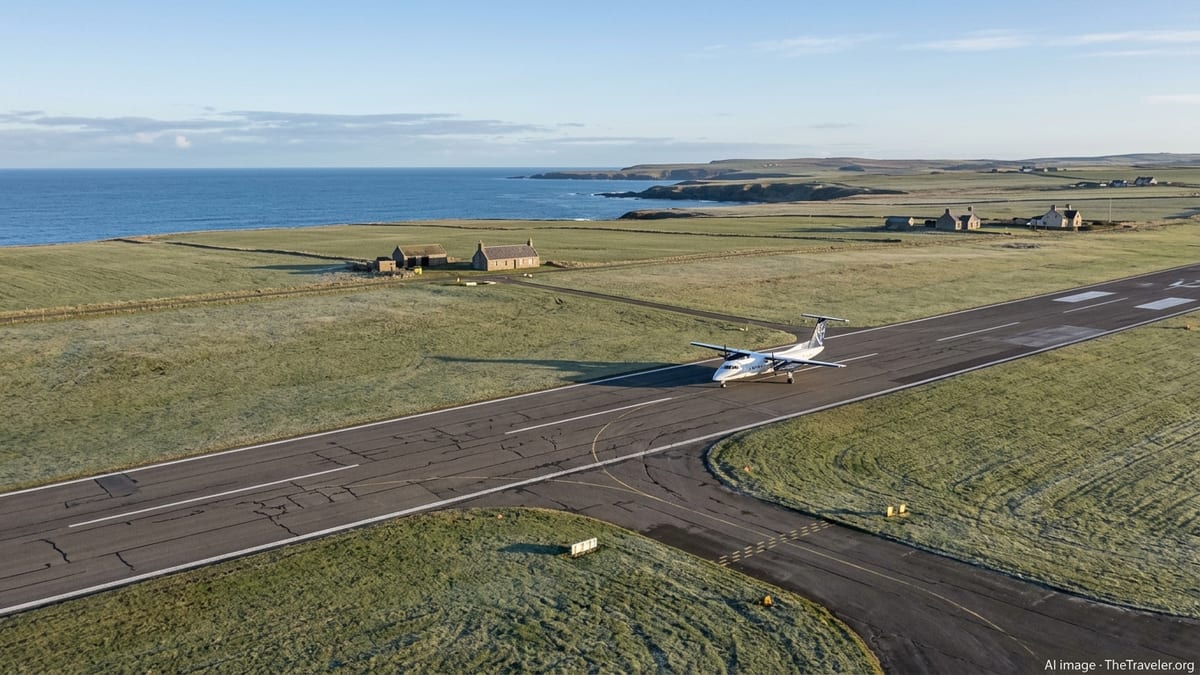
Contract Extension Secures Critical Regional Link
Publicly available information from The Highland Council and the operator shows that Air Charter Scotland has been appointed to run the Wick John O’Groats to Aberdeen route under a Public Service Obligation contract through to the end of March 2026. The contract follows an emergency tender process launched in late 2025 after the collapse of the previous operator, restoring scheduled flights that are regarded locally as a lifeline for Caithness.
The deal formalises what had initially been framed as a shorter term arrangement and signals a push for more stable connectivity after several years of uncertainty on the route. The extension to 2026 is designed to give passengers, businesses and public services greater confidence to plan ahead, while giving the airline time to bed in its first foray into scheduled domestic operations.
Under the agreement, the route continues to benefit from financial support from the Scottish Government and Highland Council, enabling fares to be kept at levels intended to be affordable for local residents and small businesses. The model reflects wider policy priorities around sustaining rural communities and countering depopulation pressures across the Highlands.
For Air Charter Scotland, best known for managing and operating business jets on an on demand basis, the Wick–Aberdeen contract represents a strategic expansion into scheduled regional aviation. Company statements indicate the carrier sees long term potential in applying its charter experience to thin routes that require a tailored, community focused approach.
Timetable and Capacity Aimed at Everyday Travellers
The extended service operates multiple weekly frequencies designed to support both business and personal travel between Caithness and Scotland’s north east. Information published by Aberdeen International Airport and local authorities indicates that weekday morning departures from Wick to Aberdeen, coupled with return flights later in the day and additional services at weekends, are intended to offer viable day trip options and better onward connections.
Recent coverage in regional transport and travel publications highlights that Air Charter Scotland has already moved to boost capacity on the route by increasing the number of available seats on key days. This is being achieved through the deployment of an 18 seat turboprop aircraft, a configuration regarded as appropriate for the relatively short sector length and variable demand typical of remote regional services.
Observers of the Highlands and Islands aviation market note that the timetable reflects lessons learned from earlier iterations of the Wick–Aberdeen link, when schedules were often criticised for making same day returns difficult. The current pattern aims to balance the needs of business travellers requiring full working days in Aberdeen with those of residents using the service for medical appointments, education, shopping or onward journeys south.
By locking in this timetable structure to 2026, planners hope to encourage a shift from ad hoc usage toward more habitual flying, which in turn can strengthen the commercial case for maintaining and potentially enhancing frequencies in the future.
Economic Stakes for Caithness and the Wider Highlands
The Wick–Aberdeen connection carries significance far beyond its modest passenger numbers. Policy documents and local economic analyses consistently describe the air link as critical infrastructure for Caithness, underpinning access to employment, healthcare and higher education, and supporting sectors such as energy, tourism and professional services.
Business groups in the far north have long argued that reliable air services are a prerequisite for attracting investment and retaining skilled workers, particularly in industries tied to the nuclear decommissioning programme at Dounreay and emerging opportunities in offshore wind and wider renewables. The extended contract with Air Charter Scotland is therefore being interpreted as a tangible step toward improving the area’s competitiveness.
The route also plays a role in sustaining Wick John O’Groats Airport itself, which in recent years has seen periods with no scheduled commercial flights. Maintaining a regular connection to Aberdeen helps justify continued investment in airport facilities and supports employment tied directly and indirectly to aviation activity.
More broadly, transport planners view the Wick–Aberdeen PSO as part of a network of subsidised links that knit together Scotland’s remote communities. Ensuring that one of the country’s most northerly population centres retains predictable air access to a major regional hub aligns with policy objectives around territorial cohesion and inclusive growth.
Public Service Obligation Model Under Scrutiny
The decision to extend the Wick–Aberdeen contract until 2026 reinforces the central role of the Public Service Obligation framework in sustaining regional air services that would struggle to survive on a purely commercial basis. Under this mechanism, governments can tender routes for a fixed period, specifying minimum service levels in return for financial support.
In the case of Wick–Aberdeen, publicly available documents describe a funding structure in which national and local authorities share responsibility for underwriting the service. In return, the operator commits to a defined timetable, fare caps and performance standards intended to reflect community priorities rather than just yield management considerations.
Analysts of regional aviation note that the PSO model is likely to remain a feature of Scotland’s transport landscape as long as road and rail alternatives entail long journey times and challenging weather conditions. Flight times between Wick and Aberdeen are typically under an hour, compared with many hours by road, a difference that becomes especially significant for time critical appointments or business engagements.
The extension of the Wick–Aberdeen PSO to 2026 will therefore be closely watched as a test of how smaller operators such as Air Charter Scotland can adapt to scheduled operations while delivering the reliability and community responsiveness that the framework is designed to incentivise.
Prospects for Further Growth Beyond 2026
With the current contract running to March 2026, attention is already turning to what might follow. Stakeholders in Caithness and the wider Highlands are expected to use the stability offered by the extension to build a stronger case for either renewing or expanding the service in the next tender cycle.
Some regional commentators have suggested there may be scope to adjust frequencies or timings if demand strengthens, particularly around peak travel days or in response to large scale industrial and energy projects. Others have pointed to the potential for better integration with rail and bus services at both Wick and Aberdeen to create more seamless multimodal journeys.
For Air Charter Scotland, performance on the Wick–Aberdeen route will shape its reputation as a scheduled carrier and could influence whether it pursues similar opportunities elsewhere in Scotland or beyond. Consistently strong load factors, punctuality and community engagement would bolster arguments for a long term role in the country’s regional aviation network.
While the future beyond 2026 will depend on funding decisions and the outcome of any subsequent tender, the current extension marks a notable milestone. It confirms that, after a period of turbulence and uncertainty, the Wick–Aberdeen route has a clear runway for growth in the medium term and underscores the strategic importance of small regional links in Scotland’s wider transport picture.