

More news on this day
Air China is deepening its China–Europe network with new and upgraded daily services to Frankfurt and Milan, underscoring a wider rebound in long-haul connectivity between Chinese and European hubs.
Get the latest news straight to your inbox!
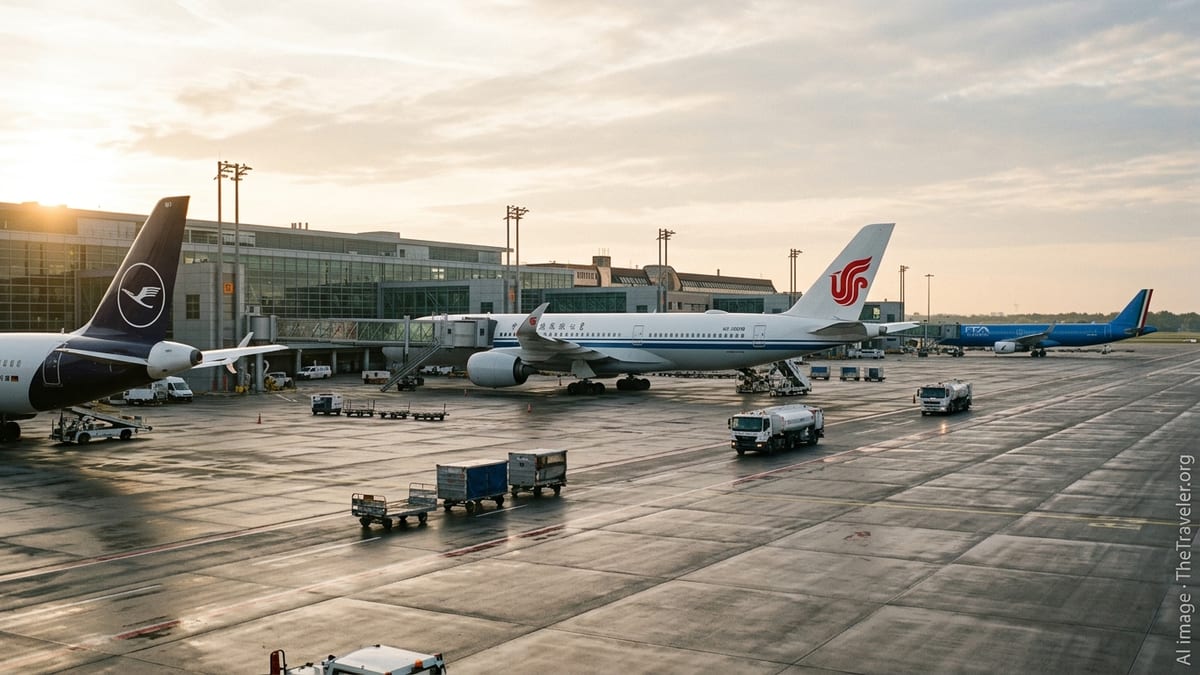
New Daily Links Anchor a Rebuilt China–Europe Network
Publicly available schedules and industry analyses indicate that Air China is positioning Frankfurt and Milan as central pillars in its renewed push to reconnect Chinese cities with Europe. The carrier has progressively rebuilt and expanded long-haul links from hubs such as Beijing and Chengdu, with Frankfurt and Milan now served on a daily basis on key routes. These additions sit alongside broader capacity growth between China and Europe as travel demand recovers and competition intensifies.
Route data compiled by specialist aviation outlets shows that Air China has increased frequencies on the Beijing–Frankfurt sector and built up a pattern of regular non-stop flights between Chinese cities and Milan Malpensa. In parallel, reports tracking network development highlight that Chinese and European airlines together are restoring and expanding long-haul services after several years of constrained operations, with China–Europe corridors among the fastest-growing long-haul markets.
These developments follow a wider trend in which Chinese carriers are adding long-haul capacity not only to traditional gateways such as Frankfurt, Paris and London, but also to secondary European cities. Within that pattern, Frankfurt and Milan stand out for Air China as strong anchors that combine robust local demand with extensive onward connectivity through European partners and interline agreements.
Frankfurt Strengthens Role as a Premier Mainland China Gateway
Timetable information and route announcements show that Air China has progressively expanded services between Beijing Capital and Frankfurt, moving toward daily operations on the trunk route in the northern summer season. Industry route trackers have detailed additional weekly rotations, elevating the connection from a limited post-pandemic schedule to a high-frequency offering favored by business travelers and cargo customers.
Frankfurt’s role as a major Star Alliance hub makes it a logical focus for Air China. The airport offers extensive same-day connections to continental Europe and North America, allowing itineraries that link Chinese cities to a broad range of secondary destinations via a single stop. With increased Air China capacity, travelers gain more departure-time choices in both directions, improving flexibility for corporate itineraries and time-sensitive travel.
For Frankfurt Airport, the strengthened schedule from China supports efforts to rebuild long-haul traffic volumes and cargo flows. Air China’s additional frequencies are part of a broader recovery in China–Germany air links, which also involves European partner carriers restoring their own services. Available data indicates that this combined activity is helping to close the gap with pre-2020 capacity, particularly during peak summer travel periods.
Milan Malpensa Emerges as a Key European Node for Western China
In Italy, Air China has been steadily reinforcing Milan Malpensa as a focal point for its European operations. Published route coverage from aviation analysts notes that Chengdu Tianfu–Milan was added as a new non-stop service and integrated into a pattern of regular flights linking Milan with multiple Chinese cities. These moves have pushed Air China’s Milan operation to several dozen weekly flights when Rome services are included, with daily or near-daily frequencies on core routes.
Coverage of the Chengdu–Milan launch emphasized Air China’s strategy of using Milan as a European gateway for western China, complementing existing services to Frankfurt and London from Chengdu. By offering non-stop links from inland Chinese hubs to northern Italy, the carrier is targeting flows tied to manufacturing, fashion, design and tourism, while shortening travel times for passengers who previously needed to connect through Beijing, Shanghai or coastal hubs.
Data on broader market developments shows that Italy has become one of the most competitive China–Europe markets, with multiple Chinese airlines now operating to Milan and Rome. Within this environment, Air China’s move to daily or near-daily patterns on key Milan routes serves both defensive and growth purposes: defending market share against Chinese competitors and tapping into rising demand from Italian exporters, tour operators and Chinese outbound travelers.
Competitive Landscape Intensifies on China–Europe Corridors
The decision to run daily services to Frankfurt and Milan aligns with a wider wave of capacity additions by Chinese carriers on European routes. Reports on new services and schedule changes highlight that other Chinese airlines have launched or upgraded flights to Milan, Copenhagen, Geneva and various northern European cities, often at daily frequencies out of Shanghai and other coastal hubs. These routes frequently compete head-to-head with Air China on major city pairs, particularly to Italy and central Europe.
Industry commentary suggests that this competition is reshaping pricing and product strategies on China–Europe corridors. As capacity returns, carriers are balancing yield management with efforts to stimulate demand, especially from tour groups, students and small and medium-sized enterprises. Daily frequencies to hubs such as Frankfurt and Milan give Air China a foundation to offer more consistent schedules, through-fares and connection options, which can be critical differentiators in a crowded marketplace.
At the same time, European airlines are incrementally rebuilding their own China operations, adding more non-stop services from hubs in Germany, France, the Netherlands and the Nordic region. This dual-side growth means that passengers now see a mix of options: direct flights on European airlines, non-stops on Chinese carriers, and combinations that connect through third-country hubs. Air China’s strengthened presence in Frankfurt and Milan is a key element of its response to this evolving landscape.
Implications for Business, Tourism and Cargo Flows
For corporate travelers, daily Air China services to Frankfurt and Milan are expected to improve planning flexibility and reliability. Regular frequencies make it easier to schedule short-notice trips, align meeting calendars across time zones and secure preferred cabin classes. Travel managers also gain more options when structuring corporate contracts and routing policies for China–Europe travel.
Tourism flows in both directions are likely to benefit as well. Daily links from major Chinese cities to Frankfurt and Milan connect passengers to popular destinations across Europe, from central European cities reachable by rail from Frankfurt to leisure regions in Italy and neighboring countries. The increased ease of access may support growth in organized group tours, independent travel and combined itineraries that pair multiple European countries in a single trip.
Air cargo is another important dimension of the enhanced services. High-frequency passenger flights typically carry significant bellyhold cargo, particularly on routes connecting manufacturing hubs in China with industrial regions in Germany and northern Italy. With additional weekly frequencies and more consistent schedules, logistics providers gain greater flexibility for time-sensitive shipments, from automotive components and machinery to high-value consumer goods. This, in turn, supports supply chains that rely on predictable China–Europe air links.