

More news on this day
Air China has restarted direct passenger flights between Beijing and Pyongyang after a six-year suspension, a move that is expected to reshape the limited but symbolically important tourism flows into North Korea.
Get the latest news straight to your inbox!
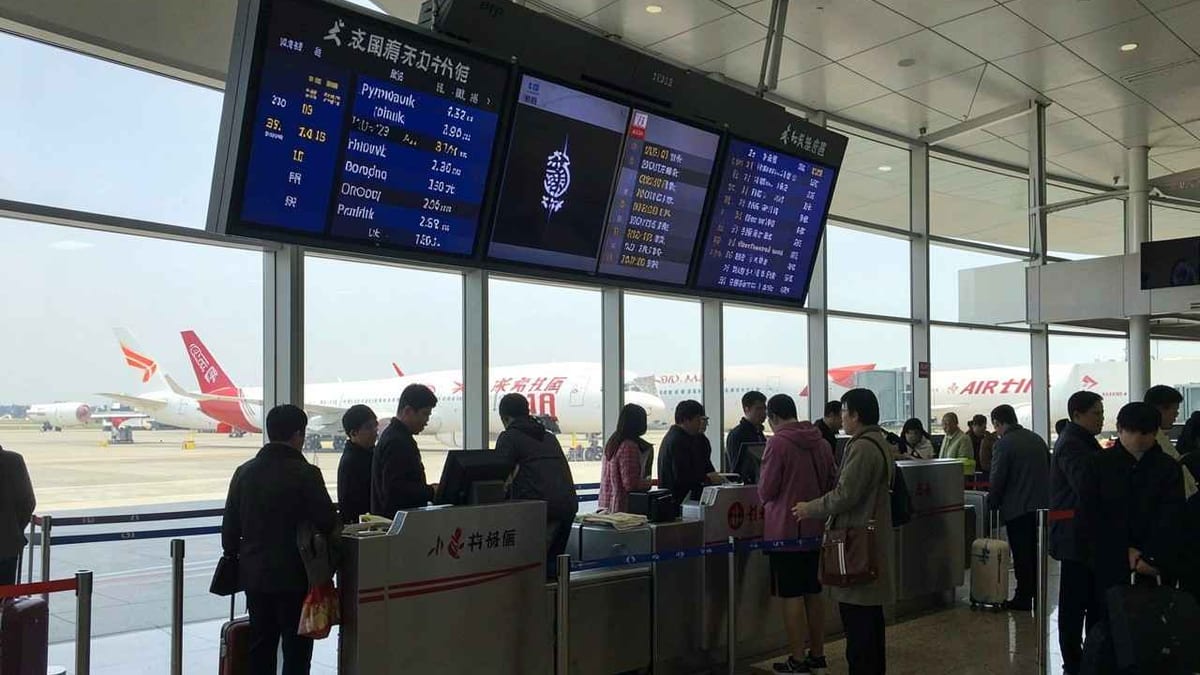
Image by Travel And Tour World
From Pandemic Shutdown To Limited Reopening
The relaunch of Air China’s Beijing–Pyongyang service on March 30, 2026, follows one of the world’s longest pandemic-era border closures. Passenger flights and trains between China and North Korea were halted in early 2020 as Pyongyang imposed sweeping controls on cross-border movement.
Publicly available information shows that North Korea began easing those restrictions only gradually. Air Koryo resumed limited routes in 2023, and Russian tour groups were among the first foreign visitors allowed back in 2024. Observers note that this sequencing underlined Pyongyang’s preference for tightly managed, geopolitically aligned tourism rather than a broad reopening.
Reports from rail and aviation trackers indicate that passenger train links between Beijing and Pyongyang resumed in March 2026, shortly before the Air China restart. The restoration of both air and rail connections within weeks of each other points to a coordinated effort to normalize people-to-people exchanges with China after a six-year interruption.
For North Korea, these steps restore a critical external lifeline. Before the pandemic, Chinese visitors were widely estimated to account for the vast majority of the country’s foreign tourists, generating hard currency for state-run hotels, attractions and retail outlets.
New Flight Schedule Signals Cautious Scaling-Up
According to published schedule data, Air China’s revived service operates initially as a modest but regular link. Flights between Beijing Capital International Airport and Pyongyang’s Sunan International Airport are listed once weekly on Mondays from March 30 through mid-May, before shifting to a reduced pattern in June.
Industry reports describe the route as one of North Korea’s very few scheduled international air connections. The use of single-aisle aircraft and a limited weekly frequency suggests that both sides are testing demand and operational arrangements rather than rushing into a full-scale relaunch.
Fare information compiled by regional media points to economy-class tickets priced in the mid-hundreds of U.S. dollars equivalent, broadly in line with other short-haul international routes from Beijing that have constrained capacity. For Chinese travelers interested in highly unusual destinations, the resumption offers a clearer and more predictable option than the sporadic charters that had been reported since 2023.
For travel planners, the key change is reliability. A scheduled service by China’s flag carrier provides a fixed framework around which tour agencies can build multi-day itineraries, something that was difficult when North Korea accepted only occasional charter flights or specialized delegations.
China Poised To Dominate Post‑Pandemic Tourism To North Korea
Before 2020, research on cross-border tourism consistently highlighted China as North Korea’s dominant source market, with estimates that Chinese visitors made up around 90 percent of all foreign arrivals. The overwhelming majority entered on short guided packages focused on Pyongyang, Kaesong and select coastal or mountain areas.
Travel-industry coverage suggests that this pattern is likely to reassert itself as restrictions loosen. Chinese citizens benefit from geographic proximity, a large and well-established network of DPRK-specialist travel agencies in cities such as Beijing and Dandong, and comparatively straightforward visa and transport arrangements when routes are open.
With Air China back on the Beijing–Pyongyang corridor and passenger trains also restored, Chinese tourists now have a dual gateway into the country. Analysts following the aviation and rail sectors argue that this creates the conditions for a renewed surge of packaged tours once Pyongyang authorizes broader access for Chinese groups.
At the same time, the restart fits within China’s broader outbound travel recovery. Domestic data and regional tourism statistics show strong pent-up demand for international trips since late 2023, and niche destinations have benefited as travelers seek distinctive experiences after years of restrictions.
Opportunities And Constraints For Tour Operators
Specialist tour companies in China and abroad have long treated North Korea as a tightly controlled but marketable niche, emphasizing historic sites, socialist-era architecture, mass games events and coastal developments such as Wonsan-Kalma when accessible. The return of Air China flights gives these operators a critical logistical anchor for future packages.
However, publicly available guidance suggests that operational constraints will remain significant. All itineraries inside North Korea are arranged through state agencies, movement beyond approved routes is strictly limited, and last-minute changes are not uncommon. Agencies therefore tend to design highly structured group tours that can absorb disruptions and comply with regulations.
Insurance requirements, currency rules and restrictions on electronic devices are additional factors that agencies must explain clearly to clients. Recent experiences with postponed or reconfigured tours during the tentative reopenings of 2024 and 2025 have underlined the importance of flexible booking terms and clear communication about potential schedule shifts.
For now, most observers expect growth to be gradual rather than explosive. The once-weekly flight pattern and continued emphasis on group travel point to a carefully calibrated reopening in which tourism remains subordinate to public-health, political and security considerations inside North Korea.
Geopolitical Undercurrents Behind The Tourism Rebound
The restoration of Air China’s Pyongyang route also carries clear geopolitical overtones. Coverage in regional outlets links the move to warming ties between Beijing and Pyongyang, including recent high-level exchanges and cooperation pledges.
By resuming a flagship commercial link, China reinforces its role as North Korea’s primary economic partner and gateway to the outside world. Some analysts suggest that the predictable air corridor could eventually facilitate not only tourism but also business travel tied to border economic zones, infrastructure projects and limited trade initiatives.
For North Korea, allowing a major Chinese state-owned carrier back into its capital airport signals confidence that it can manage a controlled influx of foreign visitors while maintaining strict oversight. It also diversifies the country’s external connections beyond the Russian charter flights and humanitarian missions that have dominated headlines since 2023.
How far this reopening will extend remains uncertain. Yet with Air China once again touching down in Pyongyang and trains crossing the border from Beijing and Dandong, the foundations are in place for Chinese tourism to reclaim its central role in one of the world’s most unusual travel markets.