

More news on this day
Air China’s Shandong Airlines unit plans to lease 10 additional Boeing 737 aircraft, even as the wider Air China group reports widening losses, underscoring the carrier’s determination to grow capacity in a recovering but highly competitive Chinese market.
Get the latest news straight to your inbox!
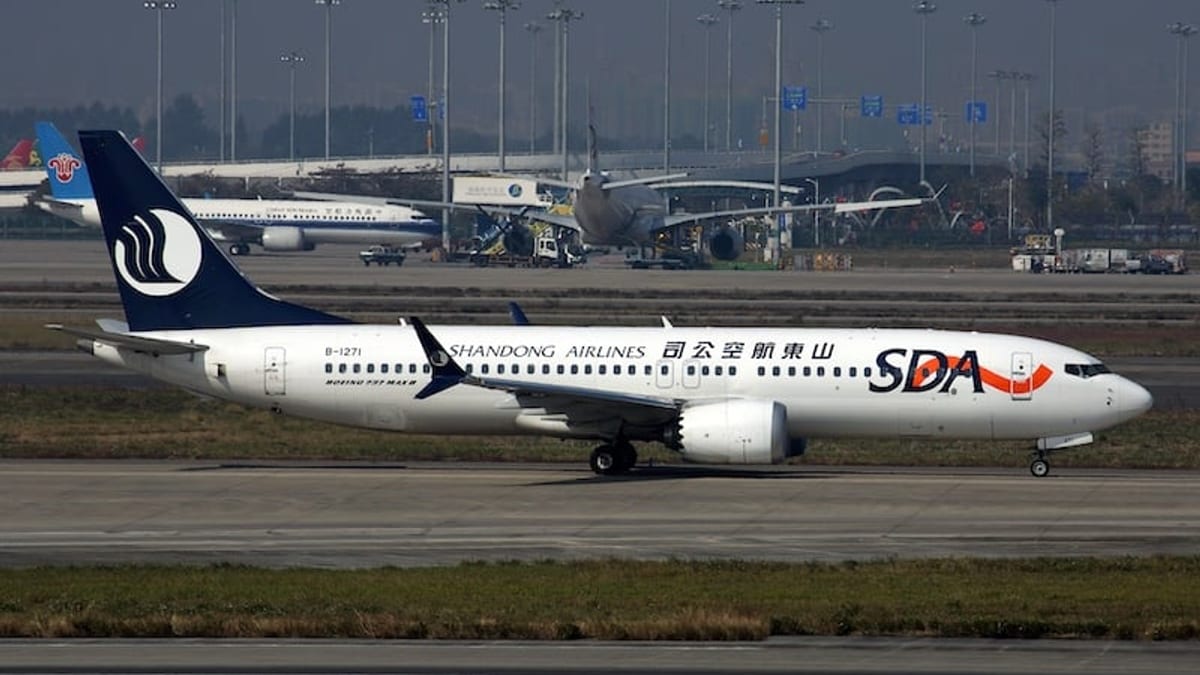
Image by AWN RSS by content source
Lease Deal Expands Shandong Airlines’ Narrowbody Fleet
According to recent regulatory disclosures and industry coverage, Shandong Airlines has agreed to lease 10 Boeing 737 aircraft as part of a broader fleet strategy within the Air China group. The aircraft are expected to be deployed primarily on domestic and short-haul regional routes, where demand has rebounded more quickly than on long-haul international services. The move reflects an effort to reinforce Shandong Airlines’ position in China’s populous Shandong province and neighboring regions.
The leasing arrangement allows the airline to add capacity without the heavy upfront capital outlay associated with direct purchases. Operating leases remain a favored tool among Chinese carriers seeking flexibility as market conditions evolve. By relying on leased aircraft, Shandong Airlines can adjust its fleet plan more easily if traffic projections fail to materialize or if macroeconomic conditions soften.
Shandong Airlines, which is majority controlled by Air China through Shandong Aviation Group, already operates a predominantly Boeing 737 fleet. The incoming aircraft are expected to integrate smoothly into existing operations, supporting crew commonality, maintenance efficiencies, and scheduling flexibility across its domestic network.
Capacity growth at the regional subsidiary is also aligned with national aviation planning, which continues to prioritize improved connectivity between provincial capitals, coastal hubs, and emerging inland cities. Shandong’s enhanced fleet will position it to capture traffic flows tied to tourism, business travel, and the continued development of regional airport infrastructure.
Group Losses Widen Despite Traffic Recovery
While Shandong Airlines presses ahead with fleet expansion, the Air China group has reported widening losses, reflecting lingering financial pressures from the long pandemic downturn and a patchy international recovery. Recent interim financial results show that higher operating costs, currency movements, and still-normalizing long-haul yields have weighed on the bottom line, even as passenger numbers and load factors improve.
Publicly available financial statements indicate that the group’s net result remains in negative territory, with foreign exchange losses and interest expenses adding to pressure from fuel and labor costs. The consolidation of Shandong Airlines and other affiliates into Air China’s accounts has increased reported revenue, but it has also magnified exposure to regional market volatility.
Analysts note that China’s big three state-controlled carriers, including Air China, have yet to fully restore international capacity to pre-2020 levels. Long-haul routes, traditionally a key profit driver, continue to face slower demand recovery, evolving travel restrictions in some markets, and intensifying competition from foreign airlines retrenching into Asia.
Against this backdrop, management attention has turned to improving network efficiency, renegotiating lease terms where possible, and managing debt profiles. The decision to keep investing in fleet growth at Shandong Airlines suggests that Air China sees domestic and near-regional markets as central to its path back to profitability, even if this temporarily coincides with continued red ink at group level.
Balancing Fleet Strategy With Financial Discipline
The choice to add 10 leased Boeing 737s illustrates the difficult balance Chinese carriers must strike between seizing growth opportunities and preserving financial discipline. Industry data show that domestic passenger volumes in China have surpassed pre-pandemic benchmarks, driven by pent-up leisure demand and policy support for regional connectivity. However, yields remain uneven, and competition among state-owned and private airlines is intense.
Fleet planners at Air China and Shandong Airlines appear to be betting that modern, fuel-efficient narrowbodies will help contain unit costs and support higher aircraft utilization. Leasing rather than purchasing outright preserves cash and may allow the group to phase in or phase out capacity in line with demand cycles. At the same time, lease liabilities contribute to overall leverage, a sensitive issue for carriers that accumulated significant debt over several loss-making years.
Public filings highlight Air China’s sizable fleet of more than 900 aircraft across the group, including a mix of self-owned, finance-leased, and operating-leased jets. The incremental 737s at Shandong Airlines will be folded into this broader asset base, which the company has been reshaping through selective retirements and deliveries. The emphasis has gradually shifted toward younger aircraft that offer lower fuel burn and reduced maintenance burdens, supporting cost recovery efforts.
Sector observers indicate that the timing of new leases is also influenced by aircraft availability and pricing in the global leasing market. With lessors repositioning portfolios and some Western carriers delaying deliveries or deferring growth plans, Chinese airlines have gained access to aircraft on terms that may be more favorable than in the peak pre-pandemic cycle.
Competition and Network Positioning in Eastern China
Shandong Airlines’ lease-driven expansion must be seen in the broader context of competition across eastern China, one of the country’s most contested aviation markets. The carrier operates from key bases including Jinan and Qingdao, where it faces rivals such as China Eastern Airlines, China Southern Airlines, and various low-cost operators. Adding 10 Boeing 737s will enable Shandong to increase frequencies on core trunk routes and to open or restore thinner point-to-point services.
Reports indicate that capacity growth will be directed at routes connecting Shandong province with major hubs such as Beijing, Shanghai, and Guangzhou, as well as popular tourist destinations. Higher frequencies are particularly important to capture business travelers, who demand schedule flexibility and seamless connections, while additional seats during holidays and peak travel seasons can support load factors and ancillary revenue.
The expansion also feeds into Air China’s broader network strategy in northern and eastern China. Through coordinated scheduling and codeshare arrangements within the group, Shandong’s flights can feed long-haul and interprovincial services, improving connectivity for secondary cities. This hub-and-spoke logic has become more important as international routes gradually return, enabling passengers from regional centers to access the global network via Beijing and other gateways.
However, competition for slots at congested airports and the proliferation of alternative high-speed rail options mean that incremental capacity does not guarantee profitability. Airlines operating in eastern China must carefully manage pricing, revenue management, and marketing strategies to ensure that new aircraft are deployed on routes where they can earn sustainable returns.
Outlook: Cautious Optimism Amid Persistent Risks
The decision by Shandong Airlines to take on 10 leased Boeing 737s, in the midst of widened losses at the Air China group, encapsulates the cautious optimism prevailing in China’s aviation sector. Traffic trends and policy support point toward continued growth in domestic air travel, yet the financial scars of the past several years are still visible in balance sheets and earnings reports.
Industry commentary suggests that Air China’s near-term focus will remain on restoring profitability through disciplined capacity deployment, fleet modernization, and cost control, while gradually rebuilding its international presence. The Shandong lease deal can be viewed as a tactical move within that broader strategy, aimed at consolidating the group’s presence in a strategically important region.
Risks remain significant. Fuel price volatility, currency fluctuations, geopolitical tensions, and potential public health disruptions all pose challenges to forecasting demand and planning capacity. Furthermore, structural shifts, including the rise of China’s domestic aircraft manufacturing and the growth of high-speed rail, may reshape competitive dynamics over the medium term.
For now, the additional 737s at Shandong Airlines signal that Air China is prepared to invest in growth despite the drag of current losses. How effectively the group translates new capacity into sustainable earnings will be a key test of its post-crisis strategy and its ability to navigate a transformed global aviation landscape.