

More news on this day
Air Congo is laying the groundwork for its most ambitious expansion yet, rolling out new African routes from Kinshasa in 2026 while firming plans for future long-haul flights to Paris, Brussels and Dubai that would put Belgium and the United Arab Emirates alongside France on the Democratic Republic of Congo’s growing aviation map.
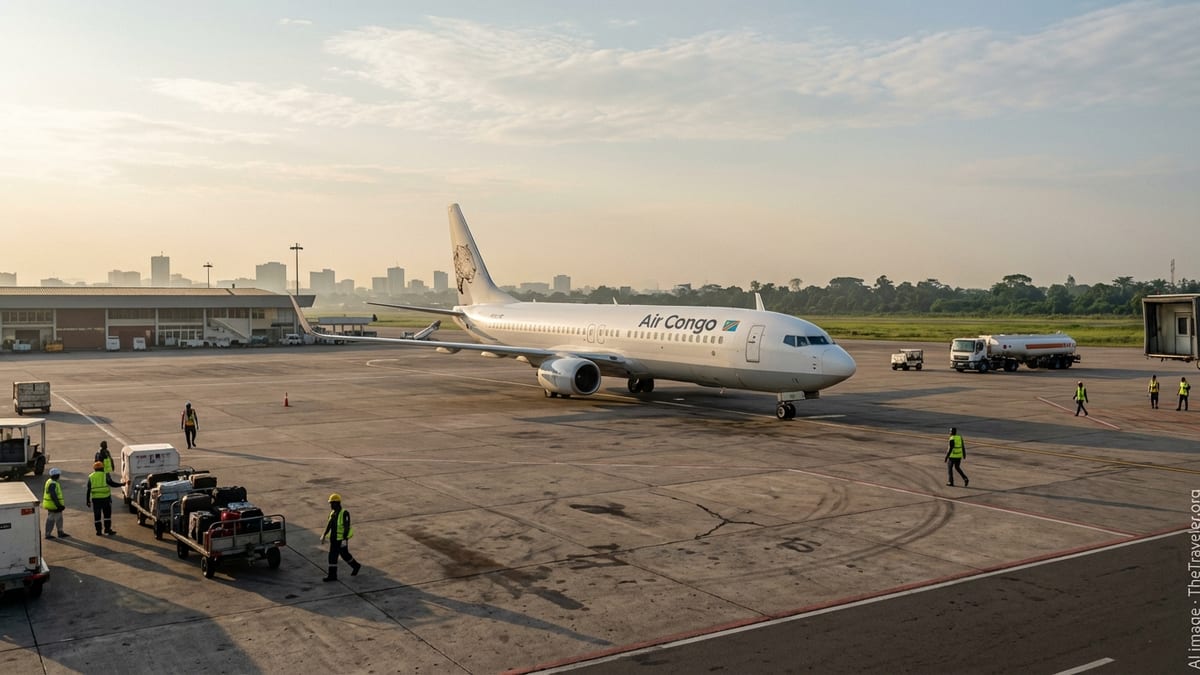
Regional Rollout Begins With African Hubs
The first stage of Air Congo’s roadmap is firmly rooted on the continent. The flag carrier, created as a joint venture between the Congolese state and Ethiopian Airlines, has confirmed a sequence of new routes from its Kinshasa hub to Johannesburg, Entebbe, Douala, Cotonou and Dar es Salaam starting from late March 2026. The move signals a decisive shift from a largely domestic operation toward a regional network designed to plug the Democratic Republic of Congo into Africa’s busiest air corridors.
According to recent company announcements, flights from Kinshasa to Johannesburg and Entebbe are due to start on March 22, 2026, followed by services to Douala and Cotonou on March 28 and Dar es Salaam on April 4. These routes are being launched with Boeing 737-800 aircraft, with additional jets expected to join the fleet over the next two years. For business and leisure travelers alike, the expansion promises shorter journey times and fewer connections to reach Southern, Central and East Africa.
Johannesburg, Entebbe and Dar es Salaam in particular are seen as strategic gateways, offering onward links across Africa and to the Middle East, Europe and Asia. By anchoring itself in these markets early, Air Congo is positioning Kinshasa as a viable alternative hub for regional travel and as a stepping stone for future intercontinental operations.
A Joint Venture Built for International Ambition
Air Congo’s international leap is underpinned by its joint-venture structure. The airline was launched in late 2024 with the Congolese government holding a majority stake and Ethiopian Airlines providing technical expertise, aircraft and commercial support. That partnership has enabled the young carrier to ramp up operations quickly, moving from domestic services to a multi-country African network in less than two years.
Officials in Kinshasa have framed aviation as a pillar of national development, arguing that better air links are essential to unlocking investment in mining, energy and infrastructure. With domestic connectivity still limited and the country’s size posing major logistical challenges, Air Congo’s growth strategy is intended to improve internal cohesion while also inserting the DRC into regional and global trade flows.
Central to that vision is a future long-haul fleet. The airline has repeatedly indicated that its long-term plan includes up to eight Boeing 737s and two Boeing 787s dedicated to international routes. While the initial years are focused on consolidating domestic and African operations, the 787s are seen as the key to launching non-stop services from Kinshasa to major intercontinental destinations.
Paris First, Then Brussels and Dubai on the Horizon
In its published strategic outlines and public statements, Air Congo has consistently cited Paris, Brussels and Dubai as priority long-haul destinations once the widebody fleet is in place. Paris stands out as the most immediate intercontinental target, reflecting both historical ties between the francophone DRC and France and strong demand already served by foreign carriers on the Kinshasa to Paris corridor.
Brussels, home to a large Congolese diaspora and long a key European gateway for flights to Central Africa, is expected to follow closely. Securing traffic rights and slots at Brussels Airport would give the airline direct access to a market with deep cultural, economic and family connections to the DRC. Industry analysts say a Kinshasa to Brussels link could quickly become one of Air Congo’s flagship routes, particularly if schedules are designed to connect smoothly with regional flights within Congo and across Africa.
Dubai, meanwhile, represents a different but complementary opportunity. A Kinshasa to Dubai service would tap into the Middle East’s role as a global transfer hub and as a fast-growing market for African trade, tourism and investment. From Dubai, passengers could connect to Asia, Europe and North America, turning Air Congo into a feeder of long-haul traffic while also giving Congolese travelers a one-stop option to a wide range of destinations.
Competition and Cooperation on Established Corridors
Launching flights to Paris, Brussels and Dubai will place Air Congo directly into competition with some of the world’s largest and most established carriers. On the Paris route, Air France already operates long-haul services between Charles de Gaulle and Kinshasa, while several African and Gulf airlines offer one-stop connections via their own hubs. Brussels is also served by European and African carriers that have decades of experience on Central African routes.
Yet the DRC’s national carrier is not positioning itself purely as a rival. The joint venture with Ethiopian Airlines signals a preference for cooperative models such as codeshares and interline agreements, which could extend Air Congo’s reach without requiring a large standalone long-haul fleet from day one. Industry observers expect the airline to explore partnerships not only with Ethiopian but also with European and Gulf carriers to optimise schedules and share traffic.
Pricing, service quality and reliability will be critical. Travelers in Central Africa have long complained about high fares and limited options on international services from Kinshasa. If Air Congo can pair competitive pricing with a robust regional network that feeds traffic into long-haul flights, it could carve out a sustainable niche even on crowded corridors to France, Belgium and the United Arab Emirates.
What the 2026 Roadmap Means for Travelers
For now, the changes most visible to passengers will come from the African network expansion beginning in March 2026. Direct links from Kinshasa to Johannesburg, Entebbe, Douala, Cotonou and Dar es Salaam will immediately reduce travel times within the region and open new options for multi-stop itineraries using Kinshasa as a connecting hub.
As additional aircraft join the fleet and operational experience grows on these regional routes, the groundwork will be laid for long-haul launches. Though precise dates have not yet been announced for Paris, Brussels and Dubai services, officials describe these destinations as medium-term priorities firmly embedded in the airline’s plan for the second half of the decade.
For Congolese travelers, the prospect of more direct international flights from Kinshasa represents a significant shift after years of relying heavily on foreign airlines for long-distance journeys. For international visitors and investors, a stronger homegrown carrier could make the DRC more accessible and better integrated into global aviation networks, with Belgium and the United Arab Emirates poised to join France as key long-haul partners once Air Congo’s roadmap is fully realized.