

More news on this day
Air Europa has restored its Madrid–Caracas route after a three-month suspension, a move widely seen as a turning point for Venezuelan tourism and a vital step in rebuilding economic and family links between Spain and Venezuela.
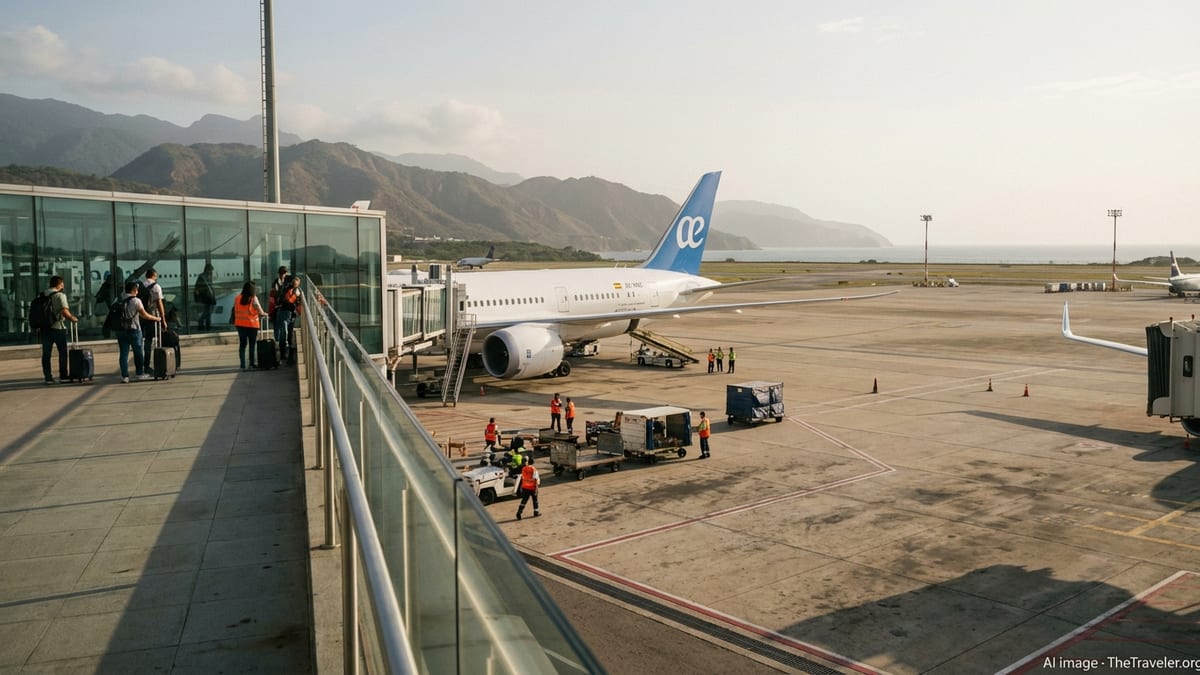
A Strategic Route Returns After Months of Uncertainty
The relaunch of Air Europa’s Madrid–Caracas service on February 17, 2026, brings fresh momentum to a corridor that had fallen abruptly silent since late November 2025. The airline is the first major Spanish carrier to return to Venezuela following a wave of suspensions triggered by security advisories over Venezuelan airspace and a period of intense geopolitical tension.
Initially operating on select dates in February, the route is being reintroduced with three weekly flights as part of what the airline describes as a gradual reactivation plan. Services on February 17, 20 and 22 mark the reopening of the link, with further dates through late February and March already appearing in schedules as conditions stabilize.
For Air Europa, the route is strategically important. Madrid is a powerful long haul hub for connections across Europe and to parts of Africa and the Middle East, making the Madrid–Caracas leg a key bridge for Venezuelan travelers and for Spanish and European visitors heading to Latin America. Restoring this connection is both a commercial decision and a signal of renewed confidence in Venezuela’s role on the regional aviation map.
The comeback also carries symbolic weight. For months, Venezuela had watched its international connectivity shrink, with passengers forced into complex itineraries through third countries. The return of a direct Madrid–Caracas flight softens that isolation and helps rebuild trust between travelers and airlines operating into the country.
From Suspension to Restart: How the Air Link Was Lost
The restoration of flights follows a turbulent period that began in November 2025, when multiple international carriers halted services to Venezuela. A security advisory from United States aviation authorities warning of heightened risks over Venezuelan airspace, combined with recommendations from Spain’s aviation safety agency, prompted Spanish airlines to ground their Caracas operations on safety grounds.
Air Europa, which previously operated up to five weekly frequencies between Madrid and Caracas, suspended services alongside Iberia and Plus Ultra. Venezuelan authorities responded by revoking or freezing operating permits for several foreign airlines, accusing them of aligning with hostile foreign policies. The result was a sharp contraction in international capacity and a fresh wave of uncertainty for travelers and the tourism sector.
Passengers were left stranded or forced to reroute through neighboring countries such as Colombia and Panama, often facing higher fares, longer travel times and complicated visa situations. Reports from the period highlighted families sleeping in terminals, disrupted business trips and students unsure how or when they would be able to return home.
The three month suspension underscored the fragility of Venezuela’s air connectivity. Despite a modest revival of tourism and improved load factors on certain routes, decisions made far outside the tourism sector, from military deployments to regulatory advisories, could still bring traffic to a standstill overnight.
New Schedule, Modern Aircraft and Enhanced Onboard Experience
Air Europa’s restored Madrid–Caracas operation is centered on flight pair UX071 and UX072, timed to offer evening arrival into Caracas and a late night departure back to Spain. The typical schedule sees UX071 leave Madrid in mid afternoon and arrive at Caracas’ Maiquetía Simón Bolívar International Airport in the early evening, with UX072 departing Caracas late at night and landing in Madrid around midday the following day.
The route is operated by Boeing 787 Dreamliner aircraft, part of Air Europa’s long haul fleet renewal. The twin engine widebody is marketed for its lower fuel burn, reduced noise footprint and improved passenger comfort compared with older generation aircraft. Features such as lower cabin altitude, higher humidity and larger windows aim to reduce fatigue and jet lag on the transatlantic crossing.
The aircraft’s configuration offers both economy and business class cabins, giving the route appeal to a mix of leisure travelers, visiting friends and relatives traffic and corporate passengers. The use of the 787 also reflects the airline’s expectation of strong demand, with launch flights reported to be operating at high load factors as pent up demand converts into bookings.
Health and safety remain high on the agenda. Air Europa highlights high efficiency particulate air filtration systems that renew cabin air every few minutes and remove the vast majority of airborne particles. While such technology is standard across many modern fleets, its promotion is particularly important on routes where traveler confidence has been tested by months of disruption and geopolitical headlines.
Reopening the Door to Venezuelan Tourism
The return of direct air service from Madrid is more than a scheduling update for Venezuela’s tourism industry. Spain has long been one of the country’s principal European source markets, and Madrid functions as a gateway for travelers from across the continent. Restoring a reliable, nonstop connection is expected to provide a meaningful boost to inbound arrivals.
Tourism officials and local businesses view the route as a vital channel for promoting destinations that had been gradually regaining popularity before the latest wave of suspensions. Caracas offers urban and cultural tourism, while beach and nature destinations such as Isla de Margarita, Los Roques and the Andean city of Mérida rely heavily on international visitors who typically arrive via the capital.
With direct flights back on sale, tour operators in Spain and Venezuela are already updating brochures and online packages. Multi stop itineraries that combine cultural stays in Caracas with beach holidays and eco tourism experiences are again marketable without the added complexity of multiple connections and overland segments through neighboring countries.
The restored route also supports hotel occupancy, restaurant trade and transport services in and around Maiquetía and Caracas. After months of depressed demand, stakeholders in the tourism value chain are looking to the Madrid–Caracas flight as an anchor that can justify new investments and reopen temporarily closed operations.
Families, Students and Business Travelers Reconnected
While tourism bodies celebrate the economic advantages, the most immediate beneficiaries of Air Europa’s return are Venezuelan migrants, students and binational families who depend on the Spain link. Spain is home to a large Venezuelan diaspora, many of whom travel frequently between the two countries for family visits, legal procedures and personal reasons.
During the suspension, many travelers postponed trips or sought scarce seats on alternative routes that often required transiting through Latin American or European hubs with more limited Venezuelan access. Some risked visa complications as stays in Spain or the Schengen Area approached expiry while flights remained unavailable.
The reactivated Madrid–Caracas flights provide a more predictable and direct option. For passengers who had endured repeated cancellations and rebookings, the ability to board a nonstop flight again carries both practical and emotional significance. Testimonials at Madrid’s Barajas airport on the day of the restart reflected a mix of relief, lingering frustration over past disruptions and cautious optimism that the corridor will remain open.
Business travelers also stand to gain. Spanish and Venezuelan companies active in sectors such as energy, telecommunications, construction and services depend on face to face meetings and site visits. The months of limited connectivity hindered negotiations, delayed projects and complicated the movement of technical staff. A stable schedule reopens possibilities for commercial engagement that had been put on hold.
Economic Ripple Effects Between Spain and Venezuela
The restored air bridge has broader economic implications beyond tourism receipts. Direct flights support bilateral trade flows by facilitating business travel, cargo movements and the overall ease of doing business between Spain and Venezuela. Even on primarily passenger focused routes, belly hold capacity on widebody aircraft is an important channel for high value, time sensitive goods.
Spanish firms with interests in Venezuela see the route as an enabling factor in planning investment and service operations. For Venezuelan exporters, improved connectivity to Madrid means better access to European markets for niche products, from specialty foods to cultural and creative goods, where speed and reliability of delivery matter.
At a macro level, the presence of multiple Spanish carriers in the Venezuela market in the coming months also promises a more competitive environment on fares and service levels. With Plus Ultra scheduled to return in early March and Iberia planning its own restart in April, travelers can expect more choice on departure days, cabin products and connecting options, which may ease some of the price pressures that emerged during the suspension period.
For Spain, the resumption aligns with broader efforts to maintain strong ties with Latin America, both politically and economically. Aviation connectivity remains an essential pillar of that relationship, serving not only tourism but also diplomacy, academic exchange and cultural cooperation.
Strengthening Venezuela’s Position in Regional Air Networks
Air Europa’s move occurs within a wider reopening of Venezuela’s skies to international carriers. In parallel with the Spanish airline’s return, other operators from Europe and the Americas are working to restore or increase their services into Caracas, turning what had been a fragmented, uncertain network into a more structured set of scheduled connections.
This progressive comeback helps reposition Caracas as a functional gateway for northern South America and the Caribbean. While the days of dense pre crisis schedules have not yet fully returned, the presence of modern aircraft operating regular frequencies from key hubs such as Madrid, Lisbon and Istanbul suggests a renewed confidence among airlines in the viability of serving Venezuela under updated risk assessments.
For Venezuelan authorities, the challenge now is to consolidate these gains. That means maintaining close coordination with international regulators, ensuring that safety and operational standards are transparent, and offering a stable regulatory environment that encourages airlines to sustain and expand their presence rather than treat the country as an occasional or high risk destination.
If managed carefully, the renewed Madrid–Caracas route could become one of several pillars in a more resilient international network. This, in turn, would support long term tourism development strategies that extend beyond emergency recovery and toward sustainable, diversified growth.
Opportunities and Risks in a New Era of Connectivity
Despite the optimism surrounding Air Europa’s return, industry observers caution that the revival of the Madrid–Caracas route remains exposed to regional volatility. The factors that led to the November 2025 suspensions, including shifting security assessments and geopolitical tensions, have not disappeared entirely, even if immediate risks have been judged manageable enough to allow flights to resume.
Airlines, regulators and tourism stakeholders will therefore continue to monitor conditions closely, ready to adjust schedules or operational procedures if circumstances change. For travelers, buying tickets may still involve a degree of calculated risk, making flexible booking conditions and clear communication from airlines an important part of rebuilding trust.
At the same time, the restart provides a window of opportunity. Venezuelan tourism operators can use the renewed visibility in the Spanish market to update their branding, improve service standards and target segments such as culturally curious travelers, adventure tourists and members of the Venezuelan diaspora seeking rediscovery trips.
If demand continues to grow and the security environment remains stable, the Madrid–Caracas corridor that Air Europa has re opened could become a cornerstone of Venezuela’s broader tourism recovery. For now, each departure from Madrid and each arrival in Caracas stands as a visible sign that, after months of darkness on the departure boards, one of the country’s most important international lifelines is once again in operation.