

More news on this day
Caracas is experiencing an unexpected tourism surge after Spain’s Air Europa became the first European airline to land in Venezuela since the ouster of Nicolás Maduro, joining a fast-growing roster of carriers rushing back into the country’s airspace and triggering a scramble among hotels, restaurants and tour operators to capture a sudden wave of demand.
First European Arrival Signals a New Phase for Venezuela Travel
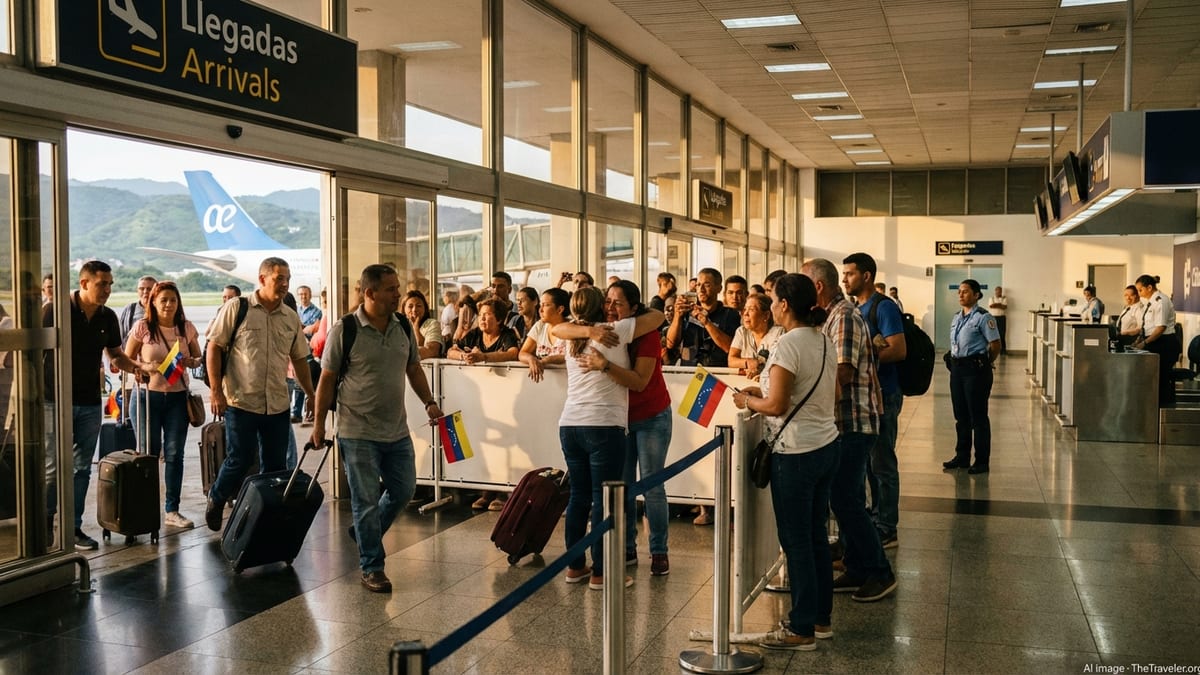
When an Air Europa jet touched down at Caracas’ Simón Bolívar International Airport this week on a direct flight from Madrid, it marked far more than a schedule update. It was the first commercial arrival from Europe since the dramatic January operation in which U.S. forces captured former president Nicolás Maduro, and it instantly became a symbolic turning point for a country tentatively reopening to the world. Airport staff described unusually emotional scenes in the arrivals hall, with families reuniting after years of separation and long-haul travelers expressing cautious optimism about Venezuela’s future.
The Spanish carrier had suspended its Madrid–Caracas service in late 2025 as security warnings escalated and Venezuelan authorities moved to restrict several foreign airlines. Its February 17 resumption, on a limited but regular schedule, is being closely watched by the global aviation industry as a test of whether confidence in Venezuelan operations can be rebuilt. The flight also restores one of the most important transatlantic bridges for the Venezuelan diaspora in Spain and across Europe, who had been forced onto complex multi-stop itineraries or simply stayed away.
For tourism officials in Caracas, the landing is being framed as the clearest sign yet that international perceptions of risk are beginning to shift. Acting president Delcy Rodríguez’s interim government has repeatedly stressed that civilian aviation and tourism are priorities in the post-Maduro transition, and the return of a European flag carrier gives that message tangible form. Travel agents report a noticeable uptick in inquiries for trips from Spain, Italy and Portugal now that at least one major European connection is back on the board.
Regional Airlines Lead a Rapid Reconnection of Caracas
While Air Europa’s arrival grabbed headlines as the first European commercial flight, Latin American carriers have been laying the groundwork for Venezuela’s aviation rebound for weeks. Colombian low-cost airline Wingo quietly resumed its Bogotá–Caracas route in mid-January and plans to add Medellín–Caracas services in early March, offering competitively priced seats that are already proving popular with Venezuelan migrants visiting relatives. The airline is positioning itself as a bridge for budget-conscious travelers who once relied on lengthy overland journeys or irregular charter flights.
Legacy carrier Avianca has moved more decisively, restoring daily Bogotá–Caracas flights from February 12 after a comprehensive review of safety and operational conditions with regulators. For Colombia and Venezuela, the route is a vital economic artery for business travelers, investors and government delegations, and its return has been hailed by regional tourism boards as a milestone in normalizing relations. Early load factors are reportedly strong, particularly on weekends as members of Venezuela’s large Colombian-resident diaspora seize newfound flexibility to travel.
Low-cost players and regional full-service airlines see a first-mover advantage in reclaiming market share in a country that was effectively off the map for years. With connections via Bogotá now linking Caracas to dozens of destinations across the Americas, the Colombian hub is rapidly reasserting itself as the primary gateway in and out of Venezuela. That shift is reshaping traveler behavior: passengers who once routed via Panama City or Mexico City are now rediscovering Bogotá as the most efficient transit point.
American, LATAM, Wingo and Copa Stoke Competition Across the Americas
Beyond Colombia, a broader coalition of carriers is flooding back into Caracas, intensifying competition and lowering fares across the hemisphere. American Airlines, which had been barred from serving Venezuela for years under U.S. restrictions, has announced plans to restore daily nonstop services from key hubs once final regulatory clearances and security guarantees are in place. Although exact start dates have not been confirmed, the prospect of direct U.S.–Venezuela flights is already influencing how tour operators and corporate travel managers design itineraries for the second half of 2026.
From the south, LATAM Airlines Colombia has confirmed its own relaunch on the Bogotá–Caracas route, initially with four weekly flights beginning February 23 and an eye toward daily operations by April, subject to regulatory approval. That adds yet another layer of connectivity for travelers hoping to pair Caracas with South American destinations such as Lima, Santiago and São Paulo through LATAM’s vast network. The airline’s leadership has framed Venezuela as a growth market where pent-up demand for cross-border travel can support sustainable, long-term expansion.
Panama’s Copa Airlines and budget carrier Wingo are meanwhile accelerating their strategies at the regional level. Copa, with its hub in Panama City, is expected to play a crucial role in funneling North American and Central American passengers to Caracas, particularly from cities that may not see direct Venezuelan service in the near term. Wingo’s point-to-point model, linking Caracas with multiple Colombian cities, is creating new short-break possibilities for leisure travelers and dual-resident families alike. The combined effect is a rapidly diversifying menu of options for reaching Venezuela, where just months ago schedules were being slashed and airspace warnings dominated headlines.
Turkish Airlines and Air Europa Bring Long-Haul Reach Back to Caracas
If regional carriers are rebuilding the foundations of connectivity, Turkish Airlines and Air Europa are restoring the long-haul scaffolding that links Venezuela to Europe, the Middle East and beyond. Turkish has confirmed plans to reactivate its Istanbul–Caracas route in early March with three weekly frequencies, reestablishing one of the most strategically important connections for Venezuelans traveling to Europe, North Africa and Western Asia. The Istanbul hub’s extensive onward network has historically offered a lifeline for Venezuelans seeking destinations not served via Madrid or Latin American hubs.
Air Europa’s Madrid–Caracas return adds a crucial westbound link and is expected to be followed, if security conditions permit, by gradual capacity increases and possibly competitive responses from other European carriers. Madrid functions as a key gateway not only for Spain but for secondary European markets with significant Venezuelan communities, including Italy, Portugal and Germany, thanks to easy onward connections. Travel agencies in Madrid and Barcelona say that within hours of Air Europa’s announcement, interest surged for Easter and summer departures, with many clients booking combination itineraries that include beach stays in Margarita Island or cultural visits in Caracas and Mérida.
The combined presence of Air Europa and Turkish Airlines gives Venezuela renewed leverage in attracting international tourism and business travel. Long-haul connectivity is often the missing link in post-crisis recovery, and tourism analysts note that once both routes are operating reliably, destination marketing efforts can more aggressively target niche segments such as adventure tourism, birdwatching and cultural heritage travel. For now, carriers are moving cautiously, keeping capacity modest while they monitor security, political developments and demand.
Hotels, Restaurants and Tour Operators Race to Reopen
The aviation revival is reverberating rapidly through Caracas’ hospitality sector. City-center hotels that had been operating with skeleton staff or shuttered floors are rushing to bring rooms back online, rehire employees and refresh facilities ahead of an anticipated influx of international guests. Several upscale properties in the Las Mercedes, Altamira and El Rosal districts report double-digit increases in forward bookings for the first and second quarters, driven by airline crews, corporate travelers and returning Venezuelan expatriates who prefer branded lodging.
Independent guesthouses and boutique hotels are also feeling the surge, particularly those catering to longer-stay visitors and diaspora families. Many are seizing the moment to reposition themselves as safe, modern bases for exploring the capital, highlighting investments in security, reliable internet and upgraded common areas. Local restaurateurs, especially in the emerging culinary districts of eastern Caracas, are extending hours, revamping menus and in some cases reinstating staff who emigrated during the worst years of the economic crisis.
Tour operators, many of whom survived the pandemic and subsequent political upheavals by pivoting to domestic tourism, are once again packaging multi-day itineraries tailored to foreign travelers. Early offerings focus on relatively accessible routes combining Caracas with the Caribbean coast, the colonial town of Choroní and the highland city of Mérida. While large-scale adventure trips to remote destinations such as Canaima or the Orinoco Delta remain more limited due to logistical challenges, operators say the return of stable airlift is the precondition they had been waiting for to slowly reintroduce such products.
Economic Hopes Rise, but Infrastructure Strains Show
With each newly announced route, expectations in Venezuela’s travel and tourism industry are rising. The return of airlines is seen as a potential catalyst for broader economic revival, unlocking new flows of foreign currency, creating jobs and encouraging external investment. Business chambers in Caracas are already reporting increased inquiries from international hotel brands, restaurant groups and travel-tech companies evaluating whether the post-Maduro environment can support expansion.
Yet the rush of activity is also exposing the limitations of infrastructure that has endured years of underinvestment. Simón Bolívar International Airport, the country’s primary international gateway, is operating, but not all of its systems and facilities are optimized for a fast rebound in long-haul traffic. Travelers continue to report inconsistent air conditioning, occasional baggage delays and patchy retail and food options in certain terminals. Airport authorities insist that maintenance and upgrade projects are underway, but resources remain constrained, and the pace of improvement will be tested if passenger numbers ramp up quickly.
Beyond the airport, ground transportation and urban infrastructure in Caracas present mixed conditions for visitors. Ride-hailing options and private transfer companies are filling gaps where public transit is unreliable, but concerns about safety and nighttime mobility still influence how tour operators design itineraries. Hoteliers and local guides are responding with curated, escort-based city experiences that stay within better-policed districts and prioritize daytime excursions, reflecting a cautious approach to rebuilding visitor confidence.
Security, Politics and the Fragility of the Rebound
Despite the excitement surrounding Air Europa’s landmark landing and the broader airline return, the revival of Venezuela’s skies remains fragile. The U.S. Federal Aviation Administration’s January ban on U.S. aircraft overflying Venezuelan territory following the military operation in Caracas underscored how quickly security dynamics can shift. While regional authorities insist that conditions for commercial flights are stable and closely monitored, airlines are factoring political risk into every capacity decision, often limiting schedules or keeping aircraft on flexible assignments.
Internally, the interim government under Acting President Delcy Rodríguez is attempting to project stability, emphasizing moves such as a broad amnesty law for political detainees and outreach to regional neighbors. However, questions linger about the durability of the current political arrangement, the timeline for new elections and the possibility of renewed unrest. Airlines are structured to manage commercial risk, but sudden escalations could once again lead to route suspensions or capacity cuts, a scenario that travel industry stakeholders know all too well.
Travel insurers and corporate risk managers are therefore playing a more visible role in shaping how and when travelers return. Many global firms are authorizing business trips to Caracas only under specific conditions, often requiring additional security briefings or the use of vetted local partners. Leisure travelers are being advised to book flexible fares and ensure they have robust cancellation coverage in case of schedule changes. These precautions reflect a sober understanding that Venezuela’s reopening, while welcome, is still contingent on a delicate political and security balance.
A New Tourism Narrative Emerges for Caracas
Against this complex backdrop, a new narrative about Caracas is taking shape in international travel media and marketing campaigns. Rather than presenting the city solely through the lens of crisis, tourism boards and local entrepreneurs are highlighting its resilience, cultural richness and striking natural setting framed by the Avila mountain range. Social media channels are filling with images of revitalized café terraces, street art tours in formerly overlooked neighborhoods and rooftop bars with sweeping views, all tagged with flight numbers from newly returned airlines.
Air Europa’s Madrid–Caracas route has become a focal point for this storytelling. For many Europeans, the presence of a familiar carrier with a direct connection provides psychological reassurance, making Venezuela feel once again like a reachable, if still unconventional, destination. Coupled with the expanding web of services by Avianca, Turkish Airlines, LATAM, American, Wingo and Copa, it is helping reposition Caracas from a no-go zone to an emerging, cautiously rediscovered stop on the Latin American travel map.
Whether this moment evolves into a sustained boom will depend on how reliably the flights operate, how quickly infrastructure can be upgraded and, above all, how the country’s political transition unfolds. For now, the packed arrivals hall that greeted the first Air Europa passengers in years captures the mood: tentative but unmistakable excitement, as Venezuela’s capital tentatively steps back into the global tourism spotlight.