

More news on this day
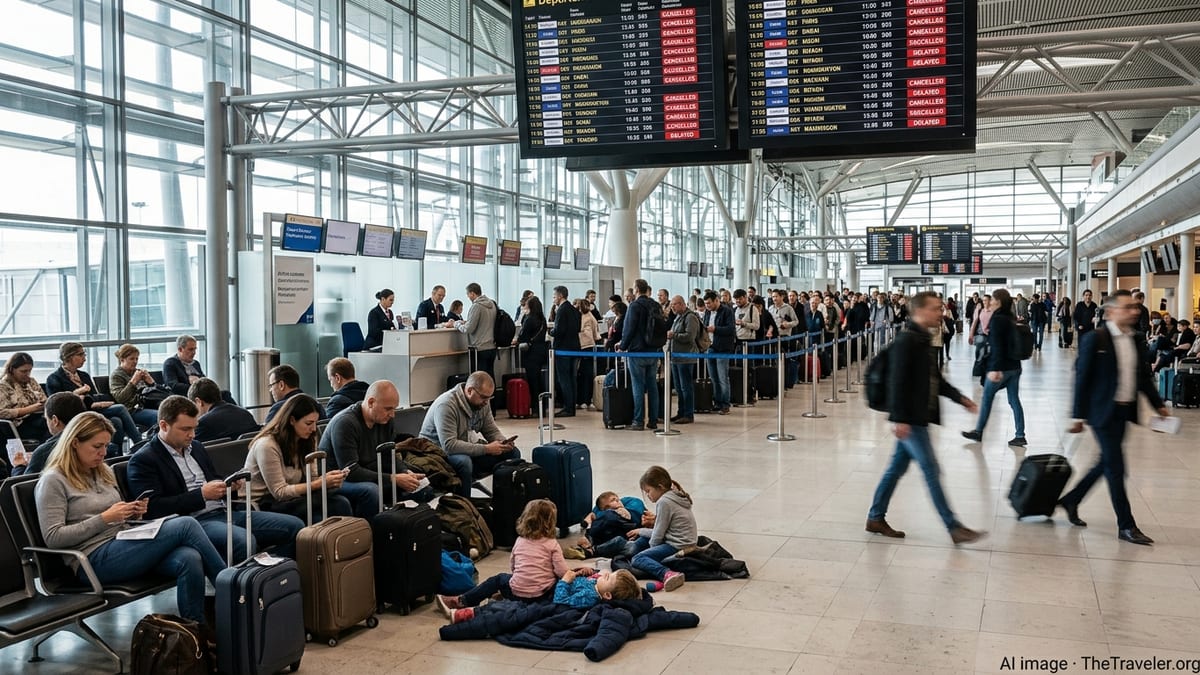
Passengers across multiple continents faced unexpected overnight stays, missed connections, and long lines at service desks after Air France cancelled eight flights and delayed 29 more across its network, disrupting travel through major hubs including Paris, Dubai, and Riyadh.
Get the latest news straight to your inbox!
Widespread Disruption Across Interconnected Hubs
The latest wave of cancellations and delays has rippled through some of Air France’s most strategically important routes, compounding an already fragile global aviation environment in early 2026. Paris Charles de Gaulle, the airline’s primary hub, has seen a series of schedule adjustments in recent weeks as carriers respond to shifting demand, security concerns, and airspace constraints.
According to publicly available flight-status data, eight Air France services were cancelled within a short window, with 29 additional flights experiencing substantial delays. The affected services linked Europe with the Middle East, North America, and key intra-European destinations, creating knock-on effects for connecting passengers who rely on Paris as a transfer point.
Reports indicate that flights touching Dubai and Riyadh were among those most heavily affected. With both cities functioning as major transit points for journeys between Europe, Asia, and Africa, even a relatively small number of cancellations has an outsized impact, leaving travelers stranded far from their final destinations and scrambling to secure new itineraries.
Travelers posting on public forums and social platforms described chaotic scenes at transfer desks and long queues for rebooking assistance, a pattern that has become familiar during recent waves of disruption affecting multiple global carriers.
Middle East Routes Hit Amid Wider Regional Volatility
The disruption on routes to and from Dubai and Riyadh comes against a backdrop of heightened regional volatility and constrained airspace. In recent weeks, a number of international airlines have temporarily adjusted or suspended services to parts of the Gulf region, redirecting flights, adding fuel stops, or cancelling select rotations outright as conditions evolve.
Published airline bulletins show that Air France has already been operating a reduced and frequently adjusted schedule into Dubai, with previous periods of suspension and episodic repatriation flights in coordination with French diplomatic services. The latest cancellations and delays add further uncertainty for passengers who had cautiously resumed travel via the Gulf after earlier interruptions.
Riyadh has also been affected as carriers recalibrate their operations in response to regional security assessments and air-traffic restrictions. Even where airports remain open, rerouted flight paths, crew duty-time limitations, and aircraft repositioning requirements can all reduce schedule resilience, making services more vulnerable to cascading delays when problems arise elsewhere in the network.
For many travelers, this means that a disruption originating thousands of kilometers away can quickly translate into missed onward connections through Middle Eastern hubs, overnight stays, and complex rebookings across multiple airlines.
Knock-On Effects for Long-Haul Travelers
Air France’s long-haul passengers have been particularly exposed to the current round of cancellations and delays. Itineraries linking North America, Europe, and Asia frequently rely on tight connections in Paris or other hubs, and any extended delay can push crews beyond legal duty-time limits or leave aircraft out of position for subsequent rotations.
Recent accounts shared publicly by passengers on disrupted Air France itineraries highlight how a single cancellation can unravel an entire journey. Travelers connecting through Paris have reported missed long-haul flights, forced downgrades to different cabins, and complex rerouting via alternative hubs such as Dubai, Hong Kong, or other European gateways.
In the latest disruption, passengers whose flights were cancelled or heavily delayed often faced rebooking onto later Air France services or, where available, onto alliance partners and interline carriers. However, reduced capacity and fluctuating schedules mean that alternative seats are limited, especially for premium cabins and school-holiday travel periods, leading to extended waits and, for some, multi-stop detours before reaching their final destination.
Travel insurance specialists and consumer-advocacy groups have noted that these complex, multi-leg disruptions can leave travelers uncertain about their rights to care, reimbursement of expenses, and statutory compensation, particularly when journeys cross several jurisdictions with different regulatory frameworks.
Passenger Rights and Compensation Under Scrutiny
The latest Air France disruptions have revived debate about what protections passengers can reasonably expect when flights are cancelled or significantly delayed. Under European Union rules, travelers departing from EU airports or flying on EU carriers from certain non-EU locations may be entitled to assistance and, in defined circumstances, financial compensation when schedules collapse for reasons within an airline’s control.
Public discussions among affected Air France customers show a growing awareness of these rules, but also confusion about how they apply to complex, long-haul itineraries involving multiple airlines and transit points outside Europe. Some passengers have reported seeking refunds for unused segments, while others have focused on claiming compensation related to long delays, hotel costs, and missed connections.
Legal experts consulted in published commentary caution that the eligibility for compensation often hinges on the original departure point, the operating carrier, and whether the cause of disruption is deemed extraordinary. Security-related airspace closures, regional conflict, and sudden government-imposed restrictions are frequently treated differently from technical faults or crew-rostering issues when regulators assess compensation claims.
As the latest cancellations play out, consumer organizations are encouraging travelers to keep detailed records of expenses, retain all boarding passes and booking confirmations, and submit written claims directly through official airline channels rather than relying solely on third-party services or informal advice online.
How Travelers Can Navigate Ongoing Uncertainty
With schedules still in flux on several key routes, including those linking Paris with Dubai, Riyadh, and other regional hubs, travelers are being urged by travel advisers to build more flexibility into their plans. Publicly shared airline guidance stresses the importance of checking flight status frequently in the days and hours before departure, as last-minute changes remain a possibility while carriers monitor conditions and adjust capacity.
Rebooking policies published in recent weeks have generally allowed affected passengers to postpone trips, change destinations within certain geographical zones, or request refunds for itineraries that are no longer viable. However, the exact options available can vary depending on the ticket type, booking channel, and the specific reason the flight was disrupted.
Industry analysts note that the combination of geopolitical tension, tight aircraft availability, and strong demand for international travel is likely to keep pressure on global networks through the coming months. Airlines such as Air France are working to balance safety considerations with commercial pressures and passenger expectations, but the margin for error remains narrow when so many routes pass through constrained or sensitive airspace.
For now, passengers planning to travel via Paris or to destinations such as Dubai and Riyadh are being advised, in publicly available guidance from travel agents and airline notices, to prepare for potential changes, allow extra time for connections, and ensure that contact details are up to date in airline booking systems so that any last-minute alerts about cancellations or delays are received promptly.