

More news on this day
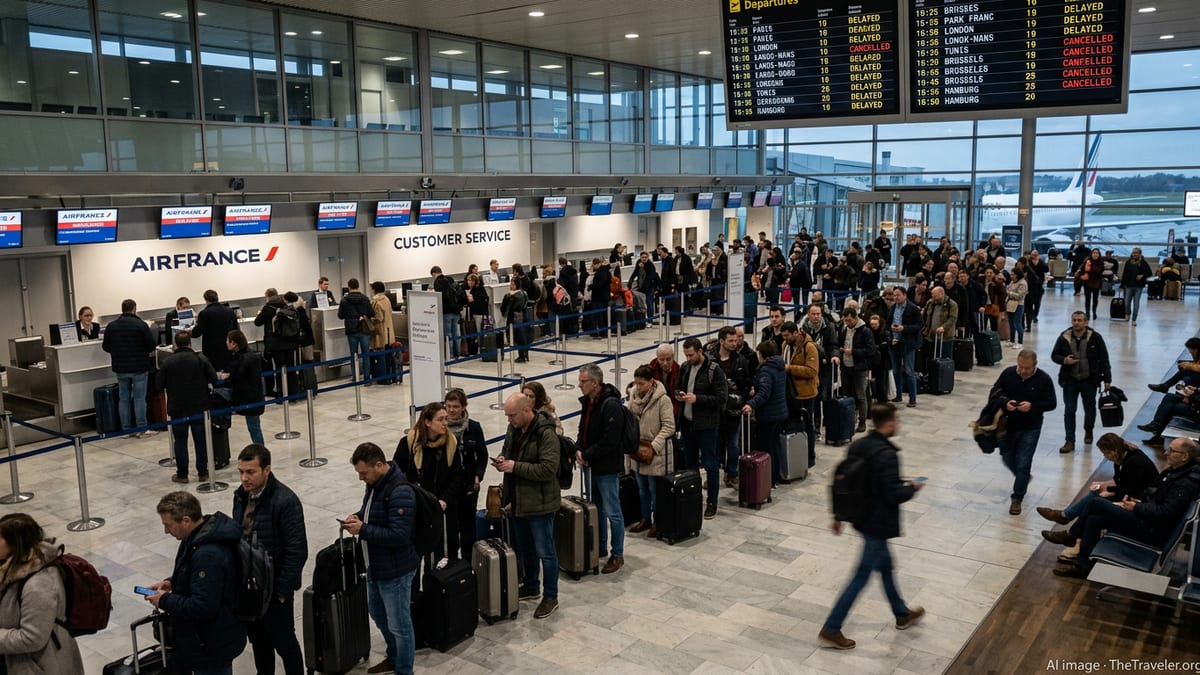
Passengers at Toulouse-Blagnac Airport faced a turbulent start to the week as Air France cancelled six flights and reported numerous delays on major routes to Paris, Tunis, Brussels, Hamburg and London, intensifying the wider disruption already rippling across Europe’s air network.
Regional Hub Hit Amid Wider European Disruption
The disruption at Toulouse-Blagnac on March 9 comes against a backdrop of mounting operational strain at airports across France and the wider continent, with adverse weather systems and staffing challenges combining to stretch airline schedules. Recent figures for Europe show hundreds of cancellations and thousands of delays across major hubs including London, Paris, Frankfurt and Amsterdam, placing additional pressure on regional airports that feed into these networks.
As a key gateway for southwest France, Toulouse-Blagnac relies heavily on high-frequency services to Paris-Charles de Gaulle and Paris-Orly, along with important links into Northern Africa and major European capitals. Air France, which maintains multiple daily rotations between Toulouse and the French capital, plays a central role in connecting business and leisure travelers to long-haul routes via its Paris hubs.
On Sunday, Air France’s six cancellations at Toulouse-Blagnac, alongside late departures on several other services, underscored how quickly local schedules can unravel when long-haul and hub operations encounter strain. With aircraft and crews often operating tight rotations, disruption at Paris can cascade across the carrier’s short-haul network, impacting cities like Toulouse with relatively little warning.
Airport observers noted unusually busy rebooking queues at Toulouse-Blagnac’s Air France counters through the afternoon and evening, as ground staff worked to accommodate stranded passengers on later services, alternative routings via other hubs, and in some cases next-day departures.
Core Routes to Paris and London Suffer Knock-On Effects
Among the hardest-hit links from Toulouse were the trunk routes to Paris, which are vital for both domestic travel and international connections. Multiple Air France departures to Charles de Gaulle recorded substantial delays, while at least one rotation was scrubbed entirely, forcing onward passengers to miss transatlantic and Asian connections scheduled from the French capital.
Services to London were also affected, with delays reported on flights linking Toulouse to the British capital just as airports in the United Kingdom struggled with their own weather and congestion issues. Travelers heading for London reported departure boards flickering between “delayed” and updated estimated times, with some flights held at the gate while air traffic control flow restrictions were adjusted.
The combination of disrupted Paris and London operations proved particularly challenging for travelers relying on tight transfer windows. Business passengers reported missed meetings and same-day returns becoming impossible, while leisure travelers faced unexpected overnight stays either in Toulouse or at their final hub.
Staff at Toulouse-Blagnac advised passengers with time-sensitive connections to check in as early as possible and to speak with airline agents about rerouting options that bypass the most congested hubs, including alternative connections via other European cities where capacity allowed.
North Africa and Northern Europe Links Disrupted
Beyond the French capital and the United Kingdom, the disruption also rippled through important international links to North Africa and Northern Europe. At least one Air France service connecting Toulouse with Tunis faced significant delay, complicating travel for those heading to family visits and business engagements in the Tunisian capital.
Routes to Brussels and Hamburg, which serve both business travelers and tourists connecting into Benelux and German networks, were similarly affected. Passengers on these services described extended waits at departure gates with limited information beyond rolling estimates of new boarding times, as aircraft arriving late from previous sectors created a domino effect across the timetable.
Some travelers reported being offered rerouting via Paris or other hubs, only to find those options under strain as well. Others chose to defer their journeys entirely, rebooking for later in the week in the hope that schedules at Toulouse-Blagnac and across the Air France network would stabilize.
For regional economies that depend on reliable air links, particularly export-oriented businesses and technology firms clustered around Toulouse, even short periods of disruption on Brussels and Hamburg routes can complicate logistics, sales trips and project timelines.
Passengers Confront Crowded Terminals and Uncertain Timetables
Inside Toulouse-Blagnac’s terminals, departure boards on Sunday afternoon showed an unusually dense pattern of amber and red indicators, as delays stacked up and cancellations were gradually posted. Passengers described long lines at customer service counters and self-service kiosks, with many attempting to secure scarce remaining seats on later flights or alternative routings.
Families and older travelers were particularly affected, with some reporting wait times of over an hour to speak to an agent. Airport staff distributed basic refreshments to those affected by the longest delays, while advising passengers to retain all receipts for potential reimbursement under European air passenger rights regulations if their flights ultimately met the criteria for compensation.
Several travelers arriving early for evening departures found themselves caught up in the disruption with little prior warning, highlighting the speed at which operational issues elsewhere in Europe can translate into sudden timetable changes at regional airports. Many turned to airline apps and social media channels for faster updates than were available on overhead announcements.
With seating areas around Air France gates rapidly filling, some passengers sought quieter corners of the terminal or opted to wait landside until their flights were confirmed as boarding, a strategy that airport officials say can help reduce crowding when disruption is prolonged.
Air France and Airport Urge Vigilance as Operations Recover
Air France said it was working to restore regular operations from Toulouse-Blagnac, deploying available aircraft and crews to stabilize core routes and prioritizing passengers whose journeys involved missed long-haul connections. The airline reiterated that affected customers could rebook onto later flights within a specified window or request refunds in line with current fare conditions and European regulations.
Airport management at Toulouse-Blagnac urged passengers scheduled to travel in the coming days, particularly on routes to Paris, London, Tunis, Brussels and Hamburg, to monitor their flight status frequently and to allow additional time at the airport for check-in and security. They cautioned that residual delays were likely as aircraft and crews were repositioned and as backlogs from the weekend gradually cleared.
Travel experts noted that the latest setback at Toulouse-Blagnac fits into a broader pattern of fragility across Europe’s aviation system this season, where bad weather, staffing gaps and tightly timed hub operations can quickly intersect. They advised passengers to build longer connection windows into their itineraries, consider travel insurance that covers disruption, and keep digital copies of tickets and boarding passes in case of last-minute rebooking.
With European carriers and airports warning that schedules are likely to remain fluid in the short term, travelers using Toulouse-Blagnac are being encouraged to check in online as early as possible, stay alert for notification messages from airlines, and be prepared for plans to shift with limited notice as operations normalize.