

More news on this day
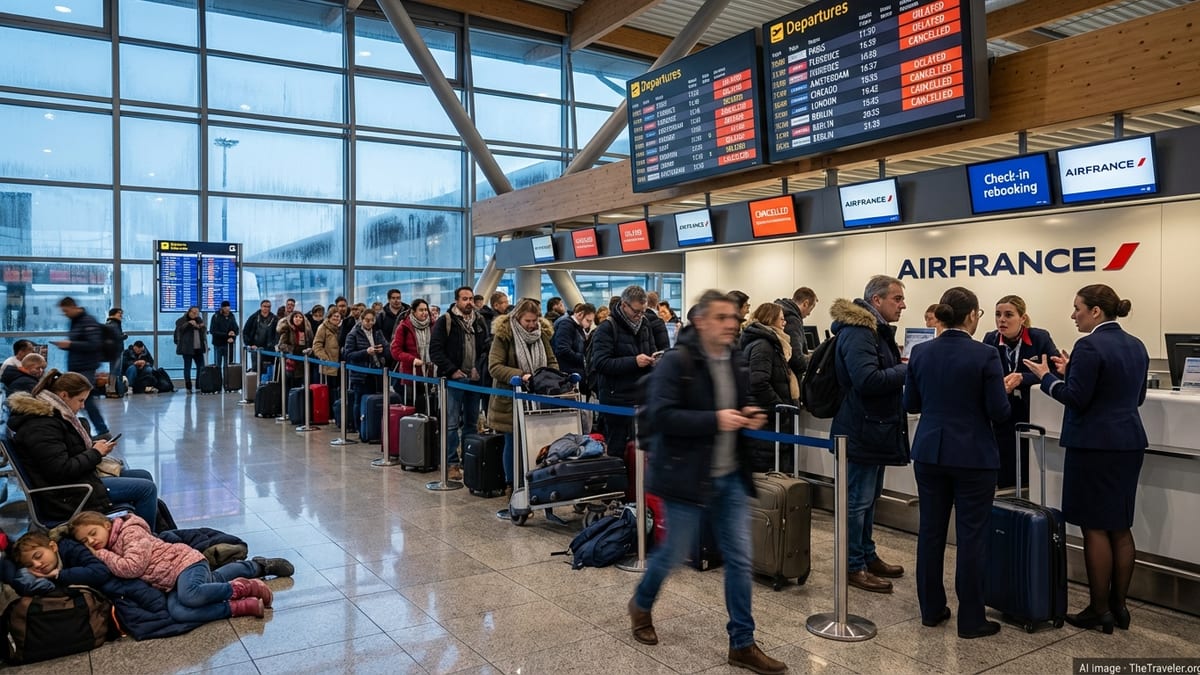
Hundreds of Air France passengers were left stranded at airports across France and around the world after the airline cancelled 21 flights and delayed more than 230 services, triggering a ripple effect that disrupted travel in Italy, Germany, the United States, the Netherlands, Angola and several other countries.
Widespread Disruption From Paris to Florence and Chicago
The disruptions, affecting both short haul and long haul routes, built up over the course of forty eight hours as Air France struggled to recover its schedules at its Paris hubs. Passengers in cities as varied as Florence, Amsterdam, Brest and Chicago reported being stuck in terminals overnight or facing missed connections and unexpected diversions as the knock on effects spread.
Data compiled from real time tracking services and airport operations reports indicated that 21 Air France flights were cancelled outright while more than 230 were significantly delayed. The pattern echoed a series of recent large scale disruptions in early 2026 in which Air France has featured prominently among European carriers forced to pare back operations in the face of winter weather and operational constraints.
At Paris Charles de Gaulle and Paris Orly, the airline’s main bases, departures to Italy, Germany and the Netherlands were among the hardest hit. Services to Florence and Amsterdam experienced rolling delays, while some regional flights to French cities such as Brest were turned back to the gate or re routed as crew and aircraft were reassigned.
On transatlantic routes, passengers bound for major US gateways, including Chicago, encountered extended waits on the ground or had to be rebooked through alternative hubs, adding further strain to an already stretched network. Travelers connecting onward to Africa, including Angola, found themselves stranded mid journey as late arriving aircraft missed crucial departure windows.
Winter Weather Pressure on an Already Fragile Network
The latest wave of Air France disruptions comes against a backdrop of intense winter weather on both sides of the Atlantic and mounting strain on European aviation. In the first weeks of 2026, storms sweeping across northern and western Europe have repeatedly forced airports and airlines to cut schedules and accept cascading delays as runways were cleared and aircraft de iced.
Recent data from passenger rights specialists and airport authorities show that Air France has already cancelled well over a hundred flights and delayed hundreds more in January alone as it grappled with freezing temperatures and snow at its French hubs and partner airports across the continent. That earlier disruption affected not only Paris but also cities such as Stockholm, Milan, Lisbon, London and Geneva, underlining how tightly interconnected European air travel has become.
In parallel, North America has faced a severe winter season, with a major storm system in late January cancelling or postponing thousands of flights in the United States. The resulting shortage of available aircraft and crew on long haul rotations has added complexity for European carriers operating transatlantic services, including those linking Paris with Chicago and other US cities.
Aviation analysts say that while winter weather is a predictable annual challenge, the current season has exposed how little slack remains in airline operations. When storms, technical faults or air traffic control constraints strike, carriers are often forced into large scale, last minute schedule changes that quickly strand passengers far from home.
Impact Across Europe: Italy, Germany and the Netherlands Hit Hard
In Europe, the latest Air France cancellations and delays were most keenly felt in Italy, Germany and the Netherlands, where flights to and from Paris serve as critical connections to long haul networks. At Florence, passengers bound for northern Europe and North America through Paris found themselves facing abrupt cancellations, with lines forming at customer service desks as travelers sought rerouting options on other carriers.
Germany saw knock on delays for passengers traveling through Paris from cities such as Munich and Frankfurt. Although many German airports have dealt with their own weather related issues in recent weeks, travelers on Air France services reported additional hours of waiting as aircraft arrived late from disrupted Paris rotations, throwing carefully planned connection times into disarray.
Amsterdam, one of Europe’s busiest hubs and a key partner gateway within Air France’s broader alliance structure, was again a focal point of disruption. The airport has already endured repeated bouts of weather related chaos this winter, with hundreds of flights cancelled and delayed on several occasions. The latest Air France schedule issues added to that pressure, with delayed arrivals from Paris forcing further adjustments to departure waves.
In the French regional city of Brest, some passengers faced the particularly frustrating scenario of repeated short delays that accumulated into missed train and ferry connections. Domestic services are often used to feed international flights, and when those upstream flights are held or cancelled, smaller regional airports feel the impact quickly.
Long Haul Repercussions in the US and Africa
Beyond Europe, the disruption was acutely felt in the United States and across African destinations linked to Air France’s Paris hubs. In Chicago, a key Midwestern gateway, delayed departures and late inbound flights left passengers waiting in crowded boarding areas with limited information on updated schedules. For some, onward connections to smaller US cities or to Latin America were lost, forcing overnight stays or complete rebookings.
Africa, where Air France maintains an extensive route network from Paris, also experienced significant ripple effects. Flights connecting Paris to Luanda in Angola, as well as other West and Central African cities, rely on carefully timed inbound feeds from across Europe and North America. Once those feeder flights slip by several hours, long haul departures can quickly fall out of position, either departing late or being cancelled to prevent further disruption down the line.
Travelers on these routes often have fewer alternative options than their European counterparts. In some cases, only a handful of airlines operate direct services between France and certain African capitals, making same day rebooking extremely difficult. Reports from affected airports indicated that some passengers faced multi day delays as they awaited seats on the next available flights.
The situation highlights how a relatively modest number of cancellations can nonetheless produce outsized consequences when they hit high demand long haul routes with limited redundancy. It also underscores the vulnerability of global south destinations that depend on a small number of European hubs for long distance connectivity.
Passengers Describe Overnight Queues and Patchy Communication
For stranded travelers, the statistics translated into long queues, uncertainty and, in many cases, unexpected overnight stays at airports. Passengers reported forming lines stretching through terminal concourses in Paris, Amsterdam and other hubs as they waited to speak to airline staff about rebooking options and accommodation.
Several travelers described communication as intermittent or confusing, with departure boards showing rolling delays in short increments and few clear explanations of whether flights would ultimately operate. While some customers received proactive text messages or app notifications about cancellations and new itineraries, others said they learned of changes only on arrival at the airport.
In Amsterdam and Paris, emergency camp beds and cots that had already been deployed during earlier winter disruption were again put to use, according to airport officials. Hotels near major airports quickly reached capacity, leaving some travelers to sleep in terminal chairs or on the floor despite the airline’s obligations to provide accommodation in the event of long delays.
The experience echoed scenes seen repeatedly this winter at European and North American airports, where a combination of bad weather, tight staffing and high demand has led to crowded terminals and frayed tempers. Social media posts from affected Air France customers showed long lines at boarding gates, families with small children resting on luggage, and departure boards lit with delays across multiple destinations.
What Travelers Can Expect in Terms of Rights and Compensation
Under European air passenger rules, travelers whose flights are cancelled are generally entitled to a choice between rerouting and a refund, along with care such as meals and, if necessary, hotel accommodation. However, when disruptions are attributed to extraordinary circumstances such as severe weather or air traffic control restrictions, additional monetary compensation is often not available.
Specialists in passenger claims note that recent Air France disruptions have frequently been linked to winter storms and associated operational constraints, conditions that airlines typically argue are beyond their control. Even so, carriers are still required to provide assistance during long waits, and to arrange alternative transport at the earliest opportunity.
Consumer advocates urge passengers affected by the latest round of cancellations and delays to keep thorough records of their travel, including boarding passes, receipts for meals and accommodation, and any written communication from the airline. Such documentation can be crucial when seeking reimbursement for out of pocket expenses or pursuing claims where the cause of disruption is contested.
Travelers are also advised to monitor their flight status closely in the days following major schedule upheavals. Even once the immediate wave of cancellations passes, aircraft and crew may remain out of position for some time, leading to further minor delays as airlines work to restore normal operations.
Air France Faces Questions Over Resilience and Planning
The repeated appearance of Air France in winter disruption statistics has prompted questions about the carrier’s resilience planning and resource allocation. Industry observers point out that while many European airlines have struggled this season, the French flag carrier’s concentration of operations at Paris, itself vulnerable to snow and ice, leaves it particularly exposed.
Earlier in January, data showed Air France cancelling more than 160 flights and delaying hundreds more across major European airports as cold weather swept the continent. The latest episode, while smaller in scale, has reinforced perceptions among some travelers that Air France’s network can be fragile under stress, particularly for those relying on tight connections through Paris.
Experts note that airlines have limited room to maneuver when multiple external shocks hit at once, such as severe weather combined with high seasonal demand and staffing limitations. Yet they also emphasize the importance of robust contingency plans, including spare aircraft and flexible crew scheduling, to minimize the number of passengers left without same day alternatives.
In the coming days, attention is likely to focus on how quickly Air France can re stabilize its timetables and clear backlogs of displaced passengers. Rival carriers, some of which have also faced major delays this winter, will be watching closely as they refine their own strategies for coping with increasingly volatile weather patterns affecting European and transatlantic aviation.
Ongoing Travel Risks as Winter Disruption Continues
With several weeks of the winter season still ahead, aviation authorities and airlines are warning that further episodes of disruption are likely. Meteorologists expect additional storms to sweep across parts of Europe and North America, raising the risk of fresh snowfall, high winds and freezing rain that can quickly bring airport operations to a standstill.
For travelers planning journeys in the coming days, the latest Air France incident serves as a reminder of the value of flexibility and preparation. Experts recommend booking longer connection windows where possible, traveling with essential items in carry on bags in case checked luggage is delayed, and ensuring that airlines and booking platforms have up to date contact details to deliver timely alerts.
Air France and other carriers are advising passengers to check their flight status before leaving for the airport and to consider rebooking at no additional charge if their travel is not time sensitive and storms are forecast along their route. Some airlines have introduced temporary waivers allowing customers to change dates without penalty during periods of predicted severe weather.
As airports from Florence and Amsterdam to Brest, Chicago and Luanda work to manage backlogs and prepare for the next round of winter challenges, the experience of those stranded in recent days underscores how quickly a handful of cancellations and a few hundred delays can spread across an interconnected global network, reshaping travel plans far beyond the original point of disruption.