

More news on this day
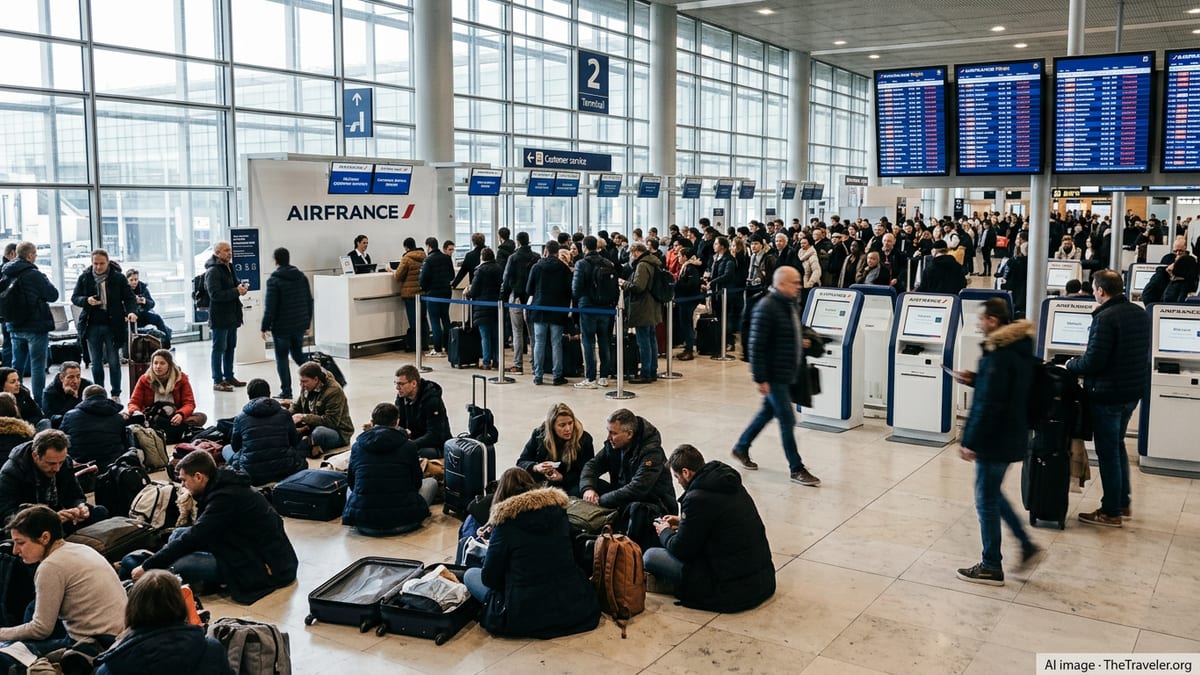
Passengers on several continents faced long queues, missed connections and overnight stays as Air France scrubbed multiple flights and reported dozens of delays on routes linking Paris with key hubs including Dubai and Riyadh, according to live flight-tracking data and traveler reports.
Get the latest news straight to your inbox!
Targeted Cancellations Ripple Through Key Long-Haul Routes
Publicly available operational data for Monday, March 16, show Air France cancelling nine scheduled services and delaying at least 31 additional flights, disrupting itineraries across Europe, the Middle East and beyond. While the overall number is small compared with the carrier’s daily schedule, the impact is amplified by the concentration of affected flights on busy trunk routes and late evening departures that feed onward connections.
Disruption has been particularly visible on services linking Paris Charles de Gaulle with Gulf gateways such as Dubai and Riyadh, according to flight-status boards and airport departure logs. These routes typically serve as critical connectors for travelers heading onward to Asia, Africa and Oceania, meaning a single cancellation can cascade across several onward tickets issued on separate reservations.
In several cases, the cancelled flights were paired with heavily delayed alternatives, leaving aircraft and crews out of position and tightening turnaround times in Paris. As a result, even passengers whose flights technically operated faced missed connections, longer ground holds and arrival delays that stretched well into the night.
Passengers Stranded in Paris, Dubai, Riyadh and Beyond
Travelers transiting through Paris Charles de Gaulle reported being held in lengthy rebooking queues as ground staff attempted to reassign them to later departures or alternative routings. With nine full flight loads suddenly removed from the schedule, options for same-day travel quickly narrowed, particularly in premium cabins and on popular transcontinental sectors.
In Dubai, where airport operations are already strained by wider regional airspace restrictions and intermittent infrastructure damage, the loss or delay of Air France services created another layer of uncertainty for passengers trying to leave the United Arab Emirates. Recent days have seen waves of repatriation and reduced schedules by multiple international airlines, and the latest Air France cuts added pressure on already limited long-haul capacity.
Riyadh and other regional gateways experienced similar knock-on effects. Travelers bound for Europe or North America via Paris described being rebooked through alternative hubs or held overnight while airlines waited for clearer routing options through contested or restricted airspace. In some instances, passengers reported being split across different flights and days, complicating family and group travel plans.
Wider Regional Volatility Compounds Airline Scheduling Challenges
The latest disruption at Air France comes against the backdrop of a highly volatile operating environment. The continuing Iran war and related strikes across parts of the Gulf have forced multiple carriers to suspend or reroute flights to and from the United Arab Emirates, Saudi Arabia, Qatar and neighboring states, according to published coverage and official advisories. Airspace closures and precautionary diversions have lengthened flight times, increased fuel burn and tightened crew duty windows.
Dubai International Airport and other regional hubs have sustained intermittent damage and periodic closures following recent drone and missile activity. Publicly available information shows that airlines serving the region have been juggling late-notice airspace changes, airport capacity constraints and evolving security assessments, all of which can force last-minute adjustments to published schedules.
For European carriers such as Air France, these constraints intersect with the need to keep aircraft cycles aligned with busy transatlantic and intra-European banks in Paris. When a long-haul rotation to Dubai or Riyadh is disrupted, the returning aircraft may not be available for its next assignment to North America or Africa, prompting preemptive cancellations or schedule thinning elsewhere in the network.
What Stranded Travelers Are Experiencing on the Ground
Accounts shared on social platforms and travel forums over the past 24 hours describe a familiar scene inside terminals: crowded customer service desks, long lines at transfer counters and confusion over which flights are still operating. Some travelers in Paris reported being handed hotel and meal vouchers under European passenger protection rules, while others with separate tickets said they struggled to secure guaranteed onward transport.
In Dubai and Riyadh, passengers caught by the latest Air France cancellations described scrambling to find seats on remaining services operated by Gulf and Asian carriers, often at sharply higher last-minute fares. Public posts from several travelers indicated that they were offered routings with multiple stops or significantly extended travel times, reflecting the limited capacity on viable alternative corridors.
Families traveling with children and elderly passengers appeared particularly affected, with some accounts citing overnight waits in crowded departure halls while rebookings were processed. Without clear visibility on when airspace restrictions might ease or additional flights might be added, many travelers have been forced into ad hoc plans for accommodation, local transport and visa extensions.
Rights, Refunds and Rebooking Options Under EU Rules
Under European Union Regulation EC 261/2004, travelers departing from EU airports or flying with EU carriers are entitled to assistance and, in many cases, compensation when flights are cancelled or subject to significant delay. Publicly available guidance explains that passengers on cancelled flights may request rerouting at the earliest opportunity or a refund of the unused portion of their ticket, with care such as meals and accommodation provided when overnight stays become necessary.
However, compensation can be more limited when airlines cite extraordinary circumstances, such as security crises or sudden airspace closures, as reasons for disruption. Legal interpretations developed through case law mean that each situation is assessed on its specific facts, and travelers are often advised in consumer guidance materials to document their experience and file formal claims with the operating carrier.
In the current climate, many passengers are also turning to travel insurance policies and credit card protections to recover costs not covered by airline obligations, including additional nights in hotels, alternative flight purchases and lost prepaid arrangements such as tours and events. Consumer advocates typically recommend that travelers keep boarding passes, receipts and written confirmations from airlines to support any future reimbursement request.
Outlook for Travelers Heading Through France and the Gulf
As of Monday afternoon, schedules indicate that Air France is continuing to operate the majority of its network, but with selective cancellations and rolling delays focused on routes most exposed to regional instability and airspace restrictions. Industry observers expect that pattern to persist in the near term, with airlines adjusting timetables day by day as conditions evolve.
For travelers with upcoming itineraries through Paris, Dubai, Riyadh or other hubs near affected corridors, publicly available advice from airlines and airports consistently emphasizes checking flight status frequently, maintaining up-to-date contact details in bookings and allowing extra time for transfers. Flexible tickets and willingness to accept rerouting via alternative hubs can significantly improve the chances of reaching a final destination on the planned travel date.
With geopolitical tensions still high and the aviation system under sustained pressure, further schedule changes across multiple carriers remain possible. For now, the nine cancellations and 31 delays recorded on Air France services serve as a snapshot of a wider pattern of disruption that is likely to shape international travel to and from France and the Gulf region in the days ahead.