

More news on this day
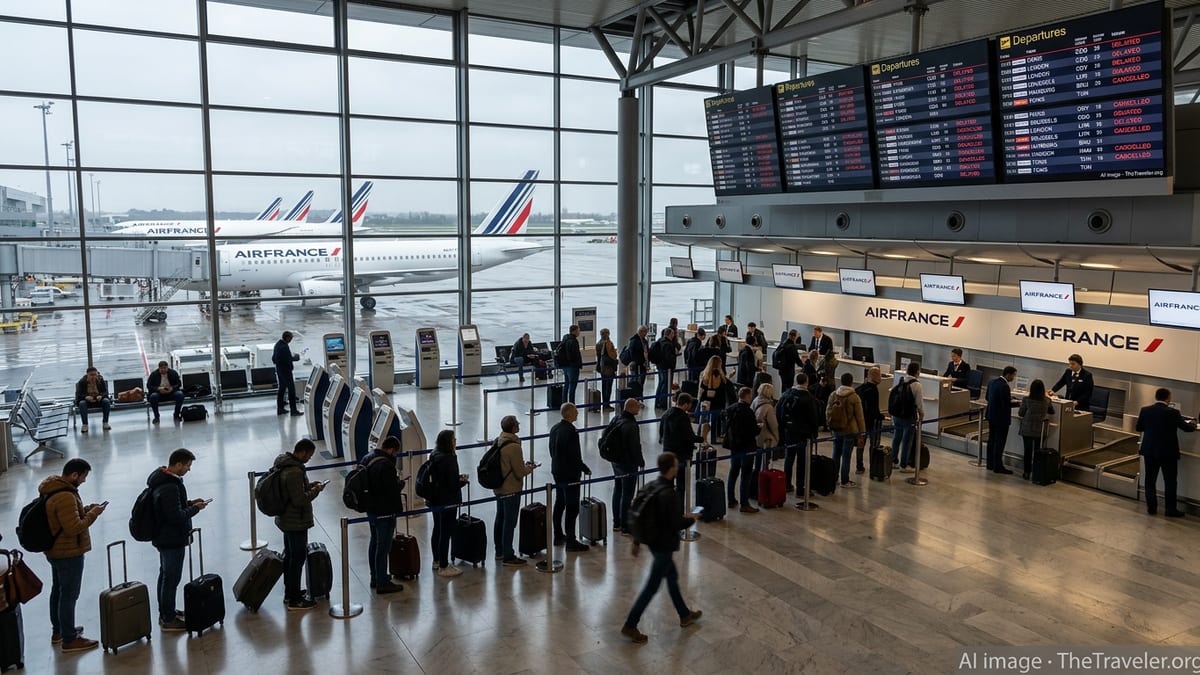
Travelers passing through Toulouse-Blagnac Airport on March 9 are facing mounting disruption as Air France cancels six flights and reports numerous delays on core European and North African routes, snarling links to Paris, Tunis, Brussels, Hamburg, London and other key destinations.
Operational Turbulence Hits a Key Regional Hub
The cancellations and delays at Toulouse-Blagnac come at a sensitive moment for the airport, which is still operating below pre-pandemic passenger volumes and adapting to structural changes in its route network. Figures released this week showed that Toulouse handled around 7.6 million passengers in 2025, a decline on the previous year and well short of historic highs, leaving the hub more exposed when major carriers experience operational shocks.
Air France, the dominant network airline at Toulouse, has been juggling wider disruption across its French operation following a series of weather-related and staffing challenges at Paris Charles de Gaulle and Orly in recent days. Those issues have rippled into its regional schedule, with Toulouse among the first secondary hubs to feel the impact as aircraft and crews fall out of position.
On Saturday, that translated into six outright cancellations from Air France’s Toulouse schedule, alongside a series of delays that stretched well beyond 60 minutes on some departures. Airport screens through the morning and afternoon showed a patchwork of revised departure times for flights bound for the French capital and major European cities, forcing passengers into long queues at service desks and triggering a wave of missed connections.
For Toulouse, which relies heavily on its connectivity to Paris and Northern Europe for both business and leisure traffic, the day’s disruption underlined how quickly an already fragile recovery in regional air travel can be unsettled by a fresh bout of operational instability.
Paris Links Disrupted as National Delays Cascade South
The most immediate impact has been felt on the high-frequency shuttle routes linking Toulouse with Paris Charles de Gaulle and Orly, which act as vital feeders for long-haul services and Europe-wide connections. Several rotations were either cancelled outright or subject to extended delays, leaving passengers bound for transatlantic and Middle Eastern flights in Paris scrambling to rebook.
Recent days have already seen Paris Charles de Gaulle contend with heavy disruption, including more than 150 delayed flights and dozens of cancellations across multiple airlines after a combination of winter weather and ground-handling bottlenecks. With Air France using its Paris hubs as the backbone of its global network, even short gaps in the schedule can cascade quickly into regional routes such as Toulouse.
At Toulouse-Blagnac, travelers arriving early for morning departures to Paris were met with conflicting information from airline apps, airport displays and ground staff as updated departure times shifted repeatedly. Some passengers aiming to connect in Paris to onward services to North America and Asia were advised that same-day rebooking would not be possible, and were instead offered hotel accommodation or later flights from either Toulouse or Paris.
The disruption also comes as Air France prepares to reshuffle its own domestic offering from Toulouse to the capital, with parts of the Toulouse–Paris Orly operation being transferred to low-cost subsidiary Transavia in 2026. While that strategic shift is intended to improve efficiency and resilience in the medium term, the current wave of irregular operations highlights the short-term fragility of the existing network.
Routes to Tunis, Brussels, Hamburg and London Feel the Strain
Beyond the Paris shuttles, Air France’s and partner-operated flights from Toulouse to Tunis, Brussels, Hamburg and London reported a combination of schedule changes and delays as aircraft arriving late from elsewhere in Europe knocked subsequent rotations off their planned departure slots. These city pairs are central to Toulouse’s role as an international gateway for both business travelers in the aerospace sector and a growing leisure market.
Passengers on northbound services to Brussels and Hamburg faced rolling delays through the day as incoming aircraft were held up at congested hubs further north. With Brussels itself preparing for renewed industrial action later in March and German airports still recovering from earlier disruption this winter, Toulouse-originating services became entangled in a wider web of European operational challenges.
The situation was similar on the London route, where services linking Toulouse with the UK capital operated to a patchy timetable, reflecting network-wide strains across British and continental carriers. For travelers heading to London for time-sensitive commitments, even relatively modest delays risked causing disruption, particularly during peak weekend travel periods when alternative seats are scarce.
On the southbound side, services connecting Toulouse with Tunis experienced pressure as aircraft and crews cycled through delayed European rotations. North African routes have become increasingly important to French regional airports, with strong demand from visiting friends and relatives as well as tourism. Any loss of reliability on these services can quickly erode confidence among frequent travelers who rely on tight itineraries.
Passengers Confront Long Queues and Compensation Questions
Inside Toulouse-Blagnac’s terminals, the operational challenges translated into familiar scenes of long lines at check-in counters and rebooking desks. Passengers reported waiting more than an hour in some cases to speak with airline agents, with self-service rebooking tools and customer apps struggling to keep pace with the volume of schedule changes throughout the morning.
For affected travelers, the key questions quickly turned to their rights to care, rerouting and compensation under European air passenger regulations. Under EU rules, passengers departing from an EU airport whose flights are cancelled or significantly delayed may be entitled to meals, refreshments, hotel accommodation and financial compensation, depending on the cause and length of the disruption and the distance of the journey.
However, the distinction between what regulators deem as controllable and uncontrollable causes of disruption is not always clear from a traveler’s perspective. While adverse weather or air traffic control constraints are typically considered outside an airline’s control, staffing shortages, technical issues and certain operational decisions often fall on the carrier’s side of the responsibility line. For Toulouse passengers trying to understand whether they qualify for compensation, that nuance added to an already stressful day at the airport.
Consumer advocates continue to urge travelers caught up in such irregular operations to keep all receipts, request written confirmation of the cause of any cancellation or long delay, and submit formal claims directly to the airline once they have reached their destination. They also recommend using airline apps and online tools as early as possible, as digital rebooking options are often updated faster than physical departure boards or call centers.
What Today’s Disruption Signals for Spring Travel
The latest wave of disruption at Toulouse-Blagnac arrives just as airlines and airports gear up for a busy late-winter and spring travel period across Europe. Recent data has shown high levels of cancellations and delays at key hubs on the continent, suggesting that operational resilience remains under pressure even before the peak summer season begins in earnest.
For carriers like Air France, which are rebalancing their networks and shifting capacity between mainline and low-cost subsidiaries, maintaining dependable regional links from airports such as Toulouse will be crucial to protecting customer confidence. Travel industry analysts have warned that repeated episodes of cancellations and long delays on core routes risk pushing some passengers toward alternative carriers or rail options, particularly on short-haul sectors where competition is strong.
At Toulouse-Blagnac, airport management is expected to continue pressing its airline partners for clear communication and robust contingency planning on days of anticipated strain, whether due to weather, air traffic restrictions or staffing challenges at major hubs. Keeping passengers informed in real time and providing timely assistance on the ground will be central to limiting the reputational damage from days like today.
For now, travelers scheduled to fly from Toulouse in the coming days are being advised to monitor their flight status closely, arrive early at the airport, and build extra time into onward connections. With network operations across Europe still unsettled, the events at Toulouse-Blagnac serve as a reminder that air travel this spring may require a renewed dose of patience and flexibility.