

More news on this day
Air France is drawing a final line under its long retreat from Paris Orly Airport, ending all remaining flights in early 2026 and consolidating operations at Paris Charles de Gaulle after roughly 80 years at the south Paris hub.
Get the latest news straight to your inbox!
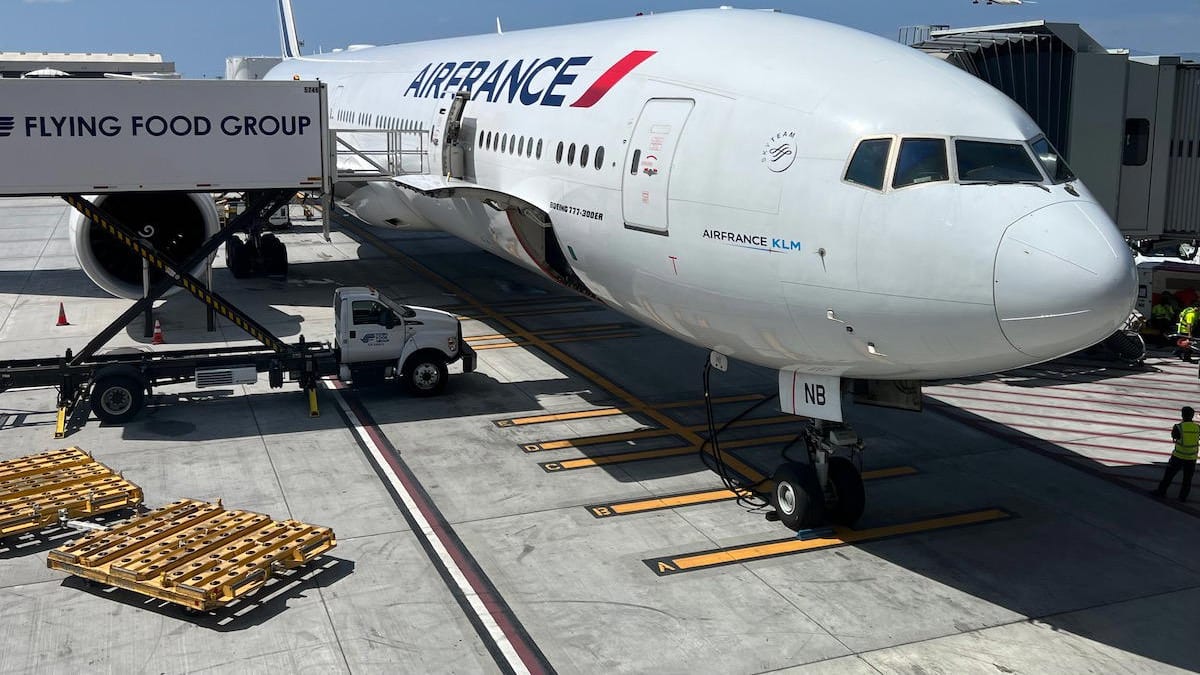
Image by One Mile at a Time
A Strategic Exit Brought Forward
Publicly available information indicates that Air France will cease operations at Paris Orly by around April 2026, several months earlier than the broader summer 2026 target previously signalled for winding down most services. Industry schedules and specialist aviation coverage show that the flag carrier has been progressively reducing its Orly presence in recent seasons, with the final step now confirmed as a full withdrawal.
The move marks the culmination of a strategy first outlined in 2023, when Air France signalled its intention to cut almost all Orly services by 2026 and focus on its main hub at Paris Charles de Gaulle. That plan has since been refined through successive schedule updates, gradually shifting both domestic and long haul services away from Orly.
Recent schedule filings highlighted by route-tracking outlets show the remaining long haul route from Orly being moved to Charles de Gaulle for the northern summer 2026 season. Separate regional and domestic adjustments point to the end of Air France branded flying from Orly around the same time, leaving the group’s low cost arm Transavia France as the primary in-group operator at the airport.
Reports indicate that the final withdrawal comes against the backdrop of a strong recovery in overall Orly traffic, but with changing demand patterns undermining the economics of Air France’s point to point network from the airport.
Consolidation at Charles de Gaulle
By exiting Orly, Air France is doubling down on a long running strategy of concentrating its operations at Charles de Gaulle, north of Paris. Corporate updates on upcoming seasons show the airline scheduling close to 800 daily flights and around 170 destinations from its main hub in the winter 2025 to 2026 period, underscoring the centrality of Charles de Gaulle to its network.
Network planners have increasingly prioritised connecting traffic through Charles de Gaulle, where Air France can feed its long haul operations with domestic and European passengers. Centralising at a single Paris hub is presented in public documentation as a way to improve aircraft utilisation, streamline staffing and ground operations, and make better use of slots at a capacity constrained airport.
From a passenger perspective, the consolidation will simplify itineraries for many long haul customers who previously had to transfer between Orly and Charles de Gaulle when connecting. For some domestic and regional travellers in France, however, the shift could mean longer surface journeys to reach Charles de Gaulle rather than Orly, which lies closer to the city’s southern suburbs and certain high speed rail links.
Air France’s parent group is positioning Transavia France to absorb much of the leisure and price sensitive demand that previously moved via Orly, particularly to Mediterranean, North African and European sun destinations, while the mainline brand focuses more heavily on hub based flows.
Domestic Network Retrenchment and the Rise of Rail
The decision to leave Orly reflects broader structural changes in France’s domestic travel market. Earlier statements from the airline and subsequent industry analysis have pointed to a sustained decline in short haul business demand, as video conferencing and hybrid work have reduced the need for frequent day return trips between major French cities.
At the same time, public policy and consumer behaviour in France have favoured a shift toward high speed rail on corridors where journey times are competitive with air. Legislative measures limiting domestic flights on routes with strong rail alternatives, together with climate policy objectives, have pushed airlines to reassess low margin domestic segments.
Orly historically served as Air France’s main base for domestic and point to point flying, including links to cities such as Toulouse, Marseille and Nice. Over the past several years, these routes have been progressively transferred to Transavia France or trimmed from the Air France portfolio. According to earlier coverage of the restructuring, Transavia is now the primary operator on key domestic routes from Orly, while Air France maintains selected domestic links from Charles de Gaulle that support its long haul hub.
Analysts note that the combination of weaker yields on domestic flights, environmental pressure and the availability of fast rail connections made it increasingly difficult to justify a dual hub presence in the Paris region under the Air France brand.
Transavia and Overseas Routes Fill the Gap
While Air France itself is stepping away from Orly, the airport will remain a significant platform for the wider Air France KLM group and other airlines. Transavia France, the group’s low cost subsidiary with its main base at Orly, is operating an expanded winter schedule with more than one hundred destinations and over two hundred routes, according to recent corporate season previews.
Transavia has taken over several of the former Air France domestic routes from Orly and is also active in the leisure and visiting friends and relatives markets from the Paris region. Published network plans show it strengthening ties to southern Europe, North Africa and popular holiday islands, leveraging Orly’s location and slot portfolio to compete with other low cost carriers.
Separately, public traffic data and route maps indicate that Orly will continue to function as a key gateway to France’s overseas departments and territories, served by a mix of carriers specialising in long haul leisure and outbound traffic. This includes routes to the Caribbean and Indian Ocean that have historically formed part of Orly’s identity, even as Air France’s own role on some of those sectors has diminished over time.
For airport operator Groupe ADP, recent financial disclosures suggest that Orly’s passenger volumes have recovered to or beyond pre pandemic levels, driven by low cost and leisure traffic, despite Air France’s progressive downsizing. That trajectory supports the view that the airport can thrive as a multi airline, multi segment platform after the flag carrier’s departure.
Closing an 80 Year Chapter in French Aviation
Air France’s exit from Orly closes a chapter that began shortly after the Second World War. Historical records show that the airline built up a major presence at the airport from the mid 1940s, using it as a base for both domestic routes and international services across Europe, Africa and the Americas as commercial aviation expanded.
Over the decades, Orly became closely associated with French air travel, featuring in cultural references and serving as the departure point for many of Air France’s formative long haul operations. Notable events in the airline’s history, from pioneering intercontinental services to high profile accidents, are tied to Orly’s runways.
The gradual transfer of activity to Charles de Gaulle from the late twentieth century onward reflected growing demand for larger, more modern facilities and a focus on hub based operations. By the 2020s, the balance had clearly shifted in favour of Charles de Gaulle, with Orly hosting a shrinking share of Air France’s flights even as low cost and leisure carriers expanded.
With the last Air France departures scheduled to leave Orly in early 2026, the airport will continue to play a central role in French aviation, but without the presence of the national carrier that helped define it for eight decades. For travellers, the change underscores how environmental considerations, technology and evolving travel patterns are reshaping the map of air services in and out of Paris.