

More news on this day
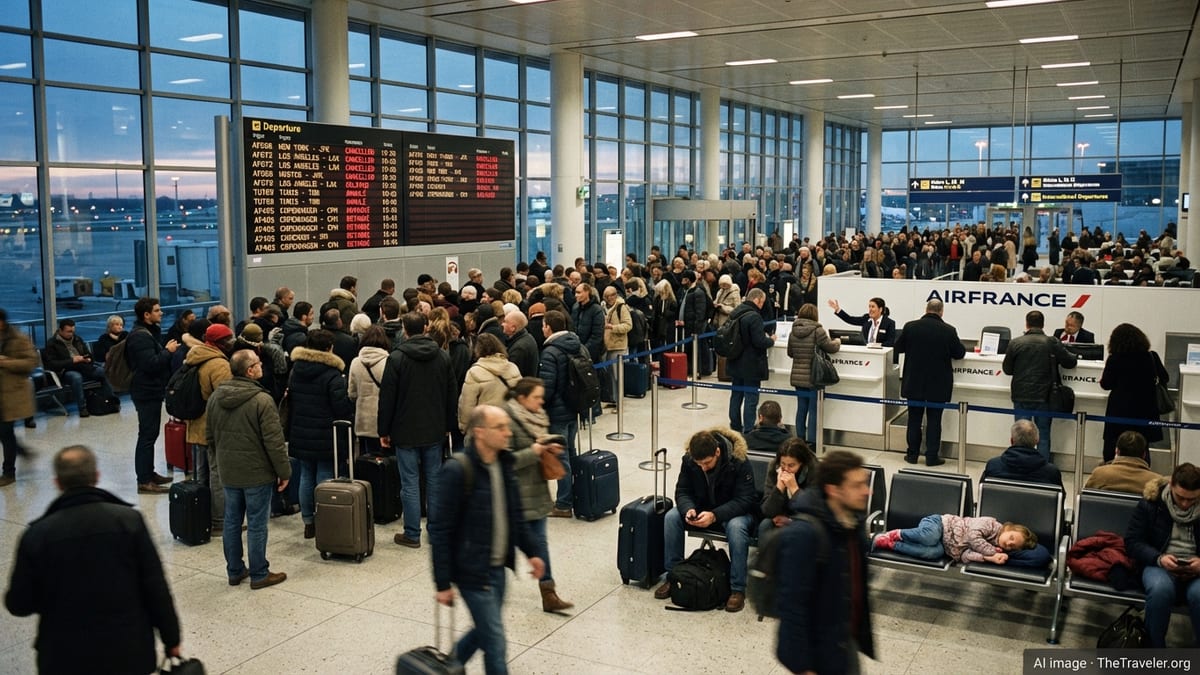
Passengers moving through major hubs in Europe, North America and Asia are facing significant disruption as Air France, KLM and British Airways report 21 flight cancellations and 136 delays, stranding travelers across cities such as Paris, Amsterdam, London, New York and Tokyo at the start of April 2026.
Get the latest news straight to your inbox!
Network Strain Felt From Europe to North America and Asia
Publicly available flight tracking snapshots and schedule data for early April 2026 indicate that service problems involving Air France, KLM and British Airways are spreading across multiple continents rather than remaining localized to one airport or region. Routes linking European hubs with North America, the Middle East and Asia show clusters of delayed and cancelled services, with Paris Charles de Gaulle, Amsterdam Schiphol and London Heathrow at the center of the disruption.
Reports from monitoring services show long departure holds and rolling delays on key transatlantic corridors, particularly on services connecting Paris and Amsterdam to New York area airports. Disruptions are also visible on itineraries between Europe and major Asian gateways, including Tokyo, where extended ground times and missed connections are being logged.
The timing coincides with the first full weekend of April, a period when leisure and business demand is typically elevated. With schedules already running close to capacity after a winter of weather related issues and airspace constraints, relatively small operational shocks are translating into disproportionately large knock on effects for passengers.
Available data suggests that while the total of 21 cancellations is modest relative to the hundreds of flights operated daily by the three carriers, the 136 recorded delays are having a wider impact on onward connections, overnight stays and crew and aircraft positioning.
Paris, Amsterdam and London Hubs Under Pressure
Paris Charles de Gaulle, the primary hub for Air France, appears to be one of the most affected nodes in the current disruption cycle. Aggregated performance statistics for recent months already pointed to a steady share of moderate and significant delays out of the airport, and fresh reports for early April show additional schedule slippage on long haul and medium haul departures as ground operations work through congested banks of flights.
Amsterdam Schiphol, KLM’s main base, is experiencing similar pressure. Flight status boards for connecting banks show pushed back departure times on European feeders arriving from regional cities, which then constrain the ability of travelers to make long haul flights to North America, the Gulf and Asia. When those connections fail, passengers are often rebooked onto later departures out of Amsterdam or rerouted through partner hubs, adding to crowding in already busy terminals.
In London, British Airways services at Heathrow are contending with a mixture of primary delays on their own network and secondary disruption when passengers arrive late from Air France or KLM codeshare and interline flights. According to published travel coverage, travelers with multi segment itineraries have reported missed onward departures and last minute changes to routings onto other European or transatlantic services.
The combined effect across the three hubs is a pattern of rolling disruption rather than a single sharp outage. Early morning irregularities cascade into the midday and evening waves of flights, keeping punctuality under pressure even as airlines work to clear backlogs.
Passengers Face Missed Connections, Long Queues and Overnight Stays
For travelers, the operational statistics translate into very tangible inconveniences. When a first leg from a regional airport into Paris, Amsterdam or London runs late, passengers on through tickets risk missing long haul departures to cities such as New York or Tokyo. Travel forums and social media posts referenced in news coverage describe situations where travelers arrive at the gate to find boarding closed or their flight already reassigned due to tight turnaround constraints.
Those who miss connections are typically offered rebooking onto the next available service, but limited seat availability during a busy period can result in overnight stays near hub airports. Travelers have reported waiting in extended customer service lines to arrange new itineraries, as well as spending additional time re clearing security and passport control when rerouted through different terminals or partner carriers.
Families and business travelers alike are also dealing with the knock on effects of delays even when flights ultimately operate. Late evening arrivals into North American and Asian destinations can mean missed last trains, closed airport bus services and the need to arrange unplanned hotel stays or alternative ground transport. For some, arriving a full day later than planned has implications for meetings, tours or onward domestic flights.
While the total number of cancelled flights remains limited relative to daily operations, the high volume of delayed departures and arrivals across multiple time zones is amplifying the overall disruption experienced by passengers, especially those with tight connections and complex itineraries.
Weather, Airspace Constraints and Tight Schedules Add to Disruption
Available reporting points to a combination of factors behind the current wave of disruption. Seasonal weather patterns continuing from late winter into early spring have contributed to ground handling slowdowns and de icing related delays in parts of Europe and North America. When storms or strong winds affect approach and departure rates at major hubs, even brief capacity reductions can generate queues of departing and arriving aircraft.
In parallel, ongoing airspace restrictions over certain regions have compressed traffic flows onto a smaller number of corridors, increasing the complexity of flight planning for long haul services between Europe, North America and Asia. Longer routings and congestion in remaining corridors can erode schedule buffers that airlines rely on to absorb minor delays.
Industry analyses published over recent months have also highlighted how tight schedules and limited spare aircraft capacity leave carriers with fewer options when irregular operations occur. When an aircraft or crew ends up out of position due to a delay earlier in the day, it can be difficult to restore the original pattern of flights without further knock on effects.
Observers note that these structural pressures are affecting the wider industry, but their impact becomes highly visible when they coincide at major network carriers like Air France, KLM and British Airways and at widely used transfer hubs such as Paris, Amsterdam and London.
What Travelers Can Expect in the Coming Days
Looking ahead to the remainder of the first weekend of April 2026, forecasting tools and airline advisories suggest that operations at Paris, Amsterdam and London may remain vulnerable to further disruption if weather conditions deteriorate again or if airspace constraints tighten. Flight status pages show some padding in schedules, but connection times for certain itineraries remain relatively tight.
Travel information services recommend that passengers due to travel with Air France, KLM or British Airways in the coming days monitor their flight status frequently on official channels and allow extra time for connections at major hubs. Those booked on itineraries involving multiple carriers or self arranged connections are considered particularly exposed to missed onward flights if initial sectors are delayed.
Passenger rights information made available by regulators and consumer groups continues to emphasize that travelers affected by long delays or cancellations on flights departing from European airports, or on flights into the region operated by European carriers, may be entitled to assistance, rerouting or compensation depending on the exact circumstances. However, processing such claims generally takes place after travel is completed and does not resolve immediate disruption on the day.
With demand remaining strong into the spring travel period, observers expect airlines to focus on restoring operational stability and recovering punctuality metrics at their hubs. In the meantime, the episode underlines how quickly disruptions at a handful of major carriers and airports can ripple outward to affect passengers as far apart as New York and Tokyo.