

More news on this day
Air France and KLM have sharply raised the cash surcharges on many award tickets by around 40%, a move that is sending shockwaves through the Flying Blue frequent flyer community and raising fresh questions about the real value of airline miles.
Get the latest news straight to your inbox!
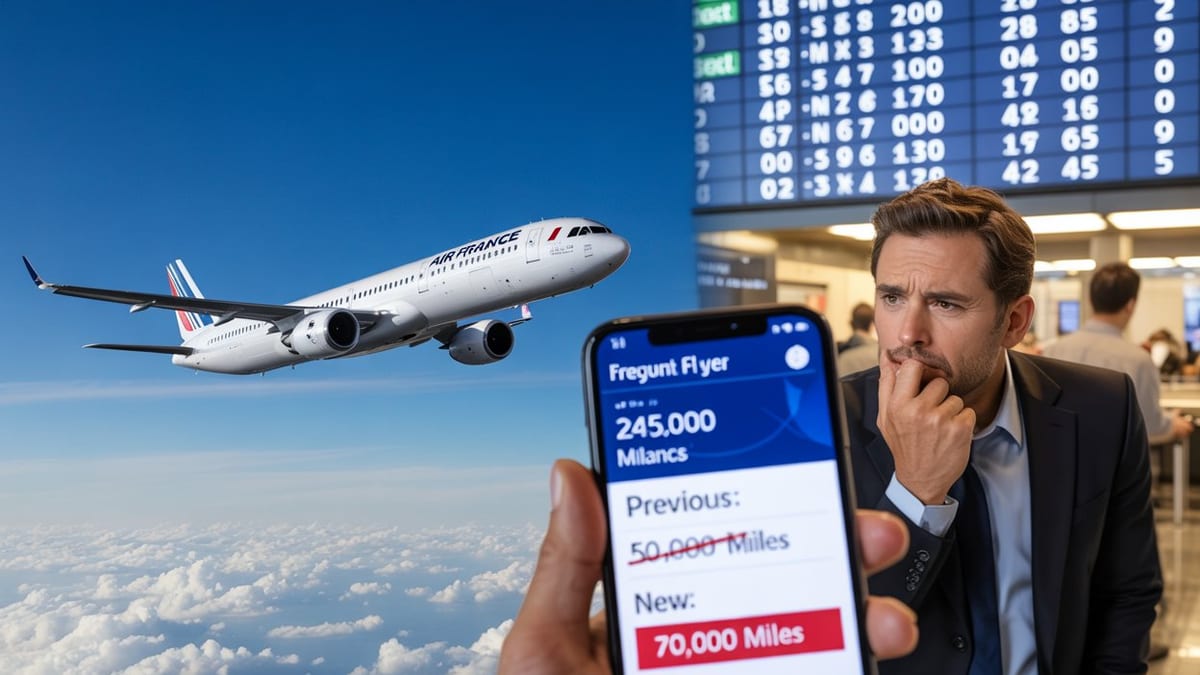
Image by Global Travel Alerts, Advisories, International Travel Alerts
What Changed in the Air France–KLM Flying Blue Program
Recent data points shared by frequent flyer analysts and travelers indicate that Air France and KLM have significantly increased carrier-imposed surcharges on a broad set of long-haul award tickets, particularly in premium cabins. Instead of paying a relatively modest cash copay alongside miles, many customers are now facing surcharges that are hundreds of dollars higher than they were just months ago.
The increase is most visible on popular transatlantic routes, where Flying Blue has long been marketed as a competitive option for business-class redemptions. Travelers report that one-way business-class awards between North America and Europe that once carried surcharges in the low to mid-hundreds are now pricing out roughly 40% higher, even when the mileage cost remains similar.
Flying Blue uses a dynamic pricing model for awards, which allows the number of miles and cash surcharges to vary by route, date, and demand. The latest changes appear to have been implemented quietly, without a widely publicized structural overhaul, making it more difficult for customers to track precisely when and how the higher fees were introduced.
Publicly available information on carrier pricing shows that Air France-KLM continues to position Flying Blue as a central pillar of its commercial strategy. At the same time, the group has previously signaled rising unit costs and ongoing pressure from taxes and surcharges in its home markets, which may help explain why these additional cash components are becoming more prominent on award tickets.
How a 40% Fee Hike Erodes the Value of Your Miles
For frequent flyers, the headline impact of the higher surcharges is a noticeable erosion in the cents-per-mile value obtained from Flying Blue redemptions. When the cash copay attached to an award jumps by 40%, the effective savings versus simply buying a discounted cash ticket narrows, especially in economy and premium economy cabins.
Take a typical scenario of a transatlantic business-class award. Even if the mileage price stays flat, an extra few hundred dollars in surcharges can mean that travelers are effectively “buying” a sizable portion of the ticket with cash on top of their hard-earned miles. In some market conditions, discounted business-class sales from competing carriers may end up only marginally more expensive than a Flying Blue award that now comes with steep add-on fees.
These changes also disproportionately affect travelers who accumulate Flying Blue miles through bank transfer partners and co-branded credit cards rather than paid flying. For those customers, the program’s appeal rests heavily on aspirational redemptions. When cash surcharges climb sharply, the psychological and financial payoff of saving miles for a premium cabin trip becomes much less compelling.
For economy travelers, the situation can be even starker. On some routes, the combination of taxes and carrier-imposed surcharges can approach or exceed the cost of a heavily discounted cash fare, leaving miles to cover only a modest portion of the ticket price. That sharply undercuts the traditional narrative that award tickets provide outsized value compared with paying cash.
Why Air France and KLM Are Turning to Higher Surcharges
While Air France and KLM have not issued a high-profile announcement tied specifically to the latest award surcharge increases, broader industry trends provide important context. Airlines around the world are confronting elevated fuel prices, higher labor costs, and new or increased taxes and fees in several jurisdictions, including parts of Europe. Many carriers are responding by raising base fares, adding fuel surcharges, or adjusting ancillary charges.
Financial disclosures and presentations from the Air France-KLM group have pointed to upward pressure on unit costs and a complex environment of airport fees, security charges, and national levies layered onto tickets. In such conditions, shifting more of the total trip cost into carrier-imposed surcharges allows airlines to preserve revenue on highly sought-after long-haul routes while still advertising attractive mileage rates.
The structure of Flying Blue also encourages this approach. Because miles are often issued through third-party partnerships such as credit card programs and retail partners, the cost of honoring those miles is a controllable variable for the airline group. Increasing surcharges on award tickets raises the cash component of a redemption without necessarily triggering a highly visible mileage devaluation.
Industry coverage of global airline pricing trends shows similar patterns emerging elsewhere, with several major carriers intensifying their use of surcharges to offset volatile fuel costs and geopolitical disruptions. In that sense, the Air France and KLM moves align with a broader shift toward more opaque, fee-heavy pricing that can be especially punishing for loyalty program members expecting near-free redemptions.
Practical Impacts for Flying Blue Members and Alliance Partners
The higher surcharges are reshaping how savvy travelers approach Flying Blue and partner redemptions. For many, the program remains useful, but only in narrower circumstances and with much more careful route selection. Certain off-peak dates and less competitive city pairs may still price with comparatively reasonable fees, while flagship routes at popular times have become far more expensive in cash terms.
Travelers who used to view Flying Blue as a reliable way to access premium cabins between Europe and North America are now weighing alternative strategies. This can include using transferable points with partners that do not pass through such high surcharges, or focusing on carriers that still offer more transparent, lower-fee award structures on long-haul routes.
There are also implications for passengers booking Air France or KLM flights via partner programs in alliances and bilateral partnerships. Some partners have historically passed through a portion of Air France-KLM surcharges on their own award tickets, while others have absorbed them or levied fixed fees. As the underlying surcharges on the operating carrier rise, partner programs may find it harder to shield members from the cost, leading to creeping increases across multiple frequent flyer schemes.
For Flying Blue members based in Europe, the fee hikes combine with existing airport and government charges that already make departures from certain countries notably expensive on a tax and surcharge basis. This layered effect can leave travelers paying substantial sums in cash even when redeeming large mileage balances, altering the calculus of when and how to use their points.
How Travelers Can Respond and Protect Their Miles
Despite the sharper fees, Flying Blue can still offer value for travelers who are flexible and strategic. Reports from the mileage community highlight that sweet spots remain, especially on routes with less competition, mixed-cabin itineraries, or connecting flights that avoid the highest-surcharge gateways. Being open to secondary European hubs or alternative U.S. departure points can reduce the cash hit attached to an award.
Travelers are increasingly advised to run side-by-side comparisons before transferring bank points into Flying Blue. This includes checking cash fares on the same dates, looking at award pricing and surcharges with other alliances, and considering whether a different loyalty program might deliver better value for a given trip. In some cases, it may be more economical to purchase a promotional cash fare and reserve miles for a future redemption where surcharges are lower.
Another emerging strategy is to watch for limited-time Flying Blue promotions, such as monthly discounted awards or transfer bonuses from bank partners, which can partially offset higher surcharges by reducing the mileage outlay. While these offers do not remove the cash fees, they can improve the overall return on points when used carefully.
For many frequent flyers, the overarching lesson from the latest Air France and KLM changes is that loyalty programs remain highly fluid. Surcharges, mileage prices, and route availability can shift with little warning. Travelers who monitor these trends closely, diversify their points across multiple programs, and regularly reevaluate the real-world value of their miles will be better positioned to withstand sudden fee hikes and preserve flexibility in an increasingly expensive skies.