

More news on this day
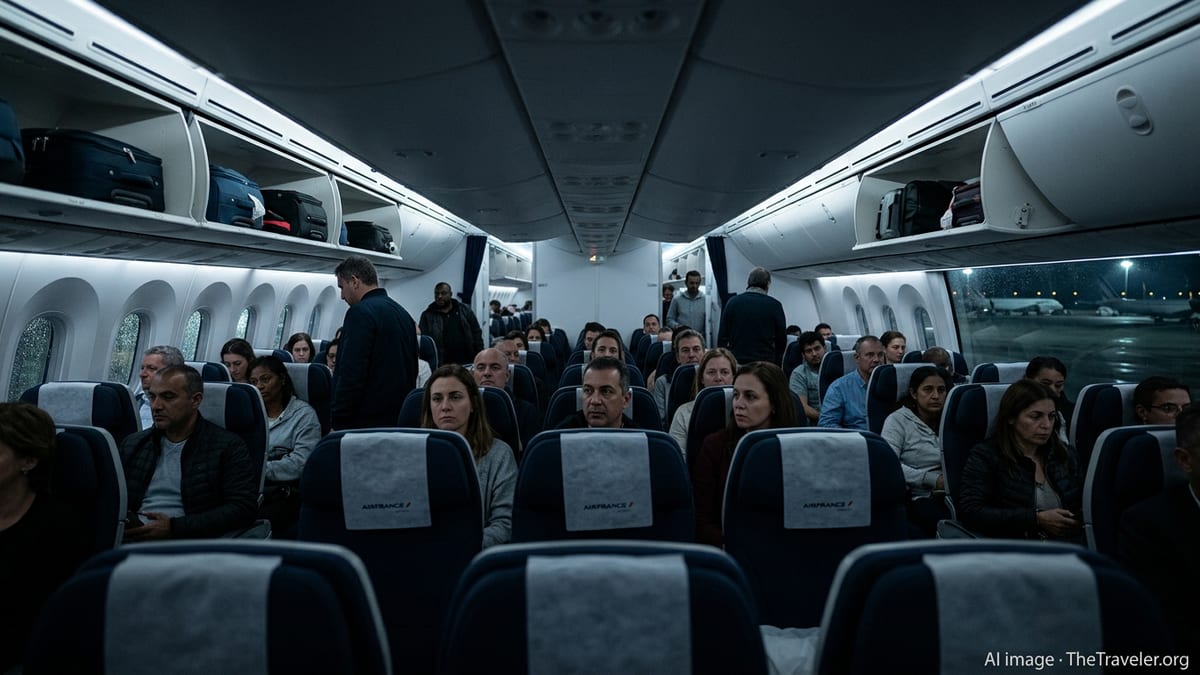
Hundreds of passengers on a government-chartered Air France flight found themselves back where they started on Thursday night after missile fire over the Gulf forced the aircraft to abandon its evacuation mission from the United Arab Emirates, underscoring the perilous state of air travel across a conflict-hit Middle East.
A Midair Reversal That Shook Already Anxious Travelers
The Air France aircraft, operating as a French government charter to repatriate nationals stranded in the UAE, was routed toward Europe on March 5 when missile activity was detected in the wider region, prompting a rapid reassessment of its route. French Transport Minister Philippe Tabarot later confirmed that the crew turned the aircraft back out of an abundance of caution after reports of missile fire "in the area" of its planned corridor.
Passengers on board had already endured days of uncertainty as commercial links between the Gulf and Europe thinned dramatically following Iranian missile and drone strikes across the region beginning on February 28. The sudden announcement that their long-awaited evacuation flight would not be continuing to France left many in disbelief, with some describing the experience to local media as a "close call" they did not fully grasp until they were safely back on the ground.
Flight-tracking data and ministerial statements suggest the jet never came under direct attack, but the decision to abandon the route highlights how fragile the security picture has become. With air defenses in several Gulf states actively intercepting incoming missiles and drones, planners are treating any escalation near civilian air corridors as a trigger for immediate diversions or turnbacks.
For the families on board, the distinction between direct and indirect threat offered little comfort. Many had packed hastily, expecting this would be their only chance to leave the Emirates for the foreseeable future, only to find themselves again grounded in a region where daily life is now shaped by sirens, air-defense interceptions and rolling flight cancellations.
Missile Barrages Turn Hub Airports into Pressure Cookers
The aborted Air France mission unfolded against the backdrop of unprecedented Iranian missile and drone strikes directed at targets across the Gulf, including the UAE. Emirati authorities say they have intercepted dozens of ballistic missiles and hundreds of drones in recent days, while acknowledging that a small number have landed on Emirati soil or fallen into surrounding waters.
Dubai and Abu Dhabi, normally among the world’s busiest and smoothest-running aviation hubs, have been transformed into pressure cookers of uncertainty. With airspace closures rippling out from the Gulf to neighboring states, tens of thousands of passengers have been left stranded, sleeping in terminals or scrambling for scarce hotel rooms as airlines slash schedules and reroute aircraft around danger zones.
Travelers who spoke to regional and European outlets described chaotic scenes at Dubai International Airport, with flight information boards continuously updating as departures were cancelled, reinstated or delayed at short notice. Long queues formed at service desks as stranded tourists pleaded for rebooking options, while others tried to secure seats on rare outbound flights operating via safer, more northerly corridors.
The decision to suspend or sharply curtail operations has not been limited to European carriers. Gulf giants Emirates and Etihad have resumed only partial schedules from Dubai and Abu Dhabi, operating at a fraction of their usual capacity as they coordinate closely with national authorities and militaries overseeing the air-defense umbrella.
Airlines Walk a Tightrope Between Safety and Connectivity
For carriers, the Air France reversal has become a stark illustration of the operational tightrope they now face. Airlines must continuously weigh the obligation to bring home stranded nationals and maintain vital connections against the evolving risk of flying near active missile and drone engagement zones.
Industry analysts note that, since February 28, many carriers have cancelled or diverted thousands of flights across the broader Middle East, often at considerable cost. Rerouting long-haul services to avoid the Gulf adds hours to flight times and dramatically raises fuel burn, putting additional pressure on airlines already navigating volatile fuel prices and complex insurance considerations.
European and Gulf carriers alike are working in lockstep with national aviation regulators, militaries and intelligence agencies as they evaluate which routes can operate safely. Some evacuation and relief flights are proceeding through carefully defined corridors and time windows, often with backup diversion plans drawn up in case the security picture changes mid-flight, as it did for the Air France charter.
Safety specialists emphasize that modern commercial aviation is built to err on the side of extreme caution in conflict zones. Even when a passenger aircraft is not directly threatened, any suggestion that interceptors, missiles or drones may be operating near civilian airspace is sufficient to trigger diversions, altitude changes or full route cancellations.
Stranded Tourists, Mounting Costs and Fraying Nerves
The human impact of these decisions is playing out in consular waiting rooms and hotel lobbies across the Emirates. French tourists have gathered outside their consulate in Dubai, voicing frustration at what they see as slow and opaque communication about evacuation plans. Many have now seen multiple return flights cancelled, rescheduled or rerouted, only to vanish again from departure boards as the conflict evolves.
Other European nationals, including Germans, Britons and Scandinavians, are also stranded as their home carriers either suspend UAE routes or offer only sporadic relief flights. Tour groups have found themselves unexpectedly extending stays by a week or more, stretching travel budgets and travel insurance coverage. For some, the added cost of last-minute accommodation and food now rivals the original price of their holiday.
Travel agents and online booking platforms are reporting a wave of last-minute itinerary changes as passengers seek any available seats via alternative hubs in Asia, Africa or southern Europe. Fares on remaining routes between Asia and Europe have surged, and some travelers report paying several times the usual price to secure a way out of the wider region.
With each new salvo of missiles or drones, the window for safe departures narrows again. Travelers who believed they had secured a solution, as those on the Air France charter did, are discovering just how quickly a plan can unravel when aviation routes overlap with an active theater of conflict.
What Travelers Need to Know Before Flying Through the Region
For travelers with upcoming trips that involve the Gulf or wider Middle East, the Air France incident is a stark reminder that circumstances can change with little warning. Aviation and security experts advise that anyone with tickets routed through the UAE, Qatar or neighboring states in the coming weeks should monitor advisories from both their airline and national foreign ministries, as schedules and risk assessments are being updated daily.
Flexible booking policies introduced at the onset of the crisis are giving some passengers a safety valve. Several major airlines are allowing fee-free changes or refunds for journeys touching affected destinations, and travel insurers are fielding a surge in queries about coverage limits related to conflict and airspace closures.
Specialists also suggest building extra slack into itineraries that cross the Middle East, avoiding tight connections and allowing time for potential reroutes via safer hubs. Travelers already in the region are being urged to register with their consulates, keep digital copies of travel documents accessible, and stay attentive to local security guidance that might affect access to airports.
For now, the story of the Air France flight that turned back mid-mission has become a cautionary tale: even carefully planned government charters, backed by intensive risk assessments, are not immune to the sudden shifts of a fast-moving conflict. Until missile and drone threats recede, anyone flying near the Gulf will be traveling through a landscape where, as hundreds of shaken passengers have just learned, a safe arrival can never be taken for granted.