

More news on this day
Berlin is entering a new era as a surge in international air capacity from American Airlines, Lufthansa and British Airways coincides with the arrival of The Dean Berlin, a lifestyle-led hotel that signals how the German capital is repositioning itself for the next wave of global travelers.
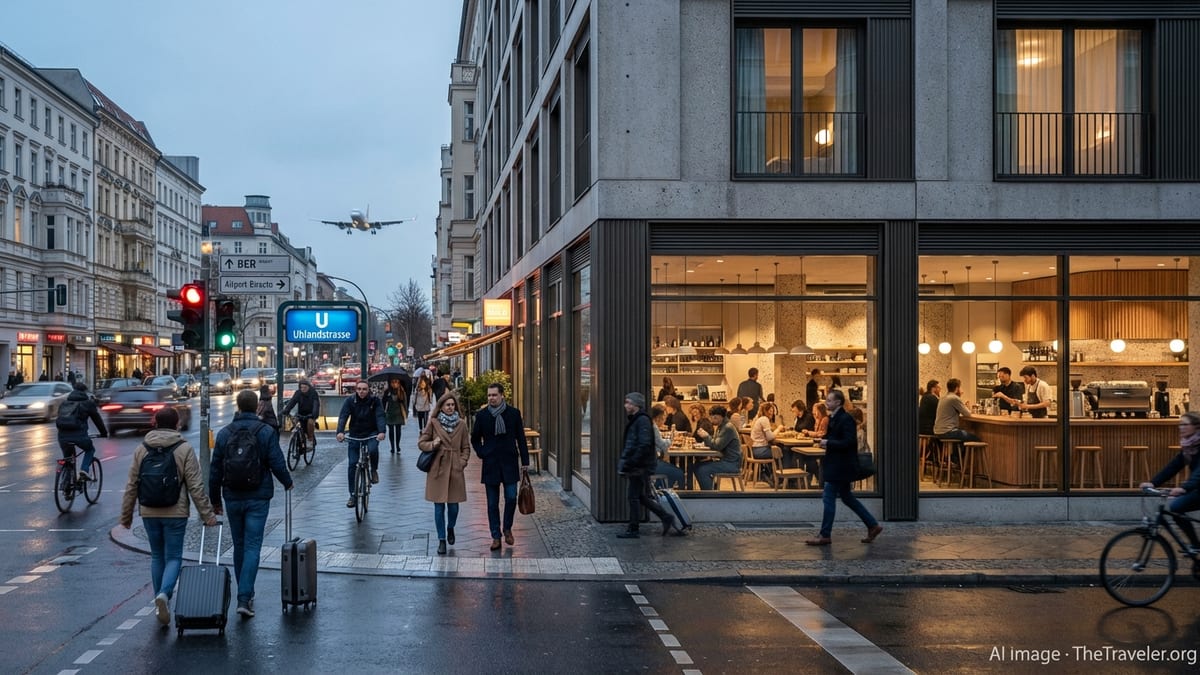
Berlin’s Tourism Boom Meets a New Wave of Air Capacity
After several years of steady recovery, Berlin is firmly back on the global travel map, with airlines and hoteliers moving in tandem to capture renewed demand. At Berlin Brandenburg Airport, the current winter and upcoming summer schedules show a broad network of 70 airlines serving around 130 destinations, underlining the German capital’s status as a major European gateway. That connectivity is now being reinforced by more targeted capacity from American Airlines, Lufthansa and British Airways, each recalibrating their networks to serve higher-yield business and lifestyle travelers.
For the hospitality sector, the timing could scarcely be better. New openings and brand debuts across the city are clustering in key districts such as Charlottenburg, Mitte and around the East Side Gallery, adding momentum to Berlin’s repositioning from value city break to design-forward, experience-driven metropolis. The Dean Berlin, which has just opened in Charlottenburg as the first international outpost of Irish lifestyle brand The Dean, has quickly become a focal point of this shift.
Industry analysts note that the convergence of enhanced long haul and European connectivity with an influx of lifestyle-led hotel concepts is changing how visitors move through and experience Berlin. Once perceived primarily as a low-cost, culture-rich city, the capital is increasingly courting premium leisure and creative business travelers seeking design, food and local immersion as much as price.
Against that backdrop, capacity decisions by American Airlines, Lufthansa and British Airways are being read not simply as schedule changes, but as strategic bets on Berlin’s long term role in Europe’s aviation and hospitality ecosystem.
The Dean Berlin: A Lifestyle Flagship in Charlottenburg
Opening in early 2026, The Dean Berlin marks a pivotal moment for its parent brand and for the City West district. Located in Charlottenburg, the 81 room property occupies a former hotel building and has been reimagined with a rebellious yet refined design concept that mirrors Berlin’s creative reputation. Interiors are characterized by bold color accents, tactile materials and a residential feel that contrasts sharply with more traditional business hotels in the area.
The hotel’s culinary and social heart is Benedict, a combined bakery, restaurant and bar that runs from early morning into late evening. With an international, breakfast focused menu and all day brunch culture, Benedict is intended as much for local residents as for overnight guests, reinforcing Berlin’s trend toward hotels functioning as neighborhood living rooms. The venue is positioned as a magnet for freelancers, creatives and fashion week visitors, with high speed connectivity and flexible seating that blurs the lines between café, bar and co working space.
The Dean Berlin also leans into the city’s walkable, transit rich profile. Situated on Uhlandstrasse, the property sits close to the U Bahn and local rail connections at Savignyplatz, linking easily to Berlin Brandenburg Airport in roughly 45 minutes by train or around half an hour by car. That accessibility has been a core selling point in early marketing campaigns, highlighting to US and UK travelers that the transition from long haul flight to hotel check in can be fast and frictionless.
For Berlin’s hotel market, The Dean’s arrival adds another international lifestyle name to a pipeline that already includes new design driven properties and coming luxury flags. The city’s tourism board has been keen to showcase such openings as evidence that Berlin can now compete directly with destinations like Lisbon, Barcelona and Copenhagen for younger, experience oriented audiences.
Lufthansa Group Deepens Its Berlin Footprint
While The Dean Berlin is reshaping expectations on the ground, the city’s skies are increasingly dominated by the Lufthansa Group. Through its leisure subsidiary Eurowings, the Group is set to expand significantly at Berlin Brandenburg from the summer 2026 season, stationing additional aircraft and lifting its local fleet to nine units. That move will see Eurowings operate connections to 43 destinations in 20 countries from the capital, strengthening Berlin’s links to both major hubs and sun focused leisure markets.
Key among the network additions are up to twelve weekly flights between Berlin and London Heathrow, alongside new services to Lisbon and Sarajevo. Increased frequencies to existing favorites such as Palma de Mallorca, Stockholm and Zurich will further reinforce Berlin’s status as a well connected base for both business and leisure travelers. For The Dean Berlin, this richer European network provides a critical feeder market, particularly from the UK, Scandinavia and southern Europe where design led city breaks remain in high demand.
At the same time, Lufthansa is rolling out its new Allegris premium travel concept across its long haul fleet, including the Boeing 787 9 Dreamliner. While early deployments have focused on routes from Frankfurt, the Group has made clear that it intends to use the upgraded cabins to capture higher yielding passengers across its network by the end of the 2026 summer schedule. For Berlin bound travelers connecting via Lufthansa hubs, that translates into a more consistent premium experience from takeoff to touchdown.
Industry observers say the combination of enhanced product standards and an expanded Eurowings presence at Berlin Brandenburg underscores the Lufthansa Group’s long term commitment to the capital region. With Berlin’s hotel investors pivoting toward lifestyle and upper upscale concepts, the alignment with a stronger premium air offering is seen as a key factor in attracting big ticket events and corporate meetings back to the city.
British Airways Targets Premium Leisure and Business Flows
British Airways, long a bellwether of UK Germany traffic, is also leaning into Berlin’s renewed global profile. From its London Heathrow hub, the carrier maintains high frequency services into Berlin Brandenburg, connecting the German capital with one of the world’s most important international gateways. As Heathrow’s long haul network rebuilds, Berlin stands to benefit from improved one stop links to North America, the Middle East and Asia, particularly relevant for travelers from markets not yet served by nonstop flights into Germany’s capital.
For British Airways, Berlin sits at the intersection of two attractive demand streams. On the one hand, there is a resilient corporate and government travel base tied to the city’s growing technology, media and political sectors. On the other, the airline is tapping into a strong premium leisure segment drawn by Berlin’s arts, nightlife and design culture. This mix is well suited to the carrier’s product portfolio, which includes differentiated cabins on short haul routes and an emphasis on seamless terminal transfers at Heathrow.
Travel intermediaries in both London and Berlin report that British Airways’ schedule and product reliability are proving increasingly important for international guests booking shorter, high value stays in the city. Many of these travelers are opting for design focused properties such as The Dean Berlin, where they can combine meetings with lifestyle experiences that reflect Berlin’s creative edge, all within a long weekend.
The airline’s presence also serves to reinforce competition on the critical London Berlin corridor, where Eurowings’ planned frequency ramp up from 2026 will be watched closely. For hoteliers, the outcome is positive: more capacity and product variety make it easier to attract international events, brand launches and cultural festivals that depend on reliable airlift.
American Airlines and Transatlantic Dynamics
Across the Atlantic, American Airlines is navigating a complex transatlantic environment that has included seasonal suspensions on several European routes during the most recent winter schedule. Services linking major US hubs with cities in Germany, France, Italy, Spain and Switzerland have been temporarily paused in response to softer winter demand and a broader industry shift toward warmer, leisure heavy destinations during the colder months.
Despite those adjustments, American remains a central player in the North Atlantic market and a critical conduit for US based travelers heading to Berlin, often via partner hubs and alliance connections. Industry data from the recent holiday travel period indicates that global passenger numbers have reached record levels, with airlines forecasting more than 5 billion travelers in 2026. Within that picture, US outbound demand to Europe, while increasingly seasonal, continues to rebound around key periods such as summer, major trade fairs and cultural events.
For a property like The Dean Berlin, which is actively courting a mix of American leisure and creative industry guests, this evolving pattern means planning around peak transatlantic flows. The hotel’s all day dining concept, flexible room product and emphasis on neighborhood experiences are tailored to short, high intensity stays in which travelers combine work, culture and nightlife within a compressed itinerary. When American and its partners restore full summer schedules, that segment is expected to be a major driver of bookings.
Travel advisors note that US visitors, especially from creative and tech hubs such as New York, Los Angeles and Austin, are increasingly seeking “local feeling” hotels in Berlin that avoid a generic international look. The Dean Berlin’s Irish roots, playful design and Charlottenburg address hit that brief, positioning it as a natural beneficiary when transatlantic capacity tightens around city break seasons.
Berlin’s Hotel Pipeline Signals a Higher End Shift
The Dean Berlin is part of a broader recalibration in the city’s hospitality landscape that points toward higher average rates and more design focused offerings. According to Berlin’s tourism and convention office, a series of new lifestyle and upper upscale properties is reshaping the inventory, from waterfront concepts at the East Side Gallery to renovated grand hotels bringing back early twentieth century glamour along Kurfürstendamm.
Among the most closely watched developments is the planned transformation of Berlin’s historic Hotel de Rome into a Four Seasons property by late 2027. That project will see a top tier luxury brand return to the German capital after a two decade absence, complementing the city’s more experimental lifestyle scene. Taken together with The Dean Berlin’s opening and the arrival of other international design led flags, Berlin is on track to offer a fuller spectrum of upscale and luxury options than at any point in its recent history.
This evolving mix is expected to push the city up the rankings for average daily rates and revenue per available room, metrics where Berlin has historically lagged behind European peers such as Paris and Amsterdam. For airlines, particularly Lufthansa and British Airways, a stronger upscale hotel base supports higher yields on business and premium leisure tickets, given travelers’ willingness to pay for a coherent end to end experience that extends from cabin to check in.
Crucially, the shift does not signal the end of Berlin’s accessible, creative ethos. Instead, properties like The Dean Berlin seek to balance playful design and neighborhood integration with elevated service and food concepts, ensuring the city remains attractive to younger travelers even as it ascends the value chain.
Synergy Between Sky and City: A New Berlin Narrative
What is emerging in Berlin is a narrative of mutual reinforcement between aviation and hospitality. Lufthansa Group’s investment in new aircraft and expanded Eurowings operations at Berlin Brandenburg, British Airways’ continued focus on premium connectivity via London Heathrow and American Airlines’ role in funneling US based visitors all contribute to a denser web of global connections. At the same time, projects like The Dean Berlin and the forthcoming Four Seasons Hotel Berlin are rewriting the script on what travelers can expect once they touch down.
This synergy is particularly evident in the way airlines and hotels are tailoring their products to similar guest profiles. Both are targeting mobile professionals, digital creatives and culturally curious leisure travelers who prize design, local food scenes and flexible spaces for work and socializing. The Dean Berlin’s all day Benedict venue, for example, mirrors the evolution of airport lounges and premium cabins where dining, productivity and relaxation blend seamlessly.
For Berlin’s policymakers and tourism strategists, the challenge now is to ensure infrastructure, public transport and neighborhood planning keep pace with this dual expansion. Pressure on key districts such as Charlottenburg and Mitte is likely to grow as more visitors choose to stay centrally, especially if air capacity continues to rise and new hotels cluster around existing cultural hubs. Balancing growth with liveability will be a central theme in the coming years.
In the meantime, travelers arriving on American Airlines, Lufthansa or British Airways will find a city in flux yet confident in its direction: a Berlin that remains unmistakably itself, even as it climbs higher on both the route maps and the wish lists of global explorers.