

More news on this day
As geopolitical tensions and airspace closures disrupt large parts of West Asia, the India–UAE air corridor is emerging as a strategic lifeline, with the Air India Group and IndiGo recalibrating networks, adding capacity and opening new city pairs to keep traffic flowing between two of the region’s busiest aviation markets.
Get the latest news straight to your inbox!
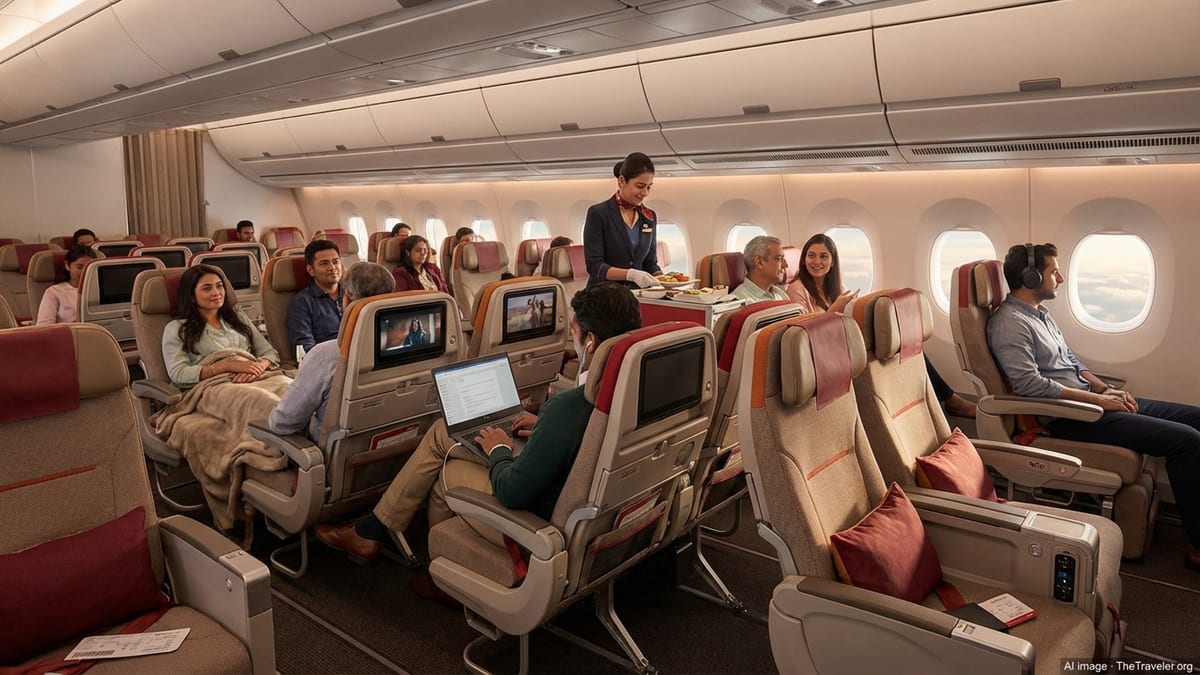
India–UAE Becomes a Critical Anchor in a Volatile Region
Publicly available traffic data shows that India handled around 376 million air passengers in the 2024 fiscal year, with the Air India Group and IndiGo together carrying more than 40 percent of international passengers to and from the country. A sizable share of that traffic is funneled through the United Arab Emirates, where Dubai, Abu Dhabi and Sharjah act as key hubs for migrant workers, business travellers and leisure visitors moving between South Asia, the Gulf and beyond.
Recent regional instability and the 2026 conflict affecting airspace across Iran, Iraq and parts of the Gulf have severely constrained traditional long-haul routings, pushing airlines to prioritise resilient, high-demand markets. Reports indicate that Indian carriers have cancelled hundreds of flights across West Asia and on onward sectors to Europe and North America as they navigate longer routings, safety assessments and regulatory advisories.
Against that backdrop, the India–UAE market has taken on added importance. Even when scheduled services have been temporarily suspended during peak phases of the crisis, carriers have focused limited resources on maintaining or restoring links between Indian metros and UAE gateways through ad hoc and non-scheduled operations, positioning the corridor as a stabilising bridge while other parts of the regional network remain disrupted.
Industry commentary suggests that this reweighting is likely to persist. As airlines rebuild schedules, sectors with dense origin-and-destination demand, strong labour and family ties, and diversified traffic flows are expected to recover fastest, and the India–UAE pairing sits at the top of that list.
Air India Group Deepens UAE Footprint and Deploys Flex Capacity
The Tata-controlled Air India Group has been moving to consolidate its presence in the Emirates while simultaneously using its fleet more flexibly to respond to disruption. According to information published by the airline, Air India and Air India Express together operate hundreds of weekly services between India and the UAE in normal conditions, linking Dubai, Abu Dhabi, Sharjah, Ras Al Khaimah and Al Ain with a wide network of Indian cities.
In 2025 the group appointed dnata as its general sales agent and service partner across the UAE, a step that industry observers interpret as an effort to streamline distribution, ground handling and customer support in a market that functions as a de facto overseas hub for Indian travellers. Press material from that agreement highlighted more than 80 weekly Air India flights and over 240 weekly Air India Express departures between the UAE and India during stable periods, underscoring the scale of the group’s commitment.
The group’s strategy has been tested by the escalation of conflict in early 2026, which prompted the suspension of most scheduled flights to and from the UAE and neighbouring Gulf states for safety reasons. Updated advisories from Air India in March 2026 show that, while regular timetabled operations remain paused at major UAE airports, both Air India and Air India Express are mounting ad hoc services between Dubai, Abu Dhabi, Ras Al Khaimah and Indian cities such as Delhi, Mumbai, Kochi and Kozhikode to move stranded passengers and essential traffic.
In parallel, the full-service carrier has temporarily shifted widebody capacity towards relatively unaffected markets in Europe and North America, using its long-haul network to offset some of the revenue pressures created by curtailed Gulf operations. Analysts note that this dual-track approach, combining tactical relief flying in the UAE with redeployment of long-haul aircraft elsewhere, is designed to protect network connectivity while limiting financial damage.
IndiGo Expands Secondary Gateways and Builds Redundancy
IndiGo, India’s largest airline by passenger numbers, has been pursuing a different but complementary strategy in the India–UAE corridor. Rather than relying only on trunk routes to Dubai and Abu Dhabi, the low-cost carrier has spent the past two years steadily growing its presence at secondary Emirati airports such as Ras Al Khaimah and Fujairah, while increasing the number of Indian cities with direct links to the UAE.
Network analysis published in mid-2025 indicated that IndiGo was already one of the top three carriers on India–UAE routes, alongside Emirates and Air India Express, with services touching Dubai, Abu Dhabi, Sharjah, Ras Al Khaimah and Fujairah. This footprint has continued to expand, with new flights announced from Indian tier-two cities into the UAE, including a Kochi to Ras Al Khaimah daily service introduced in March 2025 and additional connections such as a planned Vishakapatnam to Abu Dhabi route.
By activating these secondary gateways, IndiGo is effectively creating redundancy in the corridor. If one UAE hub faces temporary constraints because of airspace restrictions, congestion or operational limits, capacity can be rerouted through alternative airports without forcing passengers to connect via more distant hubs. Industry reports suggest that this granular approach to network planning is particularly valuable for labour and family traffic from states such as Kerala and Andhra Pradesh, where travellers benefit from having multiple nearby exit points into the Gulf.
At the same time, IndiGo has had to manage its own operational challenges, including a high-profile scheduling crisis in late 2025 linked to crew rostering rules. Analysts note that sustained expansion in the India–UAE market will depend not just on route announcements, but also on the carrier’s ability to build crew and fleet resilience so that services remain reliable during periods of regional stress.
Extra Sections and Corridor Stability Amid Ongoing Disruptions
As the 2026 conflict has disrupted overflight corridors and prompted authorities to advise caution in multiple Flight Information Regions, Indian airlines have shifted capacity into short- and medium-haul markets that can be served without traversing the most sensitive airspace. The India–UAE sector, with its relatively short stage length and heavy point-to-point demand, has become a natural candidate for such redeployment.
Recent coverage in Indian media points to the Air India Group scheduling dozens of additional non-regular flights between Indian metros and Gulf gateways, including UAE airports, to repatriate passengers and clear backlogs created by earlier cancellations. These services operate alongside a smaller core of previously planned flights, effectively creating a temporary air bridge designed to stabilise the flow of travellers, particularly migrant workers and families who rely on the corridor.
Financial analyses suggest that these efforts come at a cost. Longer routings to avoid closed or restricted airspace, higher fuel burn and reduced cargo capacity have tightened margins across Indian carriers, with estimates of sector-wide revenue losses running into hundreds of crores of rupees in the first months of the crisis. However, maintaining a credible level of India–UAE connectivity is seen as essential to preserving customer confidence and protecting future demand.
For passengers, the immediate experience is mixed. Published advisories show that while seat availability has improved compared with the earliest days of the conflict, schedules remain fluid, fares volatile and routings subject to last-minute change. Travel experts are encouraging passengers to allow greater buffer times, remain flexible on dates and airports, and monitor airline communication channels closely.
Longer-Term Reshaping of the India–UAE Travel Corridor
Beyond the immediate crisis response, industry observers expect the current period of disruption to accelerate structural changes in the India–UAE air market. The Air India Group’s consolidation of services under a unified strategy, combined with IndiGo’s focus on secondary gateways and high-frequency narrowbody operations, is likely to reinforce the dominance of these two Indian players in a corridor that is also heavily contested by Gulf network airlines.
Capacity growth to and from smaller Indian cities is another visible trend. As both groups add or reinstate links from tier-two and tier-three markets directly into the UAE, the need for domestic connections through Delhi and Mumbai is reduced, smoothing the passenger journey and spreading traffic more evenly across the system. This diversification can make the overall corridor more resilient when weather, congestion or regional geopolitics affect specific hubs.
Regulatory and bilateral considerations will also shape the next phase of expansion. Indian authorities have resisted calls from some Gulf states for significantly higher seat entitlements, a stance that has indirectly protected room for Indian carriers to grow in key markets such as the UAE. At the same time, domestic competition for limited traffic rights remains intense, and newer entrants have argued that historic allocations favour incumbents such as IndiGo and the Air India Group.
Despite these tensions, the direction of travel appears clear. With passenger demand between India and the UAE expected to remain robust, and with wider regional networks likely to stay volatile, both Air India Group and IndiGo are positioning the corridor as a central pillar of their international strategies. The result is a busier, more diversified and somewhat more flexible air bridge between the two countries, even as the skies around it remain uncertain.