

More news on this day
Air India has opened the doors to its new flagship Maharaja Lounge at Delhi’s Indira Gandhi International Airport, unveiling a premium ground experience that aims to redefine how the carrier treats its most valuable passengers and set a new benchmark for luxury, comfort and convenience at the country’s busiest international hub.
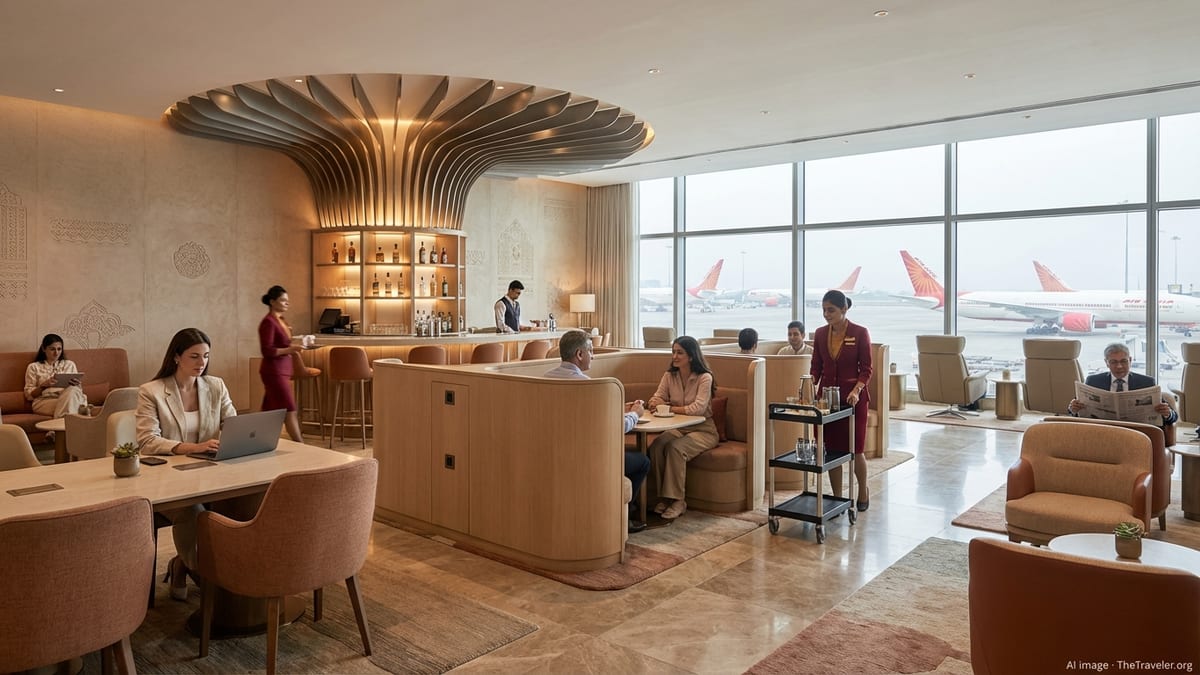
A Flagship Lounge at the Heart of Delhi’s Gateway
Located at the international pier of Terminal 3, the Maharaja Lounge is positioned to serve the dense wave of long haul departures that leave Delhi for Europe, North America and other global destinations late each evening. The 16,000 square foot space sits on a mezzanine level just beyond immigration and security, allowing eligible passengers to transition quickly from airport formalities into a calm, branded environment.
The lounge is designed to accommodate close to 300 guests across distinct Business and First Class zones. This capacity reflects a strategic shift for Air India, which is investing heavily in its premium footprint as part of a multi year transformation plan under the Tata Group. After closing its previous, much smaller facility in 2024 for a complete overhaul, the airline has now returned with a markedly more ambitious lounge that seeks to compete directly with the best in the region.
For Air India, the Delhi flagship is more than just an upgraded waiting area. Executives have framed it as a visible, tangible expression of the “New Air India” story, bringing the airline’s refreshed branding, product philosophy and hospitality standards squarely into the terminal. It is also the template for a planned network of next generation lounges that the carrier intends to roll out at key airports in India and overseas.
Eligibility, Access and the Premium Focus
Access to the Maharaja Lounge has been tightly curated around the airline’s highest yielding customers and frequent flyers. The facility is progressively opening to passengers traveling in First and Business Class on Air India, along with Gold and Platinum members of the carrier’s Maharaja Club loyalty program and eligible Star Alliance Gold travelers flying on the airline’s services from Delhi.
By limiting access to premium cabin passengers and top tier elites, Air India is signaling that it wants to preserve an atmosphere of space and exclusivity, even during the peak midnight departure banks. Unlike many contract lounges in the terminal, there is currently no provision for walk in paid entry by economy passengers, a move that aligns the lounge more closely with the access policies of major international full service carriers.
For travelers from the United States, United Kingdom and other long haul destinations, this means that a premium cabin booking on routes such as Delhi to New York, San Francisco or London Heathrow will now be paired with a significantly upgraded pre flight ground experience. As Air India continues to add widebody capacity on these routes, the lounge is expected to play a central role in shaping how international passengers perceive the brand.
Design Language: Heritage Reimagined for a New Era
The Maharaja Lounge has been conceptualised by global hospitality design studio Hirsch Bedner Associates, with a brief to marry Air India’s refreshed visual identity to an interior scheme that feels both contemporary and unmistakably Indian. The result is a palette of warm, muted tones, textured walls, and refined furnishings punctuated by curated artworks that reference motifs from across the country.
Rather than leaning on overt nostalgia, the design takes subtle cues from the airline’s storied Maharaja mascot and its mid century heritage, integrating these into a modern layout with clean lines and generous use of natural materials. Ambient lighting helps zone the space and soften acoustics, contributing to a sense of quiet even when the lounge is busy.
Art installations and decorative pieces are used to tell what the airline describes as a narrative of India’s cultural diversity, with contemporary interpretations of traditional craft and patterning. This approach allows the lounge to avoid feeling like a themed space, instead presenting an upscale, international atmosphere that happens to be rooted firmly in its home country.
Distinct Zones for Work, Rest and Socialising
A central feature of the new lounge concept is the way the floorplate has been divided into clearly defined yet visually connected zones, allowing travelers to choose an environment that suits their mood or journey stage. Quiet corners with high backed seating and soft lighting offer a refuge for those seeking rest between flights, while more open communal areas sit closer to the bar and dining zones.
Among the signature spaces is the Aviator’s Bar, a venue with a speakeasy inspired feel and a curated selection of wines and whiskies. Its design draws from the 1932 flight operated by J. R. D. Tata in a Puss Moth aircraft, with the ceiling echoing the form of a spinning propeller. The bar anchors the Business Class side of the lounge and is intended as both a social hub and a visual nod to the airline’s aviation roots.
For travelers who need to work, the Globetrotter’s Study provides a more focused environment, with individual desks, plentiful charging points, high speed connectivity and a small library of books and magazines. This zone is deliberately set back from the main thoroughfares of the lounge to minimise noise, making it suitable for conference calls, last minute presentations or quiet reading ahead of overnight flights.
Passengers looking for restorative downtime will find the Serenity Area, an enclosed section equipped with recliners and subdued lighting designed for relaxation. Here, the emphasis is on privacy and calm, giving guests a chance to reset between connections or before stepping onto long haul services where they may prefer to work or dine rather than sleep.
First Class Exclusivity with Sleep Suites and the Crystal Bar
Beyond the Business Class spaces, Air India has carved out a fully separate First Class zone, branded as Air India First. Entry is reserved for First Class passengers and select top tier frequent flyers, reinforcing a tiered experience that mirrors the differentiation on board the airline’s flagship aircraft.
At the heart of this section is the Crystal Bar, a centerpiece venue that serves champagne, sparkling wines and made to order cocktails in an environment styled with contemporary furnishings and subtle Indian detailing. The atmosphere is quieter and more intimate than in the main Aviator’s Bar, with a layout focused on smaller seating clusters and tarmac facing viewpoints.
One of the standout amenities in the First Class area is a set of Sleep Suites, private enclosed spaces equipped with beds and soft lighting where guests can enjoy real pre flight rest. Given Delhi’s role as a hub for overnight services in both directions, these suites are positioned as a key differentiator for the lounge, enabling travelers to arrive on board already rejuvenated and ready to make full use of in flight time.
Large windows in the First Class dining and seating areas provide expansive views of the apron and runway, allowing guests to watch aircraft movements while they dine or relax. This sense of connection to the airfield, paired with the relative seclusion of the zone, is likely to appeal to aviation enthusiasts and high spending corporate travelers alike.
Culinary Programmes and Bespoke Beverage Service
The food and beverage offering at the Maharaja Lounge has been designed to reflect both the airline’s international network and its Indian roots. Buffet counters and live cooking stations serve a mix of Indian regional specialities and global favourites, catering to a wide range of dietary preferences and time zones.
In addition to the main self service areas, Air India has introduced a distinctive Beverage on Wheels concept. Mobile beverage carts circulate through the lounge, allowing guests to order bespoke cocktails, mocktails or other drinks directly at their seats rather than having to approach a bar counter. This service model is particularly advantageous in the more secluded or quiet zones where guests may prefer not to move around frequently.
A dedicated tea programme pays tribute to India’s tea culture, with freshly brewed selections offered from a trolley that also carries snacks and savouries. The focus is on personalisation, with staff preparing teas according to individual strength and flavour preferences, which aligns with the broader emphasis on attentive, high touch hospitality.
The overall culinary strategy is to offer an experience that feels closer to an upscale hotel lounge than a traditional airport facility, with an emphasis on quality, presentation and a sense of place. For many long haul passengers, this will form their first or last taste of India on a journey, and Air India is clearly positioning the offering as part of its broader brand promise.
Operational Convenience and Passenger Flow
From an operational standpoint, the location and layout of the Maharaja Lounge have been chosen to streamline passenger flows through Terminal 3. Positioned above the main duty free area, the entrance is easily accessible from the central concourse yet set apart from the heaviest retail traffic, helping maintain a sense of separation from the bustle of the public areas below.
Within the lounge, seating has been distributed across smaller clusters rather than long, continuous rows, allowing guests to find semi private corners even at busy times. Multiple food and beverage points are intended to reduce queuing, while facilities such as showers and restrooms are located so that they are reachable without cutting across quiet zones.
Staffing levels are also key to the experience. Air India has emphasised training in service recovery, personal recognition of frequent flyers and proactive assistance for passengers with tight connections. The airline sees the lounge as a critical touchpoint where issues can be identified and resolved before they impact the journey further down the line.
A Cornerstone of Air India’s Premium Transformation
The launch of the Maharaja Lounge comes as Air India pursues a sweeping overhaul of its fleet, cabins and service standards following its return to Tata Group ownership. New widebody aircraft, upgraded business and premium economy products, and refreshed brand elements have all been rolled out or announced in recent months, with the lounge strategy serving as the ground counterpart to these in flight investments.
In this context, the Delhi flagship is both a symbol and a test case. If passenger feedback and load factors on premium cabins improve in tandem with the opening, the model is likely to be replicated at other hubs across India and in select overseas markets where Air India operates significant long haul services. The airline has signalled that work is already under way to identify locations for additional lounges that will follow a similar design language and service blueprint.
For Delhi Airport itself, the new facility strengthens its positioning as a premium gateway for international travel from India. With competition intensifying from hubs in the Gulf and Southeast Asia, an enhanced home carrier lounge product helps the airport and airline present a more compelling proposition to global travelers choosing where to connect or originate their journeys.
As the Maharaja Lounge begins welcoming a broader stream of guests from February 2026 onwards, its performance will be closely watched by both industry observers and rival airlines. For Air India, the space represents a confident statement that its long promised transformation is no longer just a plan but something passengers can see, touch and experience from the moment they arrive at the airport.