

Air India is tightening its grip on the crucial India United Kingdom corridor while simultaneously scaling up links to South Korea, Canada, Australia, Japan and other key markets, unveiling a sweeping international schedule that blends higher frequencies with upgraded cabins and a growing fleet of new widebody aircraft.
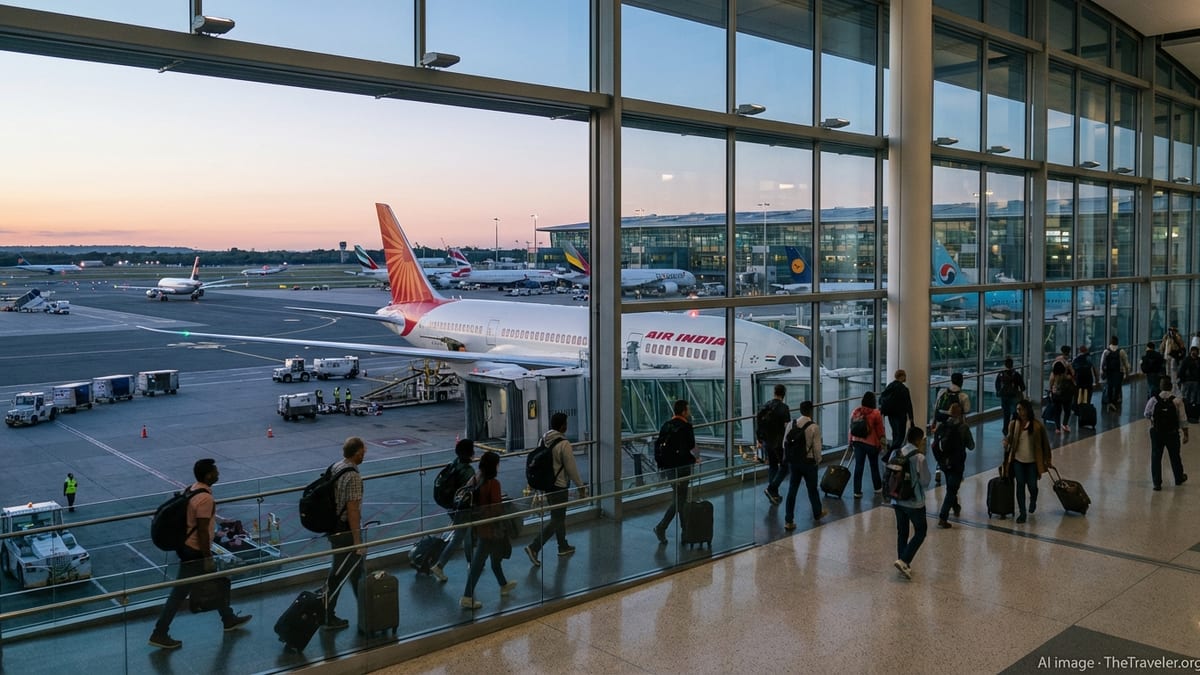
United Kingdom at the Heart of Air India’s Expansion
The United Kingdom has emerged as the centerpiece of Air India’s international growth strategy, with the carrier steadily building capacity and frequency on routes linking major Indian cities to London and Birmingham. In successive schedule updates, the airline has moved from tactical capacity cuts in 2025 to a more structural commitment to additional seats and more daily options for both business and leisure travellers.
For the Northern Summer 2025 season beginning March 30, Air India confirmed frequency increases on several UK routes, led by the busy Delhi London Heathrow trunk. The airline is raising services on this flagship route from 21 to 24 weekly flights, deploying its latest Airbus A350 900 and upgraded Boeing 787 9 aircraft. Secondary UK gateways are also seeing more connectivity, with Amritsar Birmingham flights moving from three to four times weekly, Amritsar London Gatwick also growing to four weekly services, and Ahmedabad London Gatwick expanding from three to five flights per week.
These moves build on a subsequent announcement for the Northern Winter 2025 schedule, under which Air India will further bolster UK operations with a fourth daily Delhi London Heathrow flight from late October 2025. That step will take weekly frequencies on the route to 28, and consolidate Air India’s position as the largest carrier by capacity between India and the UK, with around 1.7 million seats offered annually on its India UK network.
Industry analysts note that the UK focus reflects strong demand from a combination of corporate traffic, the large Indian diaspora, and two way tourism. With Britain and India engaged in deeper trade discussions and political outreach, airlines are racing to secure a first mover advantage, and Air India’s strategy indicates it intends to be the main Indian flag carrier on this strategic corridor.
South Korea, Japan and the Wider Asia Pacific Push
While the UK is drawing headlines, Air India is also reinforcing its presence in North East Asia, particularly South Korea and Japan, as it aligns with rising two way flows of trade, technology and tourism. From March 30, 2025, the carrier is increasing Delhi Seoul Incheon services from four to five weekly flights, creating more options for business travellers shuttling between India’s capital and one of Asia’s leading tech and manufacturing hubs.
This Seoul uplift forms part of a wider recalibration of Air India’s Far East schedule, which also includes upgauging the Delhi Hong Kong route from narrowbody aircraft to the Boeing 787 Dreamliner on daily services. The shift to widebody aircraft brings greater capacity and a more consistent long haul product, signalling the airline’s intention to compete more aggressively on comfort and reliability in the Asia Pacific region.
Air India has also highlighted Tokyo and other North Asian gateways within its broader summer travel preparations, committing newly retrofitted or upgraded cabin interiors to high demand routes including the Japanese capital, Seoul and Shanghai. By pairing North East Asian business centres with India’s fast growing technology and services sectors, the airline is betting on sustained demand from corporate travellers, students and premium leisure guests who expect modern aircraft and dependable schedules.
Japan’s inclusion in the expansion narrative is particularly significant given renewed interest from Japanese investors and tourists in India. Enhanced Air India capacity into North Asia not only facilitates point to point traffic but also feeds connecting flows over Indian hubs to destinations in the Middle East, Europe and North America, expanding the role of Delhi and other metro cities as emerging transit points.
Canada, Australia and the Long Haul Growth Story
Beyond Europe and North East Asia, Air India has identified Canada and Australia as long haul markets with strong growth potential, underpinned by sizeable Indian diaspora communities and robust student and business travel. The airline’s latest strategy updates for the 2026 Northern Summer season envisage additional capacity and upgraded aircraft on select routes to Toronto and Melbourne, two of its key non stop gateways.
On these long sectors, Air India is progressively shifting more flying to aircraft with refreshed interiors, better seating and modern inflight entertainment, in line with rising expectations from travellers familiar with global network carriers. Deploying retrofitted widebodies to cities such as Toronto and Melbourne allows the airline to improve yield and customer satisfaction while supporting government ambitions to deepen ties with Canada and Australia in trade, education and people to people links.
Canada and Australia also serve as important endpoints for complex multi leg itineraries originating in smaller Indian cities. With additional frequencies to these long haul destinations, Air India can offer more convenient connections through its hubs, capture traffic that might otherwise flow over third country airlines, and position itself as a competitive option for itineraries that combine India with stops in Europe or North Asia.
Travel industry observers say the renewed focus on long range markets reflects Air India’s transformation under new ownership, which includes major fleet orders and a commitment to modernise both product and operations. As bilateral air service agreements evolve and slot availability improves, further additions to Canada and Australia are widely anticipated, with Air India likely to pursue both frequency growth and potentially new city pairs over the medium term.
Frequency Gains and Network Rationalisation
The recent expansion headlines follow a volatile period for Air India’s international network. In mid 2025 the airline temporarily cut frequencies and suspended certain routes across North America, the UK, Europe, the Far East and Australia due to operational constraints, affecting services such as Amritsar London Gatwick, Goa London Gatwick and Delhi Nairobi. Those short term reductions highlighted the challenge of balancing ambitious growth plans with aircraft availability and ongoing fleet retrofit programmes.
Since then, the carrier has used the Northern Summer 2025 schedule change to re allocate capacity more strategically, concentrating on high demand corridors and city pairs that support sustained year round traffic. The frequency boosts to London Heathrow, Gatwick and Birmingham form part of this recalibration, as do incremental increases to European destinations such as Zurich and Vienna and additional flights to Nairobi in East Africa.
Industry timetables show that Air India has also made tactical adjustments within its European network, including aircraft swaps to larger widebodies on routes like Delhi Amsterdam during peak months. These changes, combined with a focus on key hubs such as London, Seoul and Toronto, indicate an overarching strategy of deepening existing markets rather than pursuing thin new routes that could strain resources.
Aviation analysts describe this as a shift from breadth to depth, with Air India prioritising higher frequency, better timed services that cater to premium travellers and connecting passengers. The outcome is a more resilient network that can absorb seasonal fluctuations while offering the schedule density needed to compete with rival carriers from the Gulf, Europe and East Asia.
Enhanced Passenger Comfort on New and Upgraded Cabins
Central to Air India’s pitch in its expanded international markets is a substantial upgrade of its onboard product. The airline is rolling out new cabin interiors on its flagship Airbus A350 900s and retrofitted Boeing 787 Dreamliners, which are increasingly being assigned to critical routes such as Delhi London, Tokyo, Seoul and Toronto. These aircraft feature reconfigured Business Class and Premium Economy cabins, improved seating ergonomics and modern inflight entertainment systems with expansive content libraries.
On the high profile Delhi London Heathrow route, Air India now operates all flights with its latest widebody products, offering three cabin classes on both the A350 900 and 787 9. The Business Class cabins are equipped with lie flat seats and direct aisle access, while Premium Economy provides extra legroom and differentiated service for travellers seeking more comfort without the cost of a full premium cabin. Economy Class has also been refreshed with upgraded upholstery, power outlets and redesigned lighting to create a more pleasant long haul environment.
Complementing the hardware improvements, Air India has enhanced its soft product, including revamped meal services with a broader mix of Indian and international cuisine, upgraded bedding and new amenity kits on longer flights. Complimentary WiFi on Delhi London flights, as well as expanded entertainment options across the fleet, reflect a push to align with international standards on connectivity and onboard experience.
For premium passengers and frequent flyers, ground services are also being elevated. In London Heathrow, Air India customers traveling in Business Class and eligible loyalty programme members can access a choice of partner lounges from major global airlines, offering showers, workspaces and buffet dining before departure. Similar enhancements are being progressively introduced at key Indian hubs, aiming to make the overall journey more seamless for travellers connecting between the UK, Asia Pacific, North America and beyond.
Connecting Secondary Indian Cities With Global Hubs
A distinguishing feature of Air India’s current growth phase is the emphasis on linking secondary Indian cities directly with major international hubs such as London, Birmingham, Zurich, Vienna and Seoul. Routes from Amritsar and Ahmedabad to the UK are being expanded precisely because they tap substantial catchment areas that previously required travellers to connect via Delhi or Mumbai, or to rely on foreign carriers routing through the Gulf.
With more non stop and one stop options from these regional centres, passengers gain time savings and a more predictable travel experience, while airports in India’s tier two cities benefit from higher international throughput. The increased frequencies from Amritsar to Birmingham and London Gatwick, and from Ahmedabad to London Gatwick, underscore Air India’s belief that diaspora traffic, religious tourism and student flows can sustain multiple weekly services year round.
This approach is mirrored on other international sectors. Additional flights to Zurich and Vienna strengthen links between India’s technology and services economy and Europe’s financial and industrial hubs, while extra capacity to Nairobi supports growing business and tourism connections with East Africa. Such routes also feed into Air India’s long haul services to Canada, Australia and North Asia, bolstering the role of Indian airports as competitive transit points.
For travellers in South Korea, Japan, Canada and Australia, the expanding network translates into more one ticket itineraries that connect through Delhi, Mumbai or Bengaluru onto a wide range of domestic destinations. Combined with interline and codeshare partnerships that Air India is pursuing across multiple regions, the result is a denser web of connectivity linking regional India with some of the world’s most important economic corridors.
Global Travel Demand and Competitive Landscape
Air India’s expansion comes against the backdrop of steady growth in global air travel demand, particularly on international routes. Recent data from airline industry bodies indicates that international passenger traffic continues to outpace domestic growth, with Asia Pacific and Europe seeing some of the strongest year on year increases. This environment encourages network carriers to add capacity where they see sustainable demand, especially on long haul markets linking major population centres and trading partners.
On the India UK corridor, Air India’s ambitions place it in direct competition with British Airways, Virgin Atlantic and a host of Gulf and European carriers that also rely on Indian traffic to fill their global networks. British Airways has already flagged plans for additional Delhi London capacity from 2026, while Virgin Atlantic has expanded its own India services with more seats and higher gauge aircraft. The net effect is a market where travellers enjoy more choice, but where airlines must differentiate on product quality, schedule and pricing.
In Asia Pacific, Air India’s increased frequencies to Seoul, improved Japan services and wider North East Asia coverage are set against rival offerings from Korean, Japanese and Southeast Asian carriers. Many of these airlines have long standing reputations for service excellence, meaning Air India’s cabin upgrades and improved reliability will be critical to winning premium customers and high yield corporate accounts.
For Canada and Australia, competition includes both local flag carriers and a growing number of one stop options via the Middle East and Southeast Asia. By investing in direct links and refreshed aircraft on these routes, Air India is signalling that it intends not only to serve the Indian diaspora, but also to attract international travellers looking for efficient access to multiple Indian cities from a single long haul flight.
Strategic Outlook for Air India’s International Network
The decision to place the United Kingdom alongside South Korea, Canada, Australia, Japan and other key markets at the centre of its international expansion reflects Air India’s broader transformation agenda. The airline has publicly committed to a multi year programme of fleet renewal, digital modernisation and service upgrades under its Vihaan.AI strategy, and the latest schedule changes are a visible manifestation of that plan in the long haul arena.
In the near term, the focus will likely remain on consolidating frequency gains to the UK and reinforcing connections to North Asia, Europe, Africa and the Americas through additional seats and more consistent cabin products. Continued delivery of new aircraft and the roll out of retrofitted Dreamliners should gradually ease previous capacity bottlenecks, giving planners more flexibility to fine tune schedules around peak travel seasons.
Over the medium term, Air India’s ambitions may extend to new routes and deeper partnerships, including expanded codeshare agreements designed to plug network gaps and offer more one stop itineraries beyond its own operated destinations. As India’s outbound and inbound tourism sectors grow and trade ties with partners like the UK, South Korea, Canada, Australia and Japan intensify, the airline’s role as a connector is likely to draw further regulatory and commercial support.
For travellers, the practical impact will be measured in more frequent flights, improved comfort and a wider choice of itineraries that keep India better linked to the global economy. With the United Kingdom now firmly embedded in an expansion blueprint that spans three continents, Air India is positioning itself as a central player in the next phase of international connectivity out of South Asia.