

More news on this day
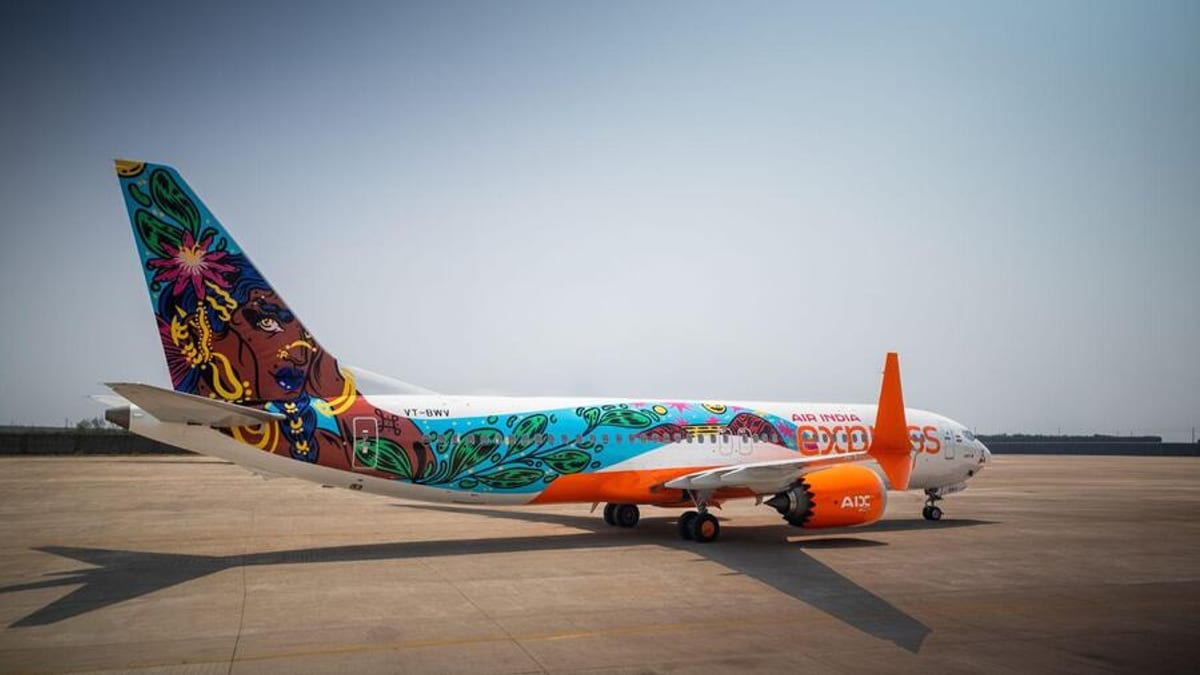
Air India Express has introduced “Flying Canvas,” a Boeing 737-8 MAX wrapped entirely in contemporary Indian art, marking what public information describes as India’s first fully art-wrapped commercial aircraft and adding a bold cultural dimension to the country’s expanding aviation footprint.
Get the latest news straight to your inbox!
A New Milestone for India’s Cultural Aviation Story
The Flying Canvas special livery has been applied to a Boeing 737-8 MAX registered as VT-BWV, according to recent enthusiast coverage and aviation tracking discussions. The aircraft features artwork that extends beyond the tail to encompass the fuselage, turning the jet into a moving gallery of modern Indian creativity. This goes beyond the long-standing practice of decorative tail art and positions the aircraft as a complete visual statement.
Reports indicate that Air India Express is framing Flying Canvas as an evolution of its existing “Tales of India” identity, which showcases regional art forms and textile motifs across its fleet. Earlier designs focused primarily on tail sections, but the new treatment significantly expands the canvas available to artists and brand designers, reinforcing the airline’s role as a showcase for Indian design.
The move comes at a time when India’s aviation sector is pursuing strong fleet growth and renewed brand building, with Air India and Air India Express both updating liveries, cabins and service concepts. Within that broader transformation, Flying Canvas serves as a high-visibility symbol of how Indian carriers are seeking to fuse commercial expansion with cultural storytelling.
Industry observers note that while special liveries are common globally, a full art-led wrap built around contemporary Indian themes is still relatively rare in the market. By calling attention to that distinction, Air India Express is positioning Flying Canvas as a first-of-its-kind expression of Indian culture in the skies.
Design Language Rooted in Contemporary Indian Art
Visuals shared in recent days show Flying Canvas covered in vivid patterns and flowing lines inspired by current Indian artistic movements rather than only classical motifs. The palette appears to build on the carrier’s refreshed brand colors, incorporating orange and turquoise with complementary tones that allow the artwork to stand out on the aircraft’s curved surfaces.
Published descriptions of the airline’s design strategy for its broader fleet reference indigenous textile art forms such as Ajrakh, Bandhani, Banarasi, Ikat, Jamdani, Kalamkari and Warli. Flying Canvas appears to extend this philosophy by blending such references with a more contemporary, illustrative style, creating a bridge between heritage and modern visual culture.
The aircraft wrap concept also reflects a growing interest among global airlines in using fuselages as large-scale storytelling platforms, whether for tourism campaigns, environmental messages or cultural promotion. In this case, the emphasis is squarely on India’s creative energy, offering passengers and onlookers a strong visual reminder of the country’s artistic diversity before they even step on board.
The design is expected to be especially visible at busy hubs where Air India Express operates its 737 MAX fleet, amplifying the aircraft’s role as a moving billboard for Indian art in both domestic and international markets.
Extending the Tales of India Brand Platform
Air India Express has already used its fleet as a canvas for regional stories, with tails dedicated to themes such as iconic monuments, landscapes and traditional crafts. Publicly available material on the airline’s 100th aircraft, inducted in 2024, highlighted Chittara art from Karnataka as part of this ongoing series, underscoring the brand’s commitment to celebrating local traditions.
Flying Canvas can be read as the next chapter in that narrative. Instead of spotlighting a single region or craft form, the aircraft appears to integrate multiple strands of Indian creativity into a cohesive, contemporary composition. This approach aligns with the carrier’s positioning as a modern, youth-focused brand while still maintaining a clear link to cultural roots.
Brand analysts following the Indian aviation market have frequently pointed to visual identity as a key differentiator in an increasingly crowded field. By investing in a high-impact special livery, Air India Express adds another recognizable asset to its brand toolkit, potentially driving organic visibility through photography, social media posts and aviation-enthusiast coverage.
The project also dovetails with broader efforts within the Air India Group to refresh visual identities, cabins and digital touchpoints, as the group seeks to compete more assertively on regional and international routes.
Global Context for Art-Wrapped Aircraft
Internationally, airlines have experimented with art-led aircraft liveries for decades, collaborating with museums, festivals and individual artists to transform jets into flying installations. From pop art collaborations to heritage-themed jets, these projects typically aim to deepen emotional connections with passengers and extend brand narratives beyond traditional advertising.
Against that backdrop, Flying Canvas helps position India within a global conversation about culture and aviation. The aircraft brings contemporary Indian aesthetics into the same visual arena as high-profile art aircraft operated by carriers in Europe, the Middle East and Asia-Pacific, signaling that Indian airlines are prepared to compete not only on scale and network reach but also on cultural expression.
For airports and destinations on the aircraft’s route network, the arrival of an art-wrapped jet also has visual and promotional value. Terminals, spotting zones and nearby communities gain a striking new presence in the sky, often prompting photography and media attention that can, in turn, support tourism messaging linked to India.
While the long-term operational plan for Flying Canvas has not been detailed in public coverage, the aircraft is likely to appear regularly on high-density routes where the airline’s 737 MAX fleet is most active, maximizing exposure across India and nearby international markets.
Passenger Experience and Brand Differentiation
Although Flying Canvas is primarily a visual initiative, it integrates with a broader push by Air India Express to update the customer experience. The airline has been highlighting new product features, fare families and digital services under its “Fly As You Are” positioning, orienting itself toward flexible, value-conscious travelers.
In that context, the art-wrapped aircraft serves as a tangible expression of the brand’s promise to bring a distinctively Indian personality to low-cost travel. Aviation commentators often note that design-led touches can influence perception even before seat comfort and service are evaluated, and a striking livery can play a powerful role in setting expectations.
The impact is not limited to passengers. Aviation enthusiasts and local communities frequently respond to such aircraft with a level of engagement that standard schemes rarely generate. Early images and commentary around Flying Canvas suggest that the aircraft is already attracting attention on social platforms and specialist forums, which may encourage the airline to consider additional art-led liveries in the future.
As Indian carriers continue to expand fleets and networks, initiatives like Flying Canvas indicate how visual culture, brand strategy and national identity can converge at 35,000 feet, turning an everyday flight into a moment of cultural visibility for India on the global stage.