

More news on this day
Air India and the Lufthansa Group have signed a wide-ranging Memorandum of Understanding to build a joint business framework on India–Europe routes, promising tighter connectivity, coordinated schedules and a new wave of tourism and business travel between the two regions.
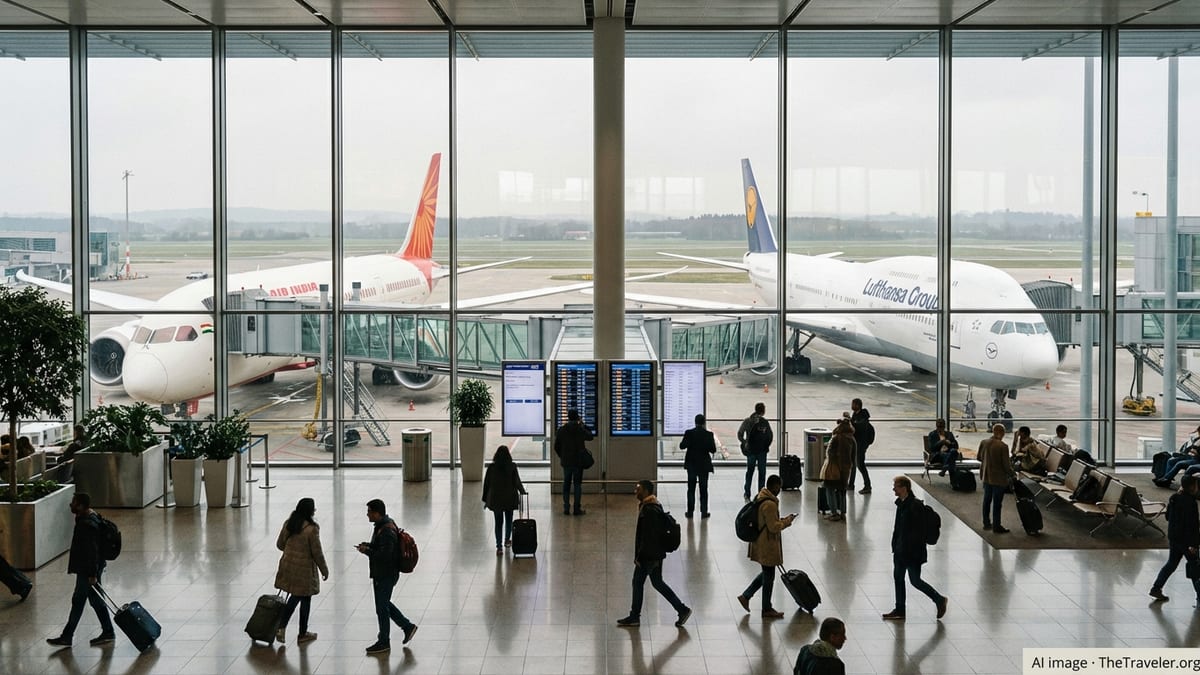
A Landmark MoU Anchored in a High-Growth Corridor
The new Memorandum of Understanding, announced on February 17, 2026, formalises the intent of Air India and the Lufthansa Group to move from a codeshare-centric relationship to a deeper joint business framework on India–Europe traffic. It covers Air India and its low-cost arm Air India Express alongside Lufthansa Group carriers including Lufthansa, Swiss International Air Lines, Austrian Airlines, Brussels Airlines, ITA Airways and other affiliated airlines.
The framework is designed to underpin a future joint business agreement, subject to regulatory and competition approvals in India and Europe. While the precise route map will be finalised at a later stage, the MoU signals a clear strategic shift: instead of acting as loosely aligned partners, the carriers aim to coordinate more closely on network planning, sales and customer experience to harness one of the fastest-growing long haul markets in global aviation.
Executives from both sides describe the MoU as a structural response to rising demand, rather than a short term commercial tweak. With India’s outbound travel recovering strongly and Europe remaining a preferred destination for both leisure and corporate travellers, the agreement sets the stage for an integrated India–Europe proposition built around Star Alliance cooperation, shared premium products and joint destination marketing.
Focus on Core Markets, With an Eye on Wider Europe
At its heart, the MoU focuses on traffic flows between Air India’s home market and Lufthansa Group’s core European home markets of Germany, Austria, Belgium, Italy and Switzerland. These countries already anchor much of the two groups’ existing connectivity, with nonstops from India into hubs such as Frankfurt, Munich, Vienna, Zurich, Brussels and Rome feeding onwards connections across the continent.
The partners have indicated that the framework is intentionally flexible, allowing for the future inclusion of wider Europe and the broader Indian subcontinent. That could eventually see more secondary Indian cities and additional European regional points pulled into a joint network architecture, especially where demand from visiting friends and relatives, students or small and medium enterprises justifies more capacity or better timed connections.
For now, however, the commercial focus will be on strengthening frequencies and connectivity along the main trunk routes, then stitching them together with improved banked connections in European and Indian hubs. The aim is to make it noticeably easier for an Indian traveller in a tier two city to reach a European city beyond the big capitals, and for European visitors to access India’s emerging tourism and business centres without fragmented, multi-ticket itineraries.
From Codeshares to Coordinated Networks and Schedules
The MoU builds on an already substantial web of cooperation. Air India and Lufthansa Group carriers currently codeshare on 145 routes touching 15 Indian and 29 European cities, following a major expansion of their partnership in 2025 that nearly doubled the number of shared routes and introduced Austrian Airlines as a codeshare partner. That earlier step gave Air India’s customers access to 26 destinations across Europe and three in the Americas beyond Frankfurt, Vienna and Zurich.
Under the new framework, the airlines intend to move from simple code placement to coordinated route planning and schedule alignment in selected markets. In practical terms, that could mean harmonised departure waves between India and key European hubs, reduced connection times and coordinated capacity deployment so that flights and aircraft types are better matched to seasonal demand patterns and time sensitive corporate traffic.
The two groups are also exploring closer cooperation on frequent flyer programmes, IT platforms and customer journey design. That may yield more predictable through check in, improved through tagging of baggage on complex itineraries, and potentially enhanced mileage earning and redemption opportunities across the combined network. For regular travellers shuttling between India and Europe, the intent is to make the experience feel more like flying one extended airline family rather than moving between separate carriers.
Joint Marketing to Power Tourism and Trade Growth
A central pillar of the MoU is a stronger emphasis on joint sales and marketing, aimed at stimulating fresh demand rather than merely reallocating existing passengers between carriers. The two groups plan coordinated campaigns in both India and Europe that showcase multi destination itineraries, seasonal escapes and city break combinations that rely on the newly strengthened network.
For tourism boards and trade promotion agencies in India and Europe, the emerging joint platform offers a new route to market. With coordinated schedules and integrated fares, destination marketers can bundle air access as part of wider campaigns targeting high spending segments such as luxury leisure travellers, meetings and incentives groups, and younger experience seeking visitors. Examples could include curated routes linking Indian metro cities with central European cultural hubs, wine regions or Alpine destinations, sold with one-stop connections and single-ticket itineraries.
On the business side, the MoU aligns with the deepening of India–EU economic ties following recent trade agreements and growing bilateral commerce. With the European Union already India’s largest trading partner for goods by value, both Air India and the Lufthansa Group see an opportunity to position themselves as the default air bridge for executives, specialists and small business owners moving between manufacturing clusters, financial centres and innovation hubs across the two regions.
Competitive Landscape in a Crowded India–Europe Market
The decision to formalise a joint business framework comes as competition on India–Europe corridors intensifies. Full service European carriers have been reinforcing their presence in India, while Gulf and West Asian airlines continue to channel significant flows over their hubs. More recently, Indian low cost and hybrid carriers have also been exploring partnerships with European and North American airlines, underlining the strategic value of the Indian market.
Against this backdrop, Air India and the Lufthansa Group are betting that a deeper partnership can carve out a clearer value proposition centred on seamless connectivity, premium product consistency and trusted brands. The two groups already share membership of Star Alliance, and the MoU builds on that foundation to create a more tightly coordinated offering that can compete more effectively with rival alliance and independent carriers.
The move also reflects shifting dynamics within Indian aviation. Since its privatisation under the Tata Group, Air India has accelerated its transformation, expanding its long haul fleet, refreshing cabins and signing a series of codeshare and interline agreements that now span more than two dozen partner airlines and hundreds of destinations. The Lufthansa Group, for its part, brings deep experience in running complex multi hub, multi brand networks across Europe and beyond, including through its own portfolio airlines ITA Airways, Austrian Airlines, Brussels Airlines and Swiss.
What Travellers Can Expect on the Ground and in the Air
While detailed timetable changes and new routes will only be confirmed once regulators approve a joint business agreement, travellers are already being given a sense of what to expect. Both sides are pointing to improved schedule coordination on key India–Germany and India–Switzerland routes, where flights are currently operated by both Air India and Lufthansa Group carriers and already fall under expanded codeshare pacts.
Passengers can also expect the partnership to showcase new and refurbished aircraft as both airline groups continue multi year fleet renewal programmes. Lufthansa has been rolling out its Allegris cabin concept, promising upgraded long haul cabins across all classes, while Swiss is introducing its own next generation interiors under the Swiss Senses banner. Air India is in the midst of a significant cabin retrofit and fleet expansion programme that will see upgraded widebodies and new long haul aircraft join its India–Europe network.
Over time, the MoU envisages more unified handling standards, from check in and boarding to disruptions management. Closer cooperation on IT systems and customer service processes is expected to minimise friction on journeys involving multiple carriers, particularly at European hubs where tight connections are common. In parallel, the partners aim to make accruing and spending loyalty miles across the combined network more straightforward, reinforcing customer stickiness on India–Europe itineraries.
Implications for Secondary Cities and Regional Gateways
One of the less visible, but potentially most significant, aspects of the agreement is its potential to reshape connectivity for secondary cities on both sides of the route map. With nearly 145 routes already under codeshare, the airlines have a base from which to layer additional city pairs that become more commercially viable when supported by joint marketing and coordinated schedules.
For Indian travellers outside the big metros, the strengthened partnership may mean better one stop options to mid sized European cities via hubs such as Frankfurt, Munich, Vienna or Zurich, supported by European feeder flights operated by Lufthansa Group carriers. Conversely, travellers from regional European centres could gain more reliable access to Indian leisure hotspots and emerging industrial hubs via Air India’s growing domestic and regional network.
Air India has also been building intermodal links in Europe, including rail partnerships that allow through ticketing to smaller cities beyond main airports. Although not explicitly part of the new MoU, such arrangements dovetail with Lufthansa Group’s own experience in rail and bus integration and could be leveraged further as the joint business framework evolves, making it even easier for travellers to complete door to door journeys on a single booking.
Regulatory Roadmap and Timeline for Implementation
The transformation from a memorandum to a fully fledged joint business will not happen overnight. The carriers will need to secure regulatory and competition clearances in multiple jurisdictions, including India and key European markets. Authorities are likely to scrutinise the potential impact on fares, capacity and consumer choice on overlapping routes where both groups currently operate.
In anticipation of that process, the MoU positions the partnership as a vehicle for sustainable growth in a market where demand is expanding rapidly. Both airline groups have framed the agreement as pro competitive, pointing to the fragmented nature of India–Europe traffic, the presence of large Gulf and Asian competitors and the significant latent demand that still exists in both directions. The regulatory roadmap will shape how quickly the parties can launch deeper schedule coordination and joint pricing on specific city pairs.
In the interim, travellers will continue to see incremental enhancements built on existing codeshare and alliance ties, from expanded route coverage to marketing campaigns that highlight multi carrier itineraries. As the joint framework moves through approvals and into practical implementation, the India–Europe market is likely to see a notable realignment, with Air India and the Lufthansa Group positioning themselves at the centre of a broad, high growth travel and tourism corridor.