

More news on this day
A new memorandum of understanding between Air India and the Lufthansa Group is poised to redraw the aviation map between India and Europe, setting the stage for a sharp rise in tourist flows and triggering fresh investment from airlines and hotel operators on both sides of the continent.
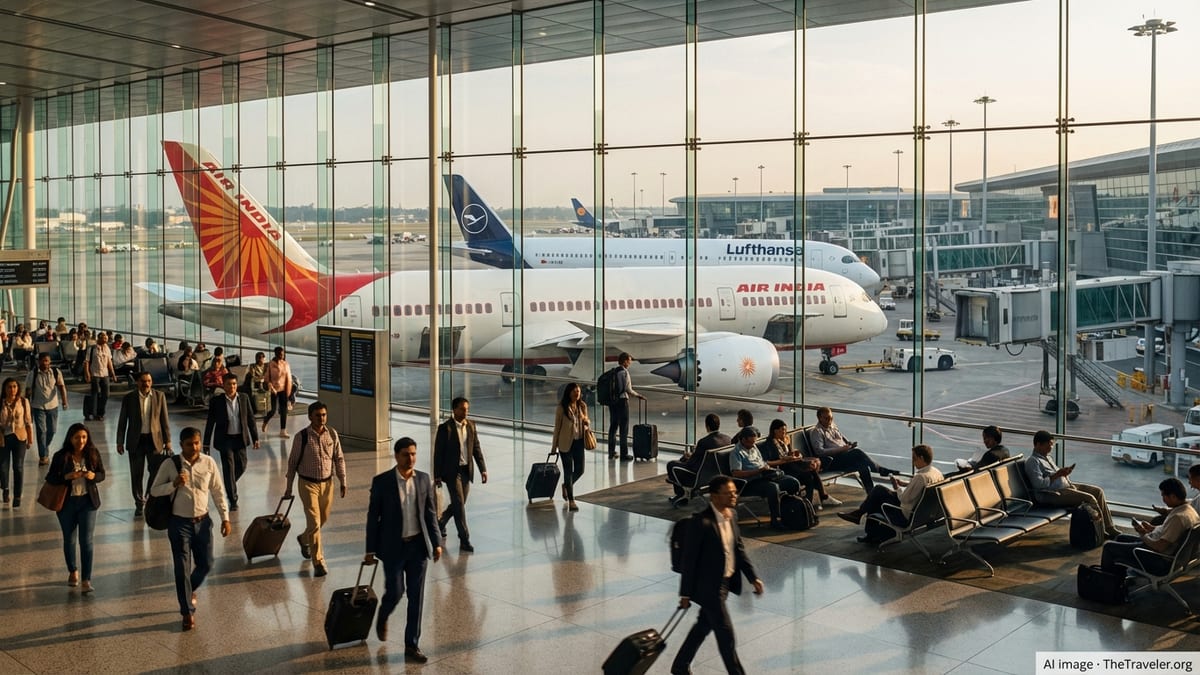
A Strategic Joint Business To Link Two Growth Powerhouses
Air India and the Lufthansa Group signed a memorandum of understanding on 17 February 2026 that lays the foundation for a far deeper commercial partnership on India–Europe routes. The proposed joint business, subject to regulatory and competition approvals, aims to coordinate network planning, schedules, pricing and sales across a wide swath of markets, transforming what has historically been a codeshare-led relationship into a more integrated alliance.
The MoU covers Air India and several Lufthansa Group carriers, including Lufthansa, Swiss International Air Lines, Austrian Airlines, Brussels Airlines and ITA Airways, as well as low-cost arm Air India Express. Together, these airlines already link India with key European hubs such as Frankfurt, Munich, Zurich, Vienna, Brussels and Rome. Under the new framework, those hub connections are expected to be tightened, with more synchronized schedules, shared revenue structures in designated markets and joint marketing campaigns targeting both leisure and corporate travelers.
Industry analysts say the move reflects the growing weight of India in global aviation demand and Europe’s need to secure access to that growth. For Air India, which is in the midst of a multi-billion-dollar fleet renewal and network expansion program under Tata Group ownership, a joint business with Lufthansa Group offers instant depth, credibility and feed across the continent. For Lufthansa Group, it ensures a strong foothold in what many forecasters now view as the world’s fastest-growing large aviation market.
The agreement builds on a series of incremental steps taken over the past two years, including a major expansion of codeshare services that added about 60 new routes linking 12 cities in India to 26 in Europe. That earlier move increased the combined codeshare network between the partners to nearly 100 routes, paving the way for the more ambitious joint business structure now being pursued.
From Codeshares To Coordinated Networks
Until recently, cooperation between Air India and Lufthansa Group largely revolved around shared flight codes that allowed each carrier to market seats on the other’s services. While helpful for passengers, codeshares alone did not guarantee optimal connectivity or joint investment in new routes, and schedules were often planned independently. The new MoU signals a shift toward coordinated network design, with the partners seeking to jointly decide which city pairs to serve, at what times and with what aircraft.
In practical terms, travelers can expect denser schedules on trunk routes such as Delhi–Frankfurt, Mumbai–Munich and Bangalore–Zurich, with banks of arrivals and departures at European hubs more tightly aligned to onward connections. The airlines also intend to explore new city pairs, particularly linking emerging Indian tier-two cities with secondary European markets, using both direct flights and one-stop itineraries built around shared hubs.
The partnership will initially focus on traffic between India and Lufthansa Group’s core home markets of Germany, Austria, Belgium, Italy and Switzerland, where demand from both business and leisure travelers has been rising steadily. Over time, executives say the model could be extended to cover flows from India via Europe to North America and other long-haul destinations in the Lufthansa Group network, as well as inbound traffic from Europe to South and Southeast Asia via Air India’s growing hub operations.
The carriers are also examining deeper integration of their frequent flyer programs and digital platforms. For passengers, that could mean more consistent recognition of elite status, harmonized upgrade and lounge access policies, and a single, smoother booking and check-in experience across multiple airlines, reinforcing the value of their shared Star Alliance membership.
India–Europe Tourism Poised For A New Boom
The timing of the Air India–Lufthansa Group MoU coincides with a sharp rebound in international tourism flows between India and Europe. Indian outbound travel to European destinations such as Germany, Switzerland, Italy and Austria has surged beyond pre-pandemic levels, driven by a growing middle class, a strong appetite for experiential travel and more streamlined visa processes in several Schengen states.
European tourism boards have aggressively courted Indian visitors with targeted campaigns that highlight winter sports, alpine landscapes, cultural festivals and culinary tourism. Improved aviation access, through wider codeshare networks and additional nonstop flights, has made multi-country itineraries across the continent more attractive and easier to book. The new joint business framework is expected to amplify this trend by offering more choice in departure cities, shorter layovers and greater schedule flexibility.
Inbound tourism from Europe to India is also regaining momentum, supported by the return of long-haul leisure travel and a renewed interest in culture-rich, wellness-focused destinations. Classic circuits such as the Golden Triangle, Rajasthan’s heritage trail, Kerala’s backwaters and the Himalaya have seen strong demand from European travelers. With better connectivity into secondary gateways such as Jaipur, Kochi, Goa Mopa and Amritsar, tour operators anticipate a broader geographic spread of visitors and longer average stays.
Travel trade bodies in both regions argue that reliable, high-capacity air links are the single most important prerequisite for sustaining this growth. The Air India–Lufthansa Group tie-up, by underwriting the economics of expanded networks and upgauged aircraft, is expected to provide that backbone and support a new phase of India–Europe tourism expansion over the next decade.
Hotels And Destinations Prepare For Higher Volumes
The aviation partnership is already rippling through the hospitality sector, where global and regional hotel brands are preparing for a potential surge in India–Europe leisure and business travel. In major Indian gateways such as Delhi, Mumbai, Bengaluru and Hyderabad, international chains have accelerated openings of airport and city-center properties, often positioning them as hubs for transit passengers, conferences and short city breaks for European visitors.
Goa, Kerala and Rajasthan, traditional favorites for European holidaymakers, are seeing a new wave of upscale and boutique hotel investments. Developers report that stronger year-round air connectivity and the prospect of additional nonstop and one-stop links from secondary European cities make resort projects more financially viable, particularly outside the peak winter season. Destination management companies are tailoring packages that combine heritage stays, wellness retreats and adventure tourism to appeal to high-spending European guests arriving on the expanded network.
Across Europe, hoteliers in key Lufthansa Group markets are equally attuned to the potential of a rising Indian clientele. Cities such as Frankfurt, Munich, Vienna, Zurich, Brussels and Rome are fine-tuning offerings for Indian travelers, from vegetarian and Jain menu options to multilingual front-desk staff and curated shopping and cultural experiences. Some hotel groups are stepping up partnerships with Indian tour operators and travel agencies, hoping to capture group business for weddings, incentive trips and corporate conferences.
Smaller European destinations connected via the expanded route map, including secondary cities in Germany, Austria and Switzerland, anticipate increased arrivals from India as itineraries diversify beyond the classic capital-city circuit. Local tourism boards have begun training programs geared to welcoming visitors from South Asia, focusing on cultural nuances, dietary preferences and payment habits in order to convert improved air access into sustained visitor spending.
Competitive Pressures In A Crowded Skies Landscape
The Air India–Lufthansa Group MoU arrives in an increasingly competitive long-haul market where Indian and foreign carriers are racing to secure traffic flows between South Asia and Europe. Low-cost giant IndiGo has expanded its own international reach through partnerships with Delta Air Lines, Air France–KLM and Virgin Atlantic, providing alternative one-stop options via European hubs for Indian travelers bound for both Europe and North America. Middle Eastern carriers continue to offer dense frequencies and global connectivity through Gulf hubs.
Within this landscape, a tightly coordinated joint business gives Air India and Lufthansa Group a tool to defend and grow their share of premium and high-yield traffic. By aligning schedules and fares, they can present a unified product that competes more effectively with one-stop itineraries offered via the Gulf or other European alliance partners. The ability to jointly plan capacity also helps reduce duplication on certain routes while opening space for new city pairs that might not be viable for a single carrier to operate alone.
At the same time, regulators in India and Europe are expected to scrutinize the arrangement to ensure that enhanced cooperation does not undermine competition on key trunk routes. The airlines will need to demonstrate that the joint business delivers tangible benefits to consumers, such as new connections, better schedules and integrated customer service, while leaving room for rival carriers to contest the market.
Travel agents and corporate travel managers say that, if implemented with transparent pricing and robust consumer protections, the partnership could raise overall service standards on the corridor. They caution, however, that careful oversight will be needed to prevent fare increases on monopoly or near-monopoly routes where the partners coordinate closely.
Infrastructure, Capacity And Sustainability Challenges
Delivering on the promise of the MoU will depend not only on airline strategy but also on the readiness of airports and airspace infrastructure in both regions. Indian metro airports such as Delhi and Mumbai are operating near capacity at peak hours, while several European hubs face slot constraints and noise-related limits on night operations. Coordinating additional flights and tighter connection banks under a joint business will require meticulous slot management and, in some cases, infrastructure upgrades.
Both Air India and Lufthansa Group are in the process of renewing and expanding their fleets with more fuel-efficient, long-range aircraft designed to improve economics on long-haul routes. New-generation widebodies such as the Airbus A350 and Boeing 787, already deployed on parts of the India–Europe network, are expected to feature more prominently as the partnership deepens. These aircraft offer lower per-seat emissions and improved passenger comfort, which align with growing expectations from climate-conscious travelers.
Sustainability is emerging as a core theme in the partnership’s long-term planning. Lufthansa Group has previously worked with Indian partners on corporate sustainable aviation fuel programs, and Air India’s parent Tata Group has signaled strong interest in cleaner technologies. As regulators in Europe push for stricter emissions targets and blending mandates for sustainable aviation fuel, coordinated procurement and joint investments could give the partners scale advantages while allowing environmentally aware travelers to reduce the carbon footprint of their journeys.
However, environmental groups warn that any large increase in long-haul capacity risks driving up aggregate emissions unless it is paired with aggressive efficiency gains and demand-management tools. The success of the Air India–Lufthansa Group model in the climate-conscious era will therefore be judged not just on connectivity and convenience, but also on how credibly it balances growth with decarbonization commitments.
The Next Phase Of India–Europe Travel Evolution
For travelers, the most visible impacts of the MoU will unfold progressively over the next several seasons as regulators review the proposal and the airlines align their commercial strategies. Travel planners expect a gradual roll-out of additional codeshares, new fare families, harmonized baggage rules and refined connection options, rather than an overnight transformation. Nevertheless, the direction of travel is clear: a more interconnected India–Europe corridor anchored by a handful of powerful airline partnerships.
For tourism-dependent regions, the stakes are high. A successful joint business could help stabilize seasonal swings in demand by enabling better yield management and targeted promotions, supporting year-round employment in hotels, restaurants and attractions. It could also encourage more Europeans to explore lesser-known Indian regions and more Indians to venture beyond Europe’s marquee capitals, distributing the economic benefits of tourism more widely.
As Air India and Lufthansa Group move from framework agreement to implementation, industry observers will be watching how quickly the promised benefits materialize and how deftly the partners handle regulatory, operational and sustainability hurdles. What is already evident is that their bet on deeper cooperation reflects a shared conviction: that the India–Europe travel corridor is entering a new era of growth, and that airlines and hotels that position themselves early stand to gain the most.