

A new memorandum of understanding between Air India and the Lufthansa Group, signed on February 17, 2026, is poised to transform how Indians and Europeans move between the two regions, promising tighter schedules, broader networks and a far more seamless experience for millions of passengers each year.
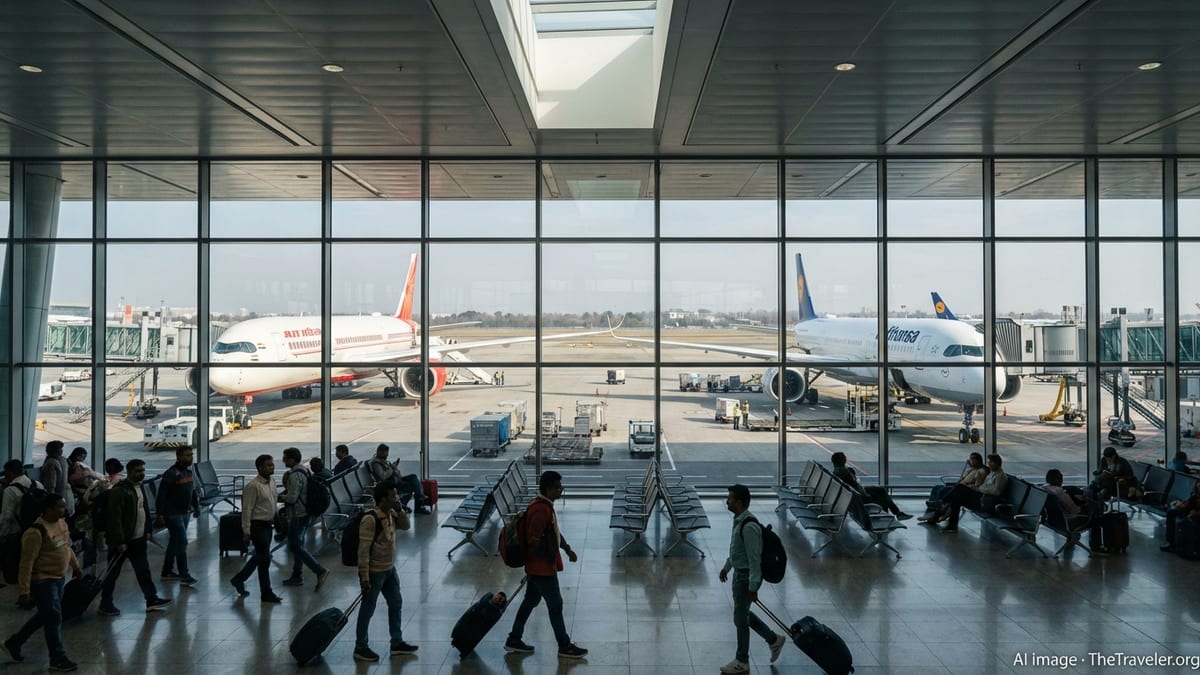
A Strategic Shift From Codeshares to Joint Business
The agreement signed in mid-February moves the Air India–Lufthansa relationship into a new league. Until now, cooperation has largely centred on codeshares, where airlines place their flight numbers on each other’s services and align some ground processes. The memorandum of understanding sets a framework for a full joint business, under which the carriers can plan routes together, coordinate schedules and jointly market flights on India–Europe sectors, subject to regulatory approvals.
That is a significant step up in ambition. A joint business in aviation is effectively a deep commercial partnership on specific routes, often compared to a “virtual merger” on those corridors. It allows participating airlines to share revenues on designated routes, reduce duplication, and build schedules that work as a single product in the eyes of customers. For travellers, it can feel closer to flying on one large airline, even while booking across multiple brands.
Executives from both sides framed the move as a natural progression. Over the past two years, Air India and Lufthansa Group carriers have already elevated their cooperation with multiple waves of codeshare expansion connecting more Indian cities to European hubs and onward to the Americas and Australia. With demand for India–Europe travel surging and competition intensifying, both groups are now betting that a coordinated approach will unlock further growth and reduce friction for passengers.
The new framework initially focuses on traffic between India and the Lufthansa Group’s core European markets of Germany, Austria, Belgium, Italy and Switzerland. Depending on approvals and performance, a second phase could extend cooperation deeper into the European Union and across the wider Indian subcontinent, potentially adding more secondary cities on both sides.
What the New Partnership Changes for Travellers
The most immediate impact for passengers, once regulators sign off and details are implemented, is likely to be felt in the timetable. Air India and Lufthansa Group carriers such as Lufthansa, Swiss, Austrian Airlines, Brussels Airlines and ITA Airways will be able to align departure and arrival times more precisely to reduce connection gaps at key hubs like Delhi, Mumbai, Frankfurt, Munich, Zurich and Vienna.
Better schedule coordination should translate into shorter layovers, more reliable same-day connections and a wider spread of departure times across the day. Business travellers shuttling between corporate centres such as Mumbai and Frankfurt or Bengaluru and Zurich could see more options that allow full working days on either side of the journey, instead of having to compromise on red-eye or awkward mid-day departures.
The partnership is also designed to simplify what happens behind the scenes. Joint sales and distribution efforts can make itineraries that mix Air India and Lufthansa Group flights easier to find and compare in booking systems. Closer coordination on revenue management and pricing could allow the carriers to design more coherent fare families and reduce odd inconsistencies between legs booked on different partners.
Equally important for many passengers will be the customer journey on the day of travel. The airlines have signalled that they intend to work together on information technology infrastructure, customer service processes and quality-assurance standards. Over time, that could mean more unified disruption handling, clearer rebooking options when flights are delayed, and more consistent recognition of frequent flyer status at airports across the combined network.
Building on a Rapidly Expanding Codeshare Network
The move toward a joint business follows a brisk expansion of the existing partnership. In February 2025, Air India and Lufthansa Group carriers announced they would grow their codeshare network to roughly 100 routes. That package added around 60 new codeshare services across 12 Indian cities and 26 European destinations, and brought Austrian Airlines formally into the fold alongside Lufthansa and Swiss.
Through that expansion, Air India customers gained one-ticket access via European gateways like Frankfurt, Vienna and Zurich to cities including Amsterdam, Barcelona, Berlin, Copenhagen, Dublin, Stockholm and Washington. For Lufthansa Group passengers, the tie-up opened a deeper slice of India, with access to cities such as Bengaluru, Chennai and other key commercial and leisure markets, as well as onward links to Kathmandu, Melbourne and Sydney.
Since its privatisation in 2022, Air India has pursued an aggressive partnership strategy across the globe, signing or expanding codeshare and interline agreements with carriers in Europe, North America, Africa and the Asia-Pacific. Lufthansa Group, for its part, has consistently positioned India as one of its most important growth markets, deploying widebody capacity and premium products on core Indian routes in response to rising demand.
The joint business framework is therefore less a bolt from the blue and more the culmination of incremental moves over several seasons. By formalising the ambition to plan and market India–Europe services together, the two airline groups are signalling that their relationship is no longer just about filling spare seats on each other’s flights, but about jointly shaping how traffic flows between their networks.
Why India–Europe Traffic Is Suddenly So Hot
The deeper alliance comes amid a fundamental shift in global air traffic patterns that places India closer to centre stage. India’s outbound travel has rebounded robustly in the years since the pandemic, fuelled by a fast-growing middle class, expanding trade with Europe and a surge in students and professionals heading abroad for education and work. At the same time, India has become one of Europe’s most dynamic trading partners, with bilateral commerce in goods exceeding the equivalent of more than one hundred billion euros in 2024.
On the inbound side, European tourism and corporate travel into India has been buoyed by a stronger rupee economy, major infrastructure projects and the rise of tech and services hubs beyond the traditional metros. Cities such as Hyderabad, Pune and Kochi now feature more prominently in European investment plans, creating new demand patterns that favour well-designed connection banks at long-haul hubs.
In this context, the ability to channel passengers efficiently between smaller European and Indian cities gains strategic importance. A traveller from Bologna to Kochi, or from Ahmedabad to Hamburg, typically relies on at least one connection. Well-integrated alliances can significantly influence which hubs capture that traffic, and which airlines benefit from the growing flows.
There is also a geopolitical and competitive angle. Gulf superconnectors and Turkish airlines have long dominated the Europe–India and wider West–East transit flows. Air India’s management has been explicit about its ambition to position Delhi and Mumbai as viable alternatives, branding its strategy as a “Via India” proposition. A deeply integrated partnership with Lufthansa Group gives that vision more heft by linking India’s emerging hubs with some of Europe’s most established ones through a coordinated network.
How the Joint Business Could Work in Practice
From a passenger perspective, the mechanics of the joint business will be largely invisible, but the effects could be far-reaching. Once regulators in India and Europe clear the framework and a detailed agreement is implemented, Air India and the participating Lufthansa Group carriers will be able to treat their India–Europe corridors as a shared commercial pool.
That typically involves harmonised scheduling to create “banks” of arrivals and departures at hubs, maximising useful connection options in short time windows. For example, a morning wave of arrivals from Europe into Delhi could be timed to feed a cluster of short- and medium-haul departures across India and South Asia, with an evening reverse pattern sending traffic back to European hubs.
The airlines can also co-ordinate capacity decisions at a granular level. Rather than competing head-to-head with multiple underfilled flights at similar times, they may choose to shift capacity to underserved time slots or new city-pairs. That can support the launch of new routes that might be marginal for a single carrier but become viable when backed by shared feeder traffic and joint marketing.
Behind the scenes, closer integration of inventory systems and revenue management models allows the partners to sell seats in a more unified way. In practice, that can reduce the risk of one airline being sold out on a key sector while its partner still has seats, and it can support more consistent pricing across itineraries that mix flights from both sides of the partnership.
Frequent Flyer Benefits and the Star Alliance Factor
Passengers who are loyal to either group already benefit from their shared membership in Star Alliance, which allows frequent flyers to earn and redeem miles across the network and enjoy elite perks such as priority services, extra baggage and lounge access. The joint business is expected to make those benefits more tangible on India–Europe routes by improving the integration of loyalty programmes and ensuring more consistent recognition of status.
For regular flyers, that could mean smoother mileage accrual and redemption on complex itineraries, fewer anomalies where status benefits are partially recognised, and potentially more upgrade opportunities on routes that fall squarely within the joint business scope. Corporate customers, who often negotiate deals that span multiple carriers, could see more comprehensive contracts that cover the combined network of Air India and Lufthansa Group in this corridor.
Star Alliance itself has highlighted India as a rising pillar in its global map, noting Air India’s stated ambition to position the country as a transit hub for travel between the West and the Asia-Pacific. Deeper cooperation with Lufthansa Group, one of the alliance’s largest and most influential members, aligns neatly with that strategy and may spur further tie-ups with other Star Alliance carriers in adjacent markets.
However, specific changes to earning rates, status tiers or redemption charts have not yet been detailed. Those are typically refined only after regulators approve the commercial framework and the airlines finalise how revenue will be shared on joint routes.
Competitive Ripples Across Europe–India Corridors
The announcement will be closely watched by rivals. European network carriers such as Air France-KLM and British Airways, Gulf giants in Dubai, Doha and Abu Dhabi, and Turkish Airlines have all invested heavily in India in recent years. Low-cost champion IndiGo has simultaneously been stitching together its own set of international partnerships, including with carriers in Europe and North America, to tap long-haul demand via short-haul feed.
A fortified Air India–Lufthansa axis introduces a stronger homegrown competitor on one of the world’s most contested long-haul markets. By combining their strengths, the partners can offer a scale of connectivity and schedule depth that rivals hub models routed through the Gulf or Istanbul. That could put downward pressure on fares on some city-pairs and prompt other alliances to deepen their own cooperation with Indian carriers.
The timing also reflects a wider recalibration of long-haul strategies. With new generation widebodies such as the Airbus A350 being inducted into both fleets, Air India and Lufthansa Group are better equipped to deploy fuel-efficient, passenger-friendly aircraft on medium-to-long sectors linking secondary cities. As more of these jets enter service, travellers on the India–Europe corridor can expect quieter cabins, improved inflight entertainment and more consistent onboard products.
Ultimately, the success of the tie-up will be judged by whether passengers feel the difference in their day-to-day journeys. If the partnership delivers meaningfully shorter end-to-end travel times, more choice on departure days and hours, smoother disruption handling and better loyalty recognition, it will raise the bar for what travellers expect when flying between India and Europe.
What Happens Next and When Travellers Will See Changes
For now, the memorandum of understanding is a framework rather than a fully operational joint business. The next steps involve detailed negotiations between the airlines on the precise scope of cooperation, the mechanics of revenue sharing and the governance structure that will oversee the partnership. At the same time, they will have to seek approvals from competition authorities and aviation regulators in India and relevant European jurisdictions.
These regulatory reviews typically examine whether a joint business would unduly reduce competition on specific routes or grant excessive market power to the participating carriers. In practice, that can lead to conditions being imposed, such as the surrender of certain airport slots or commitments to maintain minimum capacity on routes where competition might otherwise weaken.
Assuming approvals are granted, implementation would then roll out in stages. The airlines are likely to start by refining schedules and inventory coordination on their busiest trunk routes between major Indian metros and hubs in Germany, Austria and Switzerland. Additional European and Indian cities could be added as the joint business matures and systems integration deepens.
For travellers planning trips later this year and into 2027, the message is to expect gradual but noticeable improvements rather than an overnight transformation. As timetables are adjusted, new codeshares are activated under the broader framework, and customer-service processes are aligned, the practical benefits of the Air India–Lufthansa partnership should increasingly show up in search results, booking flows and the actual experience from check-in to arrival.