

More news on this day
India’s flag carrier group is deepening its European footprint and doubling down on cultural branding, as Air India prepares to restore non-stop flights between Delhi and Rome while low-cost subsidiary Air India Express rolls out aircraft whose exteriors serve as flying canvases for Indian art and heritage.
Get the latest news straight to your inbox!
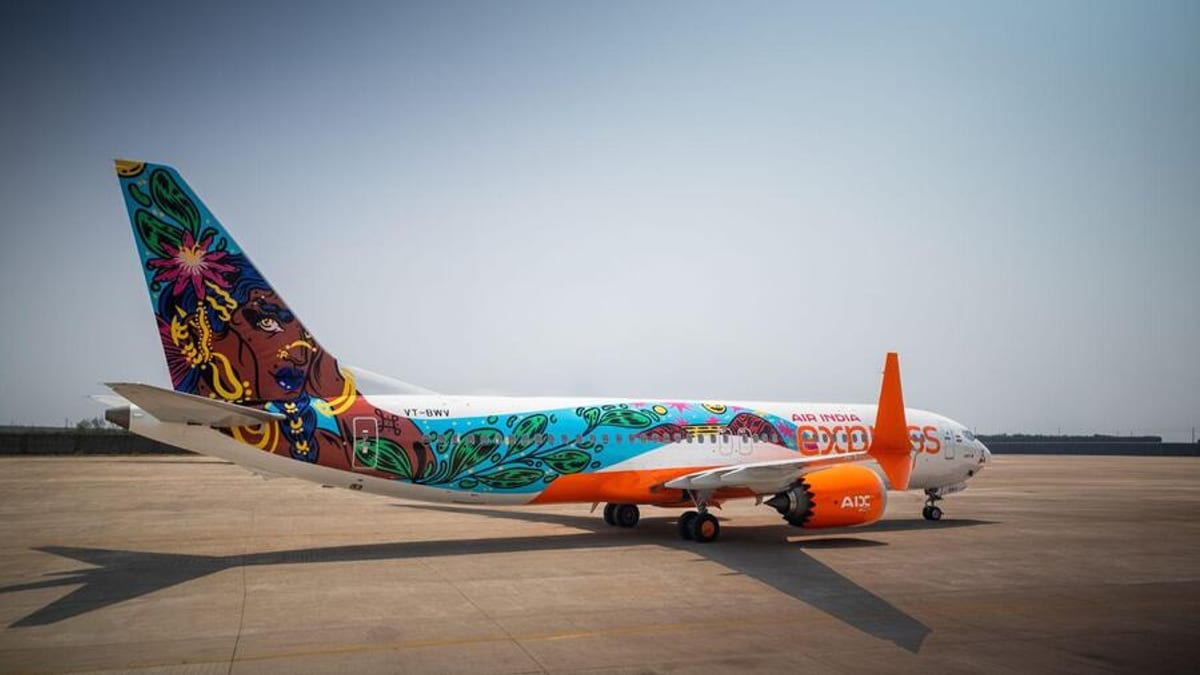
Image by Latest International / Global Travel News, Breaking World Travel News
Non-Stop Delhi–Rome Service Returns in March 2026
Publicly available schedule information shows that Air India plans to resume non-stop services between Delhi and Rome from March 25, 2026, re-entering a route that last saw direct operations in early 2021. The move brings back a key European capital to the carrier’s long-haul map after a gap of several years and aligns with a broader rebuild of its international network.
The upcoming service is expected to operate four times a week between Delhi’s Indira Gandhi International Airport and Rome Fiumicino, offering a block time of just over nine hours. Timings are being structured to fit within Air India’s growing hub-and-spoke model at Delhi, creating two-way connectivity for traffic between Europe, India, and destinations across Asia and Australasia.
The Rome relaunch follows a phase of consolidation and aircraft retrofits for Air India, during which certain long-haul routes were paused or adjusted. With additional widebody capacity progressively returning to the fleet, the airline is starting to restore and add key intercontinental links, and Rome has emerged as one of the first major European beneficiaries of this expansion cycle.
The route also returns at a time of heightened geopolitical and airspace complexity for Indian carriers serving long-haul markets. Reconnecting Delhi and Rome with a non-stop option is being viewed by aviation analysts as a way to diversify European capacity, reduce circuitous routings for some passengers, and strengthen Air India’s positioning among both business and leisure travelers bound for Italy and southern Europe.
Strategic Push to Deepen Europe–India Connectivity
Industry route data and published airline communications indicate that the Rome restart is part of a multi-season strategy in which Air India has been incrementally deepening its presence in Europe. Over the past two years, the carrier has added or reinforced links to cities such as Zurich, as well as launched new non-stop services to destinations in Southeast Asia, creating a denser web of one-stop options via India for travelers across continents.
Network planners appear to be targeting Rome as both a point-to-point market and a potential feeder gateway, tapping demand not only from Italy but also from neighboring countries that rely on Rome as a connecting hub. The schedule is expected to be synchronized with domestic and regional arrivals into Delhi, enabling same-day onward connections to major Indian cities and select destinations in South and Southeast Asia.
At the same time, Air India is navigating operational constraints shaped by evolving airspace restrictions in the wider region, which have compelled carriers to redesign certain ultra-long-haul routings. In that context, robust mid-haul European services such as Delhi–Rome can help maintain network resilience by providing alternative paths for travelers whose previous preferred routings have become longer or less predictable.
For Italy, the resumption underscores the country’s growing appeal as both a tourism draw and a trade partner for India. Travel trade reports suggest that outbound Indian tourism to Italy has been steadily recovering and diversifying beyond traditional city-break itineraries, while inbound traffic from Europe to India continues to be buoyed by interest in culture, wellness, and business travel.
Air India Express Turns Aircraft into Flying Art Galleries
While the full-service arm works on long-haul restoration, Air India Express has been advancing a strikingly visual strategy closer to home, transforming its Boeing 737 fleet into moving showcases of Indian design. Since unveiling a refreshed brand identity in 2023, the airline has progressively introduced aircraft featuring bold tail and fuselage motifs inspired by traditional craft forms such as Kalamkari, Bandhani, Phulkari, Jamdani, and other regional styles.
Reports from aviation events and regional media describe new Air India Express aircraft arriving with expansive, high-definition artwork that wraps across the tail and in some cases extends along the rear fuselage. Each design is tied to a specific cultural narrative, from intricate hand-painted textile patterns to geometric motifs rooted in tribal and folk art traditions, effectively turning the aircraft into large-scale public artworks.
Among the most prominent examples is a Boeing 737-8 carrying a livery based on the Tsüngkotepsü warrior shawl of Nagaland, introduced in conjunction with the Hornbill Festival, as well as a separate aircraft unveiled with an elaborate Kalamkari-inspired scheme. Additional special liveries, including one marking the airline’s 100th aircraft and showcasing Chittara mural art from Karnataka, underline a growing ambition to use the entire aircraft exterior as a storytelling surface.
The concept builds on the carrier’s long-running “Tales of India” initiative, which originally focused on distinctive tail designs. The latest evolutions go further by integrating full-fuselage elements, vibrant typography, and coordinated interior touches, resulting in aircraft that are instantly recognizable on the tarmac and in the sky.
Craft, Collaboration and the Making of a Flying Canvas
Behind each of these high-profile aircraft lies a complex blend of artistic collaboration and industrial precision. Published coverage of the painting process highlights the role of specialized maintenance, repair and overhaul facilities, particularly in Hyderabad, where teams of artists and technicians work side by side to scale intricate hand-drawn motifs to the dimensions of a narrowbody jet.
The work involves translating traditional art that often lives on fabric, wood, or walls into durable, aviation-grade paint schemes that can withstand weather and operational wear. Designers and cultural experts are typically involved in ensuring the patterns remain faithful to their origins, while engineers and painters adapt them to the curvature, panel lines, and safety markings of the aircraft structure.
Each full-aircraft artwork can require extensive stenciling, layering of colors, and meticulous masking to preserve fine details at large scale. Industry accounts suggest that these liveries take significantly longer to complete than standard airline paint jobs, sometimes keeping aircraft in hangars for extended periods. The airline group appears willing to absorb this investment as part of a broader brand repositioning that prizes distinctiveness and emotional resonance.
The result is a fleet that functions as a traveling exhibition of Indian visual culture, visible not only to passengers but also to onlookers at airports across India and overseas. For many travelers, their first physical encounter with Indian art on a journey begins not in a museum or marketplace, but on the tarmac, in the form of an aircraft painted with stories from across the subcontinent.
Brand Differentiation and Tourism Appeal
Together, the revival of the Delhi–Rome non-stop link and the intensified focus on cultural liveries point to a dual-track strategy for the Air India group. On one side, the full-service airline is working to position Delhi as a competitive connecting hub between Europe and Asia, using direct routes such as Rome to anchor its long-haul offer. On the other, Air India Express is carving out a distinct identity in the busy regional market by turning aircraft into instantly shareable symbols of Indian creativity.
Travel industry observers note that such visually distinctive aircraft can carry outsized marketing value, as they feature prominently in passenger photographs, social media posts, and news imagery from aviation events. For destinations that prize cultural tourism, arriving on an aircraft emblazoned with art closely tied to local traditions can add an extra layer of narrative to the journey.
As India continues to promote itself as a hub for both aviation and culture, the combination of new long-haul links and high-impact artistic branding may help the country’s largest airline group stand out in an increasingly crowded marketplace. For travelers booking a seat on the restored Delhi–Rome non-stop or boarding an Air India Express flight within the region, the message is clear: connectivity and culture are being woven more tightly together, from route maps to aircraft skin.