

More news on this day
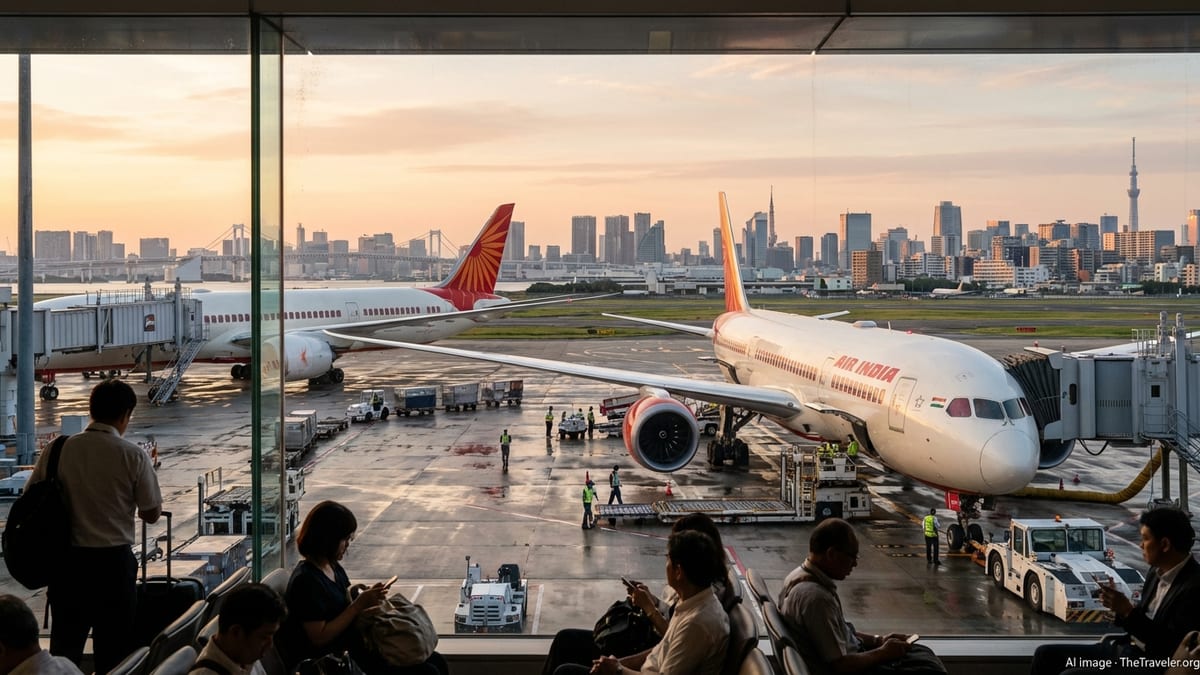
Air India is preparing a far-reaching upgrade of its long-haul network for the 2026 northern summer season, rolling out new aircraft, refreshed cabins and higher frequencies on marquee routes to Tokyo, London, Melbourne, Toronto and Shanghai in a bid to reposition itself as a serious full-service contender on the global stage.
A Strategic Push Ahead of the 2026 Northern Summer Peak
The latest schedule and product changes, announced in mid-February 2026, form part of Air India’s multi-year transformation under the Tata Group, which has committed billions of dollars to modernise the fleet, refresh cabins and simplify its international network. While the airline has spent much of 2025 navigating operational constraints following a safety-related pause, it is now pivoting toward growth, with a clear focus on high-yield intercontinental markets.
For travellers, the most visible impact will be a wave of upgraded aircraft and new cabin products deployed on routes where demand remains consistently strong: the India–Japan corridor via Tokyo Haneda, trunk services to London Heathrow, growing India–Australia flows into Melbourne, and heavily trafficked routes to Toronto and Shanghai. On several of these, Air India is both adding seats and improving the mix of cabins, signalling confidence in premium demand.
The strategy goes beyond simply adding flights. Air India is reshaping how and where it deploys its newest Boeing 787-9 Dreamliners and retrofitted 787-8s, while also leaning on upgraded Boeing 777-300ERs to introduce or expand First Class on select sectors. The carrier is also using these moves to deepen its three-class model of Business, Premium Economy and Economy on more long-haul services, a key differentiator in an increasingly crowded market.
With the first changes already rolling out between February and March 2026 and further adjustments planned for July and August, the coming year will be a pivotal test of whether Air India’s refreshed product can lure higher-paying customers away from well-established competitors in Europe, the Gulf and East Asia.
Delhi to Tokyo Haneda: A Premium Economy Debut in North Asia
One of the earliest and most significant changes in the 2026 plan is on the Delhi–Tokyo Haneda route. Effective 14 February 2026, Air India has shifted this service to the Boeing 787-9, configured in three cabins and, crucially, introducing Premium Economy between India and Japan. The move adds more than two thousand additional seats per month while also giving travellers a new middle option between traditional Economy and Business.
The 787-9s being deployed are part of Air India’s new and incoming widebody fleet, featuring redesigned interiors, updated colour palettes, modern inflight entertainment and improved lighting. In Business, passengers can expect fully flat beds, direct aisle access on most seats and upgraded dining, while Premium Economy is pitched as a dedicated, quieter cabin with additional pitch, wider seats and enhanced meal service.
For Tokyo-bound travellers, the timing is fortuitous. Japan’s inbound tourism recovery has been strong, and Haneda’s closer proximity to central Tokyo compared to Narita has made it a preferred gateway. Air India’s decision to offer a three-class product here mirrors the strategies of Japanese and Middle Eastern competitors and is likely to appeal to corporate travellers and leisure passengers willing to pay for extra comfort on the roughly eight-hour sector.
The addition of Premium Economy is also an important milestone in Air India’s broader product overhaul. The carrier has already been promoting the cabin as “India’s only” dedicated Premium Economy offering on a large scale, and extending it to North Asia reinforces the sense that this is becoming a core part of its long-haul identity rather than a niche experiment.
Mumbai and Bengaluru to London: A London Portfolio Fully Refreshed
London remains one of Air India’s most strategically important markets, and the 2026 summer schedule puts the UK capital at the heart of the airline’s upgrade push. From 1 July 2026, Mumbai–London Heathrow flights will transition to a mix of brand-new Boeing 787-9s and retrofitted 787-8s, replacing the already-upgraded 777-300ERs that currently ply the route. The change keeps overall capacity high but swaps in aircraft with the airline’s latest-generation interiors across all cabins.
The retrofitted 787-8 programme, which began in earnest in 2025, is central to this shift. Each aircraft is being stripped back and rebuilt with new seats, cabin materials, carpets and inflight entertainment, as well as Air India’s new livery. On board, travellers will find a consistent three-class layout, bringing Premium Economy into the mix on more London services and aligning the experience more closely with flights operated by new-build 787-9s and A350s.
From 1 August 2026, the upgrade expands further south, as Bengaluru–London Heathrow flights move to retrofitted 787-8s. For the tech hub of Bengaluru, this marks the debut of Premium Economy on the Heathrow route and will be an important upgrade for the city’s large community of business travellers and expatriates who regularly commute between India and the UK.
By late summer 2026, Air India expects that all of its London Heathrow operations will be served by aircraft with the new or upgraded interiors. For passengers, that should translate into fewer product inconsistencies and a clearer sense of what to expect on board, whether departing from Delhi, Mumbai or Bengaluru.
Delhi to Melbourne: Daily Service and the Arrival of First Class
Australia is another beneficiary of Air India’s 2026 long-haul reshuffle, with the Delhi–Melbourne route set for a notable upgrade. From 1 July 2026, this service will be operated daily by Boeing 777-300ERs fitted with the airline’s refreshed three-class interior, marking the introduction of First Class between the Indian and Victorian capitals.
The 777-300ERs assigned to Melbourne feature eight enclosed First Class suites, each designed as a private space with a large seat that converts into a fully flat bed, enhanced privacy partitions and upgraded catering. In Business Class, there are 40 fully flat beds, while the main cabin offers 280 Economy seats, bringing the total monthly capacity on the route up by nearly four thousand seats under the new schedule.
The decision to bring First Class to Melbourne underscores the growing premium demand on India–Australia flights, driven by a mix of corporate ties, a sizeable Indian diaspora and strong two-way leisure traffic. For Air India, offering a full three-tier premium structure of First, Business and Premium Economy on the Melbourne route reinforces its ambition to compete directly with Gulf and Southeast Asian carriers that have long dominated the India–Australia market via one-stop services.
From a passenger perspective, the daily frequency improves flexibility for connections both within India and onward from Melbourne to other Australian cities, while the upgraded cabins aim to make the roughly 12-hour sector more comfortable and attractive for high-yield travellers.
Delhi to Toronto and Shanghai: Capacity Boosts and New Cabin Choices
Across the Pacific, Air India is sharpening its focus on Toronto, one of its most important North American gateways. Starting 1 March 2026, the airline is increasing Delhi–Toronto frequency from seven to ten flights per week, providing both additional capacity and more itinerary flexibility for travellers shuttling between India and Canada’s largest city.
The real product shift arrives on 1 August 2026, when seven of those weekly Toronto services are scheduled to switch to brand-new Boeing 787-9s in a three-class configuration. These aircraft will introduce Premium Economy on the core Delhi–Toronto rotation, while the remaining three weekly flights continue to operate with the upgraded 777-300ERs. The change also means that, by mid-2026, more than half of Air India’s North America network will be flown by aircraft with new or thoroughly refreshed interiors.
On the China front, Air India is also leaning into a growing recovery in demand. The newly launched Delhi–Shanghai route, which returned to the schedule amid a wider restoration of international services, is being stepped up from four to five flights per week from 29 March 2026. While the airline has not yet announced a specific Premium Economy deployment on this route, the additional frequency alone adds over two thousand monthly seats between the two financial hubs.
Together, the Toronto and Shanghai adjustments signal Air India’s belief that North America and East Asia will remain key battlegrounds in its long-haul push. The airline is using its limited pool of new aircraft to shore up markets where there is both strong diaspora traffic and the potential to capture higher-yield corporate and connecting passengers.
Inside the New Cabins: Business, Premium Economy and First
At the heart of Air India’s 2026 overhaul is a new generation of long-haul cabins that mark a clear break from the tired interiors that for years drew criticism from frequent flyers. The airline’s refreshed Business Class, now rolling out across new Airbus A350s, incoming 787-9s and retrofitted 787-8s and 777-300ERs, focuses on privacy, direct aisle access for most seats and fully flat beds with improved bedding and ergonomic design.
Seats are paired with larger high-definition screens, an updated inflight entertainment system and improved storage options for personal items. Lighting schemes have been redesigned to soften jet lag, and cabin finishes now lean on warmer tones, upgraded fabrics and a more contemporary Indian aesthetic. The airline has also been investing in service training, with crews encouraged to offer more personalised hospitality in line with what premium travellers expect from leading global carriers.
Premium Economy, meanwhile, is being positioned as a distinct step up from Economy, not just a marginally better seat. On routes where it has been introduced, the cabin typically offers wider seats with extra legroom, a dedicated check-in area, priority boarding, enhanced meal options and a quieter, more compact cabin environment. Air India’s marketing emphasises that this is a separate product, aimed at travellers who want greater comfort without paying a Business Class fare.
In First Class, available on selected 777-300ER services including the newly upgraded Delhi–Melbourne route, the focus is on privacy and exclusivity. Suites feature larger personal screens, high-end finishes and more expansive dining menus, positioning Air India to appeal to a small but lucrative segment of travellers and reinforcing its aspirations as a full-service flag carrier.
Soft-Product Upgrades: Dining, Entertainment and Digital Tools
The 2026 route changes are arriving alongside a quieter but important series of soft-product improvements. Onboard dining on many international flights has been refreshed, with menus designed to highlight regional Indian cuisines while aligning with global tastes and dietary expectations. The airline has also introduced more sustainable practices in its catering operations, including lighter tableware and efforts to reduce food waste.
On the entertainment front, Air India’s upgraded aircraft feature a significantly expanded catalogue of films, television, music and games accessible via seatback screens or, on some aircraft, via personal devices through the airline’s streaming platform. The new systems are designed to be more intuitive and responsive than the legacy hardware they replace, addressing a long-standing point of frustration among frequent flyers.
Off the aircraft, Air India has been rolling out enhancements to its mobile app and digital services, making it easier to manage bookings, select seats and monitor baggage. The airline is experimenting with tools that use computer vision and automation to streamline check-in and boarding, aiming to reduce friction at key pain points in the travel journey.
Combined, these soft and hard-product improvements are meant to present a cohesive story: that the airline is not only swapping out old seats and fittings, but also rethinking how travellers interact with its brand from the moment they book until they collect their bags at the other end.
What Travellers Should Watch in 2026
For passengers planning long-haul trips in 2026, understanding exactly when and where Air India’s upgrades are rolling out will be critical to maximising comfort and value. The most immediate changes affect Delhi–Tokyo Haneda from 14 February, Delhi–Toronto from 1 March, and Delhi–Seoul and Delhi–Shanghai from 29 March. From 1 July, travellers on Mumbai–London Heathrow and Delhi–Melbourne will see the full effect of the new aircraft deployments, followed by Bengaluru–London and a broader shift of Toronto services to 787-9s from 1 August.
As with any large-scale fleet transition, there may be occasional aircraft substitutions due to maintenance or operational demands, which can affect whether a particular flight features the newest cabin. Travellers looking to experience the upgraded product would be wise to monitor their aircraft type in the lead-up to departure and, where possible, choose flights that are scheduled with the 787-9, retrofitted 787-8 or refurbished 777-300ER.
The broader context is that Air India is still in the middle of a multi-year retrofit and fleet-modernisation programme that is expected to run through to the latter part of this decade. The changes coming in 2026 represent one of the most visible phases of that effort, particularly on key trunk routes to Tokyo, London, Melbourne, Toronto and Shanghai that are central to the airline’s global ambitions.
For now, the message from the carrier is clear: expect more choice of cabins, more modern aircraft and a more consistent onboard experience on many of its flagship international routes, as it attempts to reclaim ground in some of the world’s most hotly contested long-haul markets.