

More news on this day
Air India is set to strengthen air links between India and Italy with the launch of a new nonstop Delhi–Rome service in March 2026, a move expected to stimulate leisure and business travel across both markets.
Get the latest news straight to your inbox!
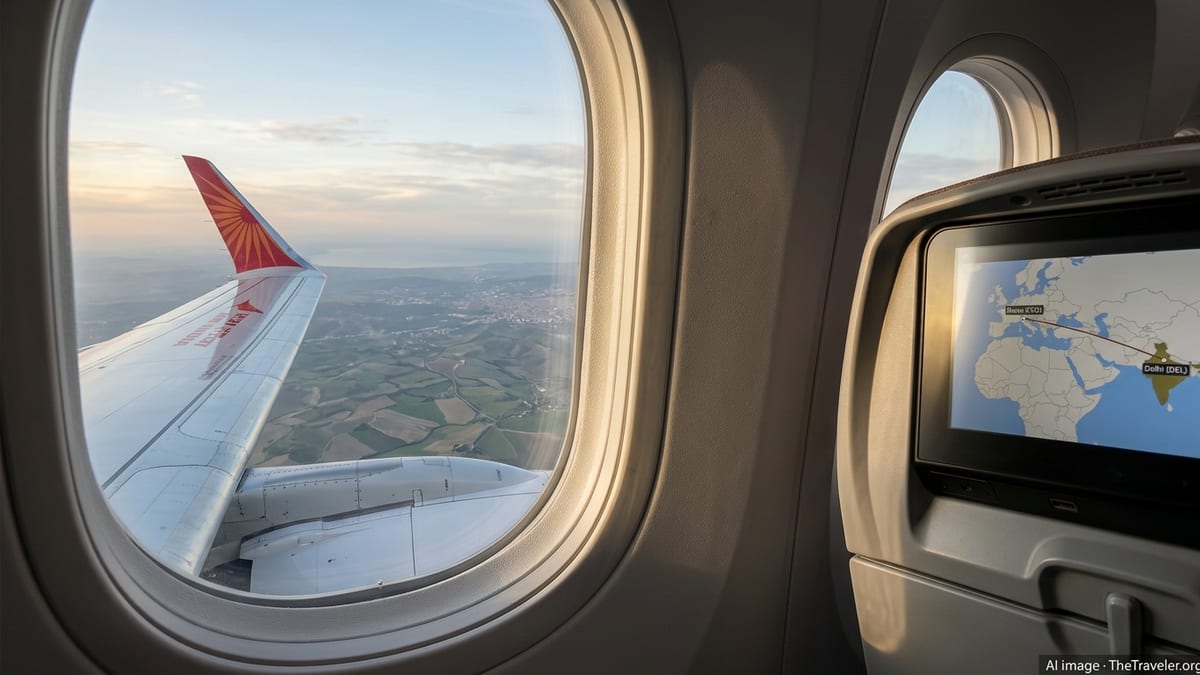
Four Weekly Nonstop Flights Link Delhi and Rome
According to published information from the airline and industry coverage, Air India will resume direct flights between Indira Gandhi International Airport in Delhi and Rome Fiumicino from 25 March 2026. The link brings back a capital-to-capital connection that has been absent for nearly six years, after services were suspended during the pandemic-era reshaping of international schedules.
The route is scheduled to operate four times a week, on Mondays, Wednesdays, Fridays and Sundays. Publicly available schedules indicate that flight AI123 will depart Delhi early afternoon and arrive in Rome early evening, while the return service AI122 will leave Rome in the evening and land in Delhi the following morning. The timings are designed to offer daylight departures in both directions and enable same‑day onward connections at each hub.
The flights will be operated by Boeing 787-8 Dreamliner aircraft configured with two cabins. Reports indicate that the aircraft will feature 18 lie‑flat seats in business class and 238 seats in economy, maintaining Air India’s standard long‑haul layout on many of its European routes. The Dreamliner’s range and fuel efficiency make it well suited to the roughly eight‑hour sector.
Air India’s decision to relaunch Rome follows a broader strategy of rebuilding its long‑haul network under Tata Group ownership. The Delhi–Rome restart comes alongside expansion to other European cities, positioning Delhi as a primary gateway for Indian travelers to the continent and for European passengers heading into South Asia.
Strategic Boost to India–Italy Connectivity
Industry analysis suggests that the renewed Delhi–Rome link is more than a single city‑pair addition. It is expected to reinforce a wider corridor between India and Italy, which have long maintained close ties in trade, fashion, engineering, automotive components, and high‑end tourism. Direct flights reduce travel time and complexity, making it easier for companies to schedule in‑person meetings and manage supply chains spanning both countries.
Before the relaunch, many travelers between India and Italy relied on one‑stop connections via hubs in West Asia or other European capitals. The nonstop option cuts out intermediate transfers, shortening total journey time and simplifying itineraries, especially for corporate travelers and groups. For Italian visitors, a direct link to Delhi also opens easier access to northern India’s cultural and heritage circuits, including Rajasthan, the Himalayas and the Golden Triangle.
From India’s perspective, Rome offers a strategic entry point into southern and central Europe. The Italian capital is a major gateway not only for domestic destinations such as Milan, Naples and Sicily, but also for nearby countries including Switzerland, Austria and the Balkans. Aviation commentators note that more competitive capacity on the India–Italy sector could put downward pressure on fares and expand travel options for both leisure and diaspora markets.
The move also aligns with a broader trend of deepening India–Europe aviation links. In recent seasons, several carriers have added or restored services between Indian metros and key European hubs. Air India’s return to Rome places it in a stronger position to participate in this growing traffic flow and to capture demand that may previously have been routed through rival airlines’ networks.
Hub Connectivity From Delhi to Asia and Beyond
The new Delhi–Rome service is being integrated into Air India’s wider hub‑and‑spoke strategy. Publicly available route maps show that Delhi functions as the airline’s main international hub, with connections radiating out across India, South Asia and the Asia‑Pacific region. The Rome flights are timed to feed into this network, enabling one‑stop itineraries in both directions.
For travelers originating in Italy, the schedule allows onward same‑day transfers in Delhi to a range of destinations across the Indian subcontinent, including major cities such as Mumbai, Bengaluru, Chennai, Hyderabad and Kolkata. Coverage in travel trade media notes that the flights are also positioned to connect to Southeast Asian destinations like Bangkok, Kuala Lumpur, Singapore, Manila and Ho Chi Minh City, giving Italian passengers additional options for multi‑stop holidays and business trips.
Conversely, Indian travelers gain a direct bridge into Italy’s capital while retaining the option to continue onwards in Europe on partner and interline carriers from Rome. For segments such as students, small business owners and diaspora families, a single connection or nonstop itinerary can substantially reduce travel fatigue and uncertainty compared with multi‑stop routings.
Travel agencies and tour operators are expected to incorporate the Delhi–Rome flights into new packages that combine India and Mediterranean destinations. Analysts suggest that this could further diversify itineraries offered in both markets, from cultural and religious tourism to cruise extensions and culinary-focused trips.
Capacity, Product and Competitive Landscape
The deployment of Boeing 787-8 aircraft on the Delhi–Rome route reflects Air India’s ongoing long‑haul fleet modernization. Industry reports highlight that the airline is gradually phasing in refurbished cabins and upgraded inflight services across its international network. While the Rome flights will initially use existing 787 configurations, they benefit from features such as higher cabin humidity, larger windows and lower noise levels compared with older wide‑body types.
Business class on the 787-8 is expected to offer full‑flat seating arranged in a layout similar to Air India’s other long‑haul services, while economy class provides standard long‑haul legroom and inflight entertainment. Observers note that consistent product standards on European routes are increasingly important as the carrier competes with established Gulf and European airlines on comfort and reliability, not just on pricing.
On the competitive front, the revived Delhi–Rome service enters a market that has seen growing interest from both Indian and European carriers. Italy’s own national airline has been expanding its presence in India, and several global players already carry India–Italy traffic via their hubs. Air India’s nonstop advantage on the Delhi–Rome sector is expected to be a key selling point, especially for time‑sensitive and premium travelers.
Aviation analysts point out that the success of the route will depend on sustained demand, operational reliability and the effectiveness of Air India’s distribution channels. Early indications from publicly available booking platforms suggest that inventory for the initial months is being opened progressively, allowing the airline and its partners to test pricing and gauge response from different passenger segments.
Rising International Travel Demand Shapes Route Decisions
The timing of the Delhi–Rome relaunch coincides with a broader recovery in global air travel demand and notable growth in outbound tourism from India. Industry data for 2025 and early 2026 show Indian travelers returning to Europe in large numbers, driven by pent‑up demand, a growing middle class and an expanding network of visa facilitation centers across the country.
Similarly, Italy has been experiencing strong inbound tourism, with travelers seeking cultural attractions, culinary experiences and Mediterranean cruise itineraries. Enhanced air connectivity from major Asian markets, including India, is viewed by tourism boards and airport operators as a central lever for sustaining that momentum. The additional nonstop capacity from Delhi contributes directly to these goals.
For Air India, the route supports its ambition to be a major long‑haul connector between Asia and Europe. Observers note that the airline has been recalibrating its network in response to shifting travel patterns, regional airspace constraints and evolving competitive dynamics. Adding or restoring high‑potential routes such as Delhi–Rome allows the carrier to diversify beyond a narrow set of trunk markets and to make better use of its growing wide‑body fleet.
As bookings build ahead of the March 2026 launch date, the Delhi–Rome service will be closely watched as a barometer of demand between India and Italy and as a test case for Air India’s renewed international strategy. If performance meets expectations, analysts anticipate that further frequency increases or additional Italy routes could follow in subsequent seasons.