

More news on this day
Air Mauritius is adding extra flights between Mauritius and Paris Charles de Gaulle as airlines worldwide contend with widespread airspace closures and diversions across the Middle East, tightening capacity on key corridors between Europe, Africa and Asia.
Get the latest news straight to your inbox!
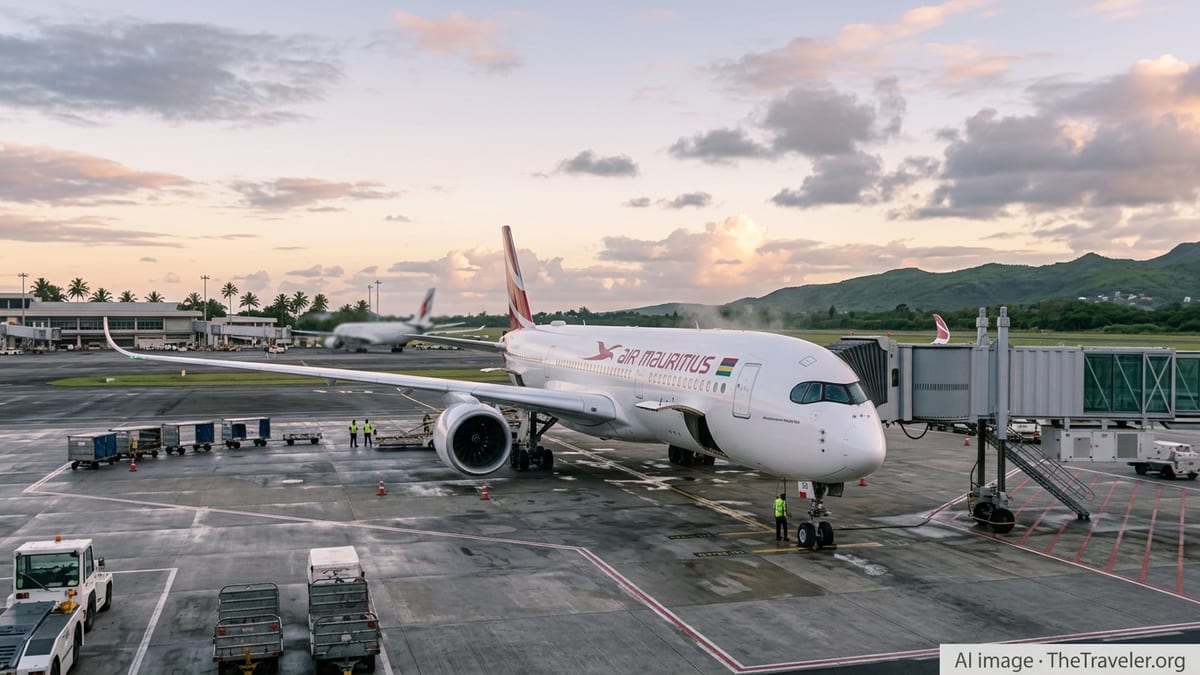
Additional Capacity on Mauritius–Paris Route
A new company communiqué dated 11 March 2026 outlines Air Mauritius plans to operate additional services on its flagship Mauritius–Paris Charles de Gaulle route, supplementing its existing schedule during March and into early April. Publicly available timetable data indicates that the airline, which typically operates daily or near-daily flights to Paris using Airbus A350-900 aircraft, is activating extra rotations to accommodate displaced passengers and new demand.
The move follows earlier schedule adjustments for the winter 2025/26 season, when Air Mauritius had planned a slight reduction in Paris frequencies in March. Those plans are now being partially reversed as the carrier pivots to support travelers affected by widespread disruptions on other long-haul routes that normally rely on Middle East hubs.
The additional flights are expected to be operated with the airline’s long-haul widebody fleet, maintaining a comparable onboard product to its regular Paris service. Public schedule data suggests that the temporary uplift will focus on shoulder and weekend days, when demand for onward connections to mainland Europe is strongest.
While precise frequency increases may vary by week, the airline’s published information points to a short-term capacity boost rather than a permanent structural change to the network. The extra flights are framed as a tactical response to a rapidly evolving operational environment.
Middle East Conflict Ripples Across Global Air Travel
The decision comes against the backdrop of unprecedented disruption to air travel in the Middle East since late February 2026. Reports indicate that airspace closures over Iran, Iraq, Israel, Syria, Qatar, Kuwait and Bahrain, combined with restrictions at several major Gulf hubs, have forced airlines to cancel flights or adopt lengthy diversionary routings around the region.
Coverage from international outlets shows that closures at Doha and other key transit airports have particularly affected long-haul passengers who would normally connect between Europe, Asia and Africa via Gulf hubs. Airlines across Asia and Europe have announced large numbers of cancellations and schedule reductions as they adapt to new routings that add flying time and fuel burn, placing additional pressure on crew duty limits and aircraft utilization.
Economic analyses of the 2026 Iran war highlight that aviation and tourism have been among the sectors most immediately affected, with global carriers rebalancing capacity away from suspended or heavily disrupted routes. This has tightened seat availability on alternative non-stop and one-stop options that bypass Middle Eastern airspace, especially on sectors linking Europe with the Indian Ocean and Southern Africa.
In this context, point-to-point routes such as Mauritius–Paris have gained new importance as reliable corridors for both leisure and VFR (visiting friends and relatives) traffic. Airlines positioned outside the immediate conflict zone, including Air Mauritius, are increasingly leveraging their geographic location to offer more stable connectivity.
Supporting Stranded and Re-Routed Travelers
According to published coverage of the wider disruption, thousands of travelers have been left stranded or faced unexpected detours as their itineraries via Middle East hubs were cancelled or significantly delayed. European and Asian carriers have deployed special services and ad hoc extra flights in recent weeks to help clear backlogs and facilitate repatriations.
By adding capacity to Paris, Air Mauritius is positioning itself as an alternative for travelers whose original journeys via Gulf hubs have been disrupted, particularly those connecting between Western Europe and the southwest Indian Ocean region. Travel industry reports suggest that some passengers are now actively seeking routings via African and island hubs rather than transiting through the Gulf, in an effort to reduce exposure to fast-changing airspace restrictions.
The extra Paris flights also support Mauritian residents, expatriates and tourists attempting to reach or leave Europe amid volatile schedules. With many long-haul operations now taking longer northerly or southerly tracks to skirt closed airspace, direct links between Mauritius and major European gateways offer a relatively predictable option, even if flight times have modestly increased due to routing adjustments.
Airfare monitoring by regional media indicates upward pressure on prices across a number of international markets affected by the conflict, as reduced capacity and longer routings filter through to consumers. Additional seats on non-stop routes such as Mauritius–Paris are therefore likely to be welcomed by both travelers and tour operators trying to maintain planned itineraries for the remainder of the high season.
Operational Challenges and Network Flexibility
Like many carriers, Air Mauritius must balance the need to add capacity with operational constraints created by the Middle East closures. Industry reporting notes that airlines have been facing increased fuel costs and tighter crew scheduling margins on long-haul sectors as they lengthen flight paths to avoid closed airspace, complicating efforts to restore normal frequencies.
For Air Mauritius, the decision to add Paris flights suggests that the carrier has identified enough aircraft and crew flexibility in its long-haul program to mount extra services while still protecting its core network. Public timetable summaries show the airline already operates a diversified schedule spanning London, Johannesburg, Mumbai and select Asian and regional destinations, many of which are also impacted indirectly by the need to re-route around parts of the Middle East.
Industry watchers point out that national carriers serving island destinations often act as critical lifelines during global transportation shocks, as they provide the primary means of international access. By leveraging its A350 and A330neo fleet on the busy Mauritius–Paris corridor, Air Mauritius appears to be following that pattern, prioritizing connectivity with a major European hub that offers onward links across the Schengen area and beyond.
However, the temporary nature of the announced uplift underscores the uncertainty still surrounding the conflict and its impact on airspace. Network planners are likely to continue revisiting schedules week by week as the operational picture evolves and as regulators update guidance on overflight permissions and safety assessments.
Implications for Mauritius Tourism and the Wider Region
Mauritius relies heavily on air access to sustain its tourism-driven economy, and France ranks among its largest source markets. Increasing direct capacity to Paris at a time of global route disruptions may help mitigate potential downturns in arrivals from continental Europe, particularly as some travelers postpone or rebook itineraries that previously routed via the Gulf.
Tourism operators on the island have been closely monitoring the conflict’s impact on bookings, with some package providers reportedly adjusting their marketing to highlight non-Gulf routings and stable non-stop links from Europe. Extra seats on Air Mauritius Paris flights can provide additional inventory for tour operators and online travel agencies seeking to protect existing reservations into late March and early April.
Regional connectivity is also at stake. Travelers from neighboring islands and parts of Southern Africa often rely on Mauritius as a stepping stone to Europe. With several Middle East gateways operating on reduced schedules or focusing on repatriation traffic, a more robust Mauritius–Paris corridor could support onward journeys that might otherwise have required lengthy detours or overnight ground arrangements.
Looking ahead, analysts suggest that the current situation may accelerate a broader reassessment of routing strategies across the Indian Ocean and Africa. As airlines and travelers weigh reliability, geopolitical risk and cost, non-stop links between secondary hubs such as Mauritius and European capitals could gain prominence within the wider long-haul network map, at least for as long as Middle East airspace remains constrained.