

More news on this day
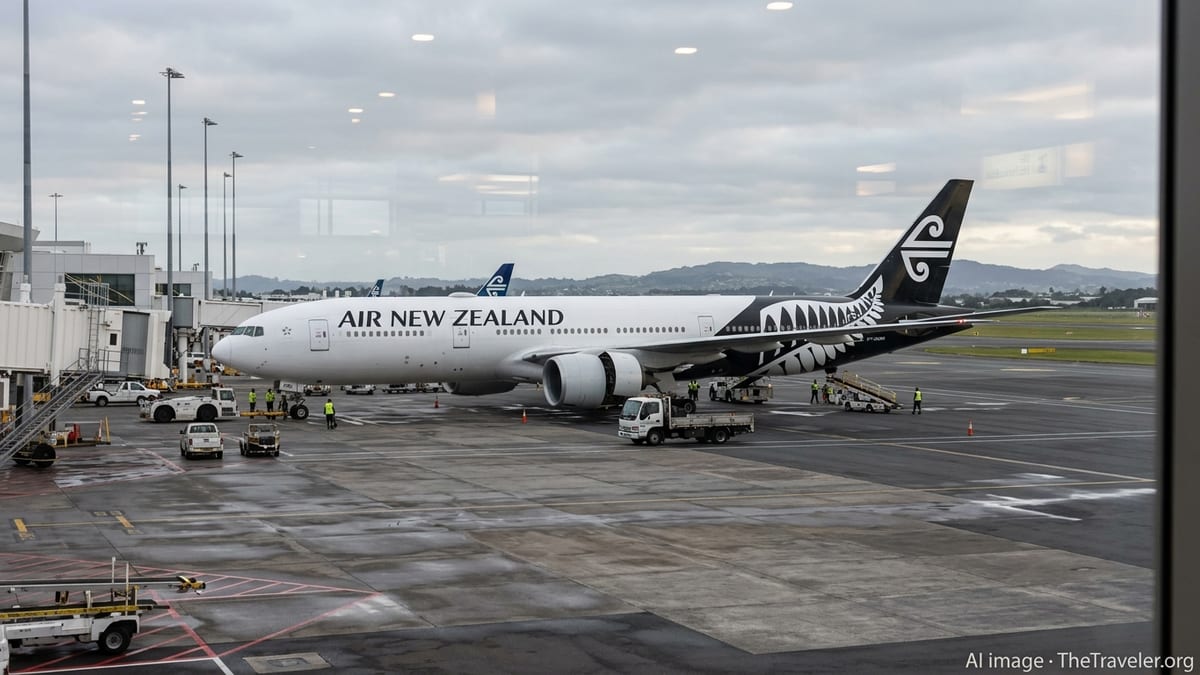
An Air New Zealand Boeing 777 operating a long haul service was forced to return to Auckland after an in flight engineering issue, prompting a precautionary turn back and renewed attention on the carrier’s widebody reliability as it navigates an intensive maintenance program for its long haul fleet.
Get the latest news straight to your inbox!
Aircraft Returns to Departure Airport After In Flight Alert
Publicly available flight tracking data and media coverage indicate that the Air New Zealand Boeing 777 departed Auckland on an international long haul route before leveling off and entering a holding pattern, rather than continuing on its planned transoceanic track. The aircraft subsequently turned back toward Auckland, landing safely after burning fuel to reach a suitable landing weight.
Reports indicate the flight crew received an onboard engineering alert that required further inspection on the ground. While specific technical details have not been disclosed, the sequence of events is consistent with a standard safety focused response in which crews discontinue a long overwater sector in favor of returning to a base with full maintenance capability.
There were no reports of injuries and publicly available information shows the aircraft landed without incident. Passengers on board faced an extensive delay, with the flight effectively becoming a lengthy round trip to and from the departure point.
Operational data suggests that Air New Zealand subsequently reassessed the aircraft’s status and schedule, with the widebody removed from immediate follow on flying as engineers worked to identify and address the underlying fault.
Widebody Reliability Under Pressure as Fleet Works Hard
The incident comes at a time when Air New Zealand’s long haul fleet is under sustained pressure, with the airline operating a mix of Boeing 777 300ER and 787 9 aircraft across its North America, Asia and Pacific networks. Company updates and industry reporting describe a period of elevated engineering and maintenance activity, driven by engine availability challenges and cabin retrofit programs designed to modernise the product on key routes.
Investor material published by the airline highlights plans to keep its core 777 300ER fleet in service into the early 2030s, supported by interior upgrades and ongoing heavy maintenance. At the same time, the airline is preparing for additional 787 deliveries from 2026 onward, which are expected to ease some of the capacity and scheduling constraints currently affecting long haul operations.
Analysts note that when a single widebody aircraft is taken out of service unexpectedly, the knock on effect can be significant. With relatively few spare long haul jets available, an unplanned engineering event often forces a cascade of schedule changes, upgauges and downgrades, or, in some cases, cancellations on other routes.
Recent public commentary around Air New Zealand’s performance has frequently referenced engineering issues as a factor in disruptions, alongside weather and air traffic constraints. The latest 777 turn back adds another example of how a single technical alert can ripple through an already tightly balanced fleet plan.
Passenger Experience Marked by Extended Journey and Disruption
For passengers on board the affected flight, the immediate implication was an involuntary return to Auckland after several hours in the air, instead of a direct arrival at their intended destination. Travel forums and social media discussion of similar long haul returns describe a mix of fatigue, frustration and relief when such flights land safely back at their point of origin.
Once on the ground, standard practice for airlines confronted with a grounded long haul aircraft typically includes arranging accommodation, meal vouchers and rebooking on the next available services. With long haul routes from New Zealand often operating only once per day or a few times per week, many travelers can face overnight stays or even multi day delays while they wait for replacement flights or alternative routings.
Publicly available commentary about Air New Zealand’s recent disruptions suggests that passengers have become increasingly vocal about communication during irregular operations. When engineering issues arise, clear and timely updates about the nature of the delay, likely timelines and options for rebooking are central to maintaining customer confidence, particularly for international travelers with onward connections.
In cases where engineering problems are confirmed as the cause of a significant delay or cancellation, consumer expectations are also shaped by evolving regulatory discussions around passenger rights, compensation frameworks and minimum standards for care during extended disruptions.
Safety Protocols Prioritise Precaution Over Schedule
Aviation safety specialists commonly note that returns to departure airports, diversions and precautionary landings are built into the industry’s conservative operating philosophy. When flight crews receive technical alerts, they follow established checklists and consult with airline operations and engineering teams to determine whether the flight can continue safely or should return.
In the case of a long overwater segment departing Auckland, the decision to turn back rather than press ahead is influenced by factors such as proximity to a major maintenance base, available alternates along the route and the nature of the alert. Returning to Auckland allows access to the airline’s primary engineering facilities and spare parts, as well as greater flexibility for rebooking passengers.
Industry data shows that the vast majority of in flight technical events are handled without injury and with ample safety margins, even if they cause major inconvenience. Events like the recent 777 return are therefore viewed less as emergencies and more as visible examples of risk management in action, with operational reliability taking a temporary back seat to technical caution.
For carriers such as Air New Zealand, which operate some of the world’s longest commercial flights, the threshold for erring on the side of caution is particularly low. The combination of long flight times, remote oceanic routes and limited diversion options reinforces a safety culture in which responding decisively to any engineering concern is the default approach.
Ongoing Maintenance Investments Aim to Reduce Disruptions
According to investor presentations and industry coverage, Air New Zealand is investing heavily in both physical infrastructure and fleet renewal in an effort to stabilise long haul reliability over the coming years. The airline has highlighted work on major maintenance facilities in Auckland, including large hangar capacity designed to accommodate 777 and 787 aircraft for scheduled checks and repairs.
At the same time, the carrier is advancing a multi year program to retrofit cabins on its existing widebody fleet, while also planning for the arrival of new generation 787 aircraft. These programs are intended to deliver a more consistent onboard product and improved fuel efficiency, but they also require careful planning to avoid taking too much capacity offline at once.
Industry observers suggest that isolated engineering events, such as the 777’s return to Auckland, are likely to remain an occasional feature of operations even as reliability improves. Complex long haul aircraft operate in demanding conditions and are subject to intensive regulatory oversight, meaning that technical alerts and conservative responses will continue to appear in the daily rhythm of global aviation.
For travelers, the incident is a reminder that modern commercial aviation is structured to place safety and engineering prudence ahead of punctuality. For Air New Zealand, it underscores the importance of its ongoing maintenance and fleet investments, as the airline works to balance growth, product upgrades and operational resilience across its long haul network.