

More news on this day
Air New Zealand has completed an ambitious four-month trial of the battery-electric Alia CX300 aircraft across regional New Zealand, marking a pivotal step in the country’s push to launch commercial electric flights as early as 2028.
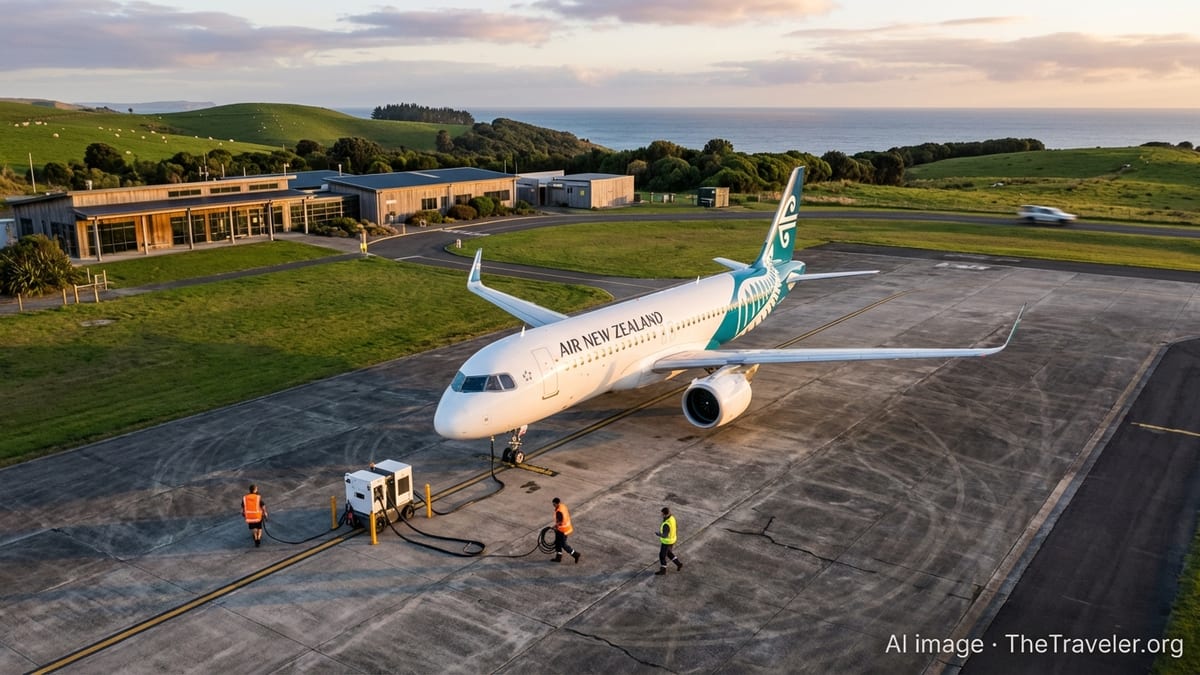
Extensive Trials Showcase Electric Aircraft Potential
The Alia CX300, developed by US-based Beta Technologies, arrived in New Zealand in late 2025 as part of Air New Zealand’s Next Generation Aircraft programme. Over the following months it flew more than 100 demonstration missions, operating primarily from Hamilton and Wellington and visiting a dozen airports nationwide to test its performance in real-world regional conditions.
The trial flights focused on short-haul cargo-style operations, mirroring the sectors where electric aircraft are expected to make their first commercial impact. Engineers and pilots gathered data on battery performance, turnaround times, charging needs and operations in varied weather and terrain, from coastal routes to more challenging inland conditions that typify New Zealand’s regional network.
According to the airline, the aircraft remained within its certified operating envelope throughout the programme, providing confidence that battery-electric platforms can handle demanding day-to-day flying if supported by the right infrastructure and regulatory approvals.
With the New Zealand Civil Aviation Authority working in parallel with the US Federal Aviation Administration on type acceptance for the aircraft, the trials also helped regulators better understand how electric aircraft fit within rules written largely for conventional combustion fleets.
Pathway to a 2028 Commercial Launch
Air New Zealand has signalled that 2028 is the earliest realistic date for the Alia CX300 to enter commercial service on regional routes, most likely in a cargo configuration initially. That timeline aligns with Beta Technologies’ push for full certification of the conventional take-off and landing variant of the aircraft and delivery slots already reserved by the airline.
Executives are careful to describe 2028 as a target rather than a firm commitment. The airline has yet to decide whether the Alia CX300 will become a permanent part of its fleet, stressing that the demonstrator programme is primarily a learning exercise. Final decisions will hinge on certification progress, infrastructure readiness, long-term operating costs and how the aircraft integrates with broader decarbonisation plans that also include sustainable aviation fuel and, longer term, hydrogen.
Even so, the pace of activity underscores New Zealand’s intent to be among the first countries to field commercially viable electric flights. The government has positioned advanced air mobility and low-emissions aviation as strategic priorities, and the national carrier is using the Alia CX300 as a testbed to de-risk the move from small pilot projects to revenue-generating services later this decade.
Industry analysts note that the 2028 window, if met, would place New Zealand in the vanguard of electric regional operations globally, on par with early adopters in Europe and North America that are trialling similar battery aircraft for cargo and short-hop passenger routes.
Building the Ground Infrastructure for Electric Aviation
A critical element of the New Zealand trials involved charging technology. Alongside the aircraft, Beta Technologies deployed its portable “Minicube” charger that can deliver around 65 kilowatts of power, recharging the Alia CX300’s battery in roughly an hour and a half. This mobile system allowed Air New Zealand to test real-world turnaround times at multiple airports without waiting for permanent installations.
Looking ahead to commercial operations, the partners are working on higher-capacity fixed chargers rated at around 320 kilowatts. Those units, slated for eventual deployment at key regional airports, would dramatically cut charging times and enable the sort of multiple daily cycles that regional cargo and passenger services require.
The trial also highlighted practical considerations such as energy reserves on landing, integration with airport power supplies and how charging infrastructure fits into existing apron layouts. For smaller regional airports, especially in remote communities, the shift to electric aircraft will require careful planning to avoid grid constraints and to ensure safe, efficient operations alongside conventional jets and turboprops.
New Zealand’s existing work on low-carbon energy, including investments in renewable electricity and hydrogen testbeds, gives it an advantage as it plans for a mixed fleet of battery-electric, hybrid and hydrogen-powered aircraft over the coming decades.
Partnership Model Between Airline, Manufacturer and State
The Alia CX300 programme reflects a close partnership between Air New Zealand, Beta Technologies and New Zealand’s public agencies. The airline has agreed in principle to acquire up to 23 of the aircraft, subject to certification and business-case approvals, while the government has used funding and regulatory support to fast-track trials and infrastructure planning.
This collaborative model, bringing together manufacturer expertise, airline operational experience and government backing, is increasingly seen as essential for scaling electric aviation beyond one-off demonstrations. In New Zealand’s case, it mirrors a broader strategy that also involves trials of hydrogen propulsion, sustainable aviation fuel testing and early investments in airport energy systems.
For Beta Technologies, New Zealand offers a high-visibility proving ground that showcases how the Alia CX300 can operate across a national network with diverse geography and weather. For Air New Zealand, the relationship extends into innovative service concepts, including new maintenance and energy management arrangements tailored to electric fleets.
Officials argue that this type of ecosystem approach can help de-risk early adoption and give regulators, investors and local communities greater confidence that electric aviation can be both safe and commercially viable.
Tourism and Regional Connectivity in a Low-Emission Future
New Zealand’s tourism sector is watching the trials closely, with electric aircraft viewed as a potential game-changer for regional connectivity and destination marketing. While initial operations are expected to focus on cargo, the same technology could eventually support short passenger hops linking cities with remote tourist hotspots, from coastal wine regions to adventure hubs in the central North Island and the South Island.
Quieter operations and zero in-flight carbon emissions could help reduce community concerns around noise and pollution at smaller airports that sit close to residential areas or sensitive landscapes. Tourism operators see an opportunity to promote low-emission flight options as part of broader sustainable travel itineraries that combine rail, electric vehicles and eco-certified experiences.
Air New Zealand has positioned the Alia CX300 and other next-generation aircraft as central to its long-term climate strategy, which targets net-zero emissions by 2050. While long-haul flights will continue to rely on sustainable aviation fuels for some time, early adoption of electric aircraft on shorter domestic sectors could deliver rapid emissions cuts and signal to international visitors that the country is serious about decarbonising travel.
If the 2028 commercial timeline is achieved, passengers could see electric aircraft with Air New Zealand branding operating regular services before the end of the decade, turning the current trial flights into a permanent feature of the country’s aviation and tourism landscape.