

More news on this day
Fuel price volatility linked to conflict in the Middle East has prompted Air New Zealand to cancel about 1,100 flights through early May, disrupting travel plans for an estimated 44,000 passengers across its domestic and international network.
Get the latest news straight to your inbox!
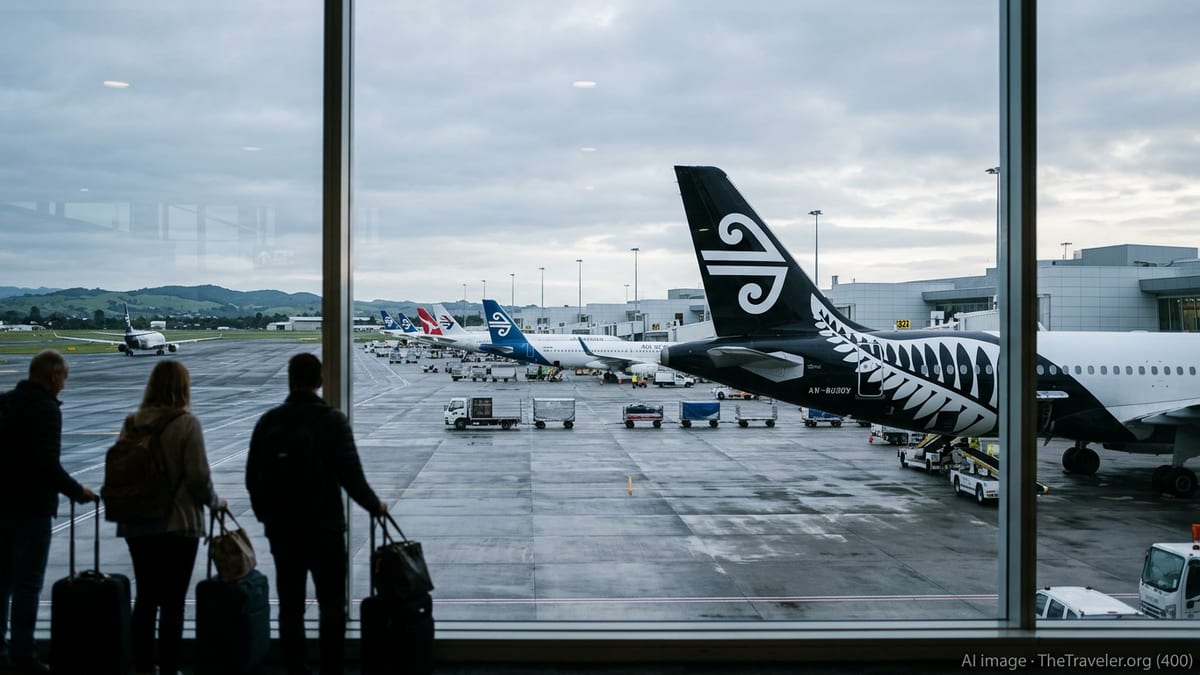
Scale of Cancellations Across the Network
Publicly available information shows that Air New Zealand will remove roughly 1,100 services from its schedule between mid-March and early May 2026, equivalent to about 5 percent of planned flights over that period. Reports indicate that the bulk of the cuts are focused on domestic services within New Zealand, with selected international sectors also affected.
Coverage in New Zealand media outlines that the cancellations will be spread over several weeks rather than concentrated on a single peak period. The strategy appears aimed at thinning out lower-demand services and consolidating passengers onto remaining flights, rather than closing specific routes completely.
Regional centres are among the areas seeing schedule changes, with cities such as Tauranga and Dunedin highlighted in local reports as facing reduced frequencies. Despite this, Air New Zealand is maintaining core connectivity on key trunk routes such as Auckland–Wellington and Auckland–Christchurch, albeit with fewer daily options for some travelers.
While most of the affected services are domestic, some short-haul and long-haul international flights are also scheduled for consolidation. The adjustments mean fewer choices for travelers heading to and from New Zealand in the coming weeks, particularly those relying on connecting domestic legs to reach international departures.
Jet Fuel Shock and Global Conflict
The flight cancellations come as Air New Zealand confronts a sudden spike in jet fuel prices linked to the war involving Iran and wider instability in the Middle East. According to published coverage, the airline has indicated that benchmark jet fuel, which had been trading around US$85 to US$90 a barrel, has recently surged to a range of about US$150 to US$200.
Reports from business and aviation outlets note that disruptions to shipping routes, including the vital Strait of Hormuz, have constrained global oil supply and pushed up costs for airlines worldwide. For a carrier operating long over-water sectors to and from an isolated market like New Zealand, fuel is a particularly large component of operating expenses.
In a notice to investors this week, Air New Zealand suspended its financial guidance for the 2026 financial year, citing what it described publicly as unprecedented volatility in jet fuel markets. The airline has warned that the fuel shock is expected to weigh heavily on second-half earnings, compounding existing pressures from engine maintenance delays and a weaker New Zealand dollar.
Aviation analysts quoted in regional coverage suggest that even for carriers with fuel hedging strategies, rapid and sustained price spikes can erode the protective effect of those contracts once they roll off. For Air New Zealand, the combination of hedging limits and elevated spot prices appears to have tipped the balance toward both higher fares and targeted capacity cuts.
Traveler Disruption and Rebooking Challenges
Travel industry reporting estimates that around 44,000 customers will be directly impacted by the 1,100 flight cancellations, either through outright loss of a planned service or through significant schedule changes. Many of these passengers are domestic travelers, including commuters, families visiting relatives, and business travelers relying on multiple daily options between New Zealand’s main centres.
Air New Zealand has begun contacting affected customers with options to move to alternative flights, accept credit, or in some cases seek refunds, according to information published on travel and aviation news platforms. With capacity being consolidated, however, remaining flights are expected to be busier, and some travelers may face longer connection times or changes to preferred departure days.
Reports from New Zealand regional media highlight concerns in smaller centres where reduced frequencies can mean fewer same-day return options for medical, education, or business trips. Travel advisers quoted in industry coverage note that passengers with onward international connections, particularly those booked on separate tickets, may need to build in additional buffer time to reduce the risk of missed flights.
Consumer advocates referenced in local reporting are urging passengers to check their bookings frequently, monitor airline notifications, and document any additional accommodation or transport costs incurred as a result of last-minute changes. While New Zealand’s compensation framework differs from rules in regions such as the European Union, there may be circumstances in which customers can seek reimbursement for certain expenses if they are stranded or significantly delayed.
Ripples for Fares and Tourism Demand
The fuel shock is not only reshaping flight schedules but also influencing ticket prices. Travel trade publications report that Air New Zealand has already introduced fare increases, adding roughly NZ$10 to many domestic tickets, around NZ$20 on short-haul international routes, and close to NZ$90 on some long-haul services.
Such increases come after several years of elevated airfare levels following the pandemic, driven by constrained capacity and strong demand. With fuel now surging again, industry observers warn that leisure travelers and price-sensitive visitors could begin to reassess travel plans, particularly for long-haul journeys to and from New Zealand.
Tourism operators contacted by local media have expressed concern that higher airfares and reduced seat availability may soften inbound numbers later in the year, especially from secondary markets that depend heavily on competitive pricing. At the same time, New Zealand residents planning overseas holidays may face tighter budgets or choose shorter, regional trips rather than long-haul itineraries.
Economists commenting in national coverage suggest that if fuel prices remain volatile for an extended period, the combined effect of higher airfares and fewer services could weigh on New Zealand’s wider visitor economy. Sectors such as hospitality, events, and regional attractions may feel the impact if travel volumes ease from current levels.
What Passengers Should Watch in the Weeks Ahead
For travelers with upcoming bookings on Air New Zealand between now and early May, the immediate priority is to check flight status and ensure contact details are up to date in airline profiles. Travel media suggest that passengers should keep an eye on potential rolling adjustments as the airline continues to manage its schedule in line with fuel market developments.
Industry analysts expect that other airlines in the region may also continue to recalibrate capacity and pricing if elevated fuel costs persist. While there is no widespread indication of a broader fuel shortage at New Zealand airports, carriers are actively managing fuel uplift patterns, route economics, and fleet deployment to conserve margins.
Published commentary indicates that any easing of geopolitical tensions or coordinated moves by oil-producing nations could alter the fuel price outlook and reduce the pressure on airline schedules. Until then, passengers may need to adapt to fuller flights, less flexibility in departure times, and the possibility of further timetable tweaks.
For New Zealand’s national carrier, the coming months will test its ability to balance financial resilience with its role in keeping a geographically remote country connected to the world. How quickly fuel markets stabilize will play a central role in determining whether the current wave of cancellations remains a short-lived adjustment or the start of a longer period of constrained capacity.