

More news on this day
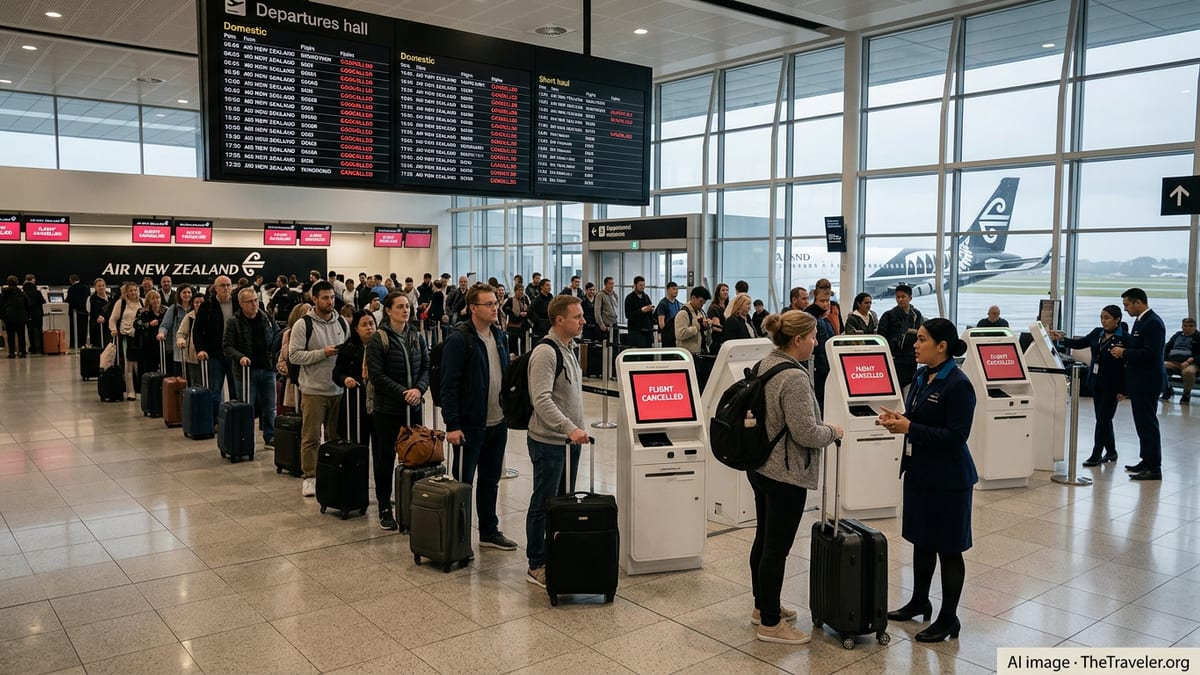
Air New Zealand is scrapping around 1,100 flights through early May 2026 and reworking thousands of bookings, as a sudden spike in jet fuel prices and mounting financial pressures force the flag carrier to shrink its schedule and warn of further turbulence ahead.
Get the latest news straight to your inbox!
How Many Flights Are Affected and When
Air New Zealand has confirmed it will cancel roughly 1,100 flights between mid March and early May 2026, a move that will affect about 44,000 passengers. The cuts will hit mainly domestic routes but will also touch some short haul international services, as the airline looks to conserve fuel and contain costs during a period of extreme market volatility.
The timing is especially sensitive. The reductions span the busy late summer and early autumn travel window in New Zealand, when leisure travel, business trips and essential regional connections typically remain strong. Air New Zealand said it would try to concentrate cancellations on flights with multiple daily services, rather than routes with limited alternatives, but warned that some communities will see noticeably fewer options.
While the airline is emphasising that most of its network will continue to operate, the cancellation tally represents a meaningful pullback for a carrier that had been in recovery mode following the pandemic and earlier engine availability issues. Executives have not ruled out further adjustments if fuel markets or geopolitical conditions deteriorate.
Soaring Fuel Prices and Strained Energy Supply Lines
The immediate trigger for the cuts is an abrupt surge in global jet fuel prices tied to worsening conflict in the Middle East and disrupted energy supply routes. Air New Zealand has told investors that jet fuel, which had averaged around 85 to 90 US dollars a barrel, has in recent days surged toward double that level, effectively more than wiping out previous hedging benefits and compressing already thin margins.
Energy market disruptions are radiating across aviation worldwide, but they pose an outsized risk for geographically isolated carriers like Air New Zealand, which rely heavily on long overwater sectors and have fewer alternative fuel supply options. Any interruption or spike in the cost of refined product quickly feeds through to operating budgets, and airlines have limited short term levers beyond cutting capacity, raising fares or both.
The carrier has already suspended its financial guidance for the year to June 30, 2026, citing what it called unprecedented volatility in jet fuel markets. That move underscores how difficult it has become to forecast costs even a few months ahead, and signals that the current flight cancellations may be only one part of a broader reshaping of schedules, pricing and investment plans.
Financial Pressures Behind the Schedule Cuts
Even before the latest fuel shock, Air New Zealand was navigating a fragile financial recovery marked by rising labour, maintenance and regulatory costs, alongside the expense of decarbonisation schemes such as emissions trading and sustainable aviation fuel. Recent interim results showed the airline slipping back into a loss, reversing profits it had recorded in earlier periods as travel rebounded post pandemic.
Executives have spoken publicly about the need to protect the balance sheet and preserve cash while demand patterns and cost inputs remain unpredictable. In that context, trimming 1,100 flights over several weeks is being framed not only as a response to fuel prices but as a defensive move to avoid operating money losing sectors and to keep aircraft and crews deployed where they generate the strongest returns.
The airline has also implemented fare increases across domestic, short haul and long haul routes, arguing that ticket prices must reflect the new reality of much higher energy costs. Analysts say that combination of higher fares and targeted capacity cuts is designed to shore up yields, but warn it could test customer loyalty at a time when competition from other carriers in and out of New Zealand is slowly rebuilding.
What This Means if You Already Have a Booking
For the roughly 44,000 passengers whose flights fall inside the cancelled programme, Air New Zealand says it is prioritising rebooking rather than outright refunds, in order to keep people moving and maintain revenue where possible. Customers are being shifted onto earlier or later services on the same day, or onto nearby dates on routes with multiple daily frequencies. In some regional markets, passengers may be routed via alternative hubs or moved to partner airlines where agreements exist.
Travellers are being notified progressively by email, text message or app alerts, so anyone flying with Air New Zealand through early May is being urged to keep contact details updated and to monitor their booking closely. Those who booked through online travel agencies or third party platforms may need to coordinate changes through their original point of sale, which can add delays, particularly at peak times.
The airline says standard passenger rights for schedule changes will apply, including options to be rebooked at no additional fare for affected sectors, to receive credit for future travel in some cases, or to request refunds where no suitable alternatives exist. However, with seats tightening as schedules are consolidated, flexibility on preferred travel times and even travel dates will likely be essential for passengers who need to secure timely alternatives.
Key Advice Before You Book Flights in 2026
For anyone still planning travel with Air New Zealand in 2026, the latest cancellations are a clear signal that fuel costs and geopolitical tensions could continue to influence schedules and pricing throughout the year. Prospective passengers are being advised to factor in a greater risk of timetable changes when planning important trips such as weddings, events, cruises or tight international connections.
Travel agents and industry observers recommend building in longer connection windows, especially when linking domestic New Zealand flights to international departures, and avoiding last minute same day connections where possible. Purchasing flexible or semi flexible fares, or adding changeable return dates, may prove worthwhile even at a higher upfront price if conditions remain volatile.
Travel insurance is also coming back into focus. Policies differ widely in their coverage of airline schedule changes, so reading the fine print before purchase is crucial. Some products offer limited or no compensation for cancellations caused by operational or cost based decisions, while others may provide cover for additional accommodation and rebooking expenses.
More broadly, passengers should expect the wider aviation sector in the region to respond to the same fuel shock, meaning that higher fares and selective capacity trims may appear at other airlines as well. For now, Air New Zealand’s move to cancel more than a thousand flights stands out as one of the most visible examples of how a distant conflict and disrupted energy routes are reshaping travel plans for tens of thousands of people on the other side of the world.