

More news on this day
Air New Zealand is under mounting political and public pressure after pressing ahead with plans to return up to $500 million to shareholders through dividends and share buybacks, even as the flag carrier battles a slide in profits, shrinking capacity and a share price hovering near multi-year lows.
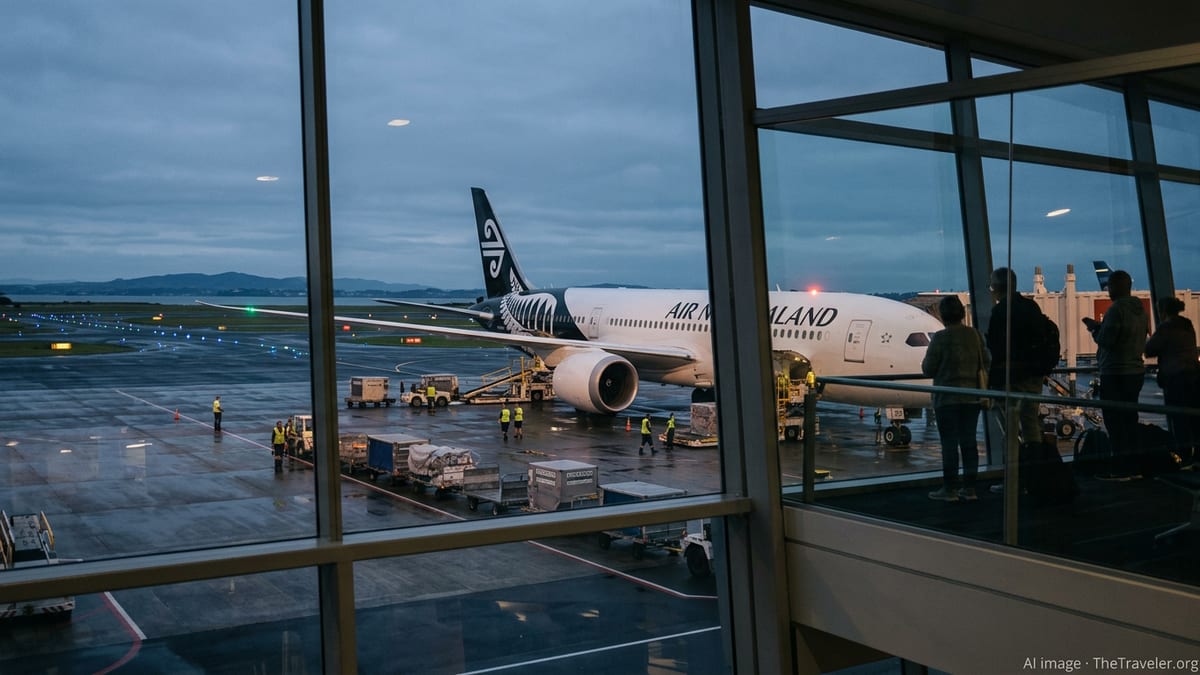
Dividend Strategy Under Fire as Losses Mount
The backlash follows a volatile period in which Air New Zealand swung from post-pandemic profits to a first-half loss and warned that high fuel costs, softer demand and operational constraints were weighing heavily on its balance sheet. The airline recently reported a multi-million dollar loss for the first half of the current financial year and announced a broad strategic review aimed at "resetting" the business, including its route network, pricing and cost base.
Despite that reset, the board has maintained a capital return strategy that includes ordinary dividends and an existing share buyback programme. Taken together with earlier guidance, the package is expected to total as much as $500 million over a multi-year period, according to analysts tracking the stock. Critics say that level of payout is difficult to justify while the airline is still grappling with debt taken on during the pandemic and struggling to restore pre-2020 capacity.
In its latest results, Air New Zealand highlighted a challenging operating environment marked by higher wages, intense competition on trans-Tasman and long-haul routes, and lingering aircraft availability issues. The company argues that modest dividends signal confidence in its recovery and reward investors who endured years of suspended payouts during the crisis. However, the scale of the broader capital return plan has become a lightning rod at a time when fares remain elevated and service frustrations are a frequent theme among travellers.
Government Stake Puts Spotlight on Taxpayer Exposure
The controversy is magnified by the New Zealand government’s role as Air New Zealand’s single largest shareholder, with a majority stake held on behalf of taxpayers. Successive governments have justified that holding on strategic grounds, citing the airline’s role in connecting remote communities, supporting tourism and ensuring air links during crises. The memory of the early-2000s bailout, when the state stepped in to rescue the then fully privatised carrier, still looms large in public debate.
With the company now posting losses and its share price recently slumping to around 17-year lows on the local market, opposition politicians and some economists have questioned whether it is appropriate to prioritise shareholder distributions over balance-sheet strength. They argue that a weakened airline could again leave taxpayers exposed if conditions deteriorate further or if another external shock hits global aviation.
Finance officials are understood to be closely monitoring the airline’s capital plans, but the government has so far avoided direct intervention in the board’s dividend decisions. Ministers have instead stressed the importance of Air New Zealand remaining commercially disciplined and capable of funding its own fleet renewal and sustainability initiatives. That stance has done little to quell concern among voters who see the company as a quasi-public utility rather than a conventional listed airline.
Travellers Face High Fares and Reduced Capacity
For many New Zealanders, the anger over dividends is less about accounting and more about lived experience. Domestic and regional passengers have complained of sharply higher fares since borders reopened, particularly on monopoly routes where Air New Zealand faces little or no competition. Industry data shows that capacity across the network remains materially below 2019 levels, limiting seat availability and driving up prices on popular corridors.
Regional airports and business groups have warned that a combination of reduced frequency, smaller aircraft and higher fares risks undermining economic growth outside the country’s main centres. Many communities depend on reliable air links for tourism, exports and access to essential services. They argue that any surplus cash should first be reinvested into restoring capacity, improving reliability and supporting regional connectivity before being returned to shareholders.
Customer dissatisfaction has been compounded by a series of operational headaches, including schedule changes, long call-centre wait times and disputes over refunds and credits. Social media and local forums are filled with stories of last-minute cancellations, complex rebookings and steep fees for changes, reinforcing the perception that passengers are being asked to shoulder more of the burden while investors are made whole.
Air New Zealand Defends Returns as "Measured"
Air New Zealand has defended its approach, describing recent dividends as modest in the context of the airline’s capital needs and the size of its shareholder base. Executives note that the resumption of ordinary dividends followed several years of suspended payouts and came only after the company had strengthened liquidity and refinanced key borrowings. They also emphasise that announced buybacks are spread over an extended period and may be scaled depending on trading conditions.
The board has framed the capital return programme as part of a broader effort to restore the company’s investment narrative after the disruptions of the pandemic era. By signalling a path back to regular dividends, directors hope to attract long-term investors and stabilise the share register, which they argue ultimately benefits customers and staff by supporting fleet renewal and product upgrades. The airline has pointed to planned investments in more efficient aircraft, customer experience initiatives and sustainability projects as evidence that it is not sacrificing the future for short-term payouts.
Nonetheless, the company acknowledges that it faces a delicate balancing act. In recent communications with investors, Air New Zealand has stressed that future dividends will be contingent on earnings, gearing levels and macroeconomic conditions. Analysts say a deeper-than-expected downturn in demand, further spikes in fuel prices or additional operational disruptions could force the board to reconsider the pace and scale of capital returns, particularly if losses extend into the next financial year.
What the Backlash Means for New Zealand Tourism
The debate over Air New Zealand’s dividends has broader implications for the country’s travel and tourism industry. As the dominant domestic carrier and a marquee international brand for New Zealand, the airline’s financial health and strategic choices have a direct impact on visitor flows, regional tourism businesses and the global perception of the country as an accessible, value-for-money destination.
Tourism operators worry that persistently high fares and reduced seat capacity could blunt the sector’s recovery just as key markets in North America, Europe and Asia are regaining momentum. Some industry leaders have called for closer coordination between the airline, regional tourism organisations and central government to ensure that air connectivity supports national growth goals rather than constraining them.
For now, travellers and taxpayers will be watching closely as Air New Zealand’s strategic review unfolds and as the board weighs future dividend decisions. The company’s challenge is to convince a sceptical public that returning hundreds of millions to shareholders can coexist with affordable fares, robust regional links and a financially resilient national carrier that will not require another taxpayer rescue if turbulent conditions persist.