

More news on this day
Hundreds of travellers across New Zealand are facing missed connections, overnight airport stays and rebooked itineraries after Air New Zealand delayed 56 flights and cancelled 15 services in a single operational period, heavily disrupting key domestic routes from Auckland to Christchurch and other centres just days after severe weather and wider regional bottlenecks hit airline reliability.
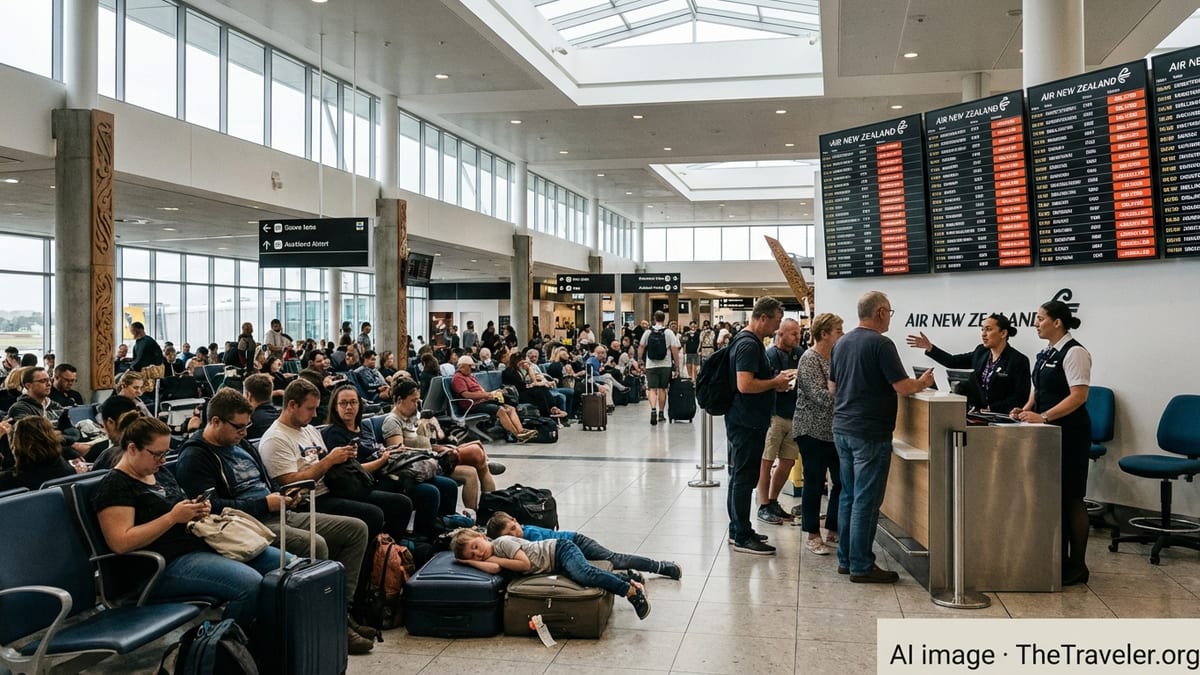
Major Disruption Across New Zealand’s Domestic Network
Operational data compiled from airline trackers and airport schedules on February 20 indicates that Air New Zealand’s latest disruption wave has affected a large share of its domestic schedule, particularly on trunk routes linking Auckland with Christchurch, Wellington and regional centres. While the carrier has not issued a single consolidated tally, aggregated status boards show at least 56 delayed flights and 15 outright cancellations across the day, creating rolling knock-on effects for passengers and crews.
Auckland Airport, the country’s primary hub, has borne the brunt of the disruption. Multiple Auckland to Christchurch flights scheduled for the afternoon and evening have shifted to later departure times or been marked as cancelled, pushing passengers onto already busy alternatives. Real-time trackers show services such as NZ561 from Auckland to Christchurch operating off schedule, with updated departure and arrival estimates indicating congestion in the evening peak.
Christchurch and Wellington have also reported elevated levels of delay, with services arriving late from Auckland and then turning around behind schedule, compressing ground times and fueling further slippage. In some cases, cancellations on one leg have forced the removal of subsequent rotations from the timetable, leaving travellers in smaller centres scrambling for replacement options.
The scale of the disruption is particularly sensitive because it touches several of New Zealand’s highest-demand corridors on a Friday, a day when business travel, weekend leisure trips and family visits all compete for limited seats. That combination has made it far harder for stranded passengers to find same-day alternatives at short notice.
Passengers Stranded as Capacity Tightens
For travellers, the operational statistics have translated into hours of real-world inconvenience. At Auckland, long queues have formed at service desks as passengers seek rebooking, meal vouchers and hotel accommodation following last-minute cancellations. With many flights departing near capacity during the busy afternoon and evening waves, even small schedule changes have made it difficult to accommodate disrupted customers on the same day.
At Christchurch, where multiple arrivals from Auckland and Wellington have been delayed or removed from the schedule, stranded passengers have reported being offered rerouting via other South Island cities or placed on early morning services the following day. Families travelling for weekend events and onward connections have been among the hardest hit, with some forced to split across different flights or travel on separate days.
The strain is even more acute for travellers with international itineraries that begin or end on domestic Air New Zealand sectors. A delayed or cancelled Auckland to Christchurch flight can mean a missed long-haul connection to North America, Asia or the Pacific, triggering complex rebookings with partner airlines and, in some cases, unplanned overnight stays. Airport hotels in both Auckland and Christchurch have reported higher-than-normal demand in recent disruption events, and Friday’s schedule challenges appear to have renewed that pattern.
While some passengers have been able to proactively rebook using mobile apps and call centres once delays became apparent, many were already at the airport or in transit when the cancellations were confirmed, limiting their options. The result has been crowded gate lounges, overburdened customer service teams and increased frustration in terminal areas.
Weather and Wider Regional Turbulence Add Pressure
The latest round of Air New Zealand disruptions comes just days after a powerful storm swept across New Zealand’s North Island, bringing heavy rain, strong winds and widespread transport disruption. That system, which intensified around February 16, forced airlines to cancel and delay services in and out of key airports, including Auckland and Wellington, and contributed to an operational backlog that carriers have been working to clear.
Even as weather conditions improved, residual issues such as aircraft and crew being out of position and maintenance checks compressed into tight windows have continued to weigh on reliability. Air New Zealand’s extensive domestic network relies on high aircraft utilisation and short ground times; when severe weather or airport congestion strikes, it can take several days for the operation to fully stabilise.
Beyond New Zealand’s borders, the broader Australia–New Zealand travel corridor has been experiencing its own turbulence. Recent tallies across multiple carriers operating between Melbourne, Sydney, Brisbane, Auckland, Christchurch and Wellington pointed to more than 500 delays and over 20 cancellations in a single operating window, highlighting how systemic pressures on staffing, airspace management and airport capacity are overlapping with local weather shocks.
These overlapping factors have made it harder for Air New Zealand to draw on regional flexibility. When nearby hubs are also experiencing bottlenecks, opportunities to swap aircraft, borrow spare capacity or quickly reroute passengers via alternative gateways become more limited, compounding the effects felt by travellers on core domestic routes.
Key Auckland–Christchurch Corridor Under Strain
Among the most affected links in the latest disruption wave is the Auckland to Christchurch corridor, one of Air New Zealand’s busiest domestic routes and a vital connector between the North and South Islands. Real-time schedule data shows several services between the two cities operating behind time or adjusted late in the day, reducing the number of available seats during peak hours.
Flights such as NZ561, scheduled to depart Auckland in the early evening, have had departure and arrival times revised, reflecting both congestion at departure gates and knock-on effects from aircraft arriving late from previous sectors. Other frequencies on the route have seen schedule shifts or cancellations, forcing travellers to compete for remaining seats or accept departures at less convenient times.
For business travellers shuttling between New Zealand’s largest city and its key South Island commercial centre, such volatility undermines the reliability that has long been a hallmark of the route. Ground transport options are limited for those needing same-day travel, and alternative airlines offer only a fraction of the capacity Air New Zealand typically provides, leaving many customers with little choice but to wait for the next available seat.
The strain on the Auckland–Christchurch corridor also ripples into regional connectivity. Many passengers from smaller centres rely on timed connections through these hubs; when a trunk flight is delayed or cancelled, carefully planned links to destinations such as Queenstown, Dunedin or Nelson can fall apart, requiring wholesale itinerary changes across multiple segments.
Airline Response and Customer Support Efforts
While Air New Zealand has not publicly confirmed the full breakdown of the 56 delays and 15 cancellations reported across its New Zealand network on Friday, the carrier has reiterated that passenger safety and operational integrity remain its top priorities. In previous disruption events, executives have emphasised that flights will not depart unless safety and regulatory requirements are fully met, even when that means holding aircraft on the ground or rearranging schedules at short notice.
In practice, that commitment has seen Air New Zealand deploy standard disruption management tools: automatically rebooking passengers onto the next available services, issuing electronic notifications through its app and text messaging system, and activating additional staff resources at major airports to help with re-accommodation and inquiries. However, when disruption unfolds across multiple routes simultaneously, those systems can become stretched, and response times may lengthen.
Travel agents and corporate travel managers have also been working to support affected customers, using global distribution systems and airline portals to secure alternative itineraries where possible. For some travellers, that has meant rerouting via Wellington or connecting within the South Island, while others have opted to defer non-essential trips until operations stabilise.
Consumer advocates note that while many passengers understand that safety-related delays are sometimes unavoidable, clear communication about their options, entitlements and expected wait times is crucial to maintaining trust. Long queues without information can quickly erode patience, particularly when disruptions follow closely on the heels of earlier weather-related cancellations.
Growing Scrutiny of Tasman and Domestic Reliability
The cluster of delays and cancellations impacting Air New Zealand’s domestic schedule is adding to a broader debate about reliability on both internal New Zealand routes and trans-Tasman services. After years of pandemic-era volatility, travellers have grown increasingly sensitive to any sign that schedule stability may be slipping again, especially during peak leisure periods and key business days.
Recent operational tallies across airlines flying between Australia and New Zealand show that disruption is not unique to any single carrier. Qantas, Jetstar, Virgin Australia and other regional operators have all faced days with elevated cancellations and delays, particularly at major hubs such as Melbourne Tullamarine and Sydney. These patterns underscore that systemic pressures from staffing, air traffic control constraints and infrastructure upgrades are rippling through the entire corridor.
In New Zealand, where the domestic network serves as a lifeline for many communities and underpins tourism and trade, recurring disruption events carry outsized economic and social consequences. Late arrivals can mean lost work hours, missed medical appointments or curtailed business meetings, while cancellations on lightly served regional routes can leave communities temporarily cut off from major centres.
Government agencies and aviation regulators are watching reliability metrics closely, even as they continue to prioritise safety and the gradual modernisation of air traffic management systems. For airlines, the challenge is to balance aggressive schedule rebuilds with the need to maintain sufficient buffers and contingency resources to handle unexpected shocks.
What Travellers Can Do in the Midst of Ongoing Disruption
For passengers caught up in the latest wave of Air New Zealand delays and cancellations, several practical steps can help reduce the impact. Checking flight status frequently on the day of travel, particularly in the four to six hours before departure, can provide earlier warning of emerging issues and more time to adjust plans or request changes.
Travellers with tightly timed domestic connections onto international flights may wish to build in longer buffers than they might have before the pandemic, especially when flying through Auckland or Christchurch on Fridays and other peak days. Booking earlier domestic feeders or considering overnight stays near major hubs can introduce cost and complexity, but can also significantly reduce the risk of a missed long-haul departure.
Passengers are also encouraged to familiarise themselves with Air New Zealand’s disruption and compensation policies, including provisions for meal vouchers, accommodation and rebooking in the event of significant delays or cancellations. While New Zealand’s regulatory framework differs from those in regions such as the European Union, where compensation rules are more prescriptive, understanding what is and is not covered can help travellers make informed decisions when choosing itineraries.
As airlines, airports and regulators work to strengthen resilience in the domestic and trans-Tasman aviation system, the latest round of disruption serves as a reminder that the return to pre-pandemic reliability levels remains a work in progress. For now, flexibility, preparation and active monitoring remain essential tools for anyone planning to fly within or beyond New Zealand’s borders.