

More news on this day
Air New Zealand has announced sweeping flight cuts and fare hikes as the escalating conflict in the Middle East sends jet fuel prices soaring and wreaks havoc on global air routes, leaving tens of thousands of travellers facing cancellations, detours and sharply higher ticket prices.
Get the latest news straight to your inbox!
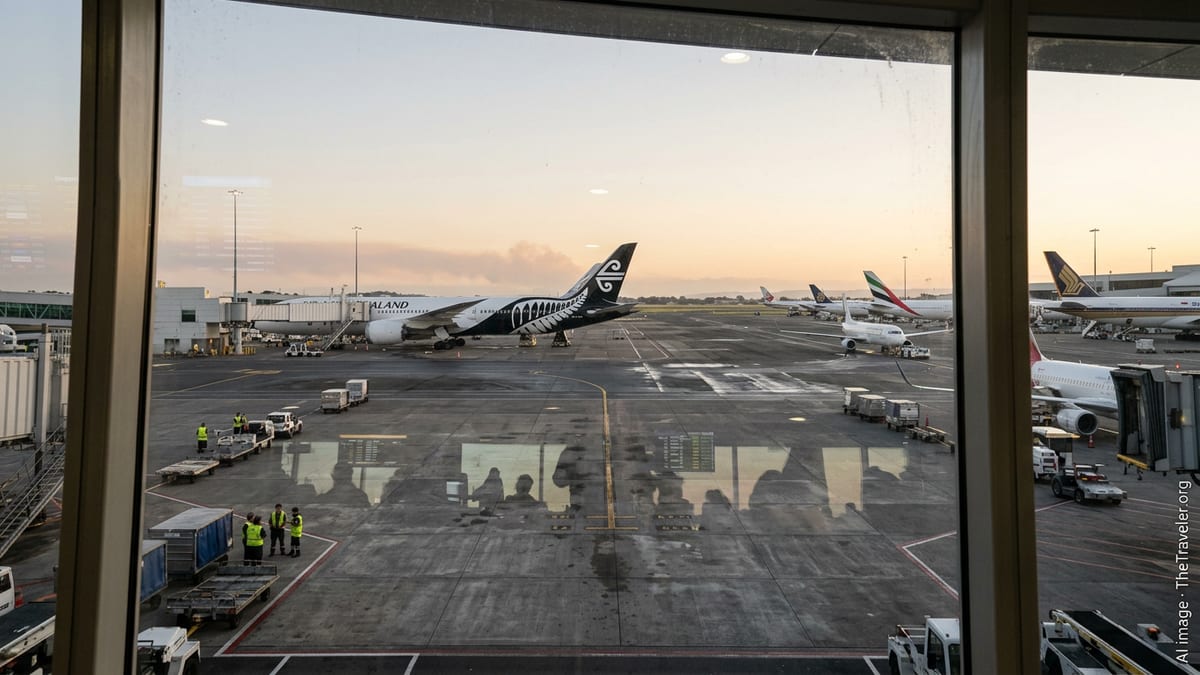
Fuel Shock Forces Air New Zealand to Ground Flights
Air New Zealand confirmed this week that it will cancel around 1,100 services between mid March and early May, blaming an unprecedented spike in jet fuel prices linked to the war on Iran and the closure of key oil and aviation corridors in the Middle East. The cuts, which affect both domestic and international networks, are expected to disrupt travel plans for roughly 44,000 passengers during the period.
The airline has suspended its 2026 financial outlook, citing extreme uncertainty over fuel costs. Executives say jet fuel prices have jumped from around 85 to 90 US dollars a barrel before the conflict to between 150 and 200 dollars in recent days, a surge that has torn through operating budgets and left airlines scrambling to protect balance sheets.
While no route is being dropped entirely, Air New Zealand will operate fewer frequencies across the board, trimming 2 to 3 return flights a week on some domestic services and cutting back more heavily once the April peak travel period passes. The airline has stressed that safety margins and maintenance windows will not be compromised, but acknowledges the move will tighten already busy schedules at major airports such as Auckland, Wellington and Christchurch.
Travellers holding tickets on affected flights are being offered rebooking options, but the sheer volume of cancellations, coupled with constrained capacity on remaining services, means many will face extended delays or be forced to alter itineraries altogether.
Fares Climb as Capacity Tightens Worldwide
Alongside the schedule reductions, Air New Zealand has introduced fare increases across its network, a move mirrored by carriers from Australia to Europe. The airline has lifted one way economy prices by about 10 New Zealand dollars on domestic routes, 20 dollars on short haul international sectors and 90 dollars on long haul flights, pointing directly to fuel as the driver.
Internationally, airlines are layering in fuel surcharges and raising base fares as they grapple with higher operating costs and longer flight times. On some long haul routes that once relied on Middle Eastern hubs, spot fares have surged by double digits within days as capacity shrank and detours added hours to flying time.
Industry analysts warn that the combination of reduced seat supply and robust post pandemic demand is a recipe for prolonged fare pressure. With many carriers still rebuilding balance sheets, there is little appetite to absorb cost shocks. Instead, travellers are being asked to shoulder more of the burden, particularly on discretionary leisure routes and last minute bookings.
There are growing concerns that rising prices could start to choke off demand, especially among price sensitive holidaymakers and small businesses. Some tourism operators in New Zealand and across Asia report early signs of group cancellations and shortened stays as travellers reassess budgets in the face of escalating airfares.
Middle East War Upends Global Flight Paths
The immediate trigger for the aviation turmoil is the US Israeli war on Iran, which erupted into open conflict at the end of February with strikes on Iranian territory and retaliatory attacks that have spilled across the Gulf. The closure or restriction of airspace over Iran, Iraq and Israel, along with disruptions at major hubs in the region, has forced airlines to rip up flight plans almost overnight.
Much of the traffic between Europe, Asia and Australasia depends on Middle Eastern carriers and corridors that funnel flights through the Gulf. With parts of that airspace effectively off limits, airlines are being pushed onto longer, less efficient routings that skirt the conflict zone, adding between one and six hours to some journeys and significantly raising fuel burn.
The crisis comes on top of existing bans on Russian airspace for many Western airlines, closing off northern polar options that once provided a safety valve during regional conflicts. Carriers now find themselves squeezed between two vast areas of restricted skies, contending with congestion on remaining corridors and tight slot availability at alternative hubs.
For New Zealand travellers, the knock on effects are stark. Journeys to Europe and parts of Africa that previously relied on connections in the Gulf are becoming longer, more expensive and less predictable. Travel insurers are warning that war related disruptions may fall outside standard policies, leaving some passengers exposed if they choose to transit near the conflict zone.
Air New Zealand Navigates a New Era of Route Risk
Even before the latest conflict, Air New Zealand had been recalibrating its international network, postponing the resumption of certain Asian routes and delaying expansion plans as it dealt with engine constraints and uneven post pandemic recovery. The Middle East crisis has added a new layer of complexity, forcing the carrier to reassess the viability and resilience of long haul connections that depend on unstable global fuel markets.
Executives have indicated that, for now, the priority is preserving core connectivity while avoiding permanent withdrawal from markets. That means trimming frequencies rather than axing routes outright, and looking at tactical measures such as slower capacity growth, tighter cost controls and potential adjustments to aircraft deployment to maximise fuel efficiency.
Behind the scenes, route planners are also weighing the strategic implications of a world in which traditional east west corridors can no longer be taken for granted. Alternative partnerships, new one stop options and greater emphasis on more self contained regional networks are all under discussion as airlines look to reduce exposure to sudden geopolitical shocks.
In the short term, however, travellers will bear the brunt of the disruption. Longer journeys, busier flights and higher fares are set to be defining features of international travel from New Zealand in the coming months, as Air New Zealand and its partners navigate a turbulent and uncertain landscape.
What Travellers Should Expect in the Months Ahead
For passengers booked with Air New Zealand, the immediate advice from agents and consumer advocates is to monitor flight status closely, ensure contact details are up to date with the airline and consider more flexible travel dates where possible. With capacity tighter and rebooking options limited on peak days, those with non essential trips may find it easier to shift travel into less busy periods.
Travel planners are also urging customers to build in longer connection windows, particularly on itineraries involving multiple carriers or routings through secondary hubs that are absorbing displaced traffic from the Middle East. Missed connections and unplanned overnight stays are more likely in a system operating with reduced buffers and heightened operational risk.
On the pricing front, there is little expectation of an immediate return to pre conflict fare levels. Any easing in ticket prices will depend not only on a de escalation in the Middle East and the reopening of key airspace, but also on whether oil markets stabilise and airlines regain confidence to restore capacity. Until then, travellers out of New Zealand and around the world are being told to budget for higher airfares and fewer choices.
For now, the message from airlines, including Air New Zealand, is one of cautious realism. The industry has weathered fuel price spikes and geopolitical crises before, but the current combination of war, constrained airspace and fragile post pandemic demand presents one of the stiffest tests in years. As the conflict drags on, the chaos in the skies shows little sign of abating.