

More news on this day
Air Niugini’s quiet cancellation of its long‑planned Boeing 787‑8 Dreamliner order has upended expectations for Papua New Guinea’s role in Pacific aviation, forcing a rethink of how Port Moresby connects to Australia, Asia and key tourism markets while raising fresh questions for hotel and resort operators that had banked on faster long‑haul growth.
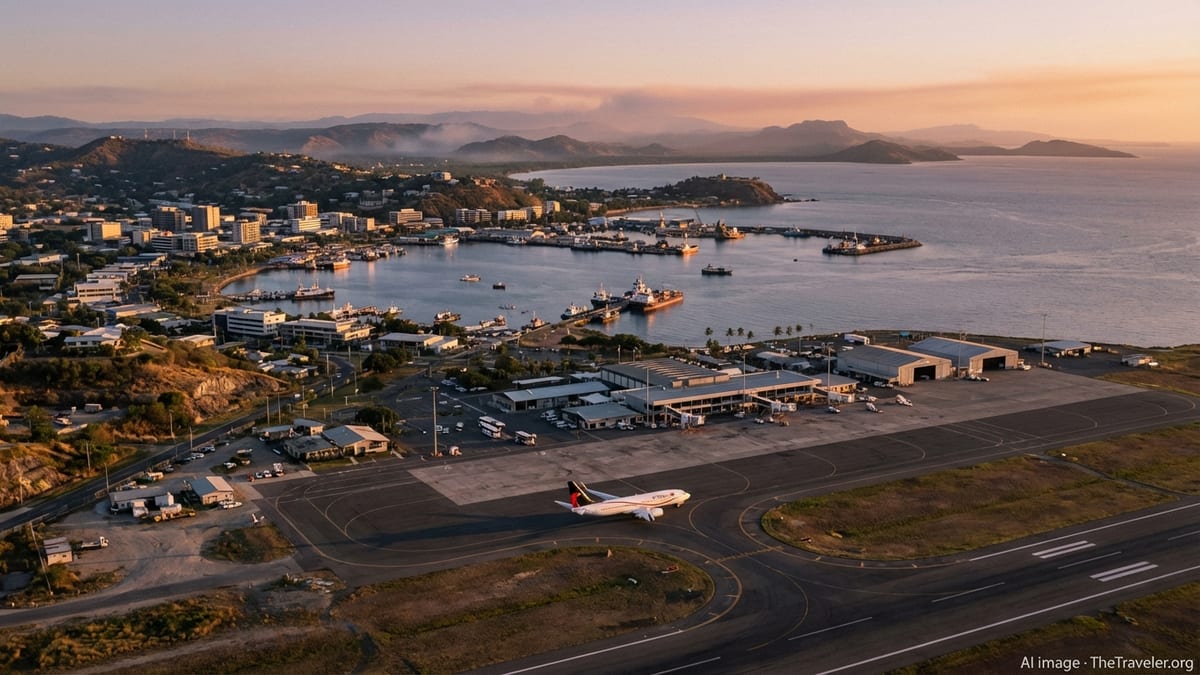
A Sudden Reversal in a Flagship Fleet Plan
Boeing’s latest orders and deliveries data for January 2026 confirms that Air Niugini’s purchase of two 787‑8s has been removed, effectively cancelling the deal that was announced with fanfare in mid‑2023 and later folded into a multi‑billion‑kina refleet program. The move comes just months before the airline’s aging Boeing 767‑300ER widebodies are due to exit service on lease expiry, leaving the carrier without a clear widebody replacement at a critical moment.
The 787‑8s had been intended to replace those 767s and underpin an expanded network from Port Moresby into Asia, Australia and New Zealand, complementing a new Airbus A220 narrowbody fleet. Public statements as recently as 2025 described the Dreamliners as central to Air Niugini’s international strategy, making the cancellation a sharp policy pivot that caught much of the regional industry by surprise.
Behind the decision lies a complex mix of financial pressure, shifting leadership and evolving government priorities. Papua New Guinea’s national carrier is in the middle of the largest capital program in its history, backed by state funding and multilateral lenders, at a time when the domestic economy is still grappling with currency shortages, imported inflation and volatile fuel prices. Against that backdrop, committing to long‑haul widebodies with high ownership and operating costs became harder to justify.
The new reality is that Air Niugini will modernise around single‑aisle aircraft first, even if that means postponing, or completely recasting, its long‑haul ambitions. For regional partners and tourism investors, the near‑term outlook for direct intercontinental connectivity has become less certain.
What It Means for PNG’s Connectivity and Growth
For Papua New Guinea, the most immediate effect of losing the 787s is a pause in the drive to create Port Moresby as a stronger regional hub linking Melanesia with major Asian and Australasian gateways. The 767‑300ERs currently support key routes such as Port Moresby to Brisbane, Singapore, Hong Kong and Palau. Without a like‑for‑like widebody replacement in hand, Air Niugini will need interim solutions to maintain capacity and frequency on these sectors.
Industry analysts in the region expect a combination of extended use of current aircraft, wet‑leases or short‑term widebody leases from other operators while the airline reassesses its long‑haul fleet plan. Any gap or reduction in widebody availability risks constraining seat supply on historically busy business and resource‑sector routes that are vital to PNG’s economy, as well as on emerging leisure markets that had been targeted for growth.
The cancellation also tempers expectations that Port Moresby could quickly become a more competitive one‑stop alternative between Australia and parts of Asia. The 787‑8’s fuel efficiency and range would have allowed Air Niugini to experiment with thinner nonstop routes and improved schedules, potentially drawing in connecting traffic. With that capability now off the table, the country’s connectivity will remain reliant on a mix of narrowbody flying and partnerships with larger regional carriers.
In the longer term, the decision may force PNG policymakers to reset timelines around aviation’s role in national development. The government has promoted the refleet as a catalyst for lower fares, better reliability and stronger integration with regional trade and tourism flows. That narrative remains intact for domestic and short‑haul travel, but the prospect of PNG rapidly stepping up as a long‑haul player has clearly receded.
Australia’s Role and the Brisbane–Port Moresby Lifeline
Australia is by far Papua New Guinea’s most important international market, and the impact of Air Niugini’s 787 cancellation will be felt most keenly on the core Brisbane to Port Moresby corridor. This route is not only a critical business and government link but also a lifeline for the resources sector and for PNG residents who rely on Australia for healthcare, education and onward connections.
In practical terms, the absence of new widebodies may limit Air Niugini’s ability to add premium capacity or more competitive schedules into major Australian gateways such as Sydney and Melbourne in the short to medium term. Brisbane is likely to remain the primary focus, with growth driven by more efficient narrowbodies rather than by the step‑change in product that 787s would have provided.
For Australian carriers, the development opens both risks and opportunities. If Air Niugini struggles to maintain capacity during the transition away from the 767 fleet, there may be scope for Qantas or low‑cost affiliates to reinforce their presence on PNG routes, either through extra frequencies or upgauging on existing services. At the same time, any instability in PNG’s long‑haul offering could disrupt carefully balanced corporate and government travel programs that depend on reliable, high‑frequency links.
Australian policymakers, who have supported Air Niugini’s modernisation via export credit agencies and development finance, will be watching closely. Stable air links underpin broader initiatives in security cooperation, infrastructure investment and labour mobility between the two countries. Ensuring that the loss of the 787s does not translate into a deterioration in connectivity will require ongoing coordination between Canberra, Port Moresby and the airline’s new leadership.
Inside Air Niugini’s Refleet Strategy Pivot
The cancellation of the Dreamliner order does not signal retreat from modernisation so much as a reshaping of priorities. Air Niugini’s refleet program, valued in the billions of kina, is anchored on the Airbus A220 family, with a mix of A220‑100 and A220‑300 aircraft due to enter service between 2025 and 2028. These jets are intended to replace older Fokker types and leased Boeing 737s while offering improved economics on domestic and regional routes.
By doubling down on the A220, Air Niugini is effectively choosing to first stabilise and upgrade its bread‑and‑butter flying within PNG and to near neighbours such as Australia, Solomon Islands and Fiji. The A220’s range and flexible cabin make it capable of operating both high‑frequency domestic sectors and medium‑haul international flights, giving the airline more options to fine‑tune capacity without the steep costs associated with new long‑haul widebodies.
There are also financial reasons to reprioritise. The refleet is heavily supported by a web of development lenders, export credit agencies and the PNG government itself. In an environment of higher interest rates and lingering post‑pandemic balance sheet pressures, trimming back or delaying the most capital‑intensive component of the plan is consistent with a more conservative risk posture. That is particularly true as PNG continues to work through foreign exchange shortages and broader macroeconomic reforms.
Leadership changes have added another layer of complexity. The return of former chief executive Alan Milne to the top job in February 2026 suggests the board wants a proven operator to steer the airline through this transition. Milne will now need to craft a revised long‑haul strategy that makes sense for an airline whose immediate growth engines will be narrowbodies rather than the flagship 787 that once symbolised its global aspirations.
Tourism and Hospitality: Slower Upswing for PNG and the Pacific
Hotel groups and tourism investors in Papua New Guinea and neighbouring Pacific destinations had watched the 787 plan closely as a proxy for future visitor flows. More seats on long‑haul‑capable aircraft typically translate into new routes, higher‑spending international guests and greater confidence to back large resort and conference developments. The cancellation therefore cools expectations for a rapid acceleration of inbound tourism.
In Port Moresby, several international hotel brands have invested in upgraded properties and convention facilities geared partly toward capturing transit and corporate traffic that a stronger hub operation might generate. Without the Dreamliners, the pace at which Port Moresby evolves into a more significant connecting node between Australia, Asia and the wider Pacific may be slower, which could lengthen payback periods on some hospitality investments.
Outside the capital, the implications are more nuanced. Many of PNG’s most compelling tourism assets, from dive sites and bird‑watching lodges to cultural festivals in the Highlands, depend as much on reliable domestic links as on long‑haul access. The introduction of modern Airbus A220s, with better reliability and comfort, has the potential to materially improve the experience for visitors once they are in the country, even if getting there still requires an extra connection via Australia or a major Asian hub.
For hospitality giants with regional portfolios across the Pacific, the message is to recalibrate rather than retreat. The growth thesis for PNG remains intact, but the slope of the curve is changing. Rather than banking on a quick surge of direct long‑haul flights, operators are likely to plan for more gradual increases in demand driven by improved domestic infrastructure and targeted marketing to niche high‑yield segments.
Australia, PNG and the Contest for Pacific Skies
The strategic dimension of Air Niugini’s fleet choices extends beyond commercial tourism and into the broader question of influence in the Pacific. Australia, China and other regional powers have all recognised that aviation links are a tangible expression of presence, underpinning everything from business flows to disaster response. A stronger, more capable national carrier in PNG had been seen as one way to reinforce the country’s connectivity with like‑minded partners and to reduce vulnerabilities.
Without the 787s, PNG’s ability to independently project long‑haul connectivity is constrained, potentially increasing reliance on foreign airlines and hubs. That does not necessarily weaken the country’s hand, but it changes the calculus. Partnerships, code‑shares and possible joint ventures will take on heightened importance as Port Moresby looks to maintain and improve access to key markets without shouldering the full cost of owning and operating a new generation of widebodies.
For Australia, which has supported Air Niugini’s refleet through development finance and export credit channels, ensuring that the airline remains viable and competitive remains a strategic priority. A modern A220‑led fleet could still deliver tangible benefits for connectivity, provided it is matched with investment in airports, air traffic management and customer‑facing systems that address long‑standing concerns over reliability and delays.
Regional competitors will also read the cancellation as a signal. Other carriers in the Pacific and Southeast Asia may see an opportunity to strengthen their own hubs as preferred transit points for traffic to and from PNG, particularly for leisure travellers. How quickly Air Niugini’s management articulates a credible alternative to the 787 plan will shape perceptions of the airline’s long‑term trajectory.
What Comes Next for Air Niugini’s Long‑Haul Future
With the 767‑300ERs scheduled to leave the fleet this year and no 787‑8s arriving to replace them, Air Niugini faces a narrow window to decide how it will sustain its long‑haul network. One option is to pursue interim widebody leases, potentially from secondary markets where older, but still efficient, aircraft types are available at relatively attractive rates. Another is to lean more heavily on partners through code‑sharing and interline agreements, ceding some control over the customer experience in exchange for lower financial risk.
Looking further ahead, the airline could revisit the idea of new‑build widebodies once its A220 program is bedded down and its balance sheet has strengthened. By that time, alternative aircraft types or different financing structures may be on the table, and the competitive landscape in the Pacific could look very different. The reappointment of a seasoned chief executive suggests that the board wants flexibility rather than to lock itself into a single path too early.
For travellers, the immediate message is one of continuity more than upheaval. Flights will continue to operate, and the arrival of new narrowbodies should gradually improve reliability and comfort on many routes. The bigger change is invisible to most passengers: a recalibrated growth story in which Air Niugini’s global footprint expands more slowly, and through partnership, than a pair of 787‑8s once promised.
For Australia, Papua New Guinea and the hospitality giants that knit the two markets together, the cancellation is a reminder that aviation strategy in small and mid‑sized economies is rarely linear. Financial realities, political priorities and shifting market conditions can alter course quickly. The coming years will reveal whether Air Niugini’s decision to step back from the Dreamliner precipice proves to be a prudent pause or a missed opportunity in the race to shape the future of Pacific travel.